

How to Get Rid of Raspberry Bushes
Written with AI assistance, edited and checked against horticultural sources.
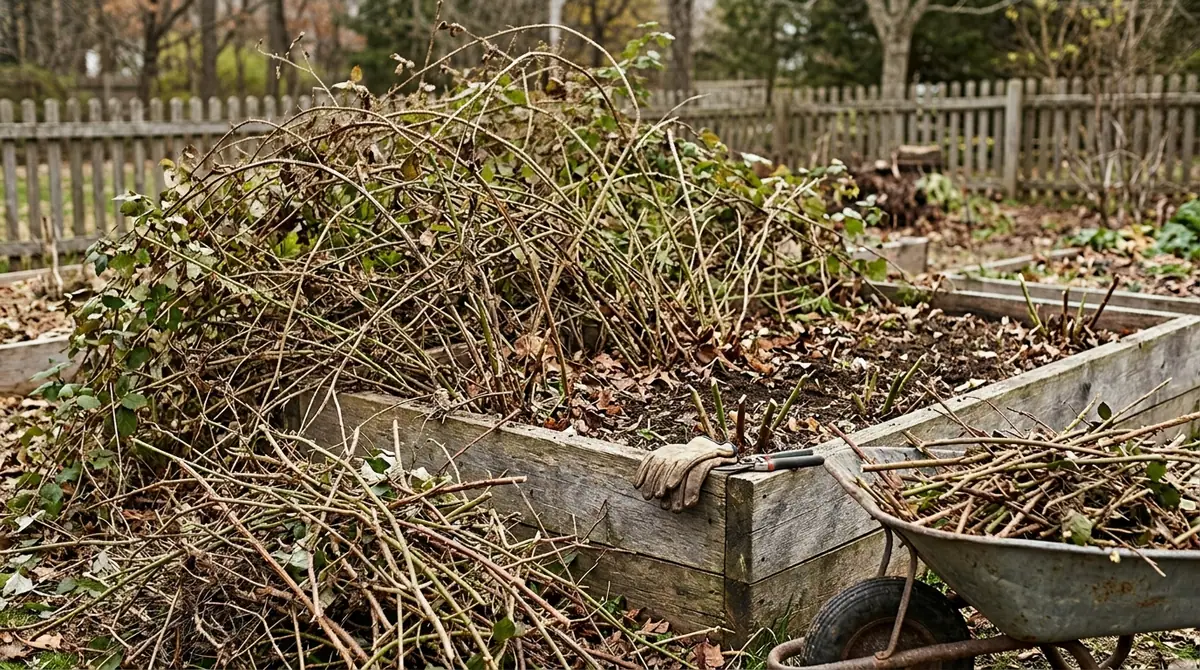
I stood knee-deep in a sea of wild red raspberries (Rubus idaeus) last summer, staring down at a neglected orchard corner where a few polite patio canes had transformed into an impenetrable, thorn-armored fortress. My clippers were dull, my leather gloves were punctured, and I realized that most gardening guides treat the removal of these resilient plants like a gentle afternoon weeding task rather than the botanical extraction operation it actually is.

Here is your definitive guide to reclaiming your landscape from out-of-control raspberry patches.
1. Botanical Overview & Natural Habitat
To eradicate an enemy, you must first understand its biology. Raspberry plants belong to the genus Rubus within the rose family, Rosaceae. They are classified botanically as perennial plants with biennial stems, known as floricanes and primocanes.
What makes raspberries notoriously difficult to eliminate is their subterranean architecture. They possess a robust, perennial root system combined with underground stems called rhizomes or root suckers. While the above-ground canes live for only two years—growing vegetatively (primocanes) in year one and fruiting and dying (floricanes) in year two—the crown and root network beneath the soil live on for decades, storing massive carbohydrate reserves.
In their natural woodland-edge habitat, raspberries thrive in disturbed soils, forest clearings, and areas with high light exposure and ample moisture. They are evolutionary pioneers designed to colonize disturbed ground rapidly. When you try to dig them out, any root fragment longer than 1 inch (2.5 cm) left behind at a depth of 6 inches (15 cm) or more can generate an entirely new plant. Understanding this perennial resilience is the foundation of effective removal. For further botanical classification details, consult the Missouri Botanical Garden Plant Finder.
2. Essential Environmental & Care Requirements
Paradoxically, understanding what raspberries love helps us weaponize their biology against them. To kill a plant, you can either physically destroy its vascular and root systems or systematically strip away the environmental conditions it requires to photosynthesize and store energy.
Raspberries thrive in full sun (minimum 6 to 8 hours of direct sunlight daily) and slightly acidic, well-draining loam soils with a pH between 5.5 and 6.5. They tolerate cold winters down to USDA Zone 3 (-40°F / -40°C) and demand consistent moisture—about 1 inch (2.5 cm) of water per week during the growing season.
When you want to suppress and ultimately eradicate a patch, you exploit these exact requirements by cutting off sunlight, altering soil conditions, and inducing drought stress.
| Parameter | Optimal Condition | Common Mistake | Why It Matters |
|---|---|---|---|
| Soil pH | 5.5 to 6.5 | Ignoring soil chemistry | Correct pH maximizes nutrient uptake for vigor; altering it can stress unwanted canes. |
| Sunlight | 6–8 hours full sun | Leaving shade options | Shading out canes limits carbohydrate storage in roots. |
| Watering | 1 inch (2.5 cm) weekly | Surface watering | Deep watering sustains deep rhizomes; withholding water forces dormancy. |
| Root Depth | Up to 12 inches (30 cm) | Shallow surface skimming | Leaving root fragments below 6 inches (15 cm) ensures re-sprouting. |
3. Step-by-Step Cultivation, Feeding & Propagation
While the heading mentions cultivation and propagation, in the context of getting rid of raspberry bushes, our "cultivation protocol" is actually a tactical eradication sequence. We are reversing every rule of propagation to ensure the plant dies rather than multiplies.
⚠️ Important Caution: Wear heavy-duty leather gauntlets, eye protection, and thick canvas trousers. Raspberry thorns carry soil-borne bacteria that can cause deep puncture infections.
Follow this 5-step eradication protocol for absolute success:
- The Canopy Reduction (Late Autumn): Cut all standing canes down to ground level using long-handled loppers. Do this in late autumn when temperatures drop below 50°F (10°C) and the plant is directing its remaining energy reserves downward into the root crown.
- The Exhaustion Phase (Early Spring): As soon as spring soil temperatures reach 55°F (13°C), new primocanes will emerge from underground rhizomes. Do not let these green shoots photosynthesize. Snip them off at soil level every 14 days. Starving the root system of foliar energy for 60 to 90 days forces the plant to exhaust its stored carbohydrates.
- Mechanical Excavation (Mid-Spring): Once the patch is weakened, use a sharp mattock and a long-handled spade to dig up the central root crowns. Excavate a trench 12 inches (30 cm) deep around the perimeter of the patch. Pry upward beneath the main root balls to lift out the dense, woody root mats.
- Targeted Herbicide Application (Optional / Chemical Method): If mechanical removal is impossible due to scale, apply a systemic herbicide containing glyphosate or triclopyr to freshly cut cane stumps immediately (within 5 minutes) after the autumn cut. The plant's vascular system pulls the chemical down into the farthest reaches of the root network. Always follow manufacturer guidelines and local regulations.
- Solarization or Cover Cropping (Summer): Cover the cleared area with heavy-duty, black woven landscape fabric or UV-resistant 6-mil black plastic sheeting for 60 to 90 consecutive days during peak summer heat (ambient temperatures above 85°F / 29°C). This thermal barrier kills any remaining root fragments or stray seeds lingering in the top 4 inches (10 cm) of soil.
💡 Pro-Tip: Never put raspberry roots, crowns, or thorny canes into a cold compost pile. The roots can easily re-sprout in damp, nutrient-rich compost, and dried canes retain viable buds for months. Bag them for municipal green waste or burn them where permitted.
4. Common Problems, Pests & Troubleshooting
When removing a raspberry patch, you will inevitably run into a few stubborn obstacles. Here is how to troubleshoot the most common setbacks during the eradication process:
- The Zombie Cane Phenomenon: You cut everything down, yet two weeks later, bright green shoots emerge 3 feet (1 meter) away from the original patch. This happens because the underground rhizomes travel horizontally. Trace the green shoot back to its subterranean anchor point, dig down 8 inches (20 cm), and sever the connecting runner.
- Stubborn Clay Soils: In heavy clay, digging out root crowns feels like chiseling through concrete. Do not pull violently on canes, as they will snap off at the crown, leaving the root system intact. Instead, soak the soil 24 hours prior to excavation to loosen the clay matrix, or use a garden fork to leverage the root ball upward.
- Accidental Garden Damage: If you are removing raspberries interspersed among valued perennials, avoid broadcast chemical treatments. Instead, use a foam paintbrush dipped in systemic herbicide to "paint" individual raspberry leaves or freshly cut stems, protecting your neighboring ornamentals. For regional extension guidance on safe weed management practices, check the University of California Agriculture and Natural Resources guidelines.

5. Frequently Asked Questions
How do I kill raspberry roots without digging?
You can kill raspberry roots without heavy digging by practicing systematic starvation or using a systemic herbicide. Cut all canes to ground level and repeatedly snip off any new green shoots every 14 days to prevent photosynthesis. Alternatively, apply a concentrated systemic herbicide containing glyphosate directly to freshly cut stump surfaces in autumn, when the plant draws nutrients downward into the root system.
Will cutting raspberry bushes to the ground kill them?
No, cutting raspberry bushes to the ground just once will not kill them. Because their root systems and underground rhizomes store substantial energy reserves, a cut cane will readily send up a flush of new shoots within weeks. To kill the plant through cutting alone, you must repeatedly remove all new growth every two weeks over the course of a full growing season to starve the roots.
What is the best herbicide for getting rid of wild raspberries?
A systemic post-emergent herbicide containing glyphosate or triclopyr is most effective against wild raspberries. These chemicals are absorbed by the foliage or fresh cuts and translocated down through the vascular system to destroy the entire underground root network. Apply during late summer or early autumn for maximum root uptake.
How deep do raspberry roots go?
The majority of a raspberry plant's fibrous root and rhizome system resides in the top 6 to 12 inches (15 to 30 cm) of soil, though some structural roots can penetrate down to 18 inches (45 cm). This relatively shallow depth makes mechanical excavation feasible, provided you remove the entire crown and any lateral rhizomes longer than 1 inch (2.5 cm) to prevent regrowth.
Related Guides
📋 Table of Contents ▼ Click to expand
Tags:
🌿 Related Plants You Might Like
PlantSavvyWorld
Editorial team
PlantSavvyWorld is an independent botanical education project. Articles are drafted with AI assistance, then edited and checked against university extension services, botanical garden collections and other published horticultural sources.