

Begonia Waterfall
Written with AI assistance, edited and checked against horticultural sources.
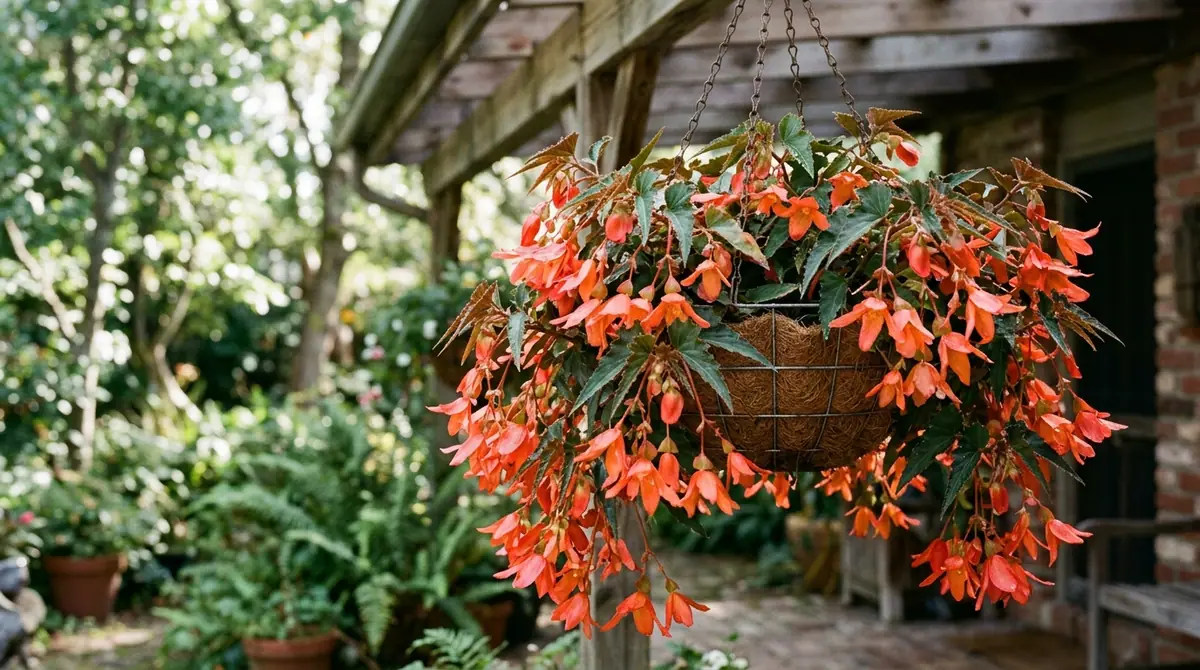
Hanging from cedar beams in a terracotta basket, 'Waterfall Encanto Orange' stems can cascade a full 24 inches (61 cm) over the rim, forming a dense, shimmering curtain of neon-bright blooms that survive a brutal July heatwave without dropping a single petal. The interspecific tuberous hybrids known collectively as the Begonia Waterfall series serve as a gold standard for vertical drama, bred specifically to handle the structural demands of hanging displays without snapping at the nodes.
1. Botanical Overview & Natural Habitat
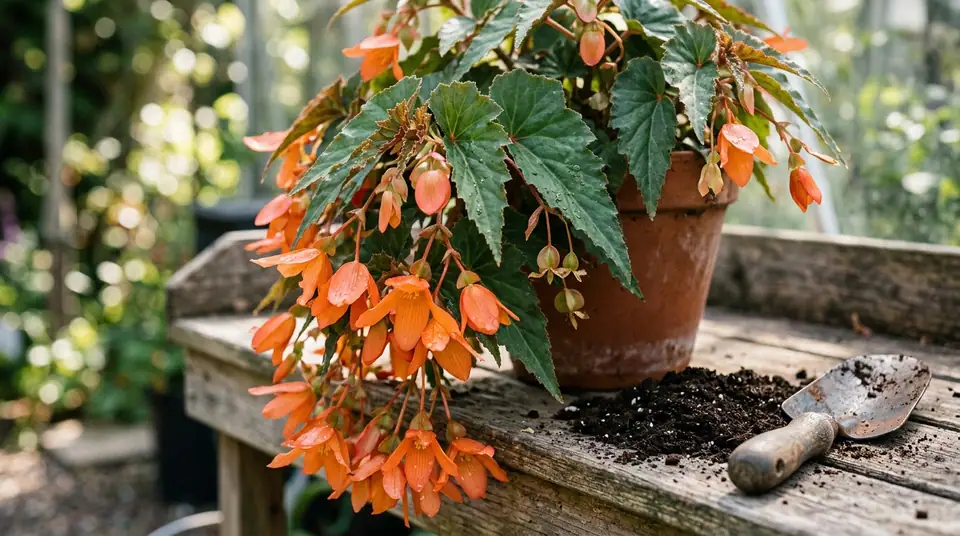
In their native high-altitude tropical and subtropical habitats, these plants cling to vertical rock faces where organic leaf litter accumulates in narrow crevices. This evolutionary niche dictates their entire physiology. They feature succulent, translucent stems that store water to survive erratic moisture fluctuations in shallow cliff soil, alongside asymmetrical, semi-succulent leaves designed to capture dappled light filtering through a dense rainforest canopy.
The root systems are remarkably compact, evolving to anchor plants in minimal substrate rather than deep earth. When we place them in containers, we are essentially replicating these cliffside microclimates. Understanding this origin story clarifies why they hate heavy, waterlogged soil and scorching, direct overhead sunlight. Their delicate root hairs will suffocate in dense mud, mirroring what happens when monsoon rains flood a poorly drained mountain crevice.
2. Essential Environmental & Care Requirements
Growing the Begonia Waterfall series successfully requires balancing light, temperature, humidity, and soil composition to mimic their native montane forest floors.
Light exposure is the most critical variable. While they are often labeled as shade plants, complete darkness yields weak, leggy stems and zero flowers. They thrive best in bright, indirect light or morning sun for 2 to 4 hours, followed by dappled shade during the intense afternoon hours of 12:00 PM to 4:00 PM. Direct afternoon sun will scorch the margins of their succulent leaves within 4 hours and cause the developing flower buds to blast and drop prematurely.
Temperature management is equally vital. These plants hate rapid thermal swings. They thrive in ambient temperatures between 65°F and 75°F (18°C to 24°C) during the active growing season. Growth slows dramatically when temperatures consistently exceed 85°F (29°C), and night temperatures dropping below 50°F (10°C) will shock the plant and halt tuber development.
Humidity should hover around 50% to 60%. While they tolerate standard outdoor humidity, dry indoor air or arid desert climates will cause crispy leaf edges unless paired with strategic misting or pebble trays.
When it comes to watering, employ the "soak and dry" method. Allow the top 1.5 to 2 inches (3.8 to 5 cm) of the soil to dry out completely before administering a thorough drenching until water runs freely through the drainage holes.
| Parameter | Optimal Condition | Common Mistake | Why It Matters |
|---|---|---|---|
| Light | Bright, indirect light with morning sun | Placing in scorching afternoon sun | Direct UV rays bleach succulent leaves and abort flower buds. |
| Temperature | 65°F–75°F (18°C–24°C) | Exposing to sustained heat over 85°F (29°C) | High heat causes severe bud drop and stalls cascading growth. |
| Soil pH | 5.5 to 6.2 (slightly acidic) | Using heavy, alkaline garden soil | Acidic media unlocks locked iron and prevents root rot. |
| Watering | Evenly moist; dry top 2 inches (5 cm) | Keeping soil perpetually soggy | Asphyxiates delicate roots and invites Pythium stem rot. |
For further technical reading on container-grown ornamentals and soil chemistry, consult the Clemson Cooperative Extension Home & Garden Information Center.
3. Step-by-Step Cultivation, Feeding & Propagation
Establishing a magnificent waterfall of blooms requires meticulous planting and a steady nutritional regimen. Because these plants invest heavily in continuous floral production, their nutrient demands are surprisingly high for shade-loving specimens.
💡 Pro-Tip: When potting your begonia waterfall plugs or tubers, mix a handful of coarse horticultural perlite and a slow-release, balanced 10-10-10 granular fertilizer directly into the core root zone. This ensures a steady feed during heavy root expansion without shocking the tender stem bases.
Follow this step-by-step protocol to plant and maintain your cascading display:
- Select the Container: Choose a hanging basket or elevated urn at least 12 inches (30 cm) in diameter with a minimum of three drainage holes at the base.
- Mix the Substrate: Combine 50% high-quality peat-based potting soil, 30% perlite or pumice for aeration, and 20% well-rotted leaf mold or compost to achieve an acidic pH between 5.5 and 6.2.
- Position the Plant: Remove the young plant from its nursery container, gently tease out the outer root fibers to prevent circling, and plant it at the exact same soil depth it grew at previously. Burying the stem too deep invites collar rot.
- Initial Watering: Water the newly planted basket thoroughly with lukewarm water until it flows from the bottom drainage holes, then let it drain completely for 30 minutes.
- Establish Feeding Routine: Once active new growth appears at the stem tips—typically 14 days post-planting—begin applying a water-soluble, low-nitrogen, high-phosphorus fertilizer (such as a 5-10-10 formula) diluted to half strength every 14 days.
- Pinch for Branching: When trailing stems reach 6 inches (15 cm) in length, use clean shears to nip off the terminal growing tip. This encourages auxiliary buds to break, doubling the number of cascading stems and creating a fuller basket.
Propagation of the Begonia Waterfall series is best achieved through terminal stem cuttings rather than seed, as hybrids do not come true from seed. Take a 4-inch (10-cm) stem tip cutting just below a leaf node in early summer. Strip the lower leaves, dip the cut end in rooting hormone powder, and insert it into a sterile mixture of half perlite and half peat moss. Maintain a humidity tent over the cutting at 72°F (22°C), and root formation typically occurs within 21 to 28 days.
4. Common Problems, Pests & Troubleshooting
Even with pristine care, environmental shifts can trigger physiological disorders or invite opportunistic pests. Monitoring your plants daily is the best defense.
Leaf drop is the most frequent complaint from growers. When lower leaves turn yellow and drop off, the culprit is almost always overwatering or poor container drainage. Conversely, if leaves curl upward at the margins and turn crispy brown, the plant is experiencing underwatering paired with low humidity or excessive heat.
Powdery mildew (Erysiphe species) is the primary fungal adversary, appearing as a white, talcum-powder-like substance on the upper surfaces of leaves during humid, stagnant weather.
⚠️ Important Caution: Never apply oil-based horticultural sprays or copper fungicides to begonias when ambient temperatures exceed 85°F (29°C) or while the plant is dry. The delicate, succulent foliage will suffer immediate chemical burning and defoliation. Always water the plant thoroughly 24 hours before applying any organic fungicidal treatment.
5. Frequently Asked Questions
Do begonia waterfall plants come back every year, or are they annuals?
In USDA Hardiness Zones 9 through 11, they can act as tender perennials if protected from winter freezes. In Zones 8 and colder, they are grown as annuals outdoors. However, because they form underground tubers, you can lift the tubers before the first autumn frost, store them in dry peat moss at 50°F (10°C) over the winter, and replant them in spring.
Why are the flower buds dropping off my begonia waterfall before they open?
Bud drop, or bud blast, is typically caused by environmental stress. The most common triggers are sudden temperature fluctuations, drafts from air conditioning vents, underwatering followed by drought stress, or placing the plant in a location with insufficient light. Ensure consistent moisture and stable ambient temperatures to prevent this.
Can I grow begonia waterfall in full sun?
No, the Begonia Waterfall series cannot handle full, direct all-day sun. Their semi-succulent leaves will scorch, and the flowers will fade rapidly. They require bright, indirect light or filtered shade, ideally receiving no more than 2 to 3 hours of gentle morning sun.
How do I make my cascading begonia look fuller and less stringy?
Leggy growth usually stems from insufficient light or skipping the initial pinching phase. To correct this, prune back the longest stems by one-third in mid-summer to stimulate side branching, move the container to a brighter location with filtered light, and maintain a regular half-strength phosphorus-rich feeding schedule every two weeks.
Related Guides
📋 Table of Contents ▼ Click to expand
Tags:
🌿 Related Plants You Might Like



PlantSavvyWorld
Editorial team
PlantSavvyWorld is an independent botanical education project. Articles are drafted with AI assistance, then edited and checked against university extension services, botanical garden collections and other published horticultural sources.