

Fertilizer for Plumerias
Written with AI assistance, edited and checked against horticultural sources.
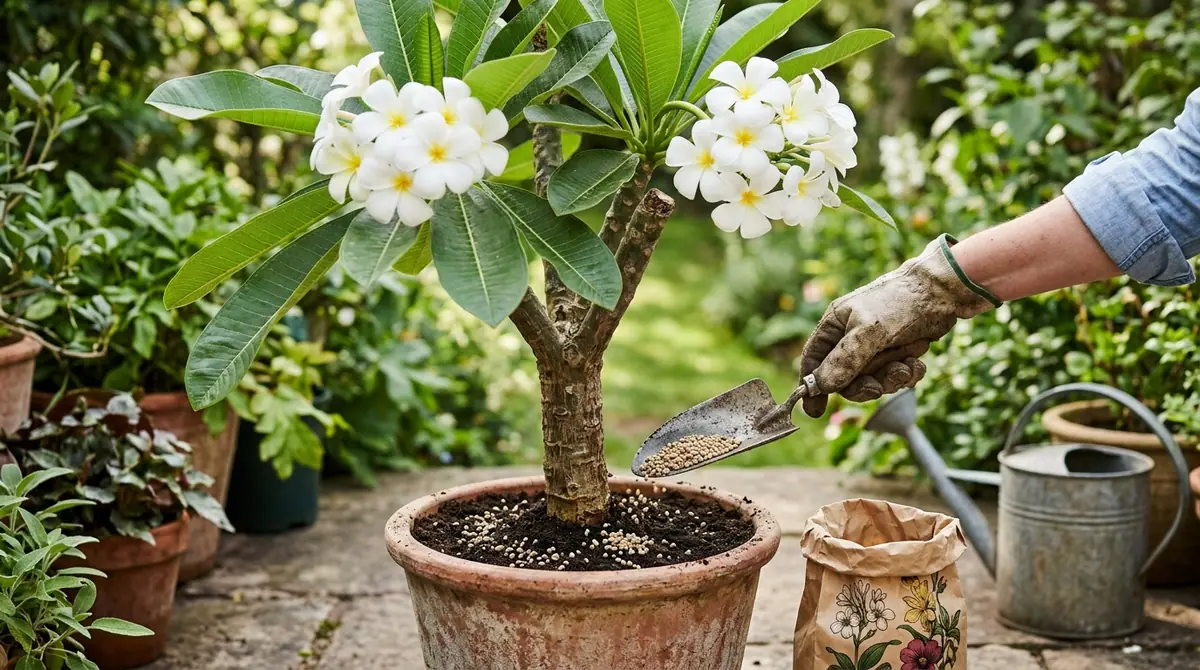
The fragrance of a blooming Plumeria rubra hitting the warm evening air is a sensory memory that always takes me back to my first major landscaping overhaul in South Florida back in 2012. I had planted a magnificent 'Singapore White' specimen in a prominent courtyard, expecting it to flourish effortlessly under the tropical sun. By month three, however, the foliage had turned anemic, the leaf tips curled downward in a sad, leathery droop, and nary a single flower spike emerged. I was feeding it a generic "all-purpose" water-soluble fertilizer every two weeks, confident I was doing right by the plant. I wasn't. I was starving it of the exact nutritional ratios it craved while burning its delicate feeder roots with an excess of nitrogen.
1. Botanical Overview & Natural Habitat
Plumerias belong to the Apocynaceae (dogbane) family and the genus Plumeria, encompassing deciduous and semi-deciduous shrubs and small trees native to tropical and subtropical regions of the Americas, spanning from Mexico through Central America, the Caribbean, and northern South America. In their native habitats, these plants encounter distinct wet and dry seasons, forcing deep adaptations in their stem anatomy and root physiology.
Morphologically, plumerias store immense amounts of water and carbohydrates in their thick, succulent stems (often referred to as pachycaul stems). This adaptation allows them to survive prolonged periods of severe drought. Their root systems are predominantly shallow and spreading when grown in thin tropical soils, though they can develop deep anchor roots when grown in loose, porous earth. Because they naturally inhabit well-drained, nutrient-permeable soils derived from weathered volcanic rock and limestone, their roots are exceptionally sensitive to compaction, waterlogging, and chemical salt accumulation from improper synthetic fertilizers.
Understanding this evolutionary background is crucial when selecting a fertilizer for plumerias. In the wild, these plants do not experience continuous flushes of rich organic waste; instead, they receive periodic, balanced pulses of nutrients washed through rapid-draining substrates during seasonal monsoon rains. When we cultivate them in containers or backyard landscapes, replicating this dynamic is essential. Over-fertilizing with high-nitrogen formulas forces rapid, weak stem elongation at the expense of floral development, making the plant structurally unstable and highly vulnerable to fungal pathogens like Rust (Coleosporium plumeriae) and stem rot (Phytophthora).
2. Essential Environmental & Care Requirements
To unlock the full potential of any fertilization program, you must first dial in the fundamental environmental parameters. A plumeria deprived of sufficient light or thermal energy cannot utilize applied nutrients efficiently, leading to fertilizer burn or soil toxicity.
| Parameter | Optimal Condition | Common Mistake | Why It Matters |
|---|---|---|---|
| Light Exposure | 6 to 8 hours of direct, unshaded sunlight daily | Placing plants in partial shade or indoor low-light rooms | Insufficient light halts photosynthesis, preventing the plant from processing macronutrients into the sugars required for bloom production. |
| Temperature Range | 65°F to 90°F (18°C to 32°C) active growth; dormant down to 40°F (4°C) | Exposing active plants to sudden drafts or temperatures below 50°F (10°C) | Cold temperatures shut down root metabolism, causing unabsorbed fertilizer salts to burn root hairs and induce root rot. |
| Soil Composition | Highly porous, coarse-textured mix (pH 6.5 to 7.0) | Using heavy garden loam, clay, or standard potting soil retaining excess moisture | Dense soils suffocate oxygen-dependent root zones, preventing the uptake of applied phosphorus and micronutrients. |
| Watering Depth | Soak thoroughly until water drains freely, then let dry completely to 2 inches (5 cm) deep | Frequent, shallow sips of water that wet only the topsoil surface | Shallow watering leaves lower roots dry and encourages salt accumulation from fertilizers near the surface. |
When managing soil pH, remember that a slightly acidic to neutral range (6.5 to 7.0) maximizes nutrient availability, particularly for trace elements like iron, manganese, and zinc. For deeper guidance on regional soil adaptation and plant health, consult resources from the University of Florida IFAS Extension.
3. Step-by-Step Cultivation, Feeding & Propagation
Feeding plumerias effectively requires aligning your fertilizer applications with their seasonal growth cycle. During active spring and summer growth, their metabolic rate is exceptionally high. During winter dormancy (when temperatures drop consistently below 50°F / 10°C and leaves drop), all fertilization must cease entirely to prevent forcing weak growth that will die back.
The Seasonal Feeding Protocol
- Spring Awakening (March to April): As soon as the first green leaf tips (cabbage heads) begin to push out from the woody stems, resume watering lightly. Wait until active leaves reach at least 2 inches (5 cm) in length before applying your first dose of fertilizer.
- Nutrient Selection (The High-Phosphorus Rule): Choose a specialized fertilizer for plumerias featuring an N-P-K (Nitrogen-Phosphorus-Potassium) ratio where the middle number (phosphorus, P) is significantly higher, such as a 10-30-10 or 11-35-15 formula. Phosphorus is the non-negotiable driver of inflorescence development, root establishment, and robust flower coloration. Avoid balanced all-purpose formulas like 20-20-20 during the growing season unless you are trying to grow a purely vegetative specimen, as high nitrogen will sacrifice blossoms for dark green leaves.
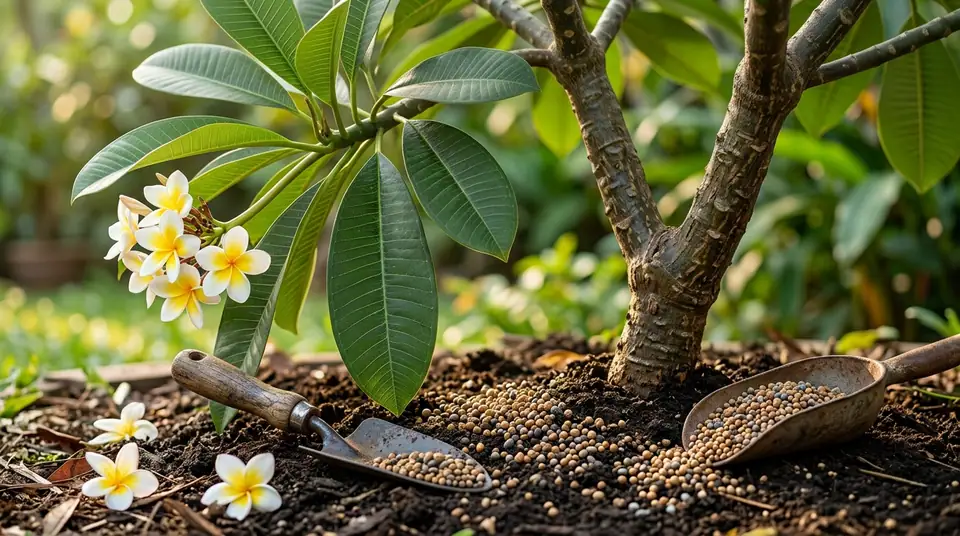
- Application Technique (Liquid vs. Granular): If using a water-soluble fertilizer, mix it to half-strength and apply every 14 days directly to moist soil. Never apply chemical fertilizers to completely dry plumeria roots, as the concentrated mineral salts will rapidly dehydrate and burn the root tips. If using a controlled-release granular fertilizer (such as a slow-release formula lasting 90 to 180 days), incorporate it into the top 1 inch (2.5 cm) of soil in early spring and water it in thoroughly.
- Micronutrient Supplementation (May to July): Plumerias are notorious for showing iron and magnesium deficiencies in alkaline soils or containers watered with hard tap water. Supplement your core fertilizing schedule once every 6 weeks with a chelated micronutrient drench containing iron, manganese, zinc, copper, boron, and molybdenum.
- Late-Summer Tapering (August to September): By late August, transition away from high-phosphorus formulas to a low-nitrogen, high-potassium (K) fertilizer (such as a 5-10-15 or similar ratio). Potassium hardens off the woody stems, thickens cell walls, and prepares the plant to withstand cooler autumn temperatures.
- Winter Dormancy Shutdown (October to February): Cease all fertilization completely by mid-autumn as daylight hours shorten and leaves yellow and drop. Water should be restricted to bare minimums (just enough to keep the woody stems from shriveling excessively). For gardeners interested in sustainable soil enrichment strategies for other yard plants, you can also explore techniques outlined in our guide on how to use coffee grounds as organic fertilizer for tomatoes, though note that plumerias require a much higher phosphorus ratio than tomatoes do.
💡 Pro-Tip: If you notice your plumeria dropping un-opened flower buds—a frustrating condition known as bud drop or blast—do not immediately assume it needs more fertilizer. Bud drop is almost always caused by erratic watering schedules combined with a sudden drop in ambient night temperatures below 60°F (15°C), or an excess of soluble salts in the root zone. Flush the container thoroughly with plain, unfertilized water until it runs clean out of the drainage holes to reset the soil chemistry.
⚠️ Important Caution: Never exceed the manufacturer's recommended dosage on synthetic chemical fertilizers. Because plumerias are often grown in confined container spaces, over-application leads to fertilizer salt buildup, which presents as burnt leaf margins, crispy brown tip burn, and sudden root collapse. When in doubt, apply liquid formulas at half-strength more frequently rather than full strength all at once.
4. Common Problems, Pests & Troubleshooting
Even with a meticulous fertilizing regimen, plumerias can occasionally encounter physiological disorders and pest pressures. Correctly diagnosing these issues ensures your feeding efforts aren't wasted on a struggling plant.
- Interveinal Chlorosis (Yellow Leaves with Green Veins): This is the hallmark sign of iron or magnesium deficiency, frequently triggered by high soil pH (above 7.5) which locks up these essential micronutrients. Solution: Apply a foliar spray or soil drench of chelated iron (Fe-EDDHA for alkaline soils) and lower the watering pH using a mild horticultural acid if necessary.
- Tip Burn and Leaf Necrosis: Crispy, brown, dead edges along the leaves usually point to fertilizer salt accumulation or underwatering during intense heat waves. Solution: Leach the potting medium by running clean water through the container for 10 minutes straight, letting it drain completely. Withhold all fertilizers for 30 days.
- Lanky, Weak Stems with No Blooms: Caused exclusively by a combination of insufficient light (under 5 hours of direct sun) and an over-abundance of high-nitrogen lawn fertilizer. Solution: Move the plant to an unobstructed southern or western exposure immediately, prune back leggy stems by one-third in early spring, and switch to a high-phosphorus bloom booster.
- Spider Mites and Scale Insects: Stressed, over-fertilized plants with soft, succulent new growth are prime targets for sap-sucking pests. Spider mites cause stippled, dusty-looking leaves, while scale appears as brown, immobile bumps along the stems. Solution: Wash the foliage vigorously with a strong stream of water, followed by an application of horticultural insecticidal soap or neem oil applied strictly during the cool evening hours to prevent leaf scorching.
5. Frequently Asked Questions
What is the best N-P-K ratio fertilizer for plumerias?
The ideal formula for blooming plumerias is a high-phosphorus blend such as 10-30-10 or 11-35-15. The elevated middle number (phosphorus) is specifically formulated to stimulate root proliferation, robust stem development, and heavy floral spike production. Avoid high-nitrogen formulas (like 20-20-20) during the growing season, as they will cause the plant to produce massive amounts of lush green leaves at the absolute expense of flowers.
Can I fertilize my plumeria in the winter?
No. You must completely stop all fertilization from late autumn through the end of winter (typically October through February). During this dormant period, plumerias drop their leaves, slow their cellular respiration, and enter a state of metabolic rest. Applying fertilizer while the plant is dormant forces active uptake when the roots cannot process nutrients, leading directly to chemical root burn, rot, and plant death.
Why are my plumeria leaves turning yellow after fertilizing?
If leaves turn yellow shortly after a feeding, it typically indicates one of two things: fertilizer burn caused by applying a high-concentration chemical salt solution to dry soil, or severe over-fertilization that has locked out the absorption of micro-elements like iron and magnesium. To remedy this, immediately flush the soil with plain, unfertilized water until runoff runs clear, and withhold all nutrient applications for at least four weeks.
How often should I feed potted plumerias compared to in-ground plumerias?
Potted plumerias require more frequent, lighter feedings because nutrients wash out of containers rapidly every time you water. Feed potted specimens every 14 days during the active spring and summer growing season using a water-soluble fertilizer at half-strength, or use a controlled-release granular fertilizer applied once every 3 to 4 months. In-ground plumerias, possessing a larger, more expansive root zone and stable native soil buffering, generally thrive on a granular, slow-release application applied just three times a year: early spring, mid-summer, and late summer.
Related Guides
- Fertilizer for Daylilies
- When to Water After Granular Fertilizer
- How to Use Coffee Grounds As Organic Fertilizer for Tomatoes
📋 Table of Contents ▼ Click to expand
Tags:
Keep reading
🌿 Related Plants You Might Like


PlantSavvyWorld
Editorial team
PlantSavvyWorld is an independent botanical education project. Articles are drafted with AI assistance, then edited and checked against university extension services, botanical garden collections and other published horticultural sources.