

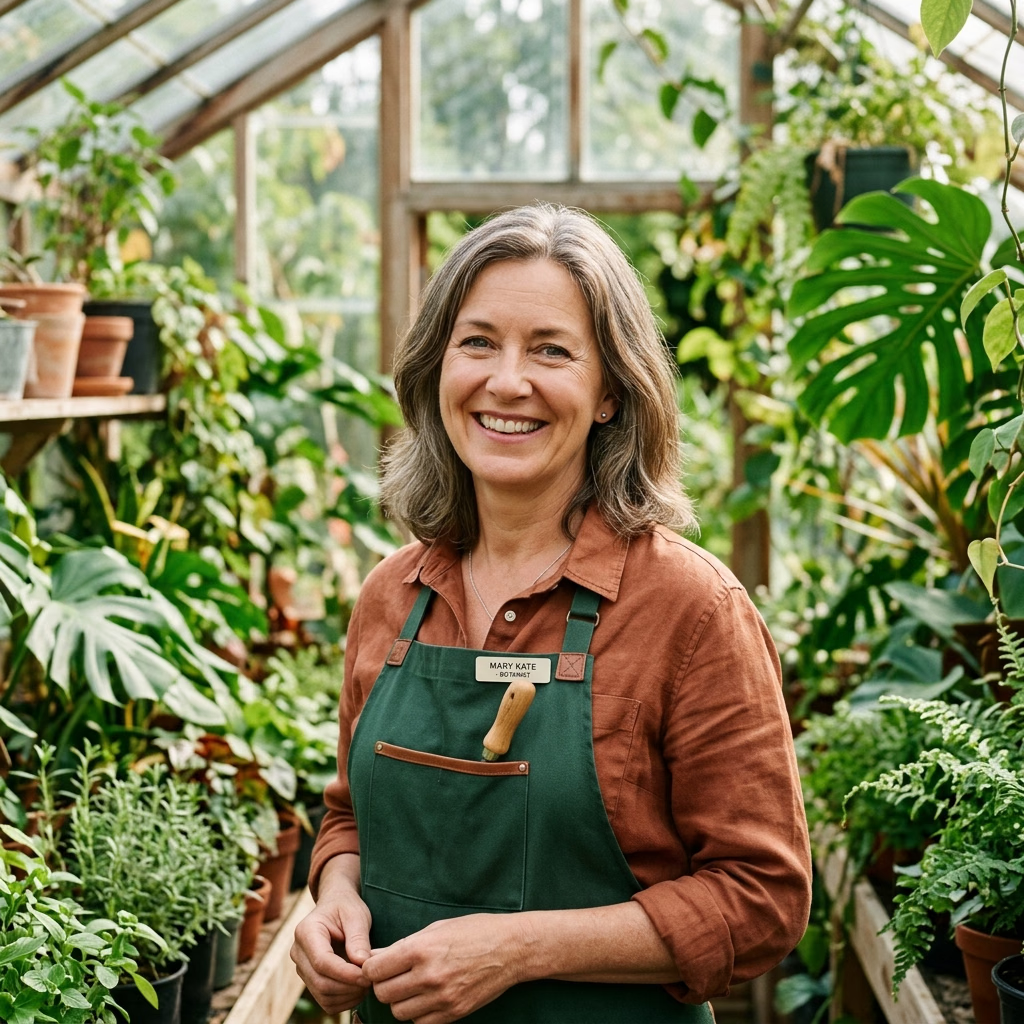
 Mary Kate
Last July, I stood in my research trial plots holding a sad, yellowing Capsicum annuum 'California Wonder' that had dropped half its blossoms overnight, despite receiving meticulous watering and a balanced organic fertilizer. The interveinal chlorosis on the lower leaves pointed straight to a nutrient lockout, and after digging through tissue-test data from similar clay loams, I dissolved two tablespoons of magnesium sulfate into a watering can and drenched the root zone. Within ten days, the pale foliage re-chlorinated into a deep, glossy green, and the subsequent flush of fruit set set a personal yield record for that bed.
As a senior botanist and landscape designer who has spent decades untangling plant nutrition, I see gardeners reach for Epsom salt for peppers as if it were a universal panacea. While magnesium and sulfur are critical for metabolic function, dumping white crystals into your garden without understanding the soil chemistry often creates more problems than it solves. Let us explore the botany, science, and precise application protocols behind using Epsom salt for your pepper crops.

1. Botanical Overview & Natural Habitat
Peppers belong to the Solanaceae family and trace their evolutionary origins to the tropical and subtropical regions of Central and South America. In their native habitats, these perennial shrubs (Capsicum species) developed in well-drained, organically rich soils subjected to warm, steady tropical rainfall and intense sunlight.
From a physiological standpoint, peppers are heavy consumers of macro- and micronutrients during their reproductive phases. Magnesium ($Mg^{2+}$) is the central metallic atom in the chlorophyll molecule—the very engine of photosynthesis. Without adequate magnesium, plants cannot efficiently harvest solar energy to fuel fruit development, leading to stunted growth and premature leaf drop. Sulfur ($SO_4^{2-}$), the second component of Epsom salt (hydrated magnesium sulfate, $MgSO_4 \cdot 7H_2O$), is equally vital for synthesizing essential amino acids like cysteine and methionine, which in turn build structural and defensive plant proteins.
Because peppers are often grown outside their native climates—whether you are timing out your seasonal schedule using resources like When to Start Peppers Indoors Zone 6 or cultivating them as tender perennials in frost-free regions by reviewing Are Bell Peppers Perennial: Expert Gardening Guide & Science-Backed Tips—their root systems demand precise chemical balances to thrive.
2. Essential Environmental & Care Requirements
To understand when Epsom salt will actually help your peppers—and when it will cause harm—we must examine their baseline environmental needs. Magnesium availability is intimately tied to soil pH, temperature, and cation exchange capacity (CEC).
| Parameter | Optimal Condition | Common Mistake | Why It Matters |
|---|---|---|---|
| Soil pH | 6.0 to 6.8 | Allowing pH to drop below 5.5 or rise above 7.5 | Extreme pH locks out magnesium and calcium, rendering soil amendments useless. |
| Soil Temperature | 70°F to 85°F (21°C to 29°C) | Planting out when soil is below 60°F (15°C) | Cold roots cannot efficiently uptake water, magnesium, or phosphorus. |
| Moisture | Consistent moisture; 1 to 2 inches (2.5 to 5 cm) per week | Alternating between drought and waterlogging | Irregular watering triggers blossom end rot, mimicking or compounding magnesium deficiency. |
| Sunlight | 6 to 8+ hours of direct daily sun | Growing in heavy, shaded microclimates | Insufficient light halts photosynthesis, negating the benefits of enhanced chlorophyll production. |
💡 Dr. Mary Kate's Pro-Tip: Never apply Epsom salt blindly. Always perform a reliable soil test through an agricultural extension service—such as the University of Minnesota Extension Soil Testing Laboratory—to confirm a genuine magnesium deficiency before amending your beds.
3. Step-by-Step Cultivation, Feeding & Propagation
When soil tests confirm low magnesium, or when visual symptoms of interveinal chlorosis appear on older pepper leaves, applying magnesium sulfate can provide a rapid corrective boost. Follow this exact botanical protocol for safe, effective application:
- Verify the Deficiency: Inspect your pepper plants. True magnesium deficiency manifests as yellowing between the green veins of the older, lower leaves while the upper canopy remains relatively bright.
- Calculate Your Dosing: For soil drenching, dissolve 1 tablespoon (15 ml) of pharmaceutical-grade Epsom salt into 1 gallon (3.78 liters) of tepid water. For foliar spraying, use a milder concentration of 1 teaspoon (5 ml) per 1 gallon (3.78 liters) of water.
- Time the Application: Apply your treatment early in the morning. Foliar sprays applied under harsh midday sun will scorch leaf tissue, while morning applications allow stomata to absorb the nutrient solution efficiently.
- Apply to the Root Zone or Foliage: Pour 1 quart (0.95 liters) of the liquid solution directly into the root zone around the base of each mature plant. If foliar spraying, mist the upper and lower leaf surfaces until runoff occurs.
- Monitor and Repeat: Observe your plants for 14 days. If deficiency symptoms persist and a soil test verifies ongoing low magnesium levels, repeat the application once. Avoid applying more than once a month to prevent nutrient imbalances.
⚠️ Important Caution: Excess magnesium in the soil competes directly with calcium and potassium for root uptake. Over-applying Epsom salt can induce a secondary calcium deficiency, which directly causes blossom end rot—the very fruit-destroying condition many gardeners mistakenly think Epsom salt cures.
4. Common Problems, Pests & Troubleshooting
Even with optimal magnesium management, pepper growers encounter several persistent hurdles. Differentiating between nutrient issues and biotic stressors is key to saving your harvest.
- Magnesium vs. Calcium Deficiency: Both cause leaf distortion or fruit issues, but magnesium chlorosis begins on older, lower leaves between veins. Calcium deficiency typically strikes the newest growth, causing tip burn on young leaves and sunken, black leathery patches on the bottoms of the developing pepper fruits.
- Nutrient Lockout from Over-Fertilization: Pouring high amounts of potassium or high-nitrogen fertilizers into the soil can block magnesium uptake. Flush the root zone with plain, pH-balanced water if you suspect salt buildup.
- Aphids and Spider Mites: Stressed, nutrient-deficient plants are prime targets for sap-sucking insects. Inspect the undersides of leaves weekly, and manage outbreaks using insecticidal soaps rather than relying on foliar fertilizer sprays to solve pest damage.
For comprehensive regional disease management guides, consult resources like the Royal Horticultural Society Pests and Diseases Portal.

5. Frequently Asked Questions
Does Epsom salt actually increase pepper yields?
Epsom salt increases yields only if the soil is genuinely deficient in magnesium or sulfur. If your soil already contains adequate magnesium levels, adding more will not boost yields and can disrupt the uptake of other vital nutrients like calcium and potassium.
How often should I put Epsom salt on my pepper plants?
If a soil test indicates a deficiency, apply a diluted solution no more than once every 4 weeks during the active growing season. Most home gardens require no more than two targeted applications per year.
Can I mix Epsom salt with my regular tomato and pepper fertilizer?
Yes, but check your fertilizer's guaranteed analysis first. Many complete organic or synthetic fertilizers already contain secondary macronutrients like magnesium and sulfur. Doubling up can lead to salt burn in the root zone.
Is it better to spray Epsom salt on leaves or pour it on the soil?
Soil drenching is generally safer and more effective for long-term uptake through the root hairs. Foliar sprays provide a rapid temporary fix for acute chlorosis, but they carry a higher risk of leaf scorch and do not solve underlying root-zone imbalances.
Related Guides
- Epsom Salt for Peppers and Tomatoes
- Epsom Salt for Pepper Plants
- When to Start Peppers Indoors Zone 6
📋 Table of Contents ▼ Click to expand
Tags:
🌿 Related Plants You Might Like






Mary Kate
Botanist & Founder
With over 10 years of experience researching sustainable horticulture and landscape architecture, I am on a mission to strengthen the bond between humans and nature.