Best Gardening Hat
Written with AI assistance, edited and checked against horticultural sources.
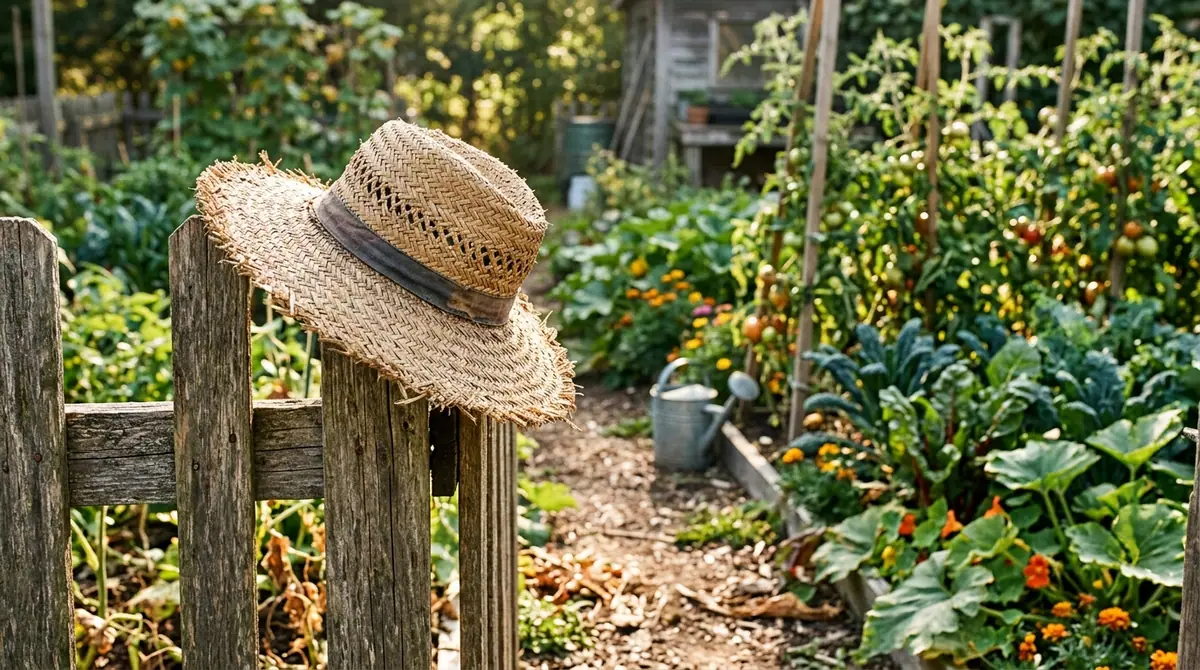
By late morning in USDA Zone 7b, the air temperature routinely passes 92°F (33°C) and the UV index sits at 9 or 10. In those conditions an unventilated canvas bucket hat can bring on heat exhaustion within about forty minutes, a loosely woven crown lets the scalp burn, and sweat in the eyes makes precise pruning risky. For anyone who gardens for hours at a time, a gardening hat is personal protective equipment (PPE), not an accessory. Whether you are managing irrigation lines, pruning dense shrubs like those featured in our guide on 15 Best Trees for Driveways That Won't Crack Concrete, or executing delicate seed propagation, your hat is the frontline defense between your skin, your focus, and the elements.
1. Botanical Overview & Natural Habitat
From a botanical standpoint, the ideal hat must balance transpirational cooling (breathability) with structural integrity. Just as a desert-adapted succulent uses a thick cuticle to prevent moisture loss, a high-performance gardening hat must feature a tightly woven or UV-resistant barrier that blocks at least 98% of harmful ultraviolet radiation (UPF 50+). The crown functions much like a stem or inflorescence, requiring adequate ventilation ports or mesh liners to release the metabolic heat and perspiration generated by your scalp when ambient temperatures exceed 85°F (29°C).
Consider the habitats where you spend your time. If your microclimate features high humidity, such as USDA Hardiness Zones 9 through 11 where relative humidity routinely hovers above 70%, a natural straw hat made from raffia or Panama straw can absorb moisture and warp, degrading its protective qualities. Conversely, in dry, high-altitude climates like Zone 5 in the Rocky Mountain foothills, ultra-lightweight, synthetic nylon-spandex blends with moisture-wicking sweatbands are essential to prevent salt crystallization and heat buildup. Understanding your environmental niche allows you to select a hat engineered for your specific regional pressures, ensuring it performs under the grueling conditions of heavy garden labor.
2. Essential Environmental & Care Requirements
Even the most robust gardening hat requires targeted maintenance to preserve its structural performance and sun-blocking capabilities. Unlike indoor headwear, gardening hats are constantly exposed to organic acids from plant sap, abrasive soil particles, mineral-heavy irrigation water, and profuse human perspiration.
| Parameter | Optimal Condition | Common Mistake | Why It Matters |
|---|---|---|---|
| Cleaning Frequency | Hand wash every 3–5 heavy wear sessions | Machine washing straw or structured brims | Agitation destroys internal wire stiffeners and breaks down natural fibers. |
| Drying Method | Air dry in a shaded, well-ventilated area | Tumble drying on high heat | Extreme heat shrinks synthetic fabrics and warps resin-treated brims. |
| Storage Geometry | Flat or hung on a wide-radius peg | Stacking heavy items on top of the crown | Crushing ruins the engineered pitch of the brim, reducing shadow coverage. |
| UV Maintenance | Annual replacement of non-treated fabric hats | Assuming UV protection lasts indefinitely | UV-blocking chemical treatments wash out or degrade under intense solar exposure. |
💡 Pro-Tip: Never store your gardening hat in the trunk of your car during summer months. Temperatures inside a vehicle can easily exceed 140°F (60°C), which degrades technical adhesives, melts synthetic sweatbands, and warps the structural memory of wide-brim polymers.
To ensure your investment lasts multiple growing seasons, you must treat your hat with the same environmental mindfulness you afford your perennials. Wash away alkaline soil residues promptly; if left to dry, soil acts as a desiccant, pulling natural oils out of straw and canvas fibers. For deeper insights into managing outdoor textile durability, consult the Clemson University Cooperative Extension resource portal on outdoor equipment care.
3. Step-by-Step Cultivation, Feeding & Propagation
Selecting, fitting, and maintaining the ultimate gardening hat requires a systematic approach. Follow this protocol to ensure maximum comfort, sun protection, and durability throughout the growing season.
- Measure Cranial Circumference: Use a flexible tailoring tape measure to record your head circumference approximately 0.5 inches (1.3 cm) above your eyebrows and ears. Most standard gardening hats range from small (21.5 inches / 54.6 cm) to extra-large (24 inches / 61 cm).
- Determine Brim Geometry: Select your brim width based on your primary tasks. For delicate seed sowing and container gardening, a 3-inch (7.6 cm) brim offers maneuverability without knocking over plant tags. For open-field work or staking tomatoes, select a brim width of 4 inches (10.2 cm) or greater to fully shade the posterior cervical spine (the back of the neck).
- Verify UPF Certification: Inspect the manufacturer specifications to ensure the fabric carries an official Ultraviolet Protection Factor rating of UPF 50+, which blocks 97.5% to over 98% of UVA and UVB radiation.
- Incorporate Moisture Management: Fit the hat with an antimicrobial, moisture-wicking internal sweatband. If your hat lacks this feature, insert a washable cotton terrycloth liner to prevent sweat from migrating into your eyes during high-exertion tasks like double-digging beds.
- Establish a Conditioning Routine: At the end of every 14-day growing cycle, brush away accumulated dry soil using a soft-bristled horsehair brush. Spot-clean stubborn sap stains with a mild, pH-neutral castile soap solution and a damp microfiber cloth.
- Apply Protective Treatments: For canvas and cotton-duck hats, spray a non-toxic, water-repellent fluorocarbon-free spray once per season to prevent organic staining from tannins in walnut or oak leaves.
⚠️ Important Caution: Never use chlorine bleach or heavy laundry detergents to remove stubborn green stains from chlorophyll on your hat. Bleach breaks down the polymer chains in UV-protective synthetic weaves, rendering the fabric functionally useless against solar radiation even if the color appears clean.
4. Common Problems, Pests & Troubleshooting
Even high-end gardening hats encounter environmental degradation. Recognizing the early symptoms of wear allows you to intervene before structural failure occurs.
- Symptom: Brim drooping or losing its horizontal pitch.
- Cause: High humidity combined with sweat saturation breaks down internal sizing agents or structural wire.
- Solution: For straw hats, lightly mist the brim with clean water, press it flat between two heavy books on a flat surface for 24 hours, and spray with a light coat of stiffening spray. For wired brims, gently realign the internal memory wire by hand.
- Symptom: White, crusty salt rings forming along the crown and sweatband.
- Cause: Crystallized sodium and urea from dried human perspiration.
- Solution: Submerge the affected area in a basin of lukewarm water mixed with two tablespoons of white vinegar for 15 minutes to break down mineral and salt bonds, then rinse thoroughly with distilled water.
- Symptom: Fading and discoloration of fabric on one side.
- Cause: Photodegradation caused by asymmetrical UV exposure (e.g., hanging the hat on a hook facing a south-facing window).
- Solution: Store hats in fully enclosed, dark closets or dedicated gear lockers when not in use. For authoritative guidelines on mitigating solar degradation in outdoor materials, reference the Royal Botanic Gardens, Kew preservation standards.
- Symptom: Mold or mildew spots developing in the inner crown lining.
- Cause: Storing a damp hat in a confined, unventilated space immediately after heavy garden irrigation.
- Solution: Sponge the area with a 50/50 solution of isopropyl alcohol and water to kill fungal spores, then place the hat in direct, bright sunlight for 2 hours to naturally sterilize the fabric.
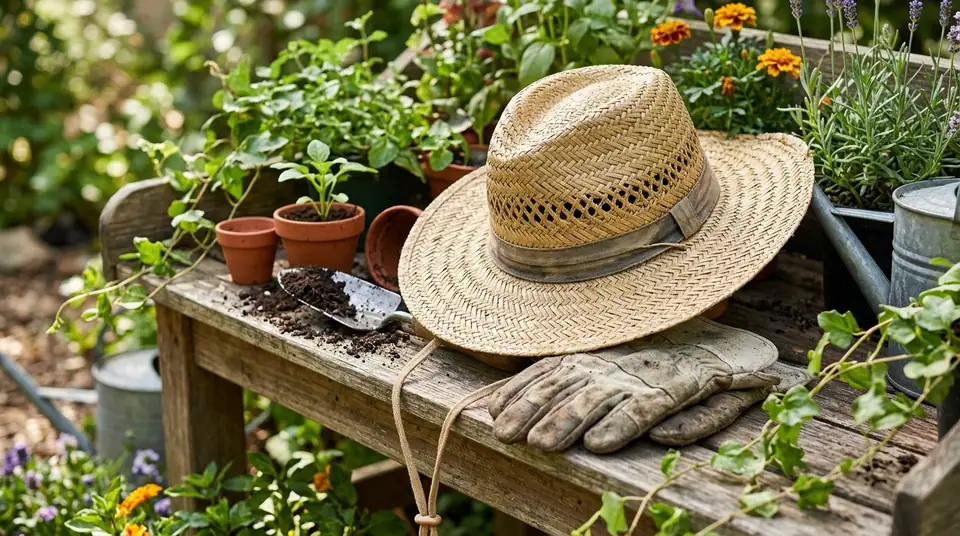
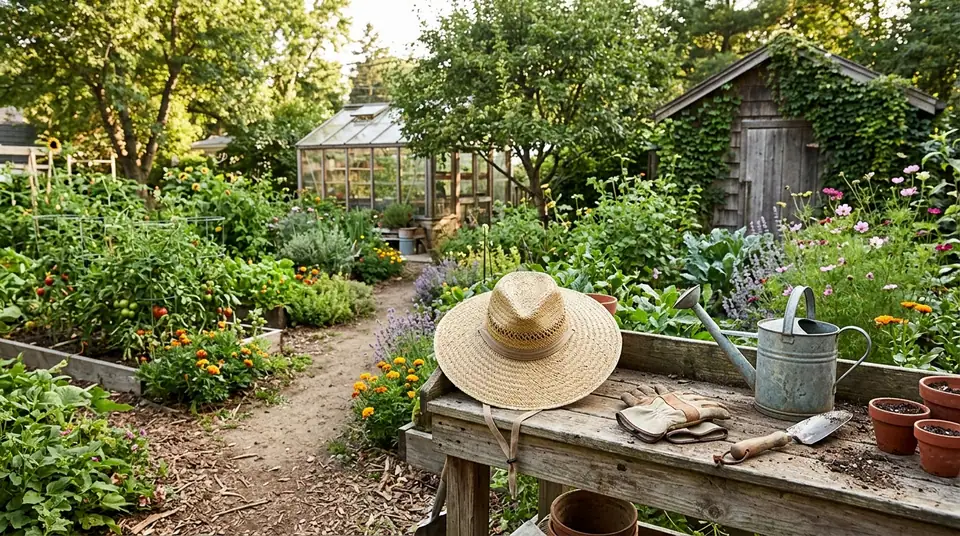
Straw hat, watering can, and gardening tools resting on a wooden potting bench in a lush garden
5. Frequently Asked Questions
What brim width is actually necessary for full sun protection while gardening?
To adequately protect your face, ears, and the back of your neck from cumulative solar damage, look for a brim width of at least 3.5 to 4 inches (8.9 to 10.2 cm). Anything under 3 inches leaves the tips of the ears and the cervical spine exposed during bending and weeding tasks.
Can I wash my straw gardening hat in the washing machine?
No, never machine wash a straw hat. Mechanical agitation and immersion in water will swell, warp, and completely dissolve the natural fibers and structural glues holding the weave together. Always spot clean straw hats with a slightly damp cloth.
How often should I replace my UV-protective gardening hat?
If you garden actively for 10 to 15 hours per week, synthetic fabrics and chemical UV treatments degrade within 2 to 3 seasons. Inspect your hat annually for thinning weaves, semantic stretching, or fading; if light passes easily through the crown when held up to a lamp, it is time to replace it.
Are chin straps necessary, or are they just annoying?
Chin straps are essential functional components for windy open-site gardening or when working near high-velocity equipment like string trimmers and leaf blowers. Look for hats featuring a break-away or adjustable toggle cord so the hat stays secure during heavy gusts without creating a choking hazard.
Related Guides
📋 Table of Contents ▼ Click to expand
Tags:
🌿 Related Plants You Might Like
PlantSavvyWorld
Editorial team
PlantSavvyWorld is an independent botanical education project. Articles are drafted with AI assistance, then edited and checked against university extension services, botanical garden collections and other published horticultural sources.