

Best Cucumbers for Pickling
Written with AI assistance, edited and checked against horticultural sources.
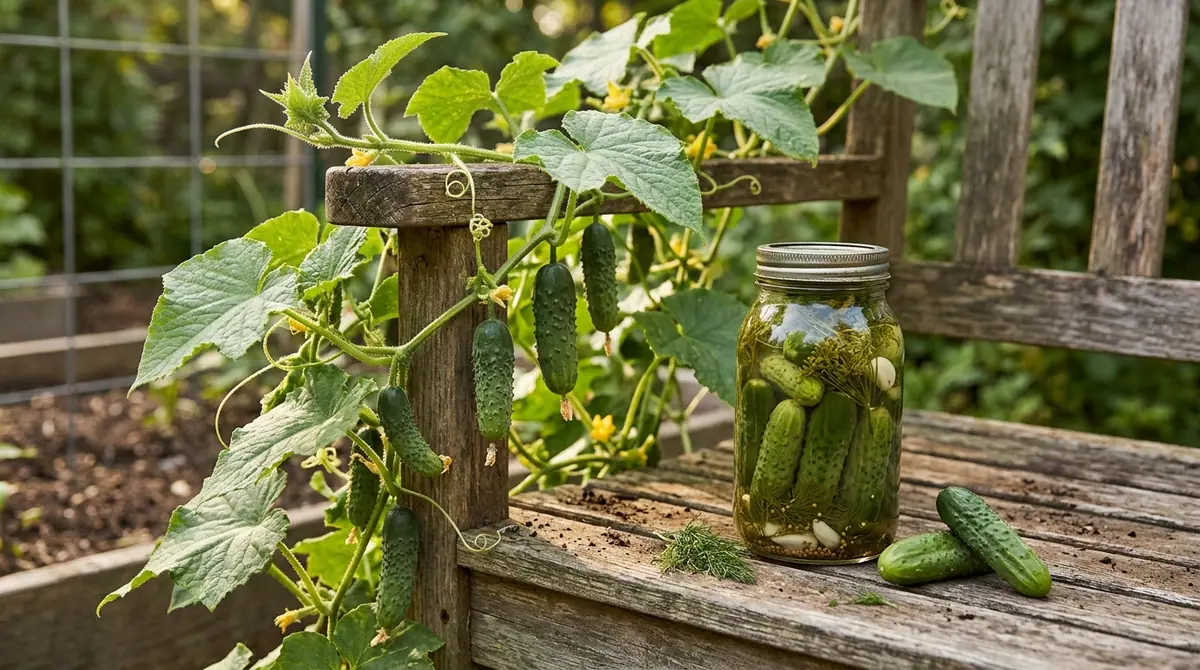
Bloated, watery slicing cucumbers and cloudy brine mean a dill pickle batch is destined for mush. Planting 'Marketmore'—an exceptional salad cuke—expecting it to perform double duty in the canning jar fails miserably because those varieties do not hold their crunch through the lacto-fermentation process due to structural cell walls, skin permeability, and seed cavity ratios.
1. Botanical Overview & Natural Habitat
To understand why certain cucumbers make exceptional pickles while others turn to mush, we have to look at the botany. Cucumbers (Cucumis sativus) belong to the Cucurbitaceae family, sharing lineage with squashes, melons, and gourds. They originated in the foothills of the Himalayas in India, where wild ancestors scrambled across tropical forest floors, protected by bitter, protective compounds.
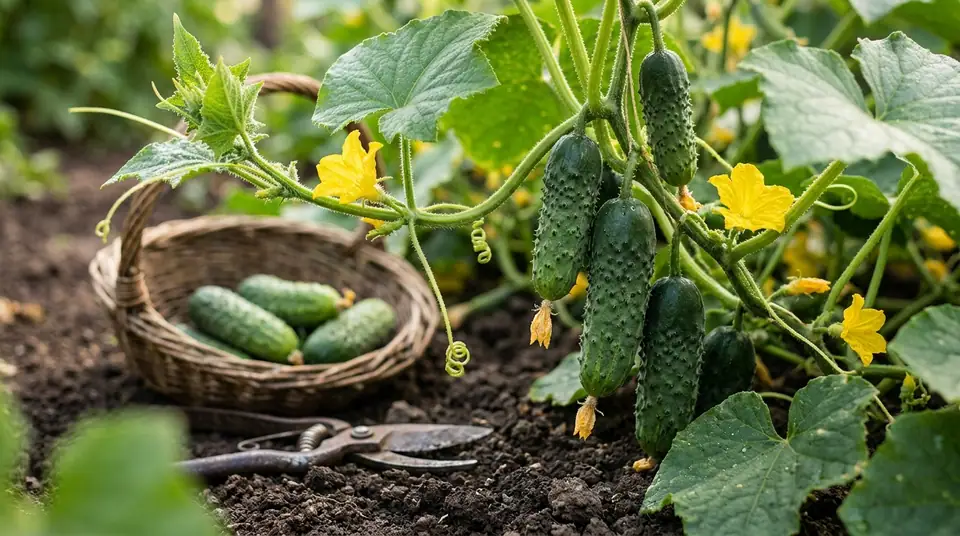
True pickling cucumbers are distinct from slicing types in several key anatomical ways. They typically feature thinner, bumpier skins studded with tiny spines (tuberculate skin), which allow brine to penetrate the flesh evenly during fermentation. Their interior seed cavities are much smaller and denser, minimizing the watery spaces that cause softening.
When selecting the best cultivars for your garden, look for these proven pickling champions:
- 'Boston Pickling': A historic heirloom introduced in 1880, producing heavy yields of 3 to 6-inch blocky green fruits with small seeds and crisp flesh.
- 'Calypso': A powerhouse hybrid with high resistance to powdery mildew and cucumber mosaic virus, yielding uniform, dark green fruits packed tightly with dense flesh.
- 'National Pickling': Bred specifically for the National Pickle Packers Association in 1924, this variety produces dark green, blunt-ended fruits that stay crisp and crunchy even in heavy brine.
- 'Paris Pickling' (also known as 'Parisian'): A French heirloom prized for producing exceptionally crisp, bumpy gherkins when harvested small at 2 to 4 inches.
For those expanding their edible landscape beyond the vegetable patch—perhaps looking to line a property boundary with ornamental security—you might also explore our guide on the 15 Best Trees for Driveways That Won't Crack Concrete to round out your homestead design.
2. Essential Environmental & Care Requirements
Cucumbers are warm-season tender annuals that demand precise environmental conditions to produce firm, stress-free fruit. Water stress or erratic temperatures translate directly into bitter flavors and deformed fruit.
| Parameter | Optimal Condition | Common Mistake | Why It Matters |
|---|---|---|---|
| Soil Temperature | 70°F to 85°F (21°C to 29°C) | Planting too early in cold soil below 60°F (15°C) | Cold soil causes root rot, stunts seedling development, and invites soil-borne pathogens. |
| Soil pH | 6.0 to 6.8 | Allowing soil to swing into high acidity or extreme alkalinity | Imbalanced pH locks out vital micronutrients like calcium, leading to blossom end rot. |
| Sunlight | Full sun (6 to 8+ hours daily) | Shading plants under taller garden structures | Insufficient light drops flower count and reduces sugar accumulation in the fruit. |
| Watering | 1 inch (2.5 cm) of water weekly | Shallow, daily splashes that wet only the topsoil | Deep soaking encourages robust taproot development, preventing watery fruit and bitterness. |
💡 Pro-Tip: To prevent soil-borne fungal spores from splashing onto lower leaves, lay down a thick 3-inch (7.6 cm) layer of clean wheat straw or shredded hardwood bark beneath your cucumber canopy. This keeps developing pickling fruits clean and dry.
3. Step-by-Step Cultivation, Feeding & Propagation
Growing pickling cucumbers successfully requires careful attention to root disturbance and consistent moisture management. Follow this structured protocol for a heavy, crisp harvest.
- Site and Soil Preparation: Select a bed with full sun exposure. Till aged compost and well-rotted manure into the top 8 inches (20 cm) of soil to ensure high organic matter and excellent drainage.
- Direct Sowing: Wait until all danger of frost has passed and soil temperatures consistently exceed 70°F (21°C). Sow seeds 1 inch (2.5 cm) deep, placing 3 to 4 seeds together in groups spaced 12 inches (30 cm) apart in rows 4 feet (1.2 m) apart.
- Thinning: Once seedlings reach 3 inches (7.6 cm) tall and display their first set of true leaves, use clean snips to cut away the weakest seedlings. Leave only the two strongest plants per cluster to prevent root competition.
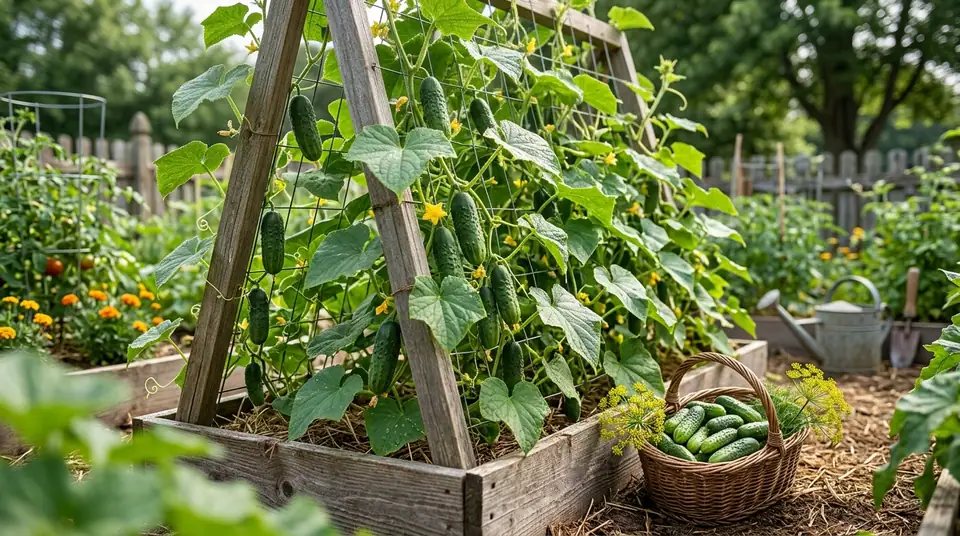
- Trellising (Optional): If growing in tight spaces, install a sturdy A-frame trellis or cattle panel netting. Vertical growth increases airflow, reduces fungal pressure, and yields straighter pickling cucumbers.
- Fertilization and Feeding: Side-dress plants with a balanced organic vegetable fertilizer (such as a 5-10-10 blend) when vines begin to run. Apply a second feeding when the first female flowers open to support continuous fruit set.
- Harvest Timing: Pick your cucumbers daily once they reach the ideal size for your preferred jar style—usually 3 to 4 inches (7.6 to 10 cm) for gherkins and spears. Leaving fruit on the vine too long signals the plant to shut down flower production.
⚠️ Important Caution: Never pull or twist cucumbers off the vine by hand. The brittle vines tear easily, which opens wounds to bacterial wilt and vine borers. Always use sharp garden shears or harvesting scissors.
4. Common Problems, Pests & Troubleshooting
Even with meticulous care, pickling cucumbers face several persistent biological challenges. Diagnosing them early saves your harvest.
- Blossom-End Rot: Fruits turn watery, darken, and rot at the distal end. This is caused by calcium deficiency, usually triggered by irregular watering rather than a true lack of calcium in the soil. Maintain steady moisture levels to ensure proper nutrient uptake.
- Powdery Mildew: A white, powdery fungal coating appears on upper leaf surfaces, reducing photosynthesis and causing premature leaf drop. Prevent this by ensuring proper spacing, and treat early outbreaks with a spray of diluted potassium bicarbonate or organic neem oil. For regional best practices on disease management, consult the University of Minnesota Extension.
- Cucumber Beetles: These yellow-and-black striped or spotted pests chew holes in young leaves and transmit bacterial wilt, which causes sudden vine collapse. Cover young seedlings with floating row covers until flowering begins, then hand-pick beetles at dawn when they are sluggish.
- Bitter Fruit: A high concentration of cucurbitacin compounds makes the fruit unpalatable. This stress response is almost always caused by extreme heat fluctuations or irregular watering cycles. Provide consistent irrigation and afternoon shade cloth in scorching desert climates.
5. Frequently Asked Questions
Can I use regular slicing cucumbers to make dill pickles?
Technically yes, but you will be disappointed with the results. Slicing cultivars like 'Marketmore' have high water content, thicker seeds, and delicate cell walls. When submerged in hot brine or salt solutions, they quickly break down, resulting in mushy pickles rather than crisp ones. Always select dedicated pickling varieties with dense flesh and bumpy, thin skins.
Why are my pickling cucumbers turning yellow and swelling at the stem end?
Yellowing and swollen stem ends are classic signs of over-ripening or irregular moisture distribution during fruit development. If left on the vine past their prime harvesting window, pickling varieties naturally turn yellow, develop hard seeds, and signal the plant to stop producing new blossoms. Harvest your cucumbers every single day during peak season to keep production heavy.
How do I stop my homemade pickles from turning soft and mushy?
Soft pickles are usually caused by three factors: using old cucumbers, leaving the blossom end attached (which contains pectin-destroying enzymes), or using iodized table salt instead of pure pickling salt. Always trim off 1/16 of an inch from the blossom end of each cucumber before canning, use non-iodized canning salt, and process fresh-picked fruits within 24 hours of harvest.
Should I trellis my pickling cucumbers or let them sprawl on the ground?
Both methods work, but trellising offers distinct advantages for pickling quality. Letting vines sprawl on the ground saves vertical space, but ground-contact fruit can develop yellow patches, dirt stains, and fungal infections from damp soil. Trellising keeps the fruit clean, straight, and dry, while significantly increasing air circulation to prevent powdery mildew.
Related Guides
📋 Table of Contents ▼ Click to expand
Tags:
Keep reading
🌿 Related Plants You Might Like

PlantSavvyWorld
Editorial team
PlantSavvyWorld is an independent botanical education project. Articles are drafted with AI assistance, then edited and checked against university extension services, botanical garden collections and other published horticultural sources.