

Prayer Plant
Maranta leuconeura
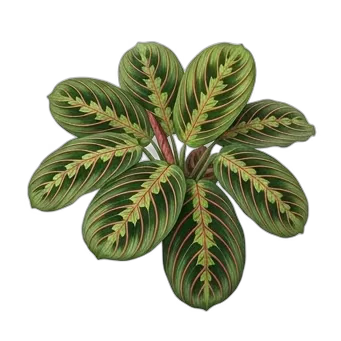
I was on my hands and knees in a humid tropical conservatory outside of Miami when I first watched a Maranta leuconeura shift. It was late afternoon, the filtered sunlight was dipping low, and I heard what sounded like a faint, rustling paper whisper. I looked down to see a cluster of velvety green leaves, adorned with striking red veins, slowly folding themselves upward into an upright, hands-in-prayer posture. That daily kinetic dance—nyctinasty—is the exact reason this botanical marvel has captured indoor gardeners' hearts for generations. Horticultural practice has spent decades analyzing how tropical understory plants adapt to domestic spaces, and few species require as precise a calibration of atmospheric and edaphic conditions as the prayer plant. Let us dive into the science of keeping your Maranta thriving.
1. Botanical Overview & Natural Habitat

Understanding its native ecology is the single most important step in decoding its care. Beneath the dense jungle canopy, the prayer plant receives dappled, filtered sunlight rather than scorching direct rays. The forest floor is rich in decomposing organic matter, creating a warm, damp, and highly porous soil matrix that remains consistently moist without ever becoming waterlogged.
Unlike tree-climbing epiphytes, prayer plants spread via shallow, creeping rhizomes, forming dense mats that rarely exceed 8 to 12 inches (20 to 30 cm) in height, though their trailing stems can extend outward up to 24 inches (60 cm). The leaves are structurally engineered for understory survival: they feature specialized motor organs called pulvini located at the base of the petiole. Driven by turgor pressure changes within these cellular tissues, the leaves raise at dusk and lower at dawn. This movement protects the plant from nocturnal heat loss, sheds excess dew, and maximizes light capture during the tropical day.
For those interested in balancing their indoor jungle with other dynamic, high-impact foliage plants, you might also enjoy exploring our comprehensive The Complete Guide to Coleus Plants: 50+ Varieties, Care, Propagation & Landscaping to expand your color palette.
2. Essential Environmental & Care Requirements
If you want to replicate a Brazilian rainforest floor in your living room, you must pay strict attention to environmental parameters. Deviate too far from these thresholds, and your prayer plant will quickly display crisp, brown leaf margins or yellowing chlorotic lower foliage.
| Parameter | Optimal Condition | Common Mistake | Why It Matters |
|---|---|---|---|
| Light | Bright, indirect light (7,000–10,000 lux) | Direct midday sun | Direct sun scorches delicate leaf pigments and bleaches the signature red or silver venation. |
| Temperature | 65°F to 80°F (18°C to 27°C) | Exposure to drafts below 55°F (13°C) | Cold stress causes cell wall collapse, stem mushiness, and sudden, severe defoliation. |
| Humidity | 60% to 80% relative humidity | Ambient indoor air (30% humidity) | Low humidity triggers rapid tip-burn, curling leaves, and invites spider mite infestations. |
| Watering | Water when top 1 inch (2.5 cm) is dry | Letting soil dry out completely or stay soggy | Inconsistent moisture stresses the shallow root system, leading to root rot or drought shock. |
Soil and Substrate Formulation
Because prayer plant roots are exceptionally fine and shallow—typically inhabiting the top 3 to 4 inches (7.5 to 10 cm) of soil—the growing medium must balance high moisture retention with aggressive aeration. A heavy, compacted potting soil will suffocate the roots.
💡 Pro-Tip: Mix a bespoke substrate using 40% high-grade peat moss or coco coir, 30% perlite or pumice for structural drainage, and 30% organic earthworm castings or orchid bark. This creates the exact spongy, nutrient-dense duff layer found on the floor of the Amazon rainforest.
Watering Quality
Tap water contains dissolved salts, fluoride, and chlorine, all of which accumulate in the soil and cause unsightly brown tips on prayer plant leaves. Whenever possible, use distilled water, reverse osmosis (RO) filtration, or captured rainwater kept at room temperature.
⚠️ Important Caution: Never let your Maranta sit in standing water within a decorative saucer. While they love moisture, stagnant water in the root zone completely cuts off oxygen exchange, rapidly inducing anaerobic root rot caused by Pythium fungi.
For further botanical insights into managing humidity-loving flora with similar structural requirements, take a look at our expert breakdown on the Lipstick Plant (Aeschynanthus Radicans) Complete Care & Bloom Guide.
3. Step-by-Step Cultivation, Feeding & Propagation
Propagating and feeding prayer plants is deeply satisfying when done correctly. Because they spread via natural stem segmentation, division and stem cuttings are exceptionally reliable if timed with their active spring growth flush.
Step-by-Step Propagation via Stem Cuttings
- Select a Healthy Stem: Choose a vigorous, pest-free stem during the active growing season (late spring or early summer). Ensure the stem has at least two robust nodes—the swollen points where leaves attach.
- Make a Clean Cut: Using sterilized pruning shears or a razor blade, cut the stem approximately 0.5 inches (1.2 cm) below the lowest node. Sharp tools prevent crushing the delicate vascular bundles.
- Strip Lower Foliage: Remove the lower leaves closest to the node, leaving only the top two or three leaves intact to minimize transpirational water loss.
- Water or Substrate Rooting: Place the cutting into a vessel of clean, filtered water, ensuring the node is fully submerged while leaves remain above the waterline. Alternatively, plant the node directly into a moist, sterile propagating mix of perlite and peat.
- Maintain High Humidity: Enclose the container or pot in a clear plastic bag or propagation dome to lock in ambient humidity around 80%. Place it in bright, indirect light.
- Transplant Rooted Cuttings: Within 14 to 21 days, healthy white roots measuring 1 to 2 inches (2.5 to 5 cm) will emerge from the nodes. Transplant the cutting into its permanent container using the custom soil blend outlined in Section 2.
Feeding and Fertilization Protocol
Feed your prayer plant lightly during its active growth period from April through September. Dilute a balanced, water-soluble houseplant fertilizer (such as a 10-10-10 or 20-20-20 formulation) to one-quarter strength. Apply this dilute solution every 4 weeks. Cease all fertilization completely between October and March when natural light levels drop and the plant enters a period of semi-dormancy. Over-fertilization quickly leads to salt toxicity, resulting in burned leaf edges and root death.
4. Common Problems, Pests & Troubleshooting
Even with meticulous care, indoor environments present challenges. Diagnosing issues early saves your plant from irreversible decline.
Leaf Issues and Environmental Stress
- Crisp, Brown Leaf Edges: This is the classic symptom of insufficient ambient humidity or chemical buildup from tap water. Increase local humidity using a cold-mist humidifier and flush the soil thoroughly with distilled water every 30 days to leach out accumulated salts.
- Yellowing Lower Leaves: Usually caused by overwatering or soil that remains saturated for too long. Let the top 1.5 inches (3.8 cm) dry out before watering again, and verify that your pot has functional drainage holes.
- Faded Leaf Color or Loss of Markings: Indicates excessive light intensity. Move the plant farther away from the window or provide a sheer curtain to diffuse harsh rays.
- Failure to Fold (Loss of Nyctinasty): If your prayer plant stops moving its leaves at night, it is experiencing severe root stress, over-fertilization, or extreme lack of light. Assess the root zone and adjust environmental inputs immediately.
Pests and Diseases
- Spider Mites (Tetranychus urticae): These microscopic arachnids thrive in warm, dry indoor air. They spin fine webbing on the undersides of leaves and cause stippling (tiny yellow dots). Wipe leaves down with insecticidal soap or neem oil diluted according to product instructions every 7 days for a 3-week cycle.
- Mealybugs (Pseudococcidae): Look for white, cottony masses in the leaf axils and stems. Dab them away individually using a cotton swab dipped in 70% isopropyl alcohol.
- Fungal Leaf Spot: Caused by water lingering on the foliage in cool, stagnant conditions. Always water the soil directly rather than overhead, and ensure good air circulation around the canopy.

5. Frequently Asked Questions
Why are the leaves on my prayer plant turning yellow?
Yellowing leaves on a Maranta leuconeura are most frequently caused by overwatering, which starves the roots of oxygen and induces root rot. It can also be triggered by using hard tap water loaded with excessive fluorides and salts, or by sudden temperature drops below 60°F (15°C). Check your soil moisture down to 2 inches (5 cm) deep and adjust your watering schedule accordingly.
How do I get my prayer plant to look bushy instead of trailing?
Prayer plants naturally grow with a trailing habit as their stems lengthen. To encourage a denser, bushier growth pattern, pinch off or prune the growing tips right above a leaf node every few weeks during the spring and summer. This forces the plant to activate dormant lateral buds, resulting in a fuller, more compact canopy.
Why is my prayer plant not folding up at night?
When a prayer plant stops performing nyctinasty (folding its leaves at night), it is under stress. The most common culprits are root damage from overwatering, severe lack of natural light, or heavy accumulation of fertilizer salts in the soil. Inspect the root system, check your lighting conditions, and flush the soil thoroughly with pure water.
Can prayer plants survive in low-light office environments?
While prayer plants can tolerate lower light levels temporarily, they will not thrive or display vibrant coloration in dark spaces. In deep shade, growth will slow significantly, stems will stretch out weakly, and the striking leaf patterns will fade. For best results, place them within 3 to 5 feet of an east- or north-facing window where they receive bright, indirect illumination.
To deepen your knowledge of how light, temperature, and seasonal shifts impact delicate root systems and plant development across different climates, review our detailed guide on How Deep Do Pepper Plant Roots Go? Pot Size & Substrate Depth Guide. For additional scientific context on tropical plant physiology, you can also reference the Missouri Botanical Garden Plant Finder.
📋 Table of Contents ▼ Click to expand
Tags:





