Written with AI assistance, edited and checked against horticultural sources.
When the air gets cooler and the days shorter, lax watering of the Aeschynanthus radicans hanging in an east-facing window can lead to a significant number of dropped leaves, as even forgiving houseplants have specific needs for blooming. The Lipstick Plant, with its exotic allure and vibrant floral display, is no exception. Many indoor gardeners struggle to coax those iconic red "lipsticks" from their waxy foliage, but achieving consistent blooms is entirely within reach with the right knowledge to ensure the plant not only survives but thrives and flowers prolifically.
1. Botanical Overview & Natural Habitat
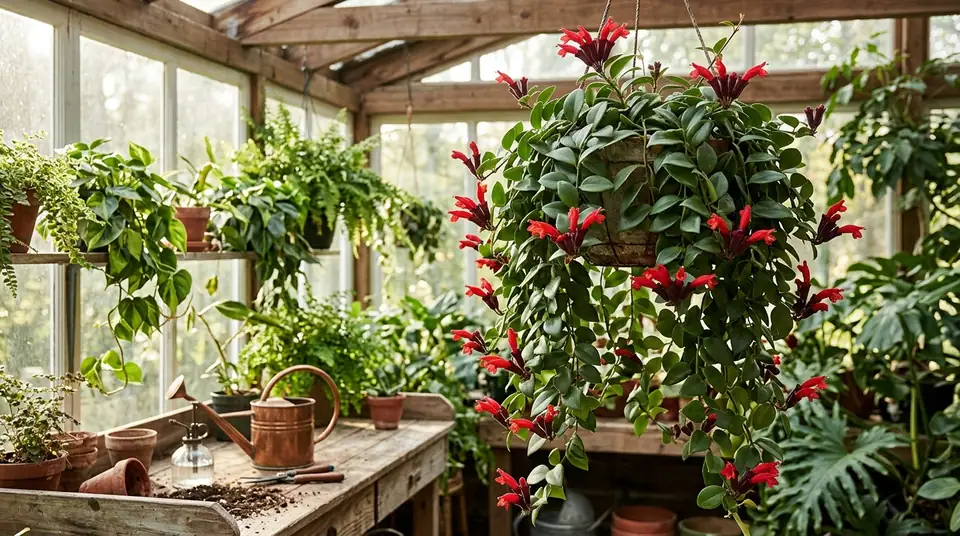
The Lipstick Plant (Aeschynanthus radicans), a member of the Gesneriaceae family, is a true gem for any indoor gardener seeking a touch of the exotic. Native to the humid, tropical rainforests of Southeast Asia and the Malay Peninsula, it's an epiphyte by nature. This means in its natural habitat, you'd typically find it clinging to the bark of trees or nestled in the nooks of branches, benefiting from the dappled light that filters through the dense canopy. Its cascading growth habit makes it exceptionally well-suited for hanging baskets, where its long, trailing stems can cascade gracefully, creating a lush, living curtain.
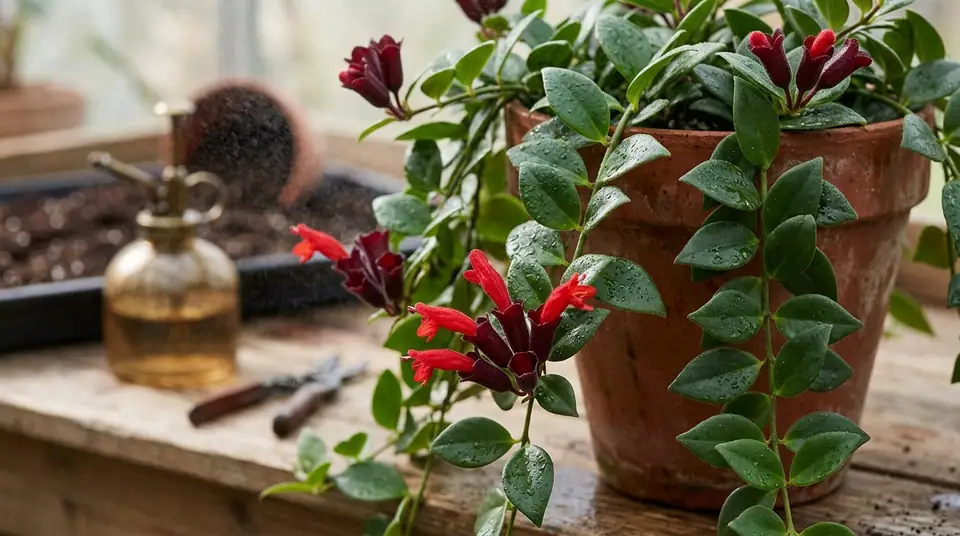
Potted lipstick plant with red blooms and water droplets on its leaves on a workbench
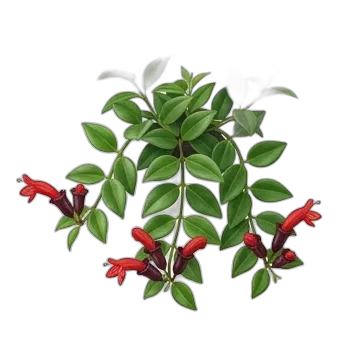
The most striking feature, and the source of its common name, are its vibrant, tubular flowers. These typically emerge from deep, dusky purple calyces, which resemble tiny, elongated pods, and then unfurl into brilliant scarlet-crimson petals. The contrast between the dark, waxy foliage and the fiery blooms is simply breathtaking. Understanding its epiphytic origins is key to mimicking its ideal conditions indoors, as it dictates its need for excellent drainage, good air circulation, and specific light and moisture levels.
2. Essential Environmental & Care Requirements
The success of your Aeschynanthus radicans hinges on meeting its environmental needs. These plants are not overly fussy, but they do have preferences that align with their tropical forest home. Deviating too far from these optimal conditions can lead to common issues like leaf drop, lack of flowering, or pest susceptibility.
Ensures excellent oxygen flow to the epiphytic root zone, preventing root rot.
Light: The Sunshine Secret
As an epiphyte, the Lipstick Plant doesn't thrive in deep shade, nor does it enjoy being scorched by direct sun. The ideal scenario is bright, indirect light. Think of the dappled light that penetrates a forest canopy. An east-facing window is often perfect, providing gentle morning sun, or a south-facing window shielded by a sheer curtain or positioned a few feet away from the glass. Aim for 12 to 14 hours of this quality light per day.
Direct, harsh midday sun, especially during the summer months, can scorch the delicate leaves, leaving unsightly brown or crispy patches. Conversely, a room that is too dim will result in leggy growth, pale foliage, and, most importantly, a distinct lack of flowers. The energy required to produce those vibrant blooms comes directly from photosynthesis, which is fueled by adequate light.
Watering: Finding the Sweet Spot
Watering is where many gardeners stumble. The key is to allow the soil to dry out partially between waterings, rather than keeping it constantly saturated or letting it become bone dry. A good rule of thumb is to check the top 25% to 30% of the soil. If it feels dry to the touch, it's time to water. For most homes, this translates to watering roughly once a week during the growing season (spring and summer) and perhaps every 10-14 days during the cooler, darker months of autumn and winter.
Always use room-temperature water. Cold water can shock the roots, leading to leaf drop. When you water, water thoroughly until you see water draining from the bottom of the pot. Discard any excess water that collects in the saucer after about 30 minutes. This prevents the roots from sitting in stagnant water, which is a fast track to root rot.
Humidity: A Tropical Embrace
Hailing from rainforests, Aeschynanthus radicans absolutely adores humidity. Standard household air, especially during winter when heating systems are in full blast, can be far too dry for this plant. Low humidity causes the leaves to dry out, leading to crispy edges, wilting, and leaf curl.
To boost humidity around your Lipstick Plant, consider several options:
Pebble Tray: Place the pot on a tray filled with pebbles and water. Ensure the bottom of the pot is not sitting directly in the water. As the water evaporates, it creates a microclimate of higher humidity around the plant.
Grouping Plants: Plants release moisture through transpiration. Grouping your Lipstick Plant with other humidity-loving plants can collectively increase the local humidity.
Humidifier: For a more consistent and effective solution, especially in very dry environments, a room humidifier is an excellent investment.
Misting: While temporary, a light misting of the foliage can provide a brief boost. However, be cautious with misting, as it can sometimes encourage fungal issues if the leaves don't dry properly, especially in low-light, poorly ventilated areas. Focus on consistent environmental humidity rather than solely relying on misting.
Temperature: Avoiding the Chill
Lipstick Plants thrive in temperatures similar to our comfortable indoor climate. They prefer the range of 65°F to 85°F (18°C–29°C). What they absolutely despise are cold drafts and sudden temperature drops. Keep them away from open windows during cool weather, air conditioning vents, and drafty doorways. A significant drop in temperature, particularly below 60°F (15°C), can trigger "bud blast," where developing flower buds shrivel and drop before they have a chance to open. Consistency is key for sustained growth and flowering.
Soil: The Foundation for Epiphytic Roots
Because of its epiphytic nature, the Lipstick Plant requires a soil mix that is incredibly well-draining and airy. It needs to mimic the conditions it would find clinging to tree bark – plenty of oxygen for its roots and no prolonged sogginess. A standard, dense potting soil will quickly lead to compacted roots and potential rot.
A good starting point is an orchid mix, which typically contains bark chips, perlite, and coco coir. You can also create your own by combining equal parts of peat moss (or coco coir), perlite, and orchid bark. Some growers even add a small amount of charcoal to help keep the mix fresh. The goal is a substrate that allows water to drain freely and air to circulate throughout the root ball.
Achieving those stunning blooms and healthy, cascading foliage involves a proactive approach to care. This section details the specific steps for nurturing your Lipstick Plant, from providing the right nutrients to propagating new plants from cuttings.
Feeding for Floral Fireworks
During the active growing season, which typically spans from spring through summer, your Lipstick Plant will benefit from regular feeding. However, it's crucial to feed it correctly to encourage blooms.
Choose the Right Fertilizer: Opt for an organic bloom booster fertilizer. These are formulated with a higher middle number in their NPK ratio, indicating a greater proportion of phosphorus, which is essential for flower development. A ratio like 5-10-5 or similar is ideal.
Dilute Adequately: It’s always better to under-fertilize than over-fertilize. Use your chosen bloom booster at half the strength recommended on the packaging.
Frequency is Key: Feed your plant every two weeks during the spring and summer months. This consistent nourishment provides the plant with the energy reserves it needs to produce and sustain its flowers.
Reduce in Winter: In the autumn and winter, when light levels decrease and growth slows, significantly reduce or cease fertilization. A feeding once every 2-3 months with a balanced, diluted fertilizer is usually sufficient, if at all. Over-fertilizing in low light conditions can lead to salt buildup in the soil and root damage.
💡 Pro-Tip: For an extra boost, consider using a liquid kelp or fish emulsion fertilizer diluted to half strength every third feeding. These organic options provide a broad spectrum of micronutrients that contribute to overall plant health and can indirectly support robust flowering.
Step-by-Step Propagation Guide from Stem Cuttings
Propagating the Lipstick Plant is incredibly straightforward and a rewarding way to expand your collection or share with friends. Stem cuttings are the most common and successful method.
Take 4-6 Inch Cuttings: Using clean, sharp pruning shears or scissors, snip healthy stem tips from a mature, thriving plant. Aim for cuttings that are approximately 4 to 6 inches (10-15 cm) in length and have at least 2 to 3 sets of leaf nodes along the stem. It’s best to take cuttings in the spring or early summer when the plant is actively growing.
Prepare the Cuttings: Gently remove the leaves from the lower half of each cutting. This typically means stripping the lowest pair of leaves and any others that would be submerged in the rooting medium. Exposing the nodes where the leaves were attached encourages the development of new roots.
Rooting Medium Options: You have a couple of excellent choices for rooting your cuttings:
Moist Sphagnum Moss: Moisten a handful of long-fibered sphagnum moss until it's damp but not waterlogged. Squeeze out any excess water.
Perlite: Use coarse horticultural perlite, which provides excellent aeration and drainage.
Water: Some gardeners have success rooting Aeschynanthus cuttings directly in a glass of water, changing the water every few days. However, this method can sometimes lead to weaker root systems or transplant shock.
Introduce Rooting Hormone (Optional but Recommended): Dip the cut end of each prepared stem cutting into a rooting hormone powder or gel. This stimulates faster and more robust root development. Tap off any excess.
Plant the Cuttings: Insert the cut end of each cutting about 1 inch (2.5 cm) deep into your chosen moist rooting medium (sphagnum moss or perlite). If using sphagnum moss, you can gently pack it around the base of the cutting. If using perlite, ensure it's lightly firmed around the stem.
Create a Humid Environment: This is crucial for successful rooting. Enclose the pot or container holding the cuttings within a clear plastic bag or a humidity dome. Ensure the bag is not tightly sealed around the pot; allow for some air circulation to prevent mold. Place the cuttings in a warm location with bright, indirect light, ideally around 75°F (24°C).
Monitor and Maintain: Keep the rooting medium consistently moist but not soggy. Check for roots after about 3 to 4 weeks. You'll know the cutting has rooted when you feel slight resistance when gently tugging on it, or when new leaf growth appears. Once well-rooted, you can transplant them into their own small pots with a well-draining potting mix, similar to what an adult plant would require.
4. Common Problems, Pests & Troubleshooting
Even with the best intentions, you might encounter a few hiccups along the way. Understanding common issues and their solutions will help you keep your Lipstick Plant looking its best.
Leaf Drop: This is perhaps the most common complaint.
Causes: Sudden temperature drops, cold drafts, overwatering leading to root rot, or severe underwatering.
Solutions: Ensure consistent temperatures above 65°F (18°C), avoid placing the plant near drafts or vents, and practice the "check the soil moisture" watering method. If root rot is suspected (indicated by mushy stems or roots and a foul odor), repot into fresh, well-draining soil after trimming away rotted roots.
Yellowing Leaves:
Causes: Can be due to overwatering (roots are suffocating), underwatering (plant is stressed), or insufficient light.
Solutions: Adjust watering habits. If the soil is consistently wet, reduce watering frequency. If it's bone dry, increase it. Ensure the plant receives adequate bright, indirect light.
Lack of Blooms:
Causes: Insufficient light is the primary culprit. Other factors include lack of nutrients, or the plant being too young.
Solutions: Move the plant to a brighter location with filtered indirect light. Ensure you are fertilizing with a bloom-boosting fertilizer during the spring and summer growing season. Young plants may take a year or two to mature enough to bloom.
Pests: While generally resistant, Lipstick Plants can occasionally be targeted by common houseplant pests.
Mealybugs: These white, cottony insects often hide in leaf axils and on new growth. They can be wiped off with a cotton swab dipped in rubbing alcohol (70% isopropyl alcohol), or treated with insecticidal soap.
Spider Mites: Tiny, spider-like pests that thrive in dry conditions. They spin fine webs and cause stippling on leaves. Increase humidity, wash the plant regularly, and use insecticidal soap or neem oil if infestations are severe.
Aphids: Small, soft-bodied insects that can appear in green, black, or brown. They cluster on new growth and the undersides of leaves. Blast them off with water, or use insecticidal soap.
⚠️ Important Caution: Before applying any pesticide, always test it on a small, inconspicuous part of the plant and wait 24-48 hours to ensure there's no adverse reaction. When using rubbing alcohol, dilute it with water if you are concerned about plant sensitivity.
A hanging lipstick plant in full bloom with vibrant red flowers inside a greenhouse
5. Frequently Asked Questions
Why are the leaves on my Lipstick Plant turning yellow and falling off?
Yellowing and subsequent leaf drop are usually a sign of stress, most commonly caused by either overwatering or underwatering. If the soil is constantly wet, the roots can't breathe, leading to rot and yellowing leaves. Conversely, if the soil dries out completely for extended periods, the plant will shed leaves to conserve moisture. Ensure you are watering only when the top 25-30% of the soil is dry and that your pot has adequate drainage. Also, check that the plant isn't exposed to cold drafts, as this can also trigger leaf loss.
My Lipstick Plant has no flowers. What am I doing wrong?
The most frequent reason for a lack of blooms on Aeschynanthus radicans is insufficient light. These plants need bright, filtered indirect light for 12-14 hours a day to set flower buds. If your plant is in a dim corner, move it closer to an east or south-facing window (with a sheer curtain if the sun is too direct). Additionally, ensure you are feeding it a balanced fertilizer with a higher middle number (phosphorus) during the spring and summer growing season every two weeks, diluted to half strength.
How often should I water my Lipstick Plant in winter?
In winter, growth slows down significantly due to shorter days and lower light levels. This means your Lipstick Plant will require less water. Instead of watering weekly, you'll likely find yourself watering every 10 to 14 days, or even less frequently, depending on your home's humidity and temperature. Always stick to the rule of checking if the top 25-30% of the soil is dry before watering. It's far better to err on the side of slightly too dry than too wet during winter to prevent root rot.
Is the Lipstick Plant poisonous to my pets?
No, the Aeschynanthus radicans is considered non-toxic to cats, dogs, and humans, according to the ASPCA. This makes it a fantastic choice for pet owners who want to enjoy beautiful, cascading foliage and vibrant blooms without worrying about accidental ingestion.
When and how should I repot my Lipstick Plant?
Lipstick Plants actually prefer to be slightly root-bound; this condition can often encourage blooming. You should only need to repot them every 2 to 3 years, typically in early spring before the main growing season begins. When you do repot, choose a container that is only 1 to 2 inches wider in diameter than the current pot. Use a very well-draining potting mix, such as an orchid mix or a blend of peat moss, perlite, and bark. Gently remove the plant from its old pot, inspect the roots (trimming any dead or mushy ones), and place it in the new pot with fresh soil.
PlantSavvyWorld is an independent botanical education project. Articles are drafted with AI assistance, then edited and checked against university extension services, botanical garden collections and other published horticultural sources.