
Panda Plant
Kalanchoe tomentosa
I stood in my glasshouse last November, watching a gardener gently run her thumb across the velvety leaf of a newly potted succulent, gasping slightly at how closely it mimicked the plush fur of a living animal. That tactile, almost irresistible softness is always the giveaway. We were potting up a collection of Kalanchoe tomentosa, universally known as the Panda Plant, and I had to remind her—as I remind every landscape design gardener who falls in love with its furry leaves—that this architectural beauty is far more than a novelty; it is a finely tuned survival machine forged in the arid crucible of southern Madagascar.

1. Botanical Overview & Natural Habitat
The Panda Plant (Kalanchoe tomentosa) belongs to the massive Crassulaceae family, sharing a lineage with jade plants, hens and chicks, and echeverias. Native primarily to the rocky, arid outcroppings of Madagascar, this perennial succulent has evolved specific morphological adaptations to survive intense solar radiation, prolonged drought, and nutrient-poor soils.
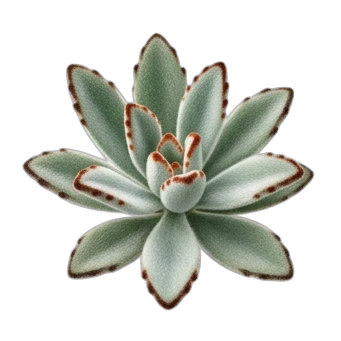
In its native habitat, Kalanchoe tomentosa experiences blistering daytime temperatures often exceeding 90°F (32°C) alongside sudden, sharp drops at night. To survive this thermal amplitude, the plant has developed a dense covering of modified trichomes—specialized epidermal hairs—that give the foliage its signature felted texture and silvery-gray appearance. These microscopic hairs act as a natural solar shade cloth, reflecting harsh ultraviolet rays, diffusing intense light, and trapping a microscopic layer of humid air directly against the leaf surface to drastically reduce transpirational water loss.
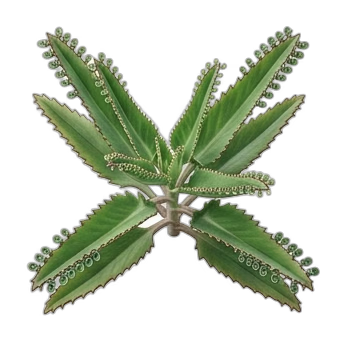
The leaves are thick, succulent, oblong, and lanceolate, typically measuring between 2.0 to 3.0 inches (5 to 7.5 cm) in length and 0.5 to 1.0 inches (1.3 to 2.5 cm) in width. Under optimal lighting conditions, the margins of these leaves are punctuated by distinct, dark brown to jet-black markings, giving the foliage a strikingly lined appearance that resembles the coloration of a feline or, as common nomenclature suggests, a panda.
As the plant matures over several years, it develops an upright, branched, shrubby growth habit. Indoor specimens frequently reach heights of 12 to 24 inches (30 to 60 cm), while specimens cultivated in frost-free Mediterranean climates outdoors can stretch up to 30 inches (76 cm) tall with a similarly robust spread. While it is predominantly grown for its mesmerizing foliage, mature plants grown under optimal photoperiods may occasionally produce tubular, bell-shaped flowers covered in a fine downy layer, typically colored in shades of brownish-purple, though indoor blooms are rare.
2. Essential Environmental & Care Requirements
Understanding the native microclimate of Kalanchoe tomentosa dictates how we must cultivate it in our homes and gardens. Because it hails from well-draining, rocky soils under blazing equatorial light, your primary design goal is to replicate these exact parameters: maximum light, minimal retained moisture, and strict avoidance of damp conditions.
Light
Panda Plants require intense light to maintain their compact growth structure and deep, contrasting leaf margins. Position your plant in a south-facing or west-facing window where it will receive a minimum of 6 hours of direct sunlight daily. If you are growing indoors under lower light conditions, the plant will quickly exhibit etiolation—stretching out, losing its dense form, and turning an anemic, pale green as the trichomes thin out. For spaces lacking natural solar exposure, supplement with a full-spectrum LED grow light positioned 8 to 12 inches (20 to 30 cm) above the foliage for 12 to 14 hours daily.
Temperature and Humidity
True to their arid origins, Panda Plants thrive in ambient household temperatures ranging from 65°F to 85°F (18°C to 29°C) during the active growing season. They possess zero frost tolerance; exposure to temperatures dropping below 35°F (1.6°C) will cause the cellular walls within the succulent leaves to rupture, turning the tissue into a translucent, mushy mess. Keep them safely away from drafty windows in winter and direct HVAC vents. Unlike tropical foliage plants that demand misting and high humidity, Panda Plants prefer dry air. Relative humidity levels between 30% and 50% are ideal.
⚠️ Important Caution: Never mist the leaves of a Panda Plant. The dense felt of trichomes acts like a sponge, trapping water droplets against the epidermal layer. Trapped moisture combined with stagnant indoor air is a primary trigger for fungal leaf spot and stem rot.
Substrate and Potting
Soil composition is the single most critical factor in preventing root rot. You must use a specialized, hyper-porous potting mix designed specifically for cacti and succulents. A standard commercial potting soil will retain moisture far too long, suffocating the root system.
To create an optimal custom blend at home, combine:
- 50% high-quality, coarse-grade cactus and succulent soil
- 25% inorganic grit such as pumice, horticultural perlite, or chicken grit (granular size 1/8 to 1/4 inch)
- 25% coarse horticultural sand or akadama
Ensure that whatever container you choose—whether unglazed terracotta, ceramic, or concrete—features at least one unobstructed drainage hole at the base. Terracotta is exceptionally beneficial because its porous clay walls allow the root zone and surrounding soil substrate to breathe and dry out at an accelerated rate.
| Parameter | Optimal Condition | Common Mistake | Why It Matters |
|---|---|---|---|
| Light | 6+ hours direct sunlight daily | Placing in low-light interior corners | Causes etiolation (stretching), fading of leaf margins, and loss of velvety trichomes. |
| Watering | Complete dry-down between waterings | Frequent, shallow sips on a schedule | Causes root suffocation, stem rot, and fungal collapse of lower leaves. |
| Soil pH | 6.0 to 7.5 (Slightly acidic to neutral) | Using heavy, organic-rich garden loam | Prevents proper oxygen exchange at the roots and locks out essential micronutrients. |
| Container | Breathable pot with drainage hole | Using glazed pots without drainage | Traps perched water tables at the base of the pot, causing fatal basal rot. |
3. Step-by-Step Cultivation, Feeding & Propagation
Mastering the lifecycle of the Panda Plant involves understanding its seasonal rhythms. It experiences active vegetative growth during the spring and summer months, followed by a semi-dormant resting phase during the shortening days of late autumn and winter. Adjusting your care routine to match these cycles ensures long-term vitality.
Watering Protocol (The Soak-and-Dry Method)
Never water your Panda Plant on a strict calendar schedule (e.g., "every Tuesday"). Instead, rely on the state of the soil and the turgidity of the leaves.
- Insert a wooden chopstick or moisture meter 2.0 to 3.0 inches (5 to 7.5 cm) down into the pot substrate.
- Pull it out; if any soil particles adhere to the wood or if it feels cool and damp, do not water.
- Wait until the soil is completely bone-dry throughout the entire depth of the container.
- When dry, take the pot to a sink and saturate the soil thoroughly until water streams freely out of the drainage hole. Allow all excess moisture to drain away completely before returning the plant to its saucer.
Feeding and Fertilization
Because Kalanchoe tomentosa originates from nutrient-poor, rocky environments, its nutritional requirements are minimal. Over-fertilizing results in rapid, weak, succulent growth that is highly susceptible to pest infestations and structural collapse.
- Feed only twice a year: once in early spring as new growth emerges, and once in mid-summer.
- Use a balanced, water-soluble cactus and succulent fertilizer diluted to one-quarter of the manufacturer's recommended strength.
- Never fertilize a dry plant or during its winter dormancy phase; doing so will chemically burn the delicate root hairs.
Step-by-Step Propagation Protocol
Propagating Panda Plants is remarkably straightforward thanks to the plant's natural cellular capacity for adventitious root development. Leaf and stem cuttings take readily during the warm spring months when metabolic activity peaks.
- Select Plant Material: Choose a firm, healthy, undamaged leaf from the middle or lower section of the stem, or take a 3.0 to 4.0-inch (7.5 to 10 cm) stem tip cutting using a sharp, sterilized razor blade or pruning shears.
- Execute a Clean Cut: Ensure your cutting tool is sanitized with 70% isopropyl alcohol to prevent the introduction of pathogens. Make a clean, straight cut across the stem or gently wiggle a leaf back and forth until it releases cleanly from the main stem, ensuring the entire leaf petiole remains intact.
- Calus the Wound: Place the harvested leaves or stem cuttings flat on a clean, dry paper towel in a warm, brightly lit location out of direct sunlight. Allow them to sit undisturbed for 3 to 7 days until the cut ends form a hard, dry, cork-like callus. This protective seal prevents fungal pathogens from entering the plant tissue during rooting.
- Prepare the Propagation Bed: Fill a shallow tray or small pots with a pre-moistened, sterile mix consisting of 50% perlite and 50% cactus soil.
- Set the Cuttings: Lay leaf cuttings flat on top of the soil surface, pressing the callused end very lightly into the medium. For stem cuttings, insert the callused stem base 1.0 inch (2.5 cm) deep into the substrate.
- Manage Moisture and Roots: Mist the soil surface lightly only when it is completely dry. Within 14 to 28 days, tiny pinkish-white roots and miniature rosette offsets will emerge from the callused bases. Once these new root systems are established and measure 0.5 inches (1.3 cm) long, gently pot them up into individual containers using standard succulent soil.
💡 Pro-Tip: When propagating from leaves, resist the urge to bury the leaf blade. Burying the leaf traps moisture against the surface and causes it to rot before it ever has a chance to push out roots. Always let gravity and surface contact do the work while you keep the environment dry and warm.
For those interested in expanding their indoor and outdoor horticultural palette with similarly resilient, texture-driven species, I frequently recommend pairing your succulents with flowering tropicals or architectural accents. Explore my detailed care breakdowns for the striking Lipstick Plant (Aeschynanthus Radicans) Complete Care & Bloom Guide and the wildly colorful The Complete Guide to Coleus Plants: 50+ Varieties, Care, Propagation & Landscaping to master contrasting foliage textures in your design work.
4. Common Problems, Pests & Troubleshooting
Even with the best intentions, environmental imbalances or pest incursions can occur. Because Panda Plants communicate their stress clearly through visible physiological changes, learning to read these symptoms allows you to intervene before minor issues become fatal.
Rot and Overwatering Symptoms
The most common killer of Kalanchoe tomentosa is root rot, triggered by chronic overwatering or heavy, poorly draining soil.
- Symptoms: Lower leaves turn translucent, yellow, and mushy to the touch. The main stem may darken, soften, or turn black at the soil line.
- Remedy: Immediately unpot the plant, inspect the root system, and use sterile shears to trim away all brown, soft, or rotting roots back to firm, white tissue. Dust the remaining healthy roots with horticultural sulfur or cinnamon powder as a natural fungicide, allow the plant to bare-root dry for 48 hours, and repot into fresh, dry, porous succulent mix. Cease watering for two weeks to allow the plant to recover.
Etiolation and Weak Stem Growth
- Symptoms: Stems stretch excessively upward with long, pale internodes, leaves become smaller, farther apart, and the distinct brown coloration on the leaf tips fades entirely.
- Remedy: This is an unmistakable cry for more light. Gradually transition the plant to a sunnier location (or increase artificial lighting). Because stretched stems cannot revert to a compact form, you can prune the top back down in spring to encourage branching, and propagate the severed top cutting.
Pest Infestations
While the dense trichomes provide some physical deterrent, Panda Plants can occasionally fall victim to specific sap-sucking insects, most notably mealybugs and scale.
- Mealybugs: These pests look like small, cottony white masses hiding in the tight crevices where leaves attach to the stem. They feed on plant sap, weakening the specimen and leaving behind sticky honeydew.
- Scale: Appears as small, immobile, brown, or brownish-yellow raised bumps along the stems and undersides of leaves.
- Remedy: Isolate the affected plant immediately. Dip a cotton swab into 70% isopropyl alcohol and dab it directly onto visible mealybugs or scale insects to dissolve their protective waxy coatings. For severe infestations, spray the entire plant thoroughly with insecticidal soap or horticultural neem oil, ensuring you reach all leaf axils. Repeat treatment every 7 to 10 days for three cycles to break the pest reproductive lifecycle.

5. Frequently Asked Questions
Why is my Panda Plant turning yellow and dropping lower leaves?
Natural lower leaf drop is a normal part of the plant's aging process as older foliage at the base dries up and sheds to fuel upward stem growth. However, if multiple leaves are turning yellow, translucent, and soft simultaneously, you are dealing with root rot caused by overwatering or compacted soil. Allow the soil to dry out completely between waterings, and ensure your pot features active drainage holes. For broader insights on managing moisture and substrate depths across different plant families, review my analysis on How Deep Do Pepper Plant Roots Go? Pot Size & Substrate Depth Guide.
Is the Panda Plant toxic to cats and dogs?
Yes, according to the ASPCA Toxic and Non-Toxic Plant List, Kalanchoe tomentosa contains cardiac glycosides (specifically bufadienolides). Ingestion by domestic pets such as cats, dogs, or horses can result in clinical symptoms including excessive drooling, vomiting, diarrhea, lethargy, and in severe cases, abnormal heart rhythms. Keep your Panda Plant elevated on high shelves or in hanging planters well out of reach of curious pets.
How do I get my Panda Plant to develop darker brown leaf tips?
The iconic dark chocolate-brown margins are directly tied to environmental stress factors, specifically high-intensity light exposure and moderate drought stress. If your plant is placed in a bright, south-facing window where it receives unfiltered, direct sunlight for at least 6 hours a day, the plant responds by producing protective pigments (anthocyanins) along the leaf edges, intensifying that coloration. Indoor plants kept in lower light will retain plain green or silver tips.
Can I grow a Panda Plant outdoors in my garden?
You can successfully cultivate Kalanchoe tomentosa outdoors year-round only if you reside within USDA Hardiness Zones 10 through 12, where temperatures never dip below freezing. In cooler temperate zones, you can move your potted Panda Plant outdoors onto a sunny patio or balcony during the warm summer months (when nighttime lows consistently remain above 50°F / 10°C), but you must bring it back indoors before the first autumn frost threatens your region.
📋 Table of Contents ▼ Click to expand
Tags: