

Flapjack Plant
Kalanchoe luciae
1. Botanical Overview & Natural Habitat

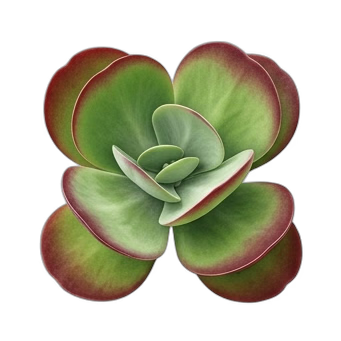
Botanically, Kalanchoe luciae forms a robust basal rosette of thick, obovate (paddle-shaped) leaves that overlap tightly. These leaves typically measure between 4 to 6 inches (10 to 15 cm) in length and up to 3 inches (7.5 cm) in width. The signature feature of the plant is its powdery, chalky white epicuticular wax—known as farina—which coats the green epidermis. When exposed to high ultraviolet light and cool night temperatures (typically dropping below 55°F / 13°C), the edges of these paddle leaves flush a brilliant, fiery crimson red.
Unlike many standard houseplants that require constant humidity and indirect light, the Flapjack Plant thrives in harsh, exposed conditions. If you enjoy experimenting with contrasting textures in interior or exterior garden design, its bold geometric form pairs wonderfully when contrasted with trailing specimens like the Lipstick Plant (Aeschynanthus Radicans) Complete Care & Bloom Guide, which prefers shadier, more humid environments.
After several years of vegetative growth—usually between 3 to 5 years—a mature Kalanchoe luciae will initiate a terminal inflorescence, sending up a robust central spike reaching heights of 3 to 4 feet (90 to 120 cm). This spike produces tubular, greenish-yellow, sweetly scented flowers. Because it is monocarpic, the main rosette that flowers will die back after seed production, but the plant almost always leaves behind basal offsets (pups) to continue its lineage. For broader landscape design inspiration involving architectural foliage, you can also explore our guide on The Complete Guide to Coleus Plants: 50+ Varieties, Care, Propagation & Landscaping to layer colors effectively.
2. Essential Environmental & Care Requirements
Successfully cultivating the Flapjack Plant requires mimicking its native African hillside environment. Understanding the precise tolerances of Kalanchoe luciae ensures vibrant coloration and prevents root rot.
| Parameter | Optimal Condition | Common Mistake | Why It Matters |
|---|---|---|---|
| Light | 6+ hours of direct sun daily | Low-light indoor placement | Causes etiolation, loss of farina, and green-only leaves |
| Soil Mix | Gritty, fast-draining cactus mix | Standard potting soil with peat | Retains moisture too long, causing stem and root rot |
| Watering | Soak-and-dry method | Frequent, shallow sips | Rots shallow roots and strips protective farina |
| Temperature | 65°F–85°F (18°C–29°C) | Freezing conditions below 30°F (-1°C) | Freezes water inside cells, causing structural collapse |
Light and Exposure
To achieve the striking red margins that make the Flapjack Plant famous, it demands maximum light exposure. Place it in a south-facing window indoors, or in a full-sun location outdoors where it receives at least 6 hours of direct sunlight daily. In deep shade, the leaves turn an uninspired pale green, stretch apart (etiolation), and lose their protective white farina.
Substrate and Potting Depth
The root system of Kalanchoe luciae is relatively shallow and spreading, much like the root habits discussed in our analysis of How Deep Do Pepper Plant Roots Go? Pot Size & Substrate Depth Guide. Plant your Flapjack in a container that is only slightly wider than the root ball, using an ultra-porous blend of 50% standard cactus soil, 30% perlite or pumice, and 20% coarse horticultural sand. Terracotta pots are strongly recommended because their porous clay walls allow the root zone to dry out rapidly between waterings.
Watering Protocol
Water your Flapjack Plant thoroughly only when the potting medium is 100% dry down to the bottom of the container. Pour water directly onto the soil substrate, avoiding the center of the rosette where moisture can sit and invite fungal pathogens.
⚠️ Important Caution: Never mist the leaves of a Flapjack Plant. Misting washes away the farina—the plant's natural sunscreen and moisture barrier—leaving the delicate foliage vulnerable to sunburn and pest attack.
3. Step-by-Step Cultivation, Feeding & Propagation
Propagation of Kalanchoe luciae is remarkably straightforward if you utilize its natural inclination to produce offsets or take leaf cuttings. Follow this sequential protocol for successful propagation:
- Select a Healthy Parent Plant: Identify a mature, disease-free Flapjack Plant that has produced basal offsets (pups) measuring at least 2 inches (5 cm) in diameter, or select a firm, unblemished lower leaf from the main rosette.
- Sanitize Your Tools: Wipe down a sharp utility knife or pair of horticultural shears with isopropyl alcohol (70% concentration) to prevent transferring bacterial or fungal pathogens.
- Harvest the Cutting: If taking an offset, gently unpot the plant and slice the offset away from the main stem, ensuring a small portion of clean stem tissue remains attached. If taking a leaf cutting, gently wiggle the leaf horizontally until it snaps cleanly away from the stem without tearing the base.
- Cure the Wound: Place the harvested offset or leaf in a warm, dry, shaded location for 4 to 7 days. This allows a protective callus to form over the cut surface, preventing pathogens from entering the plant tissue when exposed to moisture.
- Prepare the Propagation Medium: Fill a shallow nursery flat or small pot with a dry, sterile cactus and succulent mix.
- Planting: Lay leaf cuttings flat on top of the soil surface, or press the callused base of the offset approximately 0.5 inches (1.25 cm) deep into the substrate.
- Initial Care: Keep the medium completely dry for the first 14 days. Begin misting the soil lightly every 3 to 4 days only after tiny pink roots begin to emerge from the base of the cutting or offset.
- Transplanting: Once the new plantlet has developed a robust root system and the original mother leaf shrivels away (usually within 60 to 90 days), pot it up into an individual 4-inch (10-cm) container using your standard gritty succulent mix.
Fertilization
Kalanchoe luciae is adapted to nutrient-poor soils and requires very little feeding. Apply a balanced, water-soluble cactus fertilizer diluted to one-quarter strength precisely once in early spring and once in mid-summer. Avoid high-nitrogen fertilizers, which cause weak, rapid growth and make the plant structurally unstable. For academic insights into plant nutrition and specialized physiological traits, refer to the Royal Botanic Gardens, Kew.
4. Common Problems, Pests & Troubleshooting
Even with meticulous care, environmental shifts or pest introductions can impact your Flapjack Plant. Quick identification is key to effective remediation.
Root Rot
Root rot is the single greatest threat to Kalanchoe luciae. It is caused by overwatering or dense, moisture-retentive soil that suffocates the roots.
- Symptoms: Lower leaves turn translucent yellow, soft, and mushy; the base of the stem turns black or brown.
- Remediation: Unpot the plant immediately. Use a sterile blade to slice away all decayed, brown roots and mushy stem tissue down to healthy, firm white tissue. Dust the cuts with sulfur powder or cinnamon as a natural fungicide, allow the plant to dry bare-root for 5 to 7 days, and repot into fresh, dry, gritty substrate. Do not water for 14 days post-repotting.
Mealybugs and Scale
These sap-sucking insects love hiding between the tightly overlapping leaf joints of the basal rosette.
- Symptoms: White, cottony masses in the leaf axils or small, brown, immobile bumps along the stems. Left unchecked, they cause distorted leaf growth and general plant decline.
- Remediation: Dip a cotton swab into 70% isopropyl alcohol and dab it directly onto every visible pest to dissolve their protective waxy coatings. For severe infestations, spray the entire plant thoroughly with horticultural insecticidal soap or neem oil, ensuring treatment takes place out of direct sunlight to prevent leaf scorch.
💡 Pro-Tip: If your indoor Flapjack Plant begins losing its brilliant red leaf margins during the winter months, supplement its light schedule with a full-spectrum LED grow light positioned 6 to 8 inches (15 to 20 cm) above the rosette for 12 hours a day. The combination of intense light and cooler night indoor temperatures near a drafty window will quickly restore that stunning crimson flush.

5. Frequently Asked Questions
Why is my flapjack plant turning green and losing its red edges?
The red margins on a Flapjack Plant are a stress response triggered by intense ultraviolet light and cool temperatures. If your plant is turning completely green, it is not receiving enough direct sunlight. Move the plant to a location where it gets at least 6 hours of direct sun daily, or place it under a high-intensity grow light.
How often should I water a flapjack plant indoors?
There is no fixed calendar schedule for watering succulents. Instead, use the soak-and-dry method. Check the soil depth with a wooden skewer; only water when the potting mix is completely dry from top to bottom. Indoors, this typically translates to every 14 to 21 days in the summer and every 30 to 45 days in the winter.
Will my flapjack plant die after it blooms?
Yes. Kalanchoe luciae is a monocarpic species, meaning the individual rosette that produces the tall central flower spike will die back after flowering and setting seed. However, mature plants almost always produce multiple offsets (pups) around their base prior to flowering, ensuring the life of the organism continues.
Can I grow a flapjack plant outdoors year-round?
You can grow Kalanchoe luciae outdoors year-round only if you live in USDA Hardiness Zones 9 through 11. If temperatures in your region drop below 30°F (-1°C), the water inside the plant's cellular walls will freeze and rupture, causing rapid collapse. In colder climates, grow your Flapjack in a container that can be easily moved indoors before the first autumn frost.
📋 Table of Contents ▼ Click to expand
Tags:





