Aluminum Plant
Pilea cadierei
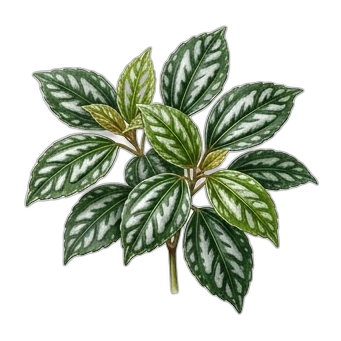
The Pilea cadierei often suffers when its metallic leaves curl at the edges from dry air and a lack of dappled light, yet its stems still hold their bounce. Horticultural practice keeps the Aluminum Plant as a steadfast favorite because its silver-splashed foliage offers a masterclass in natural contrast, catching indoor light like polished metal. To master this tropical understory gem, proper care and propagation of Pilea cadierei require attention to its specific needs.
1. Botanical Overview & Natural Habitat

Morphologically, Pilea cadierei is immediately identifiable by its oblong to elliptic leaves, which typically measure between 2.0 to 3.0 inches (5 to 8 cm) in length. The defining characteristic is the striking, raised, silvery-white patches between the deep green main veins, creating a quilted, metallic appearance that earned the species its common name. The plant exhibits a naturally upright, branching habit when young, but as it matures beyond 12 inches (30 cm) in height, the stems tend to become leggy and sprawling.
To understand its growth requirements, we can look to its evolutionary adaptations. The silvery patches are not merely aesthetic; they are heavily modified epidermal cells that scatter intense light flecks filtering through the forest canopy, preventing photo-inhibition while optimizing photosynthesis in dim light. Similarly, its thin, succulent-like stems store minimal moisture, which helps it survive brief, localized dry spells in the jungle floor litter, though it fundamentally relies on consistently damp soil.
Whether you are designing a terrarium display or studying indoor tropical adaptations, comparing it to other textured understory plants helps contextualize its needs. Much like the vibrant foliage patterns found in The Complete Guide to Coleus Plants: 50+ Varieties, Care, Propagation & Landscaping, the aluminum plant's coloration intensifies under optimal, balanced light conditions. However, unlike sprawling trailing species such as the Lipstick Plant (Aeschynanthus Radicans) Complete Care & Bloom Guide, the aluminum plant requires routine pinching to maintain a dense, bushy architectural profile rather than trailing vines. For deeper botanical classification and distribution maps, you can consult resources provided by the Missouri Botanical Garden or review agricultural insights from the University of Florida IFAS Extension.
2. Essential Environmental & Care Requirements
Creating a thriving indoor microclimate for your Pilea cadierei requires mimicking its native tropical understory. Because it hails from sheltered jungle floors, it has zero tolerance for blazing, unmitigated sunlight or bone-dry central heating. Let us break down the exact parameters required to keep your plant pristine.
Light must be bright, indirect, and filtered. Place your aluminum plant within 3.0 to 5.0 feet (0.9 to 1.5 meters) of an east- or north-facing window. Direct morning sun for an hour or two is generally well-tolerated, but harsh midday sun will scorch the delicate silver leaf tissue, leaving brown, papery patches. Conversely, if placed in deep shade, the stems will stretch out aggressively, and the striking silver patterns will fade into a dull, muddy green.
Temperature management is equally straightforward. Maintain indoor ambient temperatures between 60°F and 75°F (15°C to 24°C). The plant reacts poorly to sudden thermal shifts. Never expose it to temperatures dropping below 50°F (10°C), as chilling injury will cause rapid defoliation and stem collapse. Keep it away from drafty windows during winter and active heating or cooling vents.
Humidity is where many indoor growers stumble. Pilea cadierei thrives in relative humidity levels above 50%. In dry home environments during winter, leaf tips will crisp and brown rapidly. Grouping plants together, placing the pot on a pebble tray filled with water, or deploying a dedicated cool-mist humidifier will keep the foliage lush.
💡 Pro-Tip: When using pebble trays to boost humidity, ensure the bottom of your nursery pot sits above the water line. If the drainage holes touch standing water, capillary action will saturate the potting mix, leading rapidly to root rot.
Watering requires striking a delicate balance. The goal is to keep the soil consistently and evenly moist, akin to a wrung-out sponge, but never waterlogged. During the active growing season (spring through summer), water thoroughly whenever the top 0.5 inches (1.3 cm) of soil feels dry to the touch. In autumn and winter, reduce watering frequency, allowing the top 1.0 inch (2.5 cm) to dry out before the next irrigation. Always use room-temperature, filtered, or rainwater, as tap water heavy in fluoride and chlorine can cause leaf tip burn.
| Parameter | Optimal Condition | Common Mistake | Why It Matters |
|---|---|---|---|
| Light | Bright, indirect (filtered sun) | Direct midday sun | Scorches delicate silver leaf tissue and causes permanent bleaching |
| Temperature | 60°F to 75°F (15°C to 24°C) | Exposure below 50°F (10°C) | Triggers chilling injury, rapid defoliation, and stem rot |
| Humidity | 50% to 70% relative humidity | Dry indoor air (<30%) | Causes crispy, brown leaf margins and bud drop |
| Soil Moisture | Evenly moist, well-draining | Constant waterlogging | Suffocates roots, paving the way for Pythium and root rot |
3. Step-by-Step Cultivation, Feeding & Propagation
Cultivating a healthy aluminum plant involves selecting the right substrate, establishing a balanced feeding schedule, and regularly rejuvenating the plant through strategic pruning and propagation. Because root systems are relatively shallow—sharing similarities with how root depth is managed in container gardening, much like calculating How Deep Do Pepper Plant Roots Go? Pot Size & Substrate Depth Guide—you do not need excessively deep containers, but you do require exceptional drainage.
Substrate and Potting Mix
Use a light, airy, and highly organic potting mix. A standard blend consisting of 40% high-quality peat moss or coco coir, 30% perlite or pumice for aeration, and 30% organic compost or worm castings works exceptionally well. Ensure your container—whether terracotta, ceramic, or plastic—features at least one functional drainage hole.
Fertilization Schedule
Feed your Pilea cadierei during its active growth phase from April through September. Apply a balanced, water-soluble houseplant fertilizer diluted to half-strength once every 4 weeks. Cease all fertilization entirely from October through March when natural light levels drop and the plant enters a period of semi-dormancy. Over-fertilization leads to weak, spindly growth and salt accumulation in the root zone.
Propagation Protocol via Stem Cuttings
Because aluminum plants tend to become leggy after 12 to 18 months, propagating new plants is an essential maintenance task. Stem cuttings root with exceptional vigor if you follow this precise sequence:
- Select Mother Material: Choose a healthy, actively growing stem with at least 3 to 4 nodes and vibrant, unblemished leaves.
- Make the Cut: Using sterilized pruning shears or a razor blade, make a clean cut at a 45-degree angle approximately 0.25 inches (0.6 cm) below a leaf node. The cutting should be roughly 4.0 to 6.0 inches (10 to 15 cm) long.
- Strip Lower Leaves: Gently remove the lower leaves from the bottom two nodes, leaving only the top 2 or 3 leaves intact to minimize moisture loss.
- Apply Rooting Hormone (Optional): Dip the cut end into rooting hormone powder to accelerate cellular division, tapping off any excess.
- Plant in Substrate: Insert the cutting into a small propagation pot filled with a pre-moistened mix of 50% perlite and 50% peat moss, burying it deep enough to secure at least two bare nodes beneath the soil line.
- Create a Humidity Chamber: Enclose the pot in a clear plastic bag or propagation dome, ensuring the plastic does not touch the remaining leaves. Place it in bright, indirect light at a consistent temperature of 70°F to 75°F (21°C to 24°C).
- Monitor and Transplant: Roots will typically form within 14 to 21 days. Gently tug on the base after 21 days to test for resistance. Once roots reach 1.0 inch (2.5 cm) in length, transplant the new plant into its permanent container.
⚠️ Important Caution: Never let your aluminum plant sit in standing saucer water after watering. Pilea roots require continuous oxygen exchange; saturated soils quickly deplete oxygen levels, leading to irreversible root rot within 48 to 72 hours.
4. Common Problems, Pests & Troubleshooting
Even with meticulous care, indoor environments present fluctuating challenges. Recognizing the early visual cues of plant stress allows you to course-correct before minor issues become fatal.
- Leggy, Stretched Stems: If your plant looks sparse with long stretches of bare stem between leaf sets, it is suffering from insufficient light. Move the plant closer to an indirect light source and aggressively pinch back the growing tips to encourage lateral branching.
- Brown, Crispy Leaf Margins: This is almost always a symptom of relative humidity dropping below 40% or chemical accumulation from tap water salts. Flush the soil thoroughly with distilled water and introduce a localized humidity source.
- Yellowing Lower Leaves with Soft Stems: This classic symptom points directly to overwatering or compacted, poorly draining soil. Withhold water immediately, inspect the root ball for brown, mushy, foul-smelling roots, and repot in fresh, sterile, well-draining media after trimming away decayed tissue.
- Sudden Leaf Drop: Usually caused by a sudden draft of cold air or a drastic drop in ambient temperature. Ensure the plant is away from exterior doors and uninsulated glass windows.
Pest Management
While generally robust, indoor specimens can occasionally attract common sap-sucking pests.
- Spider Mites: Thriving in warm, dry indoor air, these microscopic pests spin fine webs on the undersides of leaves, causing stippling and yellowing. Wipe foliage down with insecticidal soap or neem oil diluted according to product instructions, repeating every 7 days for 3 cycles to break the life cycle.
- Mealybugs: Look for white, cottony masses in the leaf axils and stem joints. Remove individual pests using a cotton swab dipped in rubbing alcohol, followed by a thorough spray of horticultural oil.

5. Frequently Asked Questions
Can you grow Aluminum Plants outdoors?
Yes, Pilea cadierei can be grown outdoors as a perennial ground cover or shade container plant, but strictly within USDA Hardiness Zones 10 through 11. In cooler climates, it must be treated strictly as a houseplant or kept outdoors only during frost-free summer months, provided temperatures remain reliably above 60°F (15°C) and it is shielded from direct, burning sunlight.
Why are the leaves on my Aluminum Plant curling?
Leaf curling is typically triggered by two primary environmental stressors: extreme underwatering paired with low humidity, or heat stress caused by proximity to a hot window or heating vent. Check your soil moisture levels and evaluate the ambient temperature of its immediate microclimate. If the soil is bone dry, give the plant a thorough soak.
How do I make my Aluminum Plant bushier?
To eliminate a sparse, straggly appearance, practice regular pinching. Using your fingers or clean pruning shears, pinch off the growing tips of the stems just above a leaf node. This disrupts the plant's apical dominance, redirecting auxins (growth hormones) to activate dormant lateral buds lower down the stem, resulting in a much fuller, denser, and more compact specimen over time.
Is Pilea cadierei toxic to cats and dogs?
No, the Aluminum Plant is entirely non-toxic to cats, dogs, and horses, according to the ASPCA database. This makes it a wonderful, pet-safe alternative for indoor gardeners who want lush, tropical foliage without the worry of poisoning inquisitive pets that like to nibble on houseplants.
📋 Table of Contents ▼ Click to expand
Tags: