Lipstick Plant
Aeschynanthus radicans
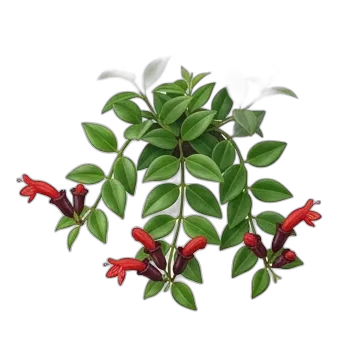
I found myself on a damp Tuesday morning in November, delicately untangling a severely root-bound Aeschynanthus radicans that had been languishing in a dim corner of a gardener's sunroom. Its stems were a depressing, pale green, stretched out to three feet with barely a single tubular scarlet bud in sight. After giving it a rigorous pruning, shifting it to a bright east-facing window, and re-potting it into a chunky, highly aerated orchid bark mix, that very same plant erupted three months later into a cascade of vibrant red flowers emerging from dark maroon calyxes—truly earning its common name, the lipstick plant. I want to walk you through mastering this magnificent epiphyte so your own indoor spaces can benefit from that same fiery display.
1. Botanical Overview & Natural Habitat

Botanically, Aeschynanthus radicans features succulent, glossy, deep green leaves measuring 2 inches (5 cm) to 4 inches (10 cm) in length, arranged in an opposite pattern along semi-woody, trailing stems that regularly stretch to 2 feet (60 cm) or 3 feet (90 cm) in length. The defining ornamental feature is its inflorescence: dark, tubular calyxes emerge at the stem terminals, out of which slide bright, vibrant red corollas that resemble miniature tubes of lipstick being pushed from their cases.
In a natural woodland ecosystem, these plants experience filtered, dappled light through a dense canopy overhead, combined with high humidity levels frequently hovering above 70% to 80%. When we attempt to transition this tropical dweller into a domesticated indoor environment, understanding this ecological backstory is essential. For authoritative taxonomic verification and broader family traits, you can consult the Royal Horticultural Society.
2. Essential Environmental & Care Requirements
Replicating a Southeast Asian rainforest inside a modern residential living room requires deliberate climate control. Let us break down the exact parameters required to keep your lipstick plant thriving year-round.
| Parameter | Optimal Condition | Common Mistake | Why It Matters |
|---|---|---|---|
| Light | Bright, indirect light (10,000 to 15,000 lux) | Placing in deep, dim interior shade | Direct sun scorches leaves, while deep shade entirely prevents flower bud formation. |
| Watering | Water thoroughly when the top 1.5 inches (3.8 cm) are dry | Keeping soil constantly saturated or completely bone-dry | Saturated soil rots sensitive epiphyte roots; extreme drought triggers severe leaf drop. |
| Temperature | 65°F to 85°F (18°C to 29°C) | Exposing to cold drafts below 50°F (10°C) | Sudden thermal shock or chill causes rapid defoliation and root collapse. |
| Humidity | 50% to 70% relative humidity | Ambient indoor air dropping below 30% in winter | Low humidity dries out leaf margins and causes flower buds to drop before opening. |
Light exposure is the single most common stumbling block for indoor gardeners. Your lipstick plant requires at least 4 to 6 hours of bright, indirect sunlight daily. An unobstructed east-facing windowsill or a shaded west-facing window is ideal.
When it comes to watering, frequency changes seasonally. During the active growth period from spring through late summer, water thoroughly until liquid runs freely out of the container drainage holes. Allow the top 1.5 inches (3.8 cm) of the soil to dry out completely before irrigating again. In the winter rest period, reduce watering frequency slightly, allowing the top 2 inches (5 cm) to dry.
To dive deeper into related tropical care paradigms, explore our comprehensive Lipstick Plant (Aeschynanthus Radicans) Complete Care & Bloom Guide.
💡 Pro-Tip: If your lipstick plant refuses to bloom despite healthy green foliage, it is almost certainly receiving insufficient light. Move it 12 inches (30 cm) closer to a bright window or supplement with an LED grow light panel delivering at least 2,000 lumens for 12 hours a day to trigger prolific bud set.
3. Step-by-Step Cultivation, Feeding & Propagation
Growing Aeschynanthus radicans successfully from a cutting or a nursery starter requires an adherence to its epiphytic nature. Standard, heavy potting soil will suffocate its delicate root system. You need a fast-draining, highly porous substrate composed of equal parts standard peat-based potting mix, coarse perlite, and orchid bark (or coco coir chips).
Here is the step-by-step protocol for propagating your lipstick plant via stem cuttings to expand your collection:
- Select Healthy Stock: Choose a vigorous, non-flowering stem from an established mother plant in early summer. The stem should be firm and green, free of any pest damage.
- Take Cuttings: Using sterile pruning shears, cut a 4-inch (10 cm) to 6-inch (15 cm) stem tip just below a leaf node.
- Strip Lower Foliage: Remove the leaves from the bottom lower half (roughly 2 inches or 5 cm) of the cutting to expose the nodes where root initiation will occur.
- Apply Rooting Hormone (Optional): Dip the stripped node end into a powdered or gel rooting hormone to accelerate cellular callus formation.
- Plant in Porous Substrate: Insert the cutting 2 inches (5 cm) deep into a small pot filled with a pre-moistened 1:1 mixture of perlite and peat. Alternatively, submerge the node in a glass of clean water, changing the water every 4 to 5 days.
- Create a High-Humidity Chamber: Cover the potted cutting with a clear plastic bag or propagation dome to lock in 90% humidity, placing it in bright, indirect light at a constant 75°F (24°C).
- Monitor and Transplant: Roots will typically emerge within 14 to 21 days. Once roots reach 1 inch (2.5 cm) in length, transplant the young plant into its permanent hanging basket.
Feeding should be approached with moderation. Because these are light feeders in nature, apply a balanced, water-soluble houseplant fertilizer diluted to half-strength once every 4 weeks strictly during the spring and summer growing seasons. Halt fertilization entirely from October through February when natural daylight diminishes and the plant enters dormancy. For broader botanical reference data regarding tropical plant propagation, check out the Missouri Botanical Garden Plant Finder.
⚠️ Important Caution: Never use heavy, unamended garden soil or dense topsoil for potted lipstick plants. The lack of oxygen porosity combined with indoor watering routines will inevitably lead to anaerobic conditions and fatal root rot within weeks.
4. Common Problems, Pests & Troubleshooting
Even experienced indoor horticulturists encounter occasional setbacks with Aeschynanthus radicans. Diagnosing issues early saves the plant from extensive cosmetic damage or decline.
Bud Blast and Drop: If your plant sets wonderful dark maroon calyxes only for them to shrivel and drop before the red flowers emerge, you are likely dealing with sudden environmental shifts. Drafts from air conditioning vents, extreme drops in indoor humidity below 35%, or erratic watering schedules will cause the plant to abort its flowers as a survival mechanism.
Leaf Yellowing and Stem Mushiness: This is the undeniable signature of overwatering and root rot. If the base of the stems turns dark, translucent, and soft, tip the plant out of its pot immediately. Trim away black, mushy roots with sterile shears, dust remaining healthy roots with cinnamon or sulfur powder as a natural fungicide, and repot into fresh, dry, fast-draining media.
Pest Infestations: Indoor lipstick plants occasionally fall prey to sap-sucking pests, particularly mealybugs (which look like tiny white cotton tufts in the leaf axils) and spider mites (signified by fine webbing across the underside of leaves and pale, stippling damage). Treat mealybugs by dabbing them individually with a cotton swab soaked in 70% isopropyl alcohol. For spider mites, increase ambient humidity immediately and wash the foliage thoroughly with insecticidal soap or horticultural oil spray every 7 days for a 3-week cycle.

5. Frequently Asked Questions
Why are the leaves on my lipstick plant falling off?
Leaf drop on Aeschynanthus radicans is usually triggered by two primary stressors: extreme underwatering or sudden exposure to cold drafts. When the soil remains bone-dry for too long, the plant drops its leaves to conserve moisture. Conversely, if placed near a drafty window where temperatures drop below 50°F (10°C), cellular shock causes rapid defoliation. Check your watering habits and ensure the plant is situated in a stable thermal zone between 65°F and 85°F (18°C and 29°C).
How do I get my lipstick plant to bloom?
To encourage your lipstick plant to produce its signature red blooms, you must provide high light intensity (bright, indirect light for 6 hours daily), a proper winter rest period with cooler night temperatures around 60°F (15°C) and reduced watering, and a fertilizer shift in spring that favors phosphorus over nitrogen. Lack of blooms is almost always tied to insufficient light exposure during the late winter and early spring bud-formation phase.
Is the lipstick plant toxic to cats and dogs?
No, the lipstick plant (Aeschynanthus radicans) is completely non-toxic to cats, dogs, and horses, according to the ASPCA. This makes it an exceptional, safe trailing choice for households with curious pets who love to bat at hanging foliage. However, ingestion of large amounts of plant matter can still cause mild, temporary gastrointestinal upset simply due to fiber content.
Should I prune my lipstick plant?
Yes, annual pruning is vital for maintaining a dense, lush appearance rather than a sparse, leggy habit. Prune your lipstick plant right after its main flowering cycle finishes in late summer or early autumn. Using clean shears, trim long, unruly stems back by one-third just above a leaf node. This encourages the plant to branch out laterally, creating twice as many flowering tips for the following season.
📋 Table of Contents ▼ Click to expand
Tags: