Swedish Ivy
Plectranthus verticillatus
1. Botanical Overview & Natural Habitat

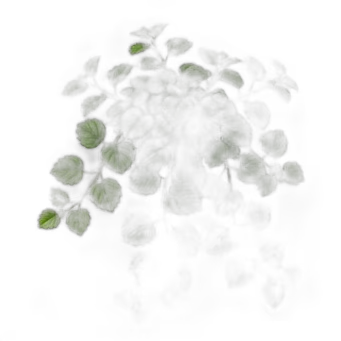
Its correct botanical name is Plectranthus verticillatus (formerly classified as Plectranthus australis or Clescanthus verticillatus). Botanically speaking, it is easily identified by its square stems—a hallmark of the mint family—and its opposite, glossy, dark green leaves that feature scalloped or crenate margins. The undersides of the leaves often sport a rich, purplish-burgundy hue, and the foliage releases a pleasant, slightly pungent, camphor-like aroma when crushed.
In its natural habitat, Plectranthus verticillatus acts as a ground cover, rooting easily at the nodes wherever stems touch the damp earth. When cultivated indoors or in hanging baskets, this sprawling growth habit translates into magnificent, cascading curtains of foliage. Under optimal conditions, it produces delicate, two-lipped white to pale lavender tubular flowers marked with purple dots, usually appearing in late winter or autumn as day lengths shorten.
Understanding its native woodland-edge habitat is the key to mastering its cultivation. It evolved to receive bright, indirect light filtered through a forest canopy, high humidity, and consistently moist yet exceptionally well-draining soil rich in organic matter. When we replicate these baseline environmental factors in our homes and gardens, Swedish Ivy transitions from a fragile houseplant into a robust, fast-growing botanical statement piece.
2. Essential Environmental & Care Requirements
Creating an optimal indoor microclimate for Plectranthus verticillatus requires balancing light, moisture, and temperature. Because it lacks the heavy lignified stems of true trees or woody vines, its semi-succulent tissue is sensitive to extreme environmental swings.
| Parameter | Optimal Condition | Common Mistake | Why It Matters |
|---|---|---|---|
| Light | Bright, indirect light (10,000 to 20,000 lux) | Direct midday sun or deep shade | Intense sun scorches the glossy leaves; deep shade causes leggy, weak stems and leaf drop. |
| Temperature | 60°F to 75°F (15°C to 24°C) | Exposure below 50°F (10°C) or drafts | Cold stress damages cellular walls, leading to black, mushy stem collapse. |
| Watering | Allow top 1 to 2 inches (2.5 to 5 cm) to dry | Keeping soil waterlogged or bone-dry | Saturated soil causes root rot; extreme dryness forces premature leaf abscission. |
| Humidity | 40% to 60relative humidity | Dry indoor air during winter heating | Low humidity crisps leaf margins and invites spider mite infestations. |
| Soil pH | 6.0 to 7.0 (slightly acidic to neutral) | Heavy, clay-heavy native garden soil | Compacted soil suffocates roots and impedes necessary drainage. |
Light is the single most critical factor in maintaining dense, compact foliage. Place your Swedish Ivy within 3 to 5 feet (0.9 to 1.5 meters) of an east-facing window, or a slightly set-back south- or west-facing window protected by a sheer curtain. If you notice the internodes (the stem space between leaf pairs) stretching out past 2 inches (5 cm), your plant is signaling a desperate need for more light.
Temperature management is equally straightforward. Swedish Ivy thrives in average human comfort zones. It can be moved outdoors as a patio or shade garden accent during the warmer months, provided night temperatures consistently remain above 55°F (13°C).
⚠️ Important Caution: Never let your Plectranthus verticillatus experience temperatures dipping below 50°F (10°C). Unlike true ivies, this tropical native has zero frost tolerance. Exposure to a single chilly autumn draft from a leaky window frame can cause irreversible cell collapse and sudden defoliation.
Watering should follow a strict rhythm. Stick your index finger into the potting medium; if it feels dry down to the second knuckle—roughly 1.5 inches (3.8 cm) deep—it is time for a thorough soaking. Water until it runs freely from the container's drainage holes, and never let the pot sit in a saucer of standing water for more than 15 minutes.
For further reading on maintaining optimal indoor plant health and diagnosing environmental stress, consult the Royal Horticultural Society.
3. Step-by-Step Cultivation, Feeding & Propagation
Propagation is where Swedish Ivy truly shines. It is one of the most cooperative plants in the botanical world, rooting with such reliability that it makes an ideal weekend project for beginning plant enthusiasts.
Here is my master protocol for potting, feeding, and propagating Plectranthus verticillatus:
- Select and Prepare the Container: Choose a pot with a minimum of one generous drainage hole. Opt for terra-cotta or durable plastic containers measuring 6 to 8 inches (15 to 20 cm) in diameter for a standard starter plant.
- Mix the Ideal Substrate: Combine 60% high-quality peat- or coir-based potting mix, 20% perlite or coarse horticultural pumice for aeration, and 20% organic compost. This creates the structural porosity required to prevent root suffocation.
- Potting the Plant: Gently tease out the root ball of your nursery plant to loosen any circling roots. Place it in the container so the crown sits level with the rim, and fill in the sides with your custom soil mix, tamping down gently to eliminate large air pockets.
- Initial Watering: Water the newly potted plant thoroughly with room-temperature water until it drains out the bottom. Allow it to drain completely before placing it in its permanent bright, indirect light location.
- Establish a Feeding Regimen: During the active growing season (spring through early autumn), feed every 4 weeks with a balanced, water-soluble houseplant fertilizer (such as a 10-10-10 or 20-20-20 formulation) diluted to half-strength. Cease all fertilization entirely from late autumn through winter when growth naturally slows.
- Executing Stem Cuttings: To propagate, use sterilized shears to snip a 4-to-6-inch (10-to-15 cm) terminal cutting just below a node. Strip away the lower two pairs of leaves to expose bare nodes.
- Rooting in Water or Soil: Place the cutting in a glass of clean water, ensuring the exposed nodes are submerged, or stick it directly into a moist, soil-less propagation mix. Roots will typically emerge from the nodes within 14 to 21 days. Once the root system reaches 1 inch (2.5 cm) in length, pot them up permanently.
💡 Pro-Tip: Pinch back the growing tips of your Swedish Ivy every 3 to 4 weeks during its spring growth surge. This simple act of horticultural housekeeping signals the plant to divert its growth energy horizontally rather than vertically, transforming a sparse, stringy specimen into a luxuriously full, mounding basket.
For official taxonomic verification and additional genus-specific care guidelines, you can reference the Missouri Botanical Garden Plant Finder.
4. Common Problems, Pests & Troubleshooting
Even resilient plants run into trouble when environmental conditions slip out of balance. By learning to read the physical signals your Swedish Ivy sends, you can intercept minor issues before they become terminal crises.
Yellowing Leaves: When lower leaves turn a uniform, pale yellow and drop off, the culprit is almost universally overwatering or compacted soil lacking oxygen. Check your drainage holes for clogs, let the soil dry out significantly, and adjust your watering frequency. If the yellowing is accompanied by a mushy stem base, root rot has set in, requiring emergency propagation of healthy upper cuttings.
Brown, Crispy Leaf Margins: If the tips and edges of the foliage turn dry and brown, your indoor air is too dry, or the plant is suffering from underwatering or mineral salt buildup from tap water. Mist the surrounding air daily, flush the soil periodically with distilled water to leach out excess fertilizer salts, and ensure your watering schedule keeps pace with seasonal heat.
Leggy, Sparse Growth: Stems that stretch wildly with wide gaps between tiny leaves indicate light starvation. Move the plant closer to an unobstructed light source immediately, and give it a hard pruning back by one-third to encourage dense, bushy replacement growth.
Pest Infestations: Indoor Swedish Ivy is occasionally targeted by sap-sucking pests, most notably spider mites and mealybugs.
- Spider Mites: Thrives in dry, warm indoor environments. Look for fine webbing across the undersides of leaves and tiny stippled white spots on the foliage. Treat by wiping leaves down with insecticidal soap or neem oil diluted according to product instructions.
- Mealybugs: Appear as small, cottony white masses in the leaf axils and stem joints. Dab them individually with a cotton swab dipped in 70% isopropyl alcohol, followed by a thorough spray of horticultural oil.

5. Frequently Asked Questions
Is Swedish Ivy toxic to cats and dogs?
No. According to authoritative horticultural and veterinary databases, Plectranthus verticillatus is completely non-toxic to cats, dogs, and horses. You can safely hang these trailing beauties in homes with curious pets without worrying about emergency veterinary visits if a stray leaf is nibbled.
Why is my Swedish Ivy dropping leaves?
Leaf drop is typically a shock response to a sudden change in its environment. Moving the plant to a new location, exposing it to a cold draft, letting it dry out completely for too long, or shifting from high summer light to dim winter light can all trigger shedding. Stabilize its environment, maintain consistent watering, and the plant will adjust and generate new growth.
How do I make my Swedish Ivy bushier?
The secret to a lush, full plant is regular pruning and pinching. Use your fingers or clean scissors to pinch off the very tips of the trailing stems right above a leaf node every few weeks. This breaks the plant's apical dominance, forcing dormant lateral buds further down the stem to activate and create multiple new branches.
Can I grow Swedish Ivy outdoors year-round?
Only if you live in USDA Hardiness Zones 10 through 11. In these frost-free climates, Plectranthus verticillatus makes a phenomenal perennial ground cover in shady garden beds or shaded rockeries. In all cooler zones, it must be treated as a seasonal outdoor container plant or grown strictly as a houseplant.
📋 Table of Contents ▼ Click to expand
Tags: