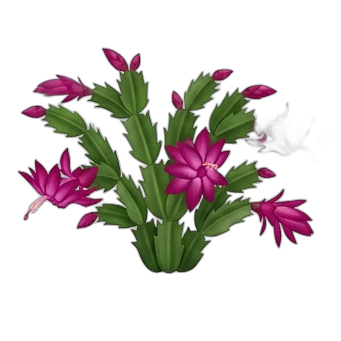
Poinsettia
Euphorbia pulcherrima

When receiving shipping boxes of Euphorbia pulcherrima 'Monet Twilight' liners in mid-November, the bracts may still be a pale, chartreuse-green, barely hinting at the creamy, pink-splashed variegation that makes them the centerpiece of a conservatory a month later. Lifting the stems often causes a drop of milky white latex to ooze from pinched leaf scars, demonstrating that managing this subtropical Mexican native requires equal parts horticultural precision and botanical respect.

1. Botanical Overview & Natural Habitat
To grow a Euphorbia pulcherrima successfully, you must first unlearn the myth that it is a fragile, single-season holiday novelty. Botanically classified within the sprawling Euphorbiaceae (spurge) family, the poinsettia is a woody perennial shrub or small tree in its native habitat, capable of reaching heights of 10 to 15 feet (3 to 4.5 meters).
Endemic to deciduous tropical forests in western Mexico—particularly around Taxco de Alarcón—the plant evolved along rocky, sun-drenched canyon slopes. In the wild, it experiences stark seasonal shifts. During the long, wet summer months, it undergoes explosive vegetative growth, producing robust stems clad in dark green, elliptical leaves. As autumn arrives, day lengths shorten and precipitation drops. This environmental trigger initiates the plant's reproductive phase, shifting its apical meristem from vegetative production to floral and bract development.
What most casual plant owners call the "flower" is actually a modified leaf structure called a bract. The true flowers are remarkably inconspicuous, clustered in small, yellowish structures called cyathia situated at the exact center of each bract cluster. These cyathia produce a thick, sugary nectar that attracts pollinators in the wild.
The milky sap coursing through the plant’s vascular system is a complex latex emulsion. While popularized urban legends claim this sap is violently toxic, extensive toxicological studies—including research from the University of Illinois Extension—have confirmed that the latex is only mildly irritating to human and animal mucous membranes, though ingestion can cause mild gastrointestinal distress in pets.
2. Essential Environmental & Care Requirements
Replicating a Mexican canyon microclimate in a modern residential or commercial interior requires strict adherence to environmental parameters.
Light is the primary driver of color development and structural integrity. Poinsettias demand a minimum of 6 hours of bright, indirect light daily. South- or west-facing windows are ideal, provided the foliage does not touch cold glass panes. Insufficient light leads to stretched, weak stems (etiolation) and pale, dull bracts.
Temperature management is where most indoor growers fail. Poinsettias despise rapid fluctuations. They thrive in daytime temperatures between 65°F and 70°F (18°C to 21°C) and nighttime temperatures dropping no lower than 60°F (15°C). Exposing them to drafts from exterior doors, forced-air heating vents, or uninsulated windows will trigger rapid leaf abscission (drop).
Watering must be approached with a strict "soak and dry" methodology. The growing medium should be allowed to dry slightly in the top 1 to 2 inches (2.5 to 5 cm) between waterings. When you water, do so thoroughly until excess moisture runs freely from the container’s drainage holes. Never let the pot sit in standing water within a decorative saucer; prolonged root immersion induces anaerobic conditions, leading directly to Pythium root rot.
| Parameter | Optimal Condition | Common Mistake | Why It Matters |
|---|---|---|---|
| Light | 6+ hours bright, indirect light | Placing in deep interior rooms | Causes weak stems and prevents proper bract coloration |
| Temperature | 65°F–70°F (18°C–21°C) | Placing near drafts or heating vents | Sudden thermal stress triggers rapid leaf drop |
| Soil pH | 5.8 to 6.2 | Highly alkaline or acidic mixes | Locks out essential micronutrients like iron and calcium |
| Humidity | 40% to 60% relative humidity | Placing in dry, forced-air environments | Causes leaf curl, crispy margins, and attracts spider mites |
💡 Pro-Tip: When purchasing poinsettias from a retail nursery, check the cyathia—those tiny yellow button-like flowers in the center of the bracts. If they are tight and unopened, the plant was recently harvested and will last for months in your home. If they are missing or covered in yellow pollen, the plant is at the end of its lifecycle and will drop its leaves within two weeks.
3. Step-by-Step Cultivation, Feeding & Propagation
Growing professional-grade poinsettias or carrying one over from year to year requires a structured protocol based on seasonal photoperiods.
Step 1: Post-Holiday Hard Pruning (Late Winter / Early Spring)
Once the colorful bracts fade in late winter (typically February to March), cut the entire plant back hard, leaving only 4 to 6 inches (10 to 15 cm) of stem above the soil line, ensuring each remaining stem has at least one visible, swollen node. This forces the plant to break dormancy and branch out aggressively, creating a bushier, multi-stemmed structure for the next cycle.
Step 2: Summer Vegetative Growth & Repotting (May through August)
Repot the pruned plant into a container one size larger using a sterile, high-drainage potting mix composed of 40% peat moss, 30% perlite, and 30% composted pine bark. Maintain a soil pH between 5.8 and 6.2. Begin a regular fertilization schedule using a balanced, water-soluble fertilizer (such as a 20-20-20 formula with micronutrients) at half-strength every 14 days. Pinch the growing tips back by 1 inch (2.5 cm) every time new stems reach 6 inches (15 cm) in length until late August to build a dense canopy.
Step 3: Initiating Photoperiod Control (Late September)
Poinsettias are classic short-day plants; they initiate flowering and bract color when nights lengthen. To force re-coloring for the holidays, you must provide uninterrupted darkness for exactly 14 hours every single night starting on October 1st.
⚠️ Important Caution: Even a stray beam of street light, a hallway lamp, or a glowing television screen during the 14-hour dark period will disrupt the chemical signaling process (phytochrome conversion) and completely prevent the bracts from turning red.
Place the plant in a completely light-tight closet or cover it with a heavy cardboard box from 5:00 PM to 7:00 AM daily. During the remaining 10 hours of daylight, give it maximum sun exposure. Continue this strict routine for 8 to 10 weeks until the bracts show full, rich color, at which point you can resume normal, un-manipulated indoor lighting conditions.
4. Common Problems, Pests & Troubleshooting
Even with careful environmental management, physiological disorders and pest pressures can emerge. Diagnosing them early saves the plant.
Yellowing Leaves and Lower Leaf Drop (Chlorosis and Abscission)
If the lowest leaves turn yellow and drop off while the upper foliage remains green, the culprit is almost always overwatering or poor drainage. Excess moisture starves the roots of oxygen, shutting down nutrient transport. Allow the medium to dry down significantly, verify that drainage holes are clear, and apply a preventative drench of a bio-fungicide containing Bacillus subtilis if root rot is suspected.
Wilting Despite Wet Soil
If the plant wilts even though the potting mix is damp, you are dealing with advanced Thielaviopsis or Pythium root rot. The root system has likely turned brown, mushy, and lost its fine root hairs. Severely affected plants cannot be saved; discard them and sterilize containers with a 10% bleach solution before reuse.
Pests: Whiteflies and Fungus Gnats
Warm indoor environments often invite sap-sucking pests. Whiteflies congregate on the undersides of leaves, leaving a sticky honeydew residue that can foster black sooty mold. Fungus gnats thrive in overly damp peat-heavy topsoils.
- For whiteflies: Apply insecticidal soap or neem oil directly to the undersides of leaves every 5 to 7 days for three consecutive cycles to break the hatching cycle.
- For fungus gnats: Let the top 2 inches (5 cm) of soil dry completely between waterings, and apply Bacillus thuringiensis israelensis (BTI) dunks to your irrigation water to eliminate larvae.

5. Frequently Asked Questions
How do I get my poinsettia to turn red again next year?
To make a poinsettia turn red again, you must replicate its natural equatorial light cycle by providing exactly 14 hours of absolute, uninterrupted darkness and 10 hours of bright light every day starting on October 1st. Continue this routine for 8 to 10 weeks without missing a single night. If exposed to artificial light during the dark period, color development will fail.
Are poinsettias poisonous to cats and dogs?
Poinsettias possess a milky latex sap that is mildly toxic to cats and dogs, but the toxicity is vastly exaggerated. Ingestion typically results only in minor irritation of the mouth and stomach, excessive drooling, or occasional vomiting. While not fatal, it is best to keep the plant out of reach of curious pets to prevent digestive discomfort.
Why are the leaves on my poinsettia turning yellow and falling off?
Leaf yellowing and dropping (abscission) is almost always caused by environmental stress, specifically overwatering, sudden temperature drops, exposure to cold drafts, or severe lack of light. Check your watering habits, ensure the soil dries slightly between waterings, and keep the plant away from exterior doors and heating vents.
How often should I water a potted poinsettia?
Water your poinsettia thoroughly only when the top 1 to 2 inches (2.5 to 5 cm) of the potting soil feel dry to the touch. Always discard any excess water that collects in the saucer after 15 minutes. Never let the root ball sit in standing water, as this rapidly induces fatal root rot.
📋 Table of Contents ▼ Click to expand
Tags: