Mother of Thousands
Kalanchoe daigremontiana
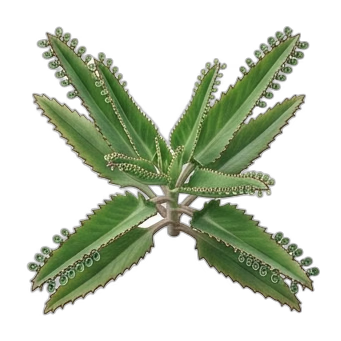
I found my first Kalanchoe daigremontiana nestled in the back corner of a damp, overcrowded greenhouse bench twelve years ago, sitting quietly in a four-inch terracotta pot while literally thousands of tiny, perfect plantlets cascaded off its serrated leaves like green confetti ready to conquer every surrounding container.
1. Botanical Overview & Natural Habitat

In its natural habitat, the plant experiences blistering sun and prolonged periods of drought, punctuated by brief, intense rainy seasons. To survive, it developed a succulent habit, storing water in its thick, fleshy, oblong-lanceolate leaves, which typically measure 6 to 8 inches (15 to 20 cm) in length and 1 to 2 inches (2.5 to 5 cm) in width. The foliage is an intriguing blue-green or grey-green on top, while the undersides are strikingly patterned with distinctive purple-brown spots and horizontal chevrons.
What truly sets Kalanchoe daigremontiana apart is its extraordinary method of reproduction via epiphyllous foliar embryos. Along the deeply crenate margins of each leaf, specialized meristematic tissue produces complete miniature plantlets equipped with microscopic roots, stems, and leaves even while still attached to the parent plant. Once these bulbils reach a height of approximately 0.25 to 0.5 inches (0.6 to 1.3 cm), they detach easily, tumbling onto the soil below to establish independent colonies.
When mature—usually after reaching 2 to 3 years of age and standing between 24 to 36 inches (60 to 90 cm) tall—the plant may produce an impressive terminal inflorescence. This panicled cluster features dusty pink to greyish-purple, bell-shaped flowers that hang in tubular symmetry. However, indoor blooming is sporadic, as the plant requires specific photoperiods to trigger the transition from vegetative growth to flowering.
2. Essential Environmental & Care Requirements
I always remind gardeners that native habitat dictates indoor or garden care. Because Kalanchoe daigremontiana originates from the sun-drenched, well-drained soils of Madagascar, replicating these parameters is the secret to keeping it robust rather than leggy and weak.
| Parameter | Optimal Condition | Common Mistake | Why It Matters |
|---|---|---|---|
| Light | 6+ hours of bright, direct sunlight daily | Placing in low-light indoor corners | Causes etiolation, weak stems, and halted bulbil production |
| Temperature | 65°F to 85°F (18°C to 29°C) | Exposing to frost below 32°F (0°C) | Freezing temperatures rupture cell walls, causing immediate plant collapse |
| Soil Mix | Gritty, fast-draining cactus and succulent mix | Using heavy, organic potting compost | Retains excess moisture, leading to root rot and fungal pathogens |
| Watering | Soak-and-dry method when soil is 100% dry | Frequent, shallow watering | Keeps roots constantly wet, starving them of oxygen |
Light intensity is the primary driver of compact, vibrant growth. Position your Mother of Thousands directly in a south-facing or west-facing window where it can receive maximum solar exposure. If natural light falls short during winter months, supplement with a full-spectrum LED grow light positioned 8 to 12 inches (20 to 30 cm) above the foliage for 12 to 14 hours daily.
Temperature management is equally straightforward, though unforgiving when ignored. While it tolerates summer heatwaves up to 95°F (35°C) with ease, it possesses zero frost tolerance. Bring outdoor container-grown specimens indoors well before nighttime temperatures drop consistently below 50°F (10°C).
Humidity is rarely an issue for this species; normal household relative humidity between 30% and 50% suits it perfectly. In fact, excessively damp air combined with stagnant conditions invites fungal leaf spots. Ensure good air circulation around the plant, especially if you are cultivating multiple specimens in close proximity.
For deep-dive taxonomic verification and physiological traits of the Crassulaceae family, you can consult the Royal Botanic Gardens, Kew.
3. Step-by-Step Cultivation, Feeding & Propagation
Cultivating Kalanchoe daigremontiana successfully requires respecting its specialized growth rhythm. Because it produces thousands of propagules naturally, your role as a grower is mostly about channeling this aggressive vitality into healthy, structural growth.
💡 Pro-Tip: When handling mature Mother of Thousands plants, always wear gardening gloves. The sap contains daigremontianin and other bufadienolide cardiac glycosides, which can cause skin irritation upon contact and are severely toxic if ingested by curious pets or toddlers.
Step-by-Step Cultivation and Propagation Sequence
- Select the Right Vessel: Choose a terra-cotta pot featuring at least one central drainage hole, measuring 6 inches (15 cm) in diameter for a young plant, or up to 10 inches (25 cm) for a mature specimen. Terra-cotta is porous, allowing excess moisture to evaporate rapidly through the walls.
- Prepare the Substrate: Mix 60% standard commercial cactus potting soil with 40% inorganic amendments such as pumice, coarse horticultural perlite, or crushed poultry grit to guarantee rapid percolation.
- Planting the Core Specimen: Unpot your starter plant, gently massage the root ball to loosen compacted soil, and position it in the new container so the soil line rests exactly where it was previously. Fill in around the roots with your custom grit mix, tamping down lightly to secure the stem.
- Initial Root Establishment: Withhold water for the first 5 to 7 days post-transplant to allow any micro-tears in the root system to callus over. Afterward, water deeply until liquid runs freely from the drainage holes.
- Harvesting and Sowing Bulbils: Gently brush your thumb along the edge of a mature leaf to collect 10 to 20 dropped or easily dislodged plantlets. Lay these miniature green propagules directly across the surface of a shallow tray filled with damp cactus mix. Do not bury them; they require light to trigger active root development.
- Nurturing the New Generation: Mist the surface substrate lightly every 3 to 4 days using a fine spray bottle to maintain ambient moisture until tiny root hairs anchor themselves into the grit within 14 days. Reduce misting frequency to a standard dry-out cycle once established.
Fertilization requirements are minimal. Feed your Mother of Thousands exactly twice a year—once in early spring and once in mid-summer—using a balanced, water-soluble succulent fertilizer diluted to one-quarter strength. Over-fertilizing results in weak, excessively succulent growth that snaps easily under its own weight.
For additional university-backed guidance on managing invasive or aggressive succulent species in domestic landscapes, review resources provided by the University of Florida IFAS Extension.
4. Common Problems, Pests & Troubleshooting
Even though Kalanchoe daigremontiana is famously resilient, poor environmental controls create vulnerabilities that opportunistic pests and pathogens exploit quickly.
Root Rot and Stem Collapse
This is the single most frequent cause of plant failure. Symptoms include translucent, yellowing lower leaves, a mushy black stem base, and sudden wilting despite wet soil.
- The Fix: Immediately cease all watering. If rot is localized, unpot the plant, slice away decayed roots using a sterilized razor blade, dust the wounds with powdered sulfur or cinnamon, and allow the plant to dry bare-root for 48 hours before repotting into fresh, dry substrate. If the main stem is completely mushy, your only recourse is to take a healthy top cutting and propagate anew.
Etiolation (Leggy Growth)
When a Mother of Thousands stretches awkwardly toward a distant light source, the internodes lengthen, leaves become pale and sparse, and the structural integrity collapses.
- The Fix: Gradually acclimate the plant to a much brighter location over the course of 10 days to prevent sunburn. Once new, compact growth appears at the crown, use clean shears to chop off the leggy top section. The remaining base will activate dormant nodes and branch out vigorously.
Mealybugs and Scale Insects
These sap-sucking pests hide tightly inside the crenate leaf margins where the baby plantlets form, protected by a white, cottony wax secretion.
- The Fix: Dip a cotton swab into 70% isopropyl alcohol and dab it directly onto every visible pest to dissolve their protective coating instantly. For heavy infestations, thoroughly spray the entire plant with horticultural insecticidal soap or neem oil, ensuring coverage deep within the leaf crevices, and repeat every 7 days for a 3-week cycle.
⚠️ Important Caution: Because Kalanchoe daigremontiana drops hundreds of viable plantlets that root effortlessly in nearby containers, never plant this species outdoors in open garden beds if you live in USDA hardiness zones 9 through 11. It can quickly escape cultivation, crowd out native flora, and become a persistent botanical weed.

5. Frequently Asked Questions
Why are the leaves on my Mother of Thousands curling inward?
Inward leaf curling is a classic defense mechanism deployed against intense drought or excessive direct heat. When the plant lacks sufficient internal water pressure, it curls its leaves to minimize surface area and reduce transpirational moisture loss. Check your watering schedule; if the soil is bone dry, give the plant a thorough, deep soaking. Conversely, if the soil is wet, curling can indicate root rot has severed the water supply, requiring emergency repotting.
How do I stop my Mother of Thousands from dropping babies everywhere?
The prolific dropping of plantlets is hardwired into the species' biology, but you can control the spread by taking proactive measures. Gently brush off the tiny bulbils from the leaf margins every two weeks using a soft paintbrush before they reach maturity and detach on their own. Alternatively, if you grow the plant indoors, keep it in a standalone decorative pot positioned away from other houseplants so any stray plantlets land harmlessly on your tabletop or floor rather than infesting neighboring pots.
Is the Mother of Thousands toxic to cats and dogs?
Yes, absolutely. Like many members of the Crassulaceae family, Kalanchoe daigremontiana contains cardiac glycosides (specifically bufadienolides) that affect the cardiovascular and nervous systems of domestic animals. Ingestion by cats, dogs, or horses can cause severe vomiting, hypersalivation, diarrhea, lethargy, and dangerous heart arrhythmias. Always keep this plant elevated on plant stands or placed inside dedicated sunrooms completely inaccessible to pets and small children.
Why is my Mother of Thousands growing tall and spindly without making any babies?
Spindly growth paired with a complete lack of plantlet production is a definitive sign of insufficient light. When light levels drop below the plant's threshold, it prioritizes vertical stem elongation over reproduction and leaf patterning. Move the plant immediately to a location that receives unobstructed, direct southern exposure, or install a high-output LED grow light directly overhead to restore robust, compact growth and trigger bulbil formation along the leaf margins.
📋 Table of Contents ▼ Click to expand
Tags: