
Strawberry Begonia
Saxifraga stolonifera
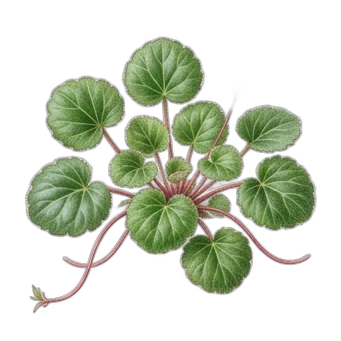
I first encountered Saxifraga stolonifera tucked into a damp, north-facing stone wall at a botanical estate in the Pacific Northwest, trailing a dense curtain of delicate, crimson-backed foliage that immediately arrested my eye. Kneeling in the damp earth, I watched how its threadlike runners danced across the stone like miniature strawberry vines, terminating in tight, perfectly formed rosettes. I knew right then I had to bring this deceptive woodland native into both my interior plant collections and my shaded courtyard designs. Despite its common name, it isn’t a strawberry at all, nor is it a begonia; it is an alpine woodland survivor that rewards the attentive grower with architectural elegance, exceptional hardiness, and an endlessly fascinating propagation game.
1. Botanical Overview & Natural Habitat

Botanically, the plant is a herbaceous evergreen perennial characterized by basal rosettes of rounded, kidney-shaped leaves. These leaves measure roughly 2 to 4 inches (5 to 10 cm) across, featuring scalloped margins, striking silvery-white venation on the upper surface, and a deep, anthocyanin-rich purplish-red on the underside. The plant’s habit of producing thin, wiry, reddish stolons (runners) makes it visually identical to the reproductive strategy of garden strawberries, culminating in baby plantlets that root wherever they touch damp earth.
From late spring through mid-summer, Saxifraga stolonifera sends up delicate, airy floral panicles reaching 8 to 18 inches (20 to 45 cm) in height. These blooms are remarkably asymmetrical: two lower petals are noticeably elongated and white, while three upper petals are smaller and marked with yellow and red dots, resembling tiny orchids.
Because it lacks the true sweet fruit of actual berries, indoor gardeners frequently ask me if they can cultivate edible crops alongside it; for those looking to harvest actual fruit in a controlled space, I often direct them to master How to Grow Strawberries Indoors: From Fruit Seeds to Sweet Berries. However, for pure foliage interest, texturing dark corners, or creating a spillover effect in containers, the strawberry begonia remains peerless.
| Parameter | Optimal Condition | Common Mistake | Why It Matters |
|---|---|---|---|
| Light | Bright, indirect light (filtered morning sun) | Direct midday sun | Leaves scorch and bleach; anthocyanin pigments fade. |
| Temperature | 55°F to 75°F (13°C to 24°C) | Exceeding 85°F (29°C) | High heat triggers dormancy, heat stress, and fungal decay. |
| Soil pH | 6.0 to 7.0 (slightly acidic to neutral) | Heavy, unamended clay | Compacted soil starves roots of oxygen, leading to rot. |
| Watering | Evenly moist; allow top 0.5 in (1.2 cm) to dry | Letting root ball dry out completely | Causes leaf margin necrosis and structural collapse. |
| Humidity | 50% to 70% | Sustained arid air below 30% | Results in brown, crispy leaf tips and slowed runner output. |
2. Essential Environmental & Care Requirements
Replicating the cool, damp woodland floor is the secret to keeping Saxifraga stolonifera thriving. Indoors, place your plant near an east- or north-facing window where it receives bright, indirect illumination. Outdoors in USDA Hardiness Zones 6 through 9, select a site in full or partial shade protected from harsh afternoon winds that can desiccate the tender foliage.
Temperature management is critical. While the strawberry begonia is remarkably cold-hardy—surviving ground freezes down to -10°F (-23°C) when planted in the garden—it struggles intensely with summer heatwaves. When indoor temperatures climb past 80°F (27°C), growth stalls, and the plant becomes acutely vulnerable to root rot if watering isn't scaled back to match the metabolic slowdown.
Soil composition must balance moisture retention with rapid drainage. A premier mix consists of 40% high-quality peat or coco coir, 30% organic compost, and 30% perlite or pumice. For detailed guidelines on selecting structurally sound potting media, consult the Royal Horticultural Society container growing guide.
Watering requires a delicate touch. The root system is relatively shallow, meaning it resents prolonged drought just as much as waterlogging. Water thoroughly until liquid runs from the drainage holes whenever the top 0.5 inches (1.2 cm) of soil feels dry to the touch. Always use room-temperature water that has been dechlorinated, as chemical additives can accumulate and burn leaf margins.
Humidity can make or break your success, particularly during winter heating seasons. If indoor relative humidity drops below 40%, group your strawberry begonia with other houseplants or place the container on a pebble tray filled with water, ensuring the pot's base sits above the water line to prevent root suffocation.
💡 Pro-Tip: When planting Saxifraga stolonifera in hanging baskets, position them at eye level in a north-facing bathroom or kitchen window. The natural humidity generated by daily use combined with gentle, indirect light mimics their native mountain gorge habitats better than any living room ever could.
3. Step-by-Step Cultivation, Feeding & Propagation
Propagating strawberry begonia is one of the most rewarding exercises in horticulture because the plant does 90% of the work for you via its prolific stolons.
Step-by-Step Propagation and Potting Protocol
- Select a Healthy Mother Plant: Identify a mature, vigorous mother rosette that has produced multiple robust runner plantlets (spiderettes) featuring tiny, visible root nubs at their bases.
- Prepare Propagation Vessels: Fill 3-inch (7.6 cm) nursery pots with a pre-moistened, sterile seed-starting mix composed of equal parts peat and perlite.
- Position the Plantlets: Without severing the connecting stolon, gently press the base of each baby rosette onto the surface of the new potting mix. Secure them lightly using bent floral wire or a curved paperclip pushed into the soil.
- Maintain High Moisture: Keep the propagation medium consistently damp using a fine-mist spray bottle daily, ensuring the ambient humidity around the developing roots remains high.
- Sever the Connection: After 14 to 21 days, inspect the base of the plantlet; once you feel gentle resistance when pulling, use sterile snips to cut the connecting stolon 0.5 inches (1.2 cm) away from the new plantlet.
- Transplant Up: Allow the newly independent plant to establish for another 30 days before stepping it up into a standard 4-inch (10 cm) container using your primary potting mix.
Feeding should be approached with a light hand. Because they are woodland understory species, strawberry begonias are light feeders. Apply a balanced, water-soluble houseplant fertilizer diluted to one-quarter strength once every 4 weeks strictly during the active growing season from April through August. Withhold fertilizer completely from September through March, as forcing growth during low-light winter months results in weak, spindly, and etiolated runners.
Pruning is minimal and mainly aesthetic. Snip away yellowed basal leaves at the base of the stem using sharp, sanitized shears. If you prefer a tighter, more compact rosette habit rather than a cascading curtain of runners, simply clip off the stolons as soon as they emerge; this redirects the plant's energy into denser foliage production. For additional academic insight into herbaceous perennial propagation techniques, review the North Carolina State University Extension publications.
⚠️ Important Caution: Never let your strawberry begonia sit in a saucer of stagnant water for more than 15 minutes. Their delicate, fibrous root systems suffocate rapidly in anaerobic, waterlogged conditions, making them prime targets for sudden crown rot.
4. Common Problems, Pests & Troubleshooting
Even with meticulous care, environmental shifts or pest introductions can cause distress in Saxifraga stolonifera. Diagnosing symptoms early prevents minor blemishes from turning into fatal declines.
- Crispy, Brown Leaf Margins: Typically caused by low humidity, inconsistent watering, or fluoride/chlorine buildup from tap water. Remedy this by shifting to distilled or filtered water and increasing local ambient humidity.
- Yellowing Lower Leaves with Mushy Stems: The classic signature of overwatering and poor drainage. Immediately unpot the plant, trim away all soft, dark, or foul-smelling roots with sterilized scissors, and repot into fresh, dry, fast-draining soil.
- Faded Foliage and Stretched, Pale Runners: A direct reaction to insufficient light. Move the plant closer to an unblocked light source, but keep it clear of intense afternoon sunbeams that cause thermal leaf scorch.
- Mealybugs and Spider Mites: These sap-sucking pests adore the protected nooks of dense rosettes and fuzzy leaf undersides. Mealybugs appear as white, cottony masses, while spider mites signal their presence through fine webbing and stippled, pale leaves. Eradicate minor infestations by wiping leaves with a cotton swab dipped in 70% isopropyl alcohol, followed by a thorough spraying with horticultural insecticidal soap.

5. Frequently Asked Questions
Is strawberry begonia safe for cats and dogs?
Yes, Saxifraga stolonifera is completely non-toxic to cats, dogs, and horses. You can display it safely in hanging baskets or low shelves without worrying about curious pets experiencing toxic reactions.
Why is my strawberry begonia not producing runners?
A lack of runners usually points to insufficient light exposure or a pot that is too large. When a plant has too much uncolonized soil around its roots, it focuses all its energy on subterranean root expansion rather than aerial stolon production. Give it slightly brighter, indirect light and allow it to become moderately root-bound.
Can strawberry begonia survive outdoors through winter?
Yes, provided you live within USDA Zones 6 through 9. In these regions, the plant goes semi-dormant during winter, dying back slightly at the surface before erupting with vigorous new rosettes in early spring. In colder climates, apply a thick layer of leaf mulch or bring containers indoors before the first hard freeze.
How do I encourage brighter red coloration on the undersides of the leaves?
The intense anthocyanin pigmentation on the leaf undersides and silvery venation on top intensify when the plant receives adequate bright, indirect light. If your plant is sitting in too much shade, the leaves will turn an uninspiring, flat green on both sides. Gradually transition it to a brighter spot to unlock its full chromatic potential.
📋 Table of Contents ▼ Click to expand
Tags: