

Silver Dollar Plant
Xerosicyos danguyi
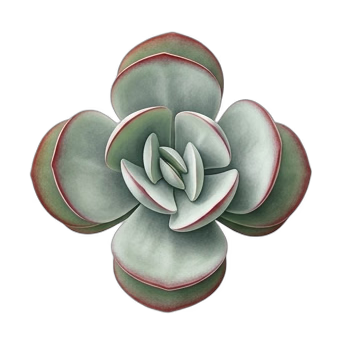
A mature Xerosicyos danguyi cascading down a weathered concrete wall in a dry-climate botanical installation features coin-like, succulent leaves that catch the late-afternoon sun like minted silver, defying the dusty heat of the courtyard. When pinched, those cold, coin-shaped disks are thick and rubbery with water-storing tissue, proving that this climber from Madagascar earns a permanent home in dry-climate design palettes. Horticultural practice has spent decades working with exotic succulents, and few species capture both architectural minimalism and sheer botanical oddness quite like the Silver Dollar Plant.
1. Botanical Overview & Natural Habitat

In its native habitat, Xerosicyos danguyi uses specialized, branched tendrils to scramble up shrubs and tree trunks, reaching lengths of up to 15 to 20 feet (4.5 to 6 meters) in the wild, though it typically remains much more modest, around 3 to 6 feet (0.9 to 1.8 meters), when cultivated in containers indoors. The stems are slender, wiry, and greyish-green, bearing alternate, perfectly round or slightly oval fleshy leaves that measure roughly 1 to 2 inches (2.5 to 5 cm) in diameter. These leaves act as hydraulic batteries, storing immense amounts of water to survive prolonged droughts.
Taxonomically, the plant was first formally described by the French botanist Humbert in 1945, who recognized its unique adaptations to extreme dry spells. The leaves exhibit a glaucous, powdery blue-green coating—known as farina—which acts as a natural sunscreen, reflecting intense UV radiation and minimizing moisture loss through transpiration. While mature plants occasionally produce small, inconspicuous yellowish-green flowers, they are rarely seen in indoor settings.
For interior landscapers and dry-climate gardeners, its trailing growth habit makes it a phenomenal specimen for hanging baskets, high shelves, or trained against a vertical trellis. If you appreciate architectural foliage with a quirky evolutionary background, pairing it with other structural statement plants—much like you would select varieties in The Complete Guide to Coleus Plants: 50+ Varieties, Care, Propagation & Landscaping—allows you to build dynamic visual contrasts in your indoor or patio spaces.
2. Essential Environmental & Care Requirements
Understanding the native environment of southern Madagascar dictates how we must treat Xerosicyos danguyi in our homes and gardens. It is an unyielding sun-worshipper that detests soggy feet and heavy, compacted soil.
| Parameter | Optimal Condition | Common Mistake | Why It Matters |
|---|---|---|---|
| Light | 6+ hours of direct sunlight daily; bright southern or western exposure. | Keeping it in a dim office corner or north-facing window. | Low light causes etiolation (stretched, weak stems), loss of silver farina, and eventual root rot from slow soil drying. |
| Watering | Soak-and-dry method; allow soil to dry completely 100% between waterings. | Frequent, shallow sips or keeping soil constantly damp. | Constant moisture suffocates the caudiciform and fibrous root systems, triggering rapid fungal decay and stem rot. |
| Substrate | Gritty, highly porous cactus/succulent mix amended with perlite/pumice. | Planting in standard, organic-heavy indoor potting soil. | Dense soils hold water too long; coarse mineral mixes allow oxygen to reach the roots and drain instantly. |
| Temperature | 65°F to 85°F (18°C to 29°C) actively; tolerates down to 40°F (4°C) briefly. | Exposing the plant to sub-freezing temperatures or heavy frost. | Freezing water inside the succulent leaf cells expands and ruptures cell walls, turning the plant to mush. |
When determining pot size, remember that like many drought-adapted species, Xerosicyos danguyi actually prefers a slightly snug root run. If you are transitioning plants into deeper containers or combining them with other root systems—similar to calculating container depths for deep-rooting edibles like those detailed in How Deep Do Pepper Plant Roots Go? Pot Size & Substrate Depth Guide—always prioritize a container with massive drainage holes over sheer volume.
During the active growing season from spring through late summer, your Silver Dollar Plant will appreciate warm ambient temperatures and maximum solar exposure. In winter, it enters a semi-dormant resting phase. During these cooler, darker months, reduce watering frequency by half to mimic its natural dry season in Madagascar.
💡 Pro-Tip: Never touch the flat surfaces of the silver dollar leaves with bare fingers when you can avoid it. That powdery, chalky sheen (farina) is the plant's natural sunblock and defense mechanism against dehydration. Wiping it off leaves unsightly fingerprints and strips away vital environmental protection.
3. Step-by-Step Cultivation, Feeding & Propagation
Growing Xerosicyos danguyi successfully requires patience and a light hand. Because it is a succulent liana, propagating and maintaining it is straightforward once you master its biological clock. Follow this step-by-step protocol for pruning, repotting, and propagating your vine.
- Select and Prepare the Ideal Pot: Choose a terracotta or unglazed ceramic pot that is only 1 to 2 inches (2.5 to 5 cm) wider than the current root ball. Ensure the container has at least one large bottom drainage hole.
- Mix the Substrate: Blend 50% high-quality commercial cactus and succulent potting mix with 30% coarse perlite or pumice and 20% horticultural sand or crushed lava rock to guarantee maximum aeration and quick drainage.
- Potting or Repotting: Gently remove the plant from its nursery container, tease apart any tightly bound roots, and position it at the exact same soil depth it was previously growing at. Fill in the gaps with your dry, gritty substrate, tamping lightly around the base.
- Initial Rest Period: Do not water the plant immediately after repotting. Wait 7 to 10 days to allow any minor root abrasions to callus over, preventing opportunistic soil-borne pathogens from entering the plant.
- Establish the Watering Routine: After the initial waiting period, drench the soil thoroughly until water runs freely out of the bottom holes. Do not water again until a moisture meter or wooden chopstick inserted 3 inches (7.5 cm) into the soil comes out completely dry and clean.
- Seasonal Feeding: Apply a balanced, water-soluble, low-nitrogen succulent fertilizer diluted to half-strength once every 4 weeks strictly during spring and summer. Withhold all fertilizer completely from October through February.
- Stem Propagation via Cuttings: To propagate, use sterile shears in late spring to take a 4 to 6-inch (10 to 15 cm) stem tip cutting containing at least 2 to 3 nodes. Allow the cut end to dry and callus over in a shady, warm spot for 3 to 5 days until a hard, protective skin forms over the wound.
- Rooting the Cutting: Insert the callused cutting 1 to 2 inches (2.5 to 5 cm) deep into a dry perlite-and-peat propagation medium. Keep the medium barely moist, and place the setup in bright, indirect light. Roots and new lateral growth typically emerge within 21 to 30 days.
For more detailed technical insights on succulent physiology, you can reference the comprehensive botanical resources maintained by the Royal Botanic Gardens, Kew.
4. Common Problems, Pests & Troubleshooting
Even resilient plants from harsh environments can falter when brought indoors. Most issues with Xerosicyos danguyi stem from well-intentioned overcare—specifically, too much water paired with insufficient light.
- Yellowing, Soft, Translucent Leaves: This is the universal SOS sign of root rot caused by overwatering or poorly draining soil. Immediately unpot the plant, inspect the root system, trim away any black, mushy, or foul-smelling roots with sterilized shears, and repot into fresh, bone-dry gritty medium.
- Long, Leggy Stems with Tiny Leaves (Etiolation): If your vine is stretching toward the nearest light source and producing pale, widely spaced, undersized leaves, it is starving for photons. Relocate the plant immediately to a south-facing windowsill or supplement with a high-output LED grow light for 12 hours a day.
- Shrivelled, Wrinkled Leaves: While wrinkles can sometimes indicate under-watering, check the stems first. If the soil is bone dry, a deep soaking will plump the leaves back up within 48 hours. However, if the soil is wet and the leaves are shrivelled, root rot has destroyed the root system's ability to take up water, requiring emergency propagation of healthy stem tips.
- Mealybugs and Scale: These sap-sucking insects love tucking into the tight crevices where the round leaves meet the wiry stems. Look for white, cottony masses or small brown bumps. Treat minor infestations by dabbing insects with a cotton swab soaked in 70% isopropyl alcohol. For larger outbreaks, apply a targeted horticultural insecticidal soap or neem oil spray during the evening hours to prevent leaf scorch.
⚠️ Important Caution: Never let your Silver Dollar Plant sit in a saucer of standing water for more than 10 minutes after watering. If your pot uses a decorative cachepot without drainage holes, always remove the inner pot, water it over a sink, let it drain completely, and only then return it to the display container. Standing water is a guaranteed death sentence for this species.

5. Frequently Asked Questions
Is the Silver Dollar Plant toxic to cats and dogs?
According to data compiled by institutions like the ASPCA Animal Poison Control Center, Xerosicyos danguyi is generally considered non-toxic to household pets. However, ingestion of the fibrous stems or succulent leaves can still cause mild gastrointestinal upset, vomiting, or excessive drooling due to the plant's sap and physical bulk. It is always best practice to keep trailing vines out of reach of curious cats and dogs.
Why are the leaves on my Silver Dollar Plant falling off?
Sudden leaf drop is almost always triggered by sudden environmental shock, such as a drastic drop in temperature, being placed in a cold draft, or a severe, rapid shift in watering habits (going from completely parched to soaking wet). Check your placement to ensure the plant is away from drafty doors, air conditioning vents, or heating registers.
How fast does the Silver Dollar Plant grow?
In optimal conditions with abundant direct sunlight and proper warm-season feeding, Xerosicyos danguyi is a moderate to fast grower. It can easily put out 12 to 24 inches (30 to 60 cm) of trailing vine growth in a single growing season. Growth slows down dramatically during the autumn and winter months.
Can I grow a Silver Dollar Plant outdoors year-round?
You can only grow Xerosicyos danguyi outdoors year-round if you live in USDA Hardiness Zones 10 through 12, where freezing temperatures never occur. If you live in a cooler climate, you can safely move your plant outdoors to a sunny patio or balcony during the summer months, but you must bring it back inside well before autumn temperatures drop below 50°F (10°C).
📋 Table of Contents ▼ Click to expand
Tags:





