

Rattlesnake Plant
Goeppertia insignis
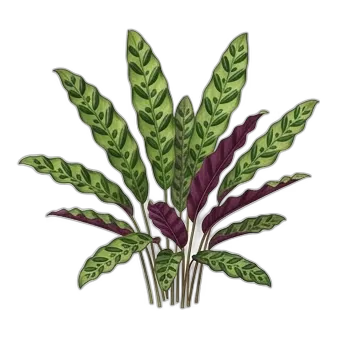
The afternoon sunlight was cutting horizontally through my studio windows, casting dramatic shadows across a three-gallon nursery pot, when I first watched my Goeppertia insignis fold its elongated, lance-shaped leaves upward for the night. That rhythmic, nocturnal rustling—the mechanical swoosh-swoosh of folding foliage driven by daily turgor pressure changes in the pulvinus—is what drew me to the Rattlesnake Plant over a decade ago. I have trialed hundreds of tropicals under harsh greenhouse glass and erratic indoor climates, but few species demand our precise respect quite like this Brazilian native. Let us dive straight into what it takes to master this magnificent prayer plant.
1. Botanical Overview & Natural Habitat

The foliage is its defining masterpiece. The pale yellow-green leaves feature striking, dark green elliptical blotches along the margins that mimic the pattern of a rattlesnake's skin, complemented by a deep purple-maroon underside designed to absorb and recycle fleeting rays of light filtered through the dense rainforest canopy. Unlike plants that require high-intensity light to thrive, Goeppertia insignis is evolutionarily optimized for low-light forest floors.
Understanding its native habitat dictates how we treat it indoors. In the wild, it never sees direct, scorching sun; it lives in damp, rich, organic leaf mold where temperatures remain consistently warm and humidity hovers near saturation. If you appreciate foliage with unique growth dynamics, you might also enjoy exploring The Complete Guide to Coleus Plants: 50+ Varieties, Care, Propagation & Landscaping for your shaded outdoor garden beds.
2. Essential Environmental & Care Requirements
Replicating a Brazilian rainforest inside a modern home or office requires a strict adherence to environmental parameters. Deviate too far from these baselines, and you will quickly see crispy leaf tips and drooping stems.
| Parameter | Optimal Condition | Common Mistake | Why It Matters |
|---|---|---|---|
| Light | Bright, indirect light (700–1500 lux) | Direct, unshaded afternoon sun | Direct rays scorch delicate foliage, bleaching the distinctive pattern and causing necrotic brown patches. |
| Temperature | 65°F to 80°F (18°C to 27°C) | Exposure to drafts below 55°F (13°C) | Cold drafts trigger immediate cellular collapse, leading to rapid yellowing and plant shock. |
| Humidity | 60% to 80% relative humidity | Ambient indoor air (below 35%) | Low moisture causes leaf margins to desiccate, turn brown, and curl permanently. |
| Watering | Evenly moist, never soggy (using distilled/rain water) | Letting it dry out completely or using hard tap water | Tap water contains fluoride and chlorine salts that build up in soil, causing tip burn and root necrosis. |
For deeper insights into plant root architecture and how sub-surface dynamics affect moisture uptake across different container sizes, take a look at my analysis on How Deep Do Pepper Plant Roots Go? Pot Size & Substrate Depth Guide.
💡 Pro-Tip: When monitoring your Rattlesnake Plant's hydration, invest in a digital hygrometer placed directly beside the pot. If your room humidity drops below 50%, group it with other tropicals or place it on a wide pebble tray filled with water, ensuring the water level sits strictly below the bottom of the nursery pot to prevent root rot.
To ensure your plant meets botanical standards, you can reference the Royal Horticultural Society plant database for additional hardiness classifications and genus data.
3. Step-by-Step Cultivation, Feeding & Propagation
Growing Goeppertia insignis successfully requires a loose, highly acidic-to-neutral potting mix that mimics forest humus while providing exceptional aeration. A standard commercial potting soil will compact over time and suffocate the fragile root system.
Soil Formulation Recipe
- 40% high-quality, fine-grade peat moss or coco coir
- 30% perlite or pumice for structural drainage
- 20% orchid bark (fine grade) for air pockets
- 10% worm castings for gentle, organic nutrition
Step-by-Step Propagation via Division
Because Rattlesnake Plants grow from underground rhizomes, stem cuttings will not root. Division is the only reliable method of asexual propagation.
- Select a Mature Specimen: Choose a healthy, multi-stemmed plant that is at least 2 to 3 years old and has outgrown its current container. Water the plant thoroughly 24 hours prior to division to minimize transplant shock.
- Unpot and Inspect: Gently slide the root ball out of its container. Use your fingers to brush away excess soil, exposing the interlocking rhizome network and distinct growth points (eyes).
- Divide the Rhizomes: Using a sterilized, sharp hori-hori knife or pruning shears, cut cleanly through the central rhizome mass, ensuring each newly separated division retains at least 3 to 4 strong stems and an intact root system.
- Prepare Nursery Pots: Fill individual 4-to-6-inch (10-to-15 cm) containers with your custom well-draining soil mix, ensuring drainage holes are clear.
- Plant and Settle: Set each division at the exact same soil depth it was growing at previously. Firm the soil gently around the base and water lightly with room-temperature distilled water to settle the media.
- Establish High Humidity: Enclose the newly divided pots in clear plastic bags or place them in a propagation dome for 14 to 21 days to maintain 90% humidity while root systems recover.
Feed your established plants sparingly during the active growing season (spring through summer). Use a balanced, water-soluble houseplant fertilizer diluted to one-quarter strength once every 4 weeks. Cease all fertilization completely from late autumn through winter when growth naturally slows.
4. Common Problems, Pests & Troubleshooting
Even veteran indoor gardeners occasionally run into trouble with Marantaceae. Here is how to diagnose and correct the most frequent issues.
Crispy, Brown Leaf Tips
- The Cause: Low relative humidity, chemical buildup from tap water, or irregular watering cycles where the soil dries out completely.
- The Solution: Switch immediately to distilled water, reverse osmosis water, or collected rainwater. Increase ambient humidity above 60% and prune away severely damaged tips using sterilized shears, cutting at a natural angle just outside the green tissue.
Yellowing Lower Leaves
- The Cause: Overwatering leading to anaerobic soil conditions and root rot, or natural senescence of older foliage.
- The Solution: Check the root ball. If roots are brown, mushy, and foul-smelling, trim away the decayed sections, treat with a hydrogen peroxide rinse, and repot into fresh, dry, fast-draining substrate. Reduce watering frequency so the top 1 inch (2.5 cm) dries out between waterings.
Spider Mites (Tetranychus urticae)
- The Cause: Stagnant air and dry indoor heating during winter months. Fine webbing on the undersides of leaves and stippled, pale foliage are classic indicators.
- The Solution: Isolate the plant immediately. Wash the foliage thoroughly under a lukewarm shower to physically dislodge the pests. Follow up by spraying all leaf surfaces, especially the undersides, with horticultural insecticidal soap or neem oil every 7 days for a 3-week cycle.
⚠️ Important Caution: Never use harsh shining agents, leaf-shine sprays, or alcohol-heavy systemic insecticides on your Rattlesnake Plant. Its thin, sensitive leaf epidermis absorbs chemical solvents rapidly, causing severe leaf burn and premature defoliation.

5. Frequently Asked Questions
Why is my Rattlesnake Plant's leaves curling inward?
Leaf curling is a primary defense mechanism against moisture loss. When the ambient humidity drops too low or the roots are underwatered, the plant curls its leaves tightly into tubes to reduce surface-area exposure to dry air. Check your soil moisture and humidity levels immediately, and give the plant a thorough soak if the substrate is dry.
Do Rattlesnake Plants need direct sunlight to survive?
No. Direct sunlight is lethal to the delicate pigments of Goeppertia insignis. In their natural understory habitat, they are shielded by dense overhead canopies. Exposing them to direct rays will scorch their leaves, bleach the dark green spots, and cause permanent, unrecoverable damage. Provide bright, filtered indoor light instead.
Why do the leaves move up and down at night?
This kinetic movement is called nyctinasty. The plant adjusts its leaf orientation using a specialized, swelling joint at the base of the leaf petiole called a pulvinus. By changing internal water pressure (turgor) within this cellular motor organ, the plant folds its leaves upward at dusk to catch evening dew and protect itself from nocturnal herbivores, then lowers them horizontally at dawn to maximize light absorption.
How often should I water a Rattlesnake Plant?
Water your plant when the top 1 to 2 inches (2.5 to 5 cm) of soil feel dry to the touch. In a typical indoor climate, this translates to watering every 7 to 10 days during spring and summer, and every 12 to 16 days during the dormant winter months. Always use chlorine-free, low-mineral water to prevent chemical burn on the sensitive leaf tips.
📋 Table of Contents ▼ Click to expand
Tags:





