


You're still changing your Lucky Bamboo's water every week?
Written with AI assistance, edited and checked against horticultural sources.
I realized that my weekly ritual of completely flushing and replacing the water was actually shocking my plants. By throwing out the water, I was stripping away a fragile, self-regulating micro-ecosystem, exposing the naked roots to sudden shifts in temperature, pH, and dissolved mineral concentrations. Let us dive deep into the science of why this happens, and how you can transform your care routine to work in harmony with nature.
1. Botanical Overview & Natural Habitat
To understand why constant water-changing is counterproductive, we must first look at what Lucky Bamboo actually is. Despite its common name and segmented, cane-like appearance, it is not a member of the Poaceae (true bamboo) family. It is Dracaena sanderiana (often categorized as Dracaena braunii), a resilient tropical shrub belonging to the Asparagaceae family.

PLAY22 Gardening Tools Set of 10
A 10-piece hand tool set with a carry bag — trowel, transplanter, pruners and weeder. Suited to repotting and general container work.
View on Amazon ↗In its native habitat of Central Africa, specifically within the understory of humid rainforests, Dracaena sanderiana grows in damp, shaded forest floors. It thrives in warm temperatures ranging from 65°F to 85°F (18°C to 29°C), where its root systems are continuously bathed in organic, slow-moving moisture. These soils are highly aerated, enriched by decaying leaf litter, and populated by a diverse consortium of beneficial microbes.
At the root zone (rhizosphere), gas exchange is just as critical as moisture. When potting mix becomes dense, muddy, or suffocated by standing drainage water, fine root hairs quickly suffer from hypoxia (oxygen deprivation), leaving the door wide open for opportunistic fungal pathogens like Pythium and Phytophthora. Conversely, an open, biologically active substrate enables robust nutrient uptake and rapid vegetative vigor.
When grown hydroponically in water, Dracaena sanderiana undergoes a physiological transition. The roots develop specialized, highly porous tissues called aerenchyma, which allow gases to diffuse internally from the exposed upper stems down to the submerged root tips. Over time, a delicate biofilm of beneficial, non-pathogenic bacteria establishes itself on the root surfaces and container walls. This microbial community acts as a natural biological filter, breaking down organic waste and suppressing harmful pathogens.
When you dump out the water every seven days, you completely destroy this microscopic biome. You subject the plant to "new water shock," forcing it to constantly re-adapt its osmotic potential to varying chemical inputs.
"Successful indoor gardening isn't a game of luck—it is the art of respecting root biology and working in harmony with natural physiological cycles."
2. Essential Environmental & Care Requirements
To cultivate healthy, vibrant Dracaena sanderiana, you must recreate its native forest-understory microclimate. This involves precise calibration of light quality, water chemistry, temperature, and physical media.
The Chemistry of Water: Chlorine, Fluoride, and Osmotic Shock
The biggest hazard to Lucky Bamboo is not old water, but tap water. Municipal tap water is treated with chlorine, chloramines, and fluoride to make it safe for human consumption. However, Dracaena species are highly sensitive to these chemicals. Fluoride accumulates in the leaf tissue over time, traveling up the vascular system via transpiration and gathering at the leaf tips. Once it reaches toxic levels, it causes localized cell death, presenting as unsightly brown, dry leaf margins.
Furthermore, changing the water weekly often introduces significant temperature fluctuations. If you fill your vase with cold tap water (below 60°F / 15°C), the sudden drop in temperature causes immediate thermal shock. This constricts the plant's vascular pathways (xylem), halting water and nutrient transport for several hours or even days.
Instead of a weekly drain-and-fill, the optimal approach is to top off the water level as it evaporates, and perform a complete system flush only once every 4 to 6 weeks. This maintains a stable, bio-active environment while preventing the accumulation of toxic mineral salts.
Key Parameters & Botanical Overview
The table below outlines the precise environmental parameters required to keep your Dracaena sanderiana in peak physiological health, contrasting ideal conditions with common home-gardening mistakes.
3. Step-by-Step Cultivation, Feeding & Propagation
Transitioning your Dracaena sanderiana from a high-maintenance, stressful routine to a low-intervention, biologically stable system is straightforward. Follow this precise, step-by-step protocol to optimize your setup, whether you grow in water or soil.
Step 1: Optimize Container Aeration and Physical Support
Select a container (glass, ceramic, or high-quality plastic) that allows the roots to expand. If growing in water:
- Thoroughly wash the container and a handful of smooth, polished river stones with hot water (do not use harsh chemical soaps).
- Arrange the stones at the base of the container to support the stalks. Ensure they are packed loosely enough to let water circulate freely.
- If growing in soil, ensure the container has generous drainage holes. Amend a standard peat-based potting mix with 30% coarse perlite or pumice to prevent compaction.
Step 2: Stabilize Climate & Micro-Environment
Position your plant in a location with bright, indirect light—typically 3 to 5 feet (90 to 150 cm) away from an east- or west-facing window.
- Avoid south-facing windows unless they are sheared by a translucent curtain.
- Keep the plant away from drafty doorways, air conditioners, and heating vents. Drastic temperature drops below 55°F (13°C) can cause cellular damage, leading to soft, translucent patches on the leaves.
Step 3: Implement the "Top-Off and Flush" Hydration Method
Instead of discarding the water weekly, follow this routine:
- Weekly: Check the water level. It should submerge the roots by about 2 to 3 inches (5 to 7.5 cm). If the level has dropped due to evaporation, top it off with room-temperature distilled water, rainwater, or dechlorinated tap water (let tap water sit uncovered for 24 hours to allow chlorine gas to dissipate).
- Every 4 to 6 weeks: Perform a full system flush. Gently remove the stalks and stones. Rinse the roots in lukewarm water, check for any soft or rotting tissue, clean the container and stones to remove any accumulated algae or mineral crust, and reassemble with fresh, room-temperature water.
Step 4: Apply Dilute Organic Nutrients
Water naturally lacks the macro- and micro-nutrients found in forest soils. During active vegetative phases (spring through late summer), your plant needs supplemental nutrition to fuel cell division and leaf development.
- Use a high-quality, liquid organic fertilizer formulated for hydroponics or indoor foliage plants.
- Dilute the fertilizer to 1/10th of the manufacturer’s recommended strength. Over-fertilizing in a water medium leads to rapid root burn and massive algae blooms.
- Add this highly diluted solution once every 4 to 6 weeks, immediately after your monthly water flush.
Step 5: Propagation via Stem Cuttings
If your Lucky Bamboo has grown too tall, or if you want to expand your collection, propagation is incredibly simple:
- Identify a healthy side shoot or a section of the main stem with at least two nodes.
- Using a sterile, sharp pruning shear, make a clean cut at a 45-degree angle.
- Dip the cut end of the parent plant in paraffin wax or melted candle wax to seal the wound and prevent fungal infections.
- Place the new cutting in a small glass container filled with 2 inches (5 cm) of distilled water. Keep it in a warm, brightly lit spot. Root initials will begin to emerge from the nodes within 14 to 21 days.
💡 Pro-Tip: Always hydrate with room-temperature water; icy tap water induces thermal root shock and halts nutrient absorption for hours. If you must use tap water, let it sit in an open container for 24 hours beforehand to allow the chlorine to gassify, and ensure it warms up to ambient room temperature (approx. 70°F / 21°C).
⚠️ Important Caution: Never let soil-grown pots stand in saucer runoff water for more than fifteen minutes; stagnant water creates anaerobic conditions that rapidly cause root rot. If you are growing in water, do not fill the vase to the top—only submerge the root zone. Submerging the green stalks too deeply deprives them of oxygen, leading to stem decay.
For more detailed guides on keeping your indoor environment healthy, you can consult the Royal Horticultural Society for expert advice on managing indoor humidity and pest control.
4. Common Problems, Pests & Troubleshooting
Even with careful management, indoor microclimates can fluctuate. Here is how to diagnose and treat the most common issues affecting Dracaena sanderiana.
1. Yellowing Leaves and Stalks
If the leaves are turning a pale yellow, but the stems remain firm, it is likely a sign of chemical sensitivity (fluoride or chlorine) or minor nutrient deficiency. If the entire stalk begins to turn yellow, translucent, and soft from the bottom up, this indicates systemic rot.
- The Fix: Immediately isolate the affected plant. If the stalk is soft, cut away the yellow, mushy sections using a sterile blade. Save the healthy upper green portions and place them in fresh, distilled water to grow new roots.
2. Mushy, Black, or Foul-Smelling Roots
Healthy roots should be orange, red, or light brown, and firm to the touch. If they turn black, slimy, and emit a swampy odor, your root system is suffering from root rot caused by anaerobic bacteria or fungal pathogens.
- The Fix: Remove the plant from the container. Gently rinse the root system under running, lukewarm water. Using sterilized scissors, prune away all soft, black roots. Clean the container and stones with a mild bleach solution (1 part bleach to 10 parts water) and rinse thoroughly. Re-establish the plant in clean, distilled water, and do not add any fertilizer until new, healthy root tips emerge.
3. Algae Accumulation
Algae thrives in environments where there is light, water, and dissolved nutrients. If your Lucky Bamboo is in a clear glass vase positioned in bright light, you will likely see green film growing on the stones, glass, and roots. While minor algae is not inherently harmful, excessive growth competes with the plant for dissolved oxygen and nutrients.
- The Fix: Switch to an opaque or dark-colored container that blocks light from reaching the water and root zone. If you prefer clear glass, clean the vase and stones thoroughly every 4 weeks, and keep the setup away from any direct sunlight.
To dive deeper into identifying plant pathogens and pests under greenhouse conditions, refer to the University of Florida IFAS Extension, which offers excellent resources on tropical ornamental plant pathology.
5. Frequently Asked Questions
When is the best time of year to implement these changes?
Early spring through mid-summer represents the active metabolic window when indoor plants can rapidly utilize increased light and fresh nutrients. During winter dormancy, reduce hydration and topping-off frequency accordingly, as the plant's transpiration rate naturally slows down.
How quickly will I see visible improvements?
Most foliage houseplants and Dracaena varieties respond within 7 to 14 days with noticeable leaf turgidity, deeper emerald color, and active apical shoot emergence once the shock of weekly water changes is eliminated.
Is this technique suitable for all indoor plant varieties?
Yes! Working with natural root biology, minimizing chemical exposure, and preventing rhizosphere shock is exceptionally effective for Monsteras, Philodendrons, Pothos, Snake Plants, and tropical foliage collections.
Why is my Lucky Bamboo turning yellow?
This is usually caused by using tap water high in chlorine, chloramine, or fluoride, which burns the sensitive root and leaf tissues. It can also be caused by excessive direct sunlight or systemic root rot from stagnant, oxygen-depleted water. Switch to distilled water, keep the plant in indirect light, and ensure the roots are not rotting.
How do I get my Lucky Bamboo to grow more branches?
To encourage lateral growth, you can prune the main stalk. Use a sterile blade to make a clean cut just above a leaf node. Seal the cut tip with wax to prevent moisture loss. New side shoots (branches) will soon emerge from the nodes just below the cut.
Have you tried this low-intervention technique with your own houseplants? Share your results with our global grower community on the Community Forum, explore more expert guides on Plant Tips, or visit our Home Page for comprehensive plant care archives.
📋 Table of Contents ▼ Click to expand
PlantSavvyWorld
Editorial team
PlantSavvyWorld is an independent botanical education project. Articles are drafted with AI assistance, then edited and checked against university extension services, botanical garden collections and other published horticultural sources.
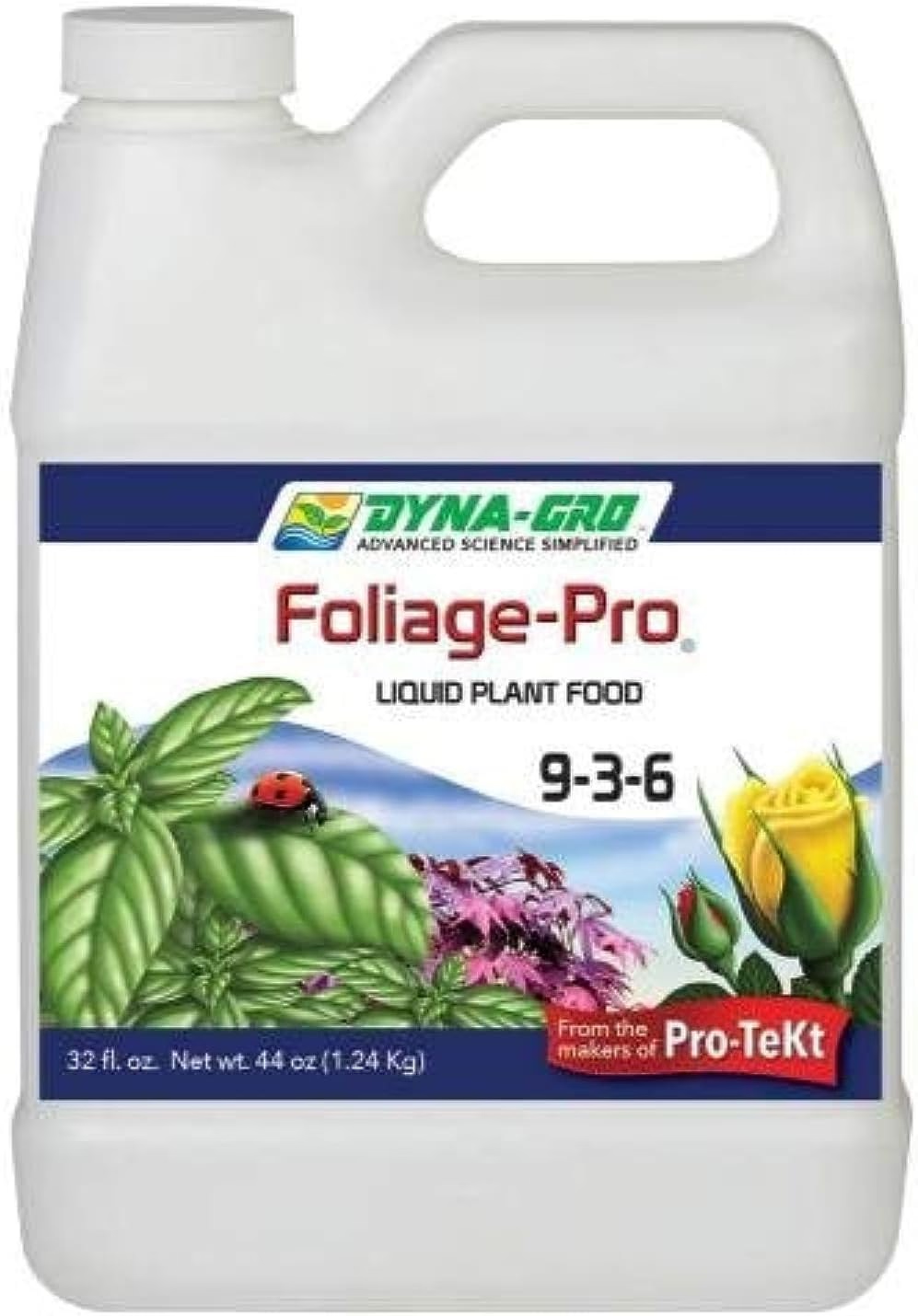
Organic Liquid Plant Food (FoxFarm)
A liquid organic plant food. Applied at label rate during active growth; most houseplants do better at reduced strength and not at all in winter.
View on Amazon ↗
PlantSavvyWorld
Editorial team
PlantSavvyWorld is an independent botanical education project. Articles are drafted with AI assistance, then edited and checked against university extension services, botanical garden collections and other published horticultural sources.
💬 Discussion