


STOP cutting your leggy String of Dolphins!
Written with AI assistance, edited and checked against horticultural sources.
If your immediate reaction to a leggy, stretched-out String of Dolphins is to grab your pruning shears and start chopping, I am here to tell you: STOP.
Pruning is a reactionary band-aid. If you cut a leggy plant without addressing the underlying physiological triggers, the resulting new growth will emerge just as weak, stretched, and flattened as before. Even worse, you are stripping away the plant’s limited energy reserves at a time when it is already metabolically compromised. To fix a leggy plant, we must look below the surface and work in harmony with its native evolutionary design.
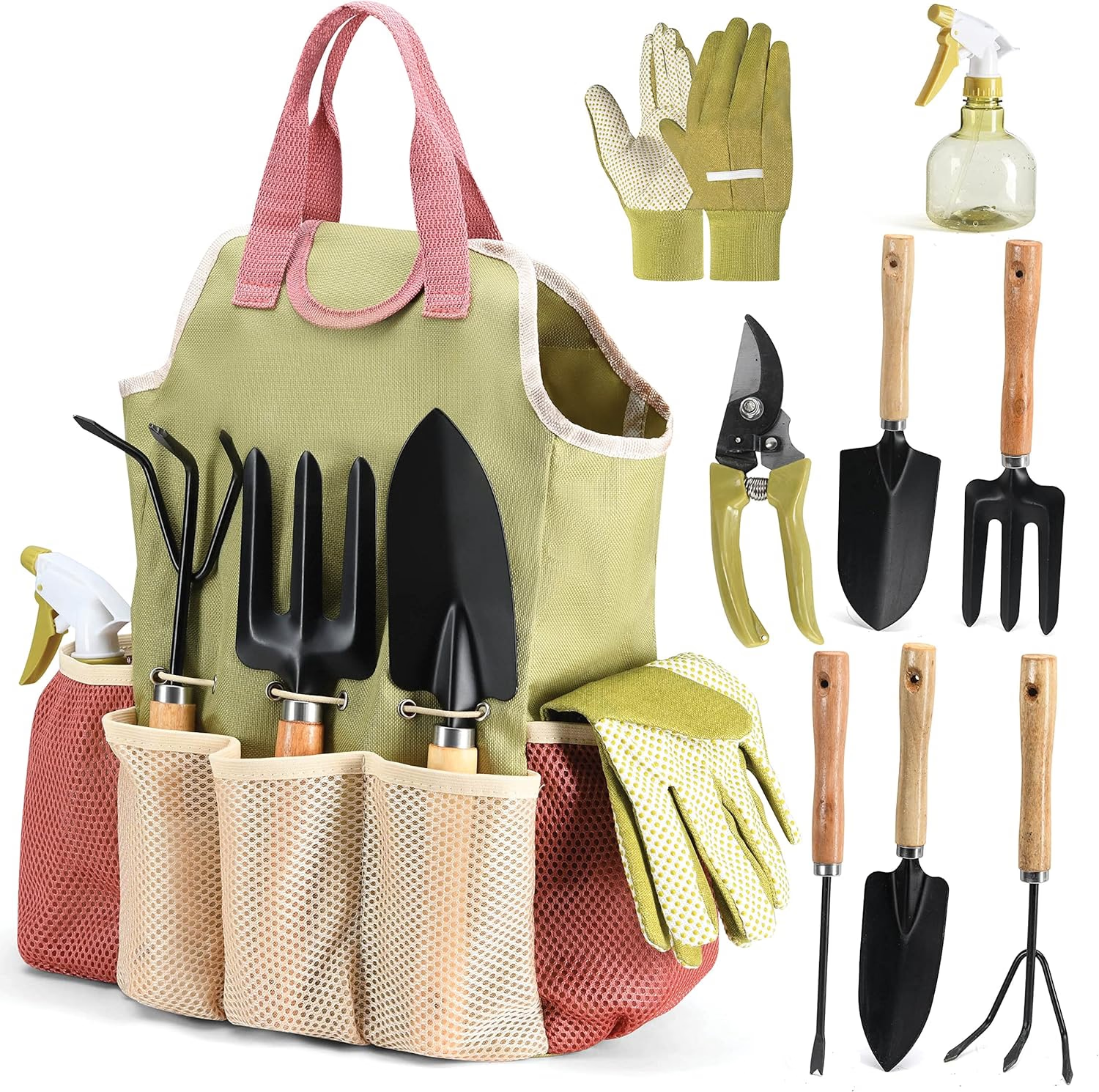
PLAY22 Gardening Tools Set of 10
A 10-piece hand tool set with a carry bag — trowel, transplanter, pruners and weeder. Suited to repotting and general container work.
View on Amazon ↗1. Botanical Overview & Natural Habitat
The String of Dolphins is not a naturally occurring wild species; it is an intergeneric hybrid of two South African treasures: Curio articulatus (the candle plant) and Curio rowleyanus (the iconic String of Pearls). To understand why this plant goes "leggy," we must look at the survival strategies of its parent lineage.
In their native South African habitats, these ancestral plants navigate rocky slopes, sandstone crevices, and semi-arid scrublands. They are exposed to intense, bright sunlight filtered through sparse vegetation, coupled with brief, torrential rainstorms followed by prolonged dry periods.
To survive these conditions, the String of Dolphins evolved highly specialized leaves. Each "dolphin" is actually a plump, succulent leaf with a curved, crescent shape. This morphology serves two evolutionary purposes:
- Water Storage: The thick, cylindrical leaf structure minimizes surface area relative to volume, significantly reducing water loss through transpiration.
- Epidermal Windows: If you look closely at a healthy dolphin leaf, you will notice a translucent band running along its curved spine. This is an epidermal window. It allows harsh sunlight to penetrate deep into the interior of the leaf, where chloroplasts can safely perform photosynthesis without exposing the delicate outer layers to solar scorching.
When light levels drop below the plant's metabolic threshold—typically around 400 foot-candles or 4,300 lux—the plant undergoes a process known as etiolation.
In an effort to survive, the plant's hormone distribution changes. Auxin, a growth hormone synthesized in the apical meristem, migrates to the shaded side of the stem. This causes the cells on the dark side to elongate rapidly, stretching the stem toward the nearest light source. At the same time, the leaves flatten out, losing their distinctive dolphin hook. This flattening is a desperate physiological bid to maximize surface area and capture whatever scant photons are available.
At the root zone (rhizosphere), gas exchange is just as critical as moisture. When potting mix becomes dense, muddy, or suffocated by standing drainage water, fine root hairs quickly suffer from hypoxia (oxygen deprivation), leaving the door wide open for opportunistic fungal pathogens like Pythium and Phytophthora. Conversely, an open, biologically active substrate enables robust nutrient uptake and rapid vegetative vigor.
"Successful indoor gardening isn't a game of luck—it is the art of respecting root biology and working in harmony with natural physiological cycles."
2. Essential Environmental & Care Requirements
To halt etiolation and restore the plump, three-dimensional dolphin shape to your plant, you must construct an environment that mimics the arid, high-light conditions of South Africa. You cannot train a succulent to adapt to a dark corner; you must adapt your space to meet its genetic programming.
When cultivating Curio × peregrinus, your goal is to balance the rate of photosynthesis with the rate of transpiration. If you provide high temperatures but low light, the plant's respiration rate will exceed its photosynthetic output, leading to weak, spindly stems. If you provide heavy water without adequate airflow and root oxygenation, the rhizosphere collapses.
The table below outlines the precise parameters required to maintain compact, robust growth and prevent the leggy stretch that tempts many growers to prune prematurely.
For detailed strategies on managing succulent species and understanding their native climates, the Royal Horticultural Society offers excellent taxonomic resources and cultivation principles.
3. Step-by-Step Cultivation, Feeding & Propagation
Instead of cutting away your leggy String of Dolphins, you can use a technique called the Coiling Method. This professional cultivation hack leverages the plant's natural adventitious rooting ability to transform a stringy, sparse basket into a lush, overflowing specimen without losing a single leaf.
When a stem grows leggy, it still contains vital vascular pathways (xylem and phloem) that transport nutrients and carbohydrates. By coiling these stems back into the pot rather than severing them, you preserve these energy highways while encouraging the dormant nodes along the stem to strike new roots and push out fresh, compact growth.
Here is the proven, systematic protocol I personally follow in a greenhouse:
Step 1: Optimize Container Aeration and Medium
Ensure your containers have generous drainage holes. I highly recommend using unglazed terracotta pots, as their porous clay walls allow moisture to evaporate laterally from the soil column. Remove your String of Dolphins from its old pot and inspect the roots. Gently shake away any old, compacted peat. Repot the plant into a fresh mix amended with 30% coarse perlite or pumice to prevent compaction.
Step 2: Perform the Soil-Coiling Maneuver
Instead of snipping those long, leggy, sparse vines, gently loop them back up and coil them in a spiral fashion over the surface of the exposed potting soil inside the rim of the pot. Take small, U-shaped floral pins (or bend standard paperclips into a "U" shape) and gently anchor the bare stem nodes directly against the damp soil. Ensure the nodes make firm physical contact with the substrate.
Step 3: Stabilize Climate & Micro-Environment
Position your newly coiled plant in a location with premium light. If your natural window light is insufficient, position an LED or T5 grow light 6 to 12 inches (15 to 30 cm) directly above the pot. To prevent localized transpiration stress, position plants at least 3 feet (91 cm) away from cold winter drafts and forced-air heating registers to prevent humidity shock. Keep the ambient relative humidity between 30% and 50%.
Step 4: Apply Dilute Organic Nutrients
During active vegetative phases (spring through early autumn), nourish your plant with half-strength organic liquid feeds to gently fuel cell division without root burn. I recommend an organic fish emulsion or a low-nitrogen seaweed extract. Apply this nutrient-rich water once every 4 weeks when the soil is dry.
💡 Pro-Tip: Always hydrate with room-temperature water; icy tap water induces thermal root shock and halts nutrient absorption for hours. For String of Dolphins, use water around 68°F to 72°F (20°C to 22°C) to keep the delicate root zone active.
⚠️ Important Caution: Never let pots stand in saucer runoff water for more than fifteen minutes; stagnant water creates anaerobic conditions that rapidly cause root rot. If the roots rot, the plant can no longer transport water up the stems, causing the leaves to shrivel and mimic underwatering!
4. Common Problems, Pests & Troubleshooting
Even with the most meticulous care, indoor environments can present challenges. Because Curio × peregrinus is a hybrid, it can display a mix of traits that make diagnostic interpretation slightly tricky. Understanding the biological mechanisms behind these symptoms will help you intervene before the damage becomes irreversible.
Root Rot and Anaerobic Collapse
If you notice that your dolphins are turning translucent, yellow, and mushy at the base of the stems, you are likely dealing with root rot. This is caused by anaerobic pathogens like Phytophthora thriving in oxygen-depleted, waterlogged soil.
To confirm this, gently slide the plant out of its pot. Healthy roots should be light tan or white, firm, and smell like fresh earth. Decayed roots will be black, slimy, and emit a sulfurous, swamp-like odor.
If rot has set in, you must act fast. Cut away any rotted, mushy tissue using sterilized shears, dust the remaining healthy stem bases with active charcoal or cinnamon powder (a natural antifungal), and repot into a completely fresh, dry, inorganic-rich aggregate mix. To understand the physics of soil water retention and how pore space impacts oxygenation, consult the comprehensive guides provided by the University of Florida IFAS Extension.
Flattened, Non-Dolphin Leaves (Loss of Phenotypic Expression)
When your dolphins look like flat, wide leaves, this is a direct response to a low Light Utility Index. The plant is trying to capture more photons by increasing its leaf surface area.
- The Fix: Slowly acclimate the plant to a brighter location over 5 to 7 days. Do not move it directly from a dark corner into blazing sun instantly, or the unadapted epidermal windows will sunburn, leaving white, scarred patches on the foliage.
Mealybug (Pseudococcus) Infestations
Mealybugs love the tight, protected crevices where the dolphin leaf meets the main trailing stem. These sap-sucking pests pierce the plant's epidermis and feed on the nutrient-rich phloem sap, weakening the plant and secreting a sticky residue called honeydew.
- The Treatment: Avoid heavy chemical pesticides and horticultural oils, which can strip the natural protective waxy cuticle (epicuticular wax) off your dolphin leaves. Instead, dip a cotton swab in 70% isopropyl alcohol and dab the pests directly. The alcohol dissolves their protective waxy coating, killing them instantly on contact. For widespread issues, spray the plant with a mild insecticidal soap solution during evening hours to prevent light-induced leaf scorch.
5. Frequently Asked Questions
Why are my string of dolphins losing their dolphin shape and turning flat?
This is a physiological defense mechanism called etiolation, triggered by insufficient light. The plant is flattening its succulent leaf tissue to maximize the surface area exposed to incoming light, trying to capture more photons for photosynthesis. To restore the dolphin shape, slowly acclimate your plant to a spot that receives brighter, indirect light or add an LED grow light.
When is the best time of year to implement these changes?
Early spring through mid-summer represents the active metabolic window when plants can rapidly utilize increased light and fresh nutrients. During winter dormancy, when photoperiods are shorter and temperatures are cooler, reduce hydration frequency and hold off on applying fertilizers.
How quickly will I see visible improvements after adjusting my care routine?
Most foliage houseplants and succulents respond within 7 to 14 days with noticeable leaf turgidity, deeper emerald color, and active apical shoot emergence. Within 21 to 30 days of coiling and increasing light, you will see new, plump dolphin-shaped leaves sprouting directly from the nodes that were pinned to the soil.
Is this coiling and aeration technique suitable for all indoor plant varieties?
Yes! It is exceptionally effective for other trailing succulents such as String of Pearls (Curio rowleyanus), String of Bananas (Curio radicans), and String of Hearts (Ceropegia woodii). It is also highly beneficial for tropical trailing plants like Pothos (Epipremnum aureum), Monsteras, and Philodendrons, which naturally produce adventitious aerial roots at their stem nodes.
Should I ever prune my String of Dolphins?
Pruning should be reserved exclusively for removing dead, diseased, or completely desiccated stems that can no longer transport nutrients. If a stem is totally dry and hollow, prune it back to healthy green tissue using sterile shears. However, if the stem is green and flexible—even if it is bare and leggy—do not cut it. Use the coiling method to preserve its stored energy and stimulate a bushier, healthier plant.
Have you tried this technique with your own houseplants? Share your results with our global grower community on the Community Forum, explore more expert guides on Plant Tips, or visit our Home Page for comprehensive plant care archives.
📋 Table of Contents ▼ Click to expand
PlantSavvyWorld
Editorial team
PlantSavvyWorld is an independent botanical education project. Articles are drafted with AI assistance, then edited and checked against university extension services, botanical garden collections and other published horticultural sources.
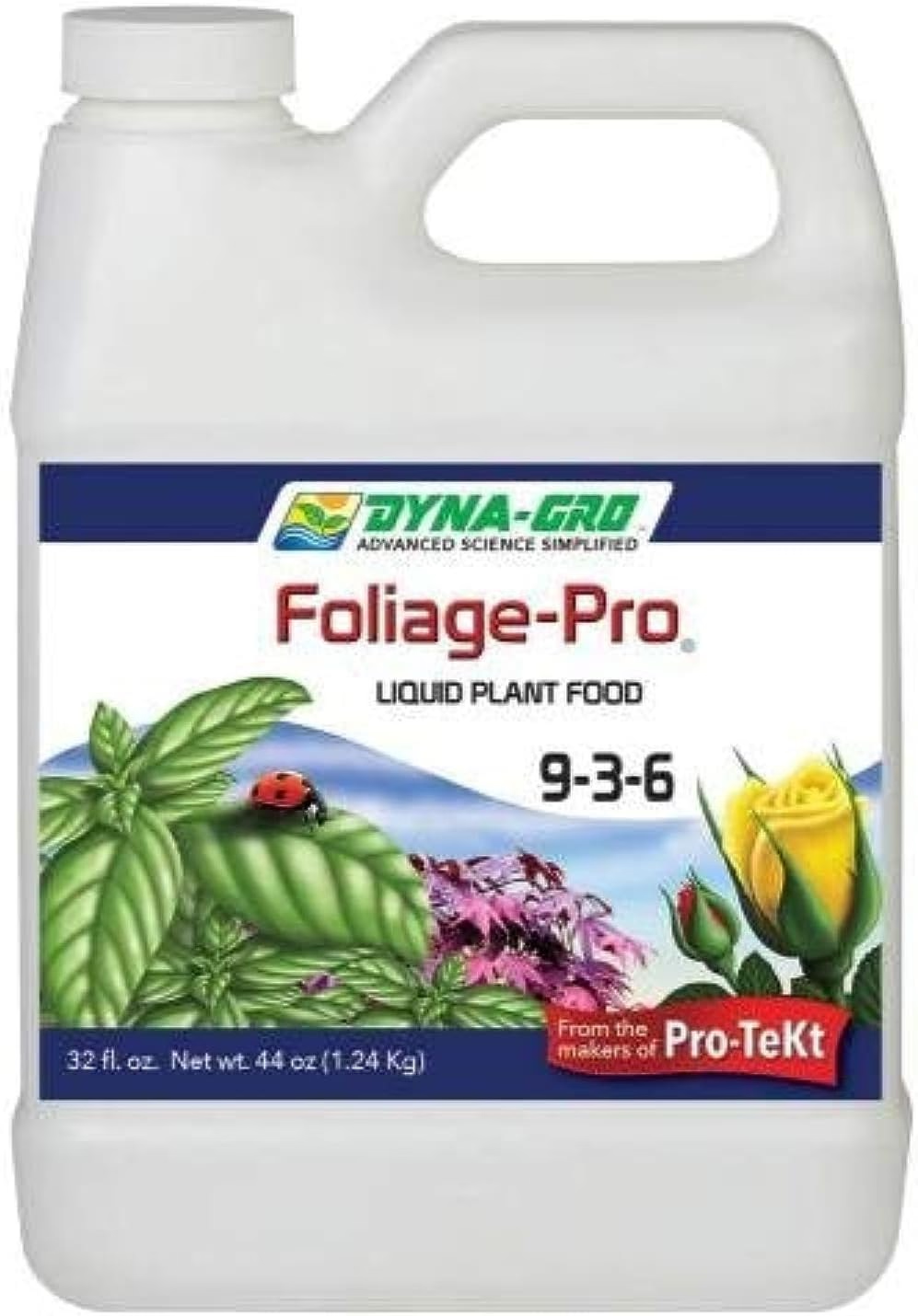
Organic Liquid Plant Food (FoxFarm)
A liquid organic plant food. Applied at label rate during active growth; most houseplants do better at reduced strength and not at all in winter.
View on Amazon ↗
PlantSavvyWorld
Editorial team
PlantSavvyWorld is an independent botanical education project. Articles are drafted with AI assistance, then edited and checked against university extension services, botanical garden collections and other published horticultural sources.
💬 Discussion