


You're doing Lucky Bamboo all wrong!
Written with AI assistance, edited and checked against horticultural sources.
For years, I wrestled with my indoor plants. My collection, once a source of pride, became a constant source of frustration. Despite meticulously following the advice in every gardening book and online guide I could find, my plants were listless, their leaves sported unsightly brown edges, and new growth seemed to stall indefinitely. It was a particularly gloomy afternoon, standing in my humid indoor plant room, that this predicament hit me. This wasn't just a phase; it was a pattern. That moment of utter despair was the catalyst for a profound shift in my approach. I realized I had been guessing, not truly understanding. It was time to stop guessing and start observing, to dive deep into the intricate biological needs of the root zone.
This shift in perspective is not just about aesthetics; it's about understanding the fundamental science that governs plant health.

PLAY22 Gardening Tools Set of 10
A 10-piece hand tool set with a carry bag — trowel, transplanter, pruners and weeder. Suited to repotting and general container work.
View on Amazon ↗The Botanical Science & Physiological Mechanisms
At the heart of every thriving plant is a healthy root zone, or rhizosphere. This is where the magic truly happens. Gas exchange is just as critical here as it is for us breathing air. When potting mix becomes dense, muddy, or is perpetually suffocated by standing drainage water, the delicate fine root hairs suffer from hypoxia—oxygen deprivation. This is a critical weakness, leaving the door wide open for opportunistic fungal pathogens like Pythium and Phytophthora to take hold, leading to devastating root rot. Conversely, an open, biologically active substrate enables robust nutrient uptake, efficient water absorption, and, crucially, rapid vegetative vigor. It’s a delicate balance, and one that is often overlooked by well-meaning plant parents.
As I learned, successful indoor gardening isn't a game of luck—it is the art of respecting root biology and working in harmony with natural physiological cycles.
1. Botanical Overview & Natural Habitat
Lucky Bamboo, scientifically known as Dracaena sanderiana, is not actually a bamboo at all, but a species of marsh-growing flowering plant native to Central Africa. Its common name comes from its superficial resemblance to bamboo culms and its perceived association with good fortune in Feng Shui. In its natural habitat, Dracaena sanderiana thrives in warm, humid environments, often found growing along the banks of streams and in the understory of rainforests. This implies a need for consistent moisture, but importantly, well-aerated moisture. It’s a plant that has adapted to environments where water is plentiful but rarely stagnant.
Understanding this origin is key to replicating its ideal conditions indoors. We need to mimic its natural environment by providing consistent hydration and sufficient light, while critically ensuring that the root system is never waterlogged. This delicate balance is often the crux of why many people struggle with their Lucky Bamboo, leading to the frustrating brown tips and yellowing leaves that plague so many collections.
2. Essential Environmental & Care Requirements
The secret to unlocking vibrant, healthy Lucky Bamboo lies in meticulously managing its environment. It’s about precision, not guesswork.
The Root Zone: A Critical Zone
This is where the real transformation happens. For Lucky Bamboo, especially when grown in soil, the substrate is paramount. It needs to be airy enough to allow roots to breathe, yet retain enough moisture to keep them hydrated. A common mistake is using heavy, dense potting soil that compacts easily. This suffocates the roots, preventing vital gas exchange and creating an environment ripe for fungal diseases.
When potting mix becomes dense, muddy, or suffocated by standing drainage water, fine root hairs quickly suffer from hypoxia (oxygen deprivation), leaving the door wide open for opportunistic fungal pathogens like Pythium and Phytophthora. Conversely, an open, biologically active substrate enables robust nutrient uptake and rapid vegetative vigor. This is why amending standard potting mixes with components like perlite, orchid bark, or even small gravel is so crucial. These additions create air pockets, improving drainage and aeration, which are essential for healthy root development.
3. Step-by-Step Cultivation, Feeding & Propagation
Here is the proven, systematic protocol I personally follow in a greenhouse for cultivating vibrant Lucky Bamboo.
- Container Selection and Substrate Preparation:
- Choose a container with ample drainage holes. For Lucky Bamboo grown in soil, a well-draining potting mix is essential. A good starting point is to amend a standard indoor potting mix with 30% coarse perlite or pumice. This creates the necessary aeration. Alternatively, a mix of equal parts peat moss, perlite, and orchid bark provides excellent drainage and aeration. For those who prefer growing in water, ensure the container is clean and uses decorative stones or pebbles to stabilize the plant and provide a surface for any emerging roots to anchor onto.
- Strategic Placement for Optimal Lighting:
- Position your Lucky Bamboo in a location that receives bright, indirect diffused light for 6 to 10 hours daily. An east-facing window is often ideal, as it provides gentle morning light. Avoid placing it in dark corners, which will lead to leggy, weak growth, or directly in harsh, scorching afternoon sun, which will burn the leaves. If your home lacks sufficient natural light, consider using a grow light for 8-10 hours a day.
- Watering Wisdom: The Deep Soak Method:
- For soil-grown plants: Allow the top 1 to 2 inches (2.5-5 cm) of soil to dry out between waterings. When it’s time to water, do so thoroughly until water drains from the bottom of the pot. Discard any excess water in the saucer. Avoid the temptation of frequent, shallow watering, as this encourages weak root systems.
- For water-grown plants: Use filtered, distilled, or rainwater. Tap water often contains fluoride and chlorine, which can accumulate and cause browning leaf tips. Change the water entirely every 1-2 weeks, or more often if it becomes cloudy. Ensure the roots are always submerged.
- Climate Control & Draft Avoidance:
- Stabilize the micro-environment. Position plants at least 3 feet (approx. 1 meter) away from cold winter drafts and forced-air heating or cooling registers. Sudden temperature fluctuations and dry, blasting air can cause significant stress, leading to leaf damage and stalled growth. Aim for a stable temperature range of 65-75°F (18-24°C).
- Nutrient Application for Vigorous Growth:
- During the active growing season (spring through early fall), feed your Lucky Bamboo with a dilute, balanced liquid fertilizer. Use it at half-strength once every 4 to 6 weeks. Opt for organic formulations if possible. Over-fertilizing can lead to salt buildup in the soil, which can "burn" the roots and cause browning. During the dormant winter months, reduce or cease fertilization.
- Propagation: Easy as Can Be:
- Lucky Bamboo is incredibly easy to propagate from stem cuttings. To do this, select a healthy stalk and use a clean, sharp knife or pruning shears to cut a section about 4 to 6 inches (10-15 cm) long. Remove any leaves from the bottom 2 inches (5 cm) of the cutting. You can then place this cutting directly into fresh water or moist, well-draining soil. New roots and shoots will typically emerge within a few weeks.
💡 Pro-Tip: Always hydrate with room-temperature water; icy tap water induces thermal root shock and halts nutrient absorption for hours. Similarly, warm water that is too hot can damage delicate root tissues. Aim for water that feels neither hot nor cold to the touch.
⚠️ Important Caution: Never let pots stand in saucer runoff water for more than fifteen minutes; stagnant water creates anaerobic conditions that rapidly cause root rot, suffocating the roots and inviting pathogens. If growing in water, ensure the decorative stones are also rinsed periodically to prevent algae and bacterial buildup.
4. Common Problems, Pests & Troubleshooting
Even with the best care, issues can arise. Understanding common problems and their solutions is key to maintaining a healthy plant.
- Yellowing Leaves: This can be a sign of overwatering, poor water quality (too much chlorine or fluoride), or insufficient light. Check your watering schedule and ensure you're using appropriate water. If the yellowing is widespread, consider increasing the light exposure slightly. If new growth is yellow but older leaves are green, it might indicate a nutrient deficiency.
- Brown Leaf Tips and Edges: This is perhaps the most common complaint. It's almost always due to one of two things:
- Water Quality: Tap water high in minerals, fluoride, or chlorine is the usual culprit. Switch to filtered, distilled, or rainwater.
- Low Humidity or Dry Air: Especially during winter months when heating systems are running, the air can become very dry. Increase humidity by misting the plant, placing it on a pebble tray with water, or grouping it with other plants.
- Root Rot: If the lower leaves are yellowing and the stem feels mushy or smells foul, root rot is likely. This is caused by overwatering and poor drainage. If caught early, you can try to save the plant by removing it from the pot, trimming away all rotted roots (they will be black and mushy), and repotting it in fresh, well-draining soil. For water-grown plants, this means thorough cleaning of the container and potentially trimming off rotted sections of the stalk.
- Leggy or Stretched Growth (Etiolation): This occurs when the plant isn't receiving enough light. The stems grow long and thin as the plant stretches desperately towards a light source. Move the plant to a brighter location. You can prune back the leggy stems to encourage bushier growth.
- Lack of New Growth: This can be caused by inadequate light, insufficient nutrients, or the plant being root-bound. Check your light levels, ensure you're fertilizing appropriately during the growing season, and consider repotting if the roots have filled the entire pot.
- Pests: While generally not a major pest magnet, Lucky Bamboo can occasionally attract spider mites or mealybugs.
- Spider Mites: Look for fine webbing and tiny moving dots on the leaves. Their presence indicates dry conditions. Increase humidity and wipe down the leaves with a damp cloth. For infestations, use an insecticidal soap or neem oil.
- Mealybugs: These appear as small, white, cottony masses on the stems and leaf axils. You can often remove them with a cotton swab dipped in rubbing alcohol. Again, insecticidal soap or neem oil can be effective for larger infestations. You can learn more about identifying and managing common houseplant pests at the University of Minnesota Extension's guide.
5. Frequently Asked Questions
Why are the tips of my Lucky Bamboo turning brown and crispy?
This is the most common issue, and it's almost always related to your water quality or humidity levels. Lucky Bamboo is highly sensitive to chemicals commonly found in tap water, such as chlorine, fluoride, and salts. These build up in the plant's tissues, causing the characteristic brown tips. Always use filtered, distilled, or rainwater. Additionally, low humidity can cause the leaf edges to dry out and turn brown. If your home is dry, especially in winter, consider increasing humidity by misting or placing the pot on a pebble tray.
Can I grow Lucky Bamboo in plain water forever, or does it need soil?
While Lucky Bamboo is often sold and grown in water, its long-term health and vigor are often better supported when grown in soil or a well-draining substrate. Plants grown solely in water may lack essential micronutrients that are readily available in a good potting mix, and their root systems can become less robust. If you choose to grow it in water, be diligent about changing the water regularly and consider supplementing with a very dilute liquid fertilizer specifically formulated for aquatic plants or your regular houseplant fertilizer at a significantly reduced strength.
How often should I change the water for my Lucky Bamboo if it's in a vase?
If your Lucky Bamboo is growing in plain water, you should aim to change the water completely every 1 to 2 weeks. If you notice the water becoming cloudy or developing an odor sooner than that, change it immediately. This helps prevent the buildup of bacteria and algae, which can harm the roots and lead to rot. Rinsing the decorative stones or pebbles at the bottom of the vase each time you change the water is also a good practice.
My Lucky Bamboo is getting really tall and starting to fall over. What can I do?
Tall, spindly Lucky Bamboo is usually a sign that it's not receiving enough light. The plant is stretching to find more light, resulting in weak, elongated stems. The best solution is to move it to a brighter location with more indirect light. You can also prune the tall stalks. Cut them back to your desired height, and you’ll encourage new, bushier growth from the remaining stalk or from the base. The cut-off tops can then be propagated to create new plants, which is a fantastic way to refresh your collection and share with friends! For more detailed information on plant propagation, the Royal Horticultural Society (RHS) offers excellent resources.
Have you tried these techniques with your own Lucky Bamboo? Share your successes and struggles with our global grower community on the Community Forum, explore more expert guides on Plant Tips, or visit our Home Page for comprehensive plant care archives.
📋 Table of Contents ▼ Click to expand
PlantSavvyWorld
Editorial team
PlantSavvyWorld is an independent botanical education project. Articles are drafted with AI assistance, then edited and checked against university extension services, botanical garden collections and other published horticultural sources.
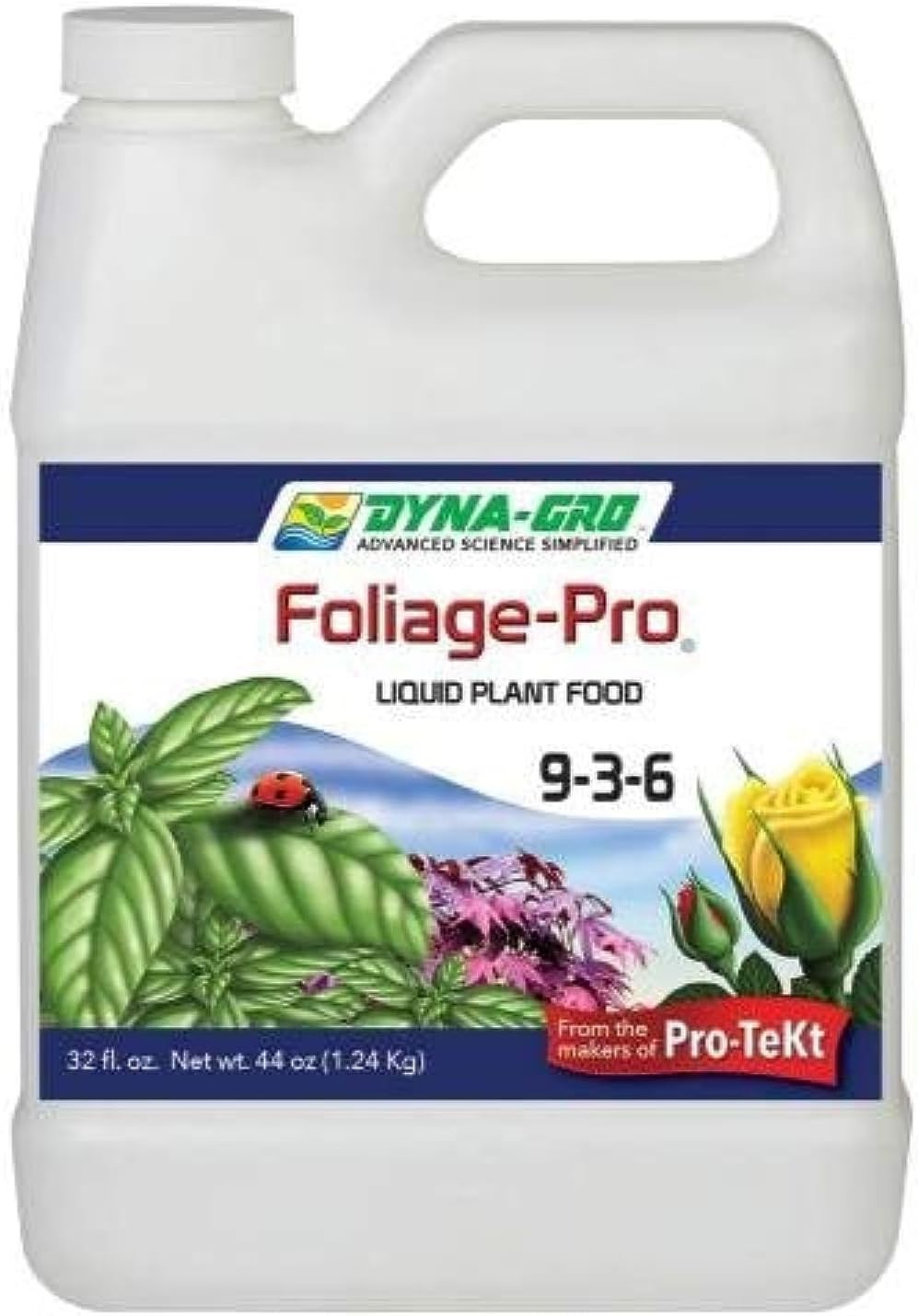
Organic Liquid Plant Food (FoxFarm)
A liquid organic plant food. Applied at label rate during active growth; most houseplants do better at reduced strength and not at all in winter.
View on Amazon ↗
PlantSavvyWorld
Editorial team
PlantSavvyWorld is an independent botanical education project. Articles are drafted with AI assistance, then edited and checked against university extension services, botanical garden collections and other published horticultural sources.
💬 Discussion