


WHAT IF I told you I haven't *really* watered my ZZ Plant in *SIX MONTHS* and it's never been...
Written with AI assistance, edited and checked against horticultural sources.
Among the specimens in my studio was a mature Zamioculcas zamiifolia—popularly known as the ZZ Plant. During a demanding six-month research expedition, this particular plant was completely overlooked in a dimly lit corner of my office. It received absolutely no manual irrigation from October to April. When I returned, expecting to find a shriveled pot of organic dust, I was stunned. Not only was the plant completely turgid, but it was also pushing up a pale green, 12-inch (30 cm) spear of new foliage.
Let us demystify the incredible physiological adaptations that allowed my ZZ plant to thrive without water for half a year, and how you can apply these scientific principles to revolutionize your entire indoor gardening practice.

PLAY22 Gardening Tools Set of 10
A 10-piece hand tool set with a carry bag — trowel, transplanter, pruners and weeder. Suited to repotting and general container work.
View on Amazon ↗1. Botanical Overview & Natural Habitat
To understand how a plant survives six months of absolute drought, we must examine its evolutionary home. Zamioculcas zamiifolia is a monotypic genus in the Araceae family, native to the arid regions of East Africa, spanning from Kenya down to South Africa. Unlike many of its tropical, moisture-loving aroid cousins like Philodendrons or Monsteras, the ZZ plant evolved in dry grasslands, savannas, and deciduous forests characterized by severe seasonal wet and dry cycles.
To survive months of zero rainfall, the ZZ plant developed three distinct morphological and physiological adaptations:
- Subterranean Potato-Like Rhizomes: These specialized, modified underground stems act as highly efficient water reservoirs. They store moisture and starches during the wet season, releasing them slowly to the root system during droughts.
- Succulent Petioles: What many growers refer to as "stems" are actually large, succulent compound leaves. The swollen bases of these petioles act as secondary water-storage vessels.
- Facultative CAM Photosynthesis: In times of severe drought, the ZZ plant can shift its metabolic pathway. While it normally utilizes standard C3 photosynthesis, under high drought stress it can transition to Crassulacean Acid Metabolism (CAM). This allows the plant to keep its stomata (microscopic breathing pores) closed during the hot daylight hours to prevent transpirational water loss, opening them only at night to absorb carbon dioxide.
At the root zone (rhizosphere), gas exchange is just as critical as moisture. When potting mix becomes dense, muddy, or suffocated by standing drainage water, fine root hairs quickly suffer from hypoxia (oxygen deprivation), leaving the door wide open for opportunistic fungal pathogens like Pythium and Phytophthora. Conversely, an open, biologically active substrate enables robust nutrient uptake and rapid vegetative vigor. For the ZZ plant, keeping the rhizosphere highly oxygenated and allowed to dry completely is the primary defense mechanism against these deadly root pathogens.
To read more about the natural distribution and ecological taxonomy of Araceae, explore the curated plant profiles on the Royal Horticultural Society database.
"Successful indoor gardening isn't a game of luck—it is the art of respecting root biology and working in harmony with natural physiological cycles."
2. Essential Environmental & Care Requirements
Replicating the dry, rocky East African savanna in a modern home requires balancing key abiotic factors: light quality, ambient temperature, humidity, and substrate physical structure.
The table below outlines the critical environmental parameters required to keep your ZZ plant in optimal health, avoiding the common pitfalls that lead to early physiological decline.
3. Step-by-Step Cultivation, Feeding & Propagation
If you want to achieve the same resilient, high-vigor growth that I maintain in a greenhouse, follow this highly disciplined step-by-step protocol.
Step 1: Optimize Container Aeration and Substrate Engineering
When potting or repotting your ZZ plant (best done every 2 to 3 years in spring), select a container with generous drainage holes. I highly recommend unglazed terracotta, which allows moisture to evaporate through its porous walls.
- Mix your substrate using a ratio of 50% high-quality coconut coir, 30% coarse pumice or perlite, and 20% medium-grade orchid bark.
- This porous blend ensures that when you do water, gravity pulls the excess through immediately, leaving the rhizosphere oxygenated and moist without being waterlogged.
Step 2: Stabilize Climate & Micro-Environment
Position your plant in a location with stable ambient conditions.
- Keep the ZZ plant at least 3 feet (90 cm) away from cold winter drafts, air conditioning units, and forced-air heating registers.
- Rapid temperature fluctuations disrupt the plant's transpirational equilibrium, leading to rapid yellowing or sudden leaf drop due to thermal and humidity shock.
Step 3: Implement the "Water Deficit Training" Protocol
Rather than watering on a weekly schedule, wait for the plant to tell you when it is dry.
- Insert a clean wooden dowel or moisture probe to the very bottom of the pot. If any soil particles cling to the dowel or show moisture, do not water.
- Once the pot is 100% dry, carry it to the sink and saturate the substrate thoroughly until water flows freely out of the drainage holes. This mimics the heavy, sporadic downpours of the East African savanna.
Step 4: Apply Dilute Organic Nutrients Safely
During the active vegetative phases (early spring through late summer), nourish your ZZ plant to support new stem development.
- Use a balanced, organic liquid fertilizer (such as a 3-1-2 NPK ratio) diluted to half or even quarter-strength.
- Apply this dilute fertilizer only after the soil has been lightly pre-moistened with plain water to prevent direct chemical burn to dry, sensitive root hairs.
Step 5: Master Rhizome Propagation
If your ZZ plant has become too dense, propagation is simple:
- Carefully slide the root ball out of its pot.
- Identify the distinct tuberous rhizomes. Using a sterilized scalpel, gently cut the tissue connecting the rhizomes, ensuring each separated section has at least one strong petiole with leaves and a cluster of roots.
- Pot each division into the custom aerated mix described in Step 1.
💡 Pro-Tip: Always hydrate with room-temperature water (68°F to 72°F / 20°C to 22°C); using icy tap water directly from the pipe induces rapid thermal root shock, causing the plant to temporarily close its root membranes and halt nutrient absorption for several hours.
⚠️ Important Caution: Never let pots stand in saucer runoff water for more than fifteen minutes. Stagnant water at the base of the pot creates completely anaerobic (oxygen-depleted) conditions that rapidly suffocate the root system and trigger destructive fungal pathogens.
4. Common Problems, Pests & Troubleshooting
Even the toughest plants can run into physiological trouble. Use this diagnostic checklist to quickly identify and correct issues before they cause permanent vascular damage to your ZZ plant.
Yellowing Leaflets and Soft, Mushy Stems
This is the classic symptom of overwatering and subsequent rhizome rot. When the root zone is starved of oxygen, the tissue decays, preventing the plant from drawing up water—which ironically causes the top of the plant to look dry and wilted.
- Remedy: Unpot the plant immediately. Cut away any black, mushy, foul-smelling roots or rhizomes with a sterilized knife. Dust the remaining healthy roots with activated charcoal or cinnamon (a natural fungicide) and repot into fresh, dry, highly aerated substrate.
Wrinkled, Puckered Petioles
If the stems of your ZZ plant look wrinkled, it means the plant has entirely depleted the water reserves stored in its succulent petioles and subterranean rhizomes. This is a sign of extreme dehydration (typically seen after 4 to 6 months without water in warm environments).
- Remedy: Do not dump gallons of water onto the dry soil all at once. Instead, perform a gentle bottom-watering step: set the pot in a shallow basin of lukewarm water for 30 minutes, allowing the dry peat to slowly rehydrate via capillary action.
Dry, Crispy Brown Spots on Leaves
This is typically caused by direct, scorching sunlight magnified by window glass, or extremely low humidity combined with hot draft air.
- Remedy: Move the plant 2 to 3 feet (60 to 90 cm) back from south- or west-facing windows, or diffuse the incoming light with a sheer curtain.
Pests: Mealybugs and Scale Insects
ZZ plants are highly resistant to most pests, but scale insects (which look like small brown bumps on the stems) and mealybugs (which look like cottony white tufts in leaf axils) can occasionally establish colonies.
- Remedy: Dip a cotton swab in 70% isopropyl alcohol and dab the pests directly to dissolve their protective waxy coatings. For larger infestations, apply an organic insecticidal soap or pure cold-pressed neem oil diluted with water and a drop of Castile soap.
For comprehensive entomological identification guides and pest control recommendations, refer to the University of Florida IFAS Extension portal.
5. Frequently Asked Questions
Why are my ZZ plant stems falling over and splitting?
Stems falling over or splitting away from the center of the plant is usually caused by insufficient light or overwatering. In low-light environments, the petioles stretch excessively toward the light source (etiolation), making them top-heavy and structurally weak. If the soil is kept too wet, the base of the stem rots and collapses under its own weight. To fix this, prune away collapsed stems, move the plant to a brighter location, and let the soil dry out completely.
Can a ZZ plant survive in a room with absolutely no windows?
While ZZ plants are incredibly resilient, no plant can survive long-term without light. In a room with no windows, your ZZ plant will eventually deplete its carbohydrate reserves and die. However, they can thrive under artificial lighting. If you keep them under standard office fluorescent lights or a dedicated LED grow light for 12 to 14 hours a day, they will photosynthesize quite happily.
How do I know if my ZZ plant rhizome is rotten?
A healthy rhizome should feel firm, plump, and heavy, similar to a fresh potato. If you gently brush away the top inch of soil and find that the rhizomes are soft, squishy, or oozing liquid when lightly pressed, they are rotting. Healthy rhizomes have a clean, earthy scent, while rotten rhizomes emit a distinct, sour, sulfur-like odor.
How often should you water a ZZ plant in the winter?
During the winter dormancy period (typically late October through February), the plant's metabolic rate drops significantly. Photosynthesis slows down, meaning water transpiration is nearly non-existent. You should reduce your watering frequency to once every 6 to 8 weeks, or even longer depending on your home's humidity level. Always verify that the potting mix is completely dry from top to bottom before adding any moisture.
When is the best time of year to implement these soil and watering changes?
Early spring through mid-summer represents the active metabolic window when plants can rapidly utilize increased light and fresh nutrients. During winter dormancy, reduce hydration frequency accordingly and avoid repotting unless it is an emergency.
How quickly will I see visible improvements?
Most foliage houseplants respond within 7 to 14 days with noticeable leaf turgidity, deeper emerald color, and active apical shoot emergence once their rhizosphere environment is optimized.
Is this watering technique suitable for all indoor plant varieties?
Yes! It is exceptionally effective for Monsteras, Philodendrons, Pothos, Snake Plants, and tropical foliage collections. However, plants with finer root systems (such as ferns or calatheas) will require slightly higher moisture retention in their substrate and should not be left dry for six months.
Have you tried this technique with your own houseplants? Share your results with our global grower community on the Community Forum, explore more expert guides on Plant Tips, or visit our Home Page for comprehensive plant care archives.
📋 Table of Contents ▼ Click to expand
PlantSavvyWorld
Editorial team
PlantSavvyWorld is an independent botanical education project. Articles are drafted with AI assistance, then edited and checked against university extension services, botanical garden collections and other published horticultural sources.
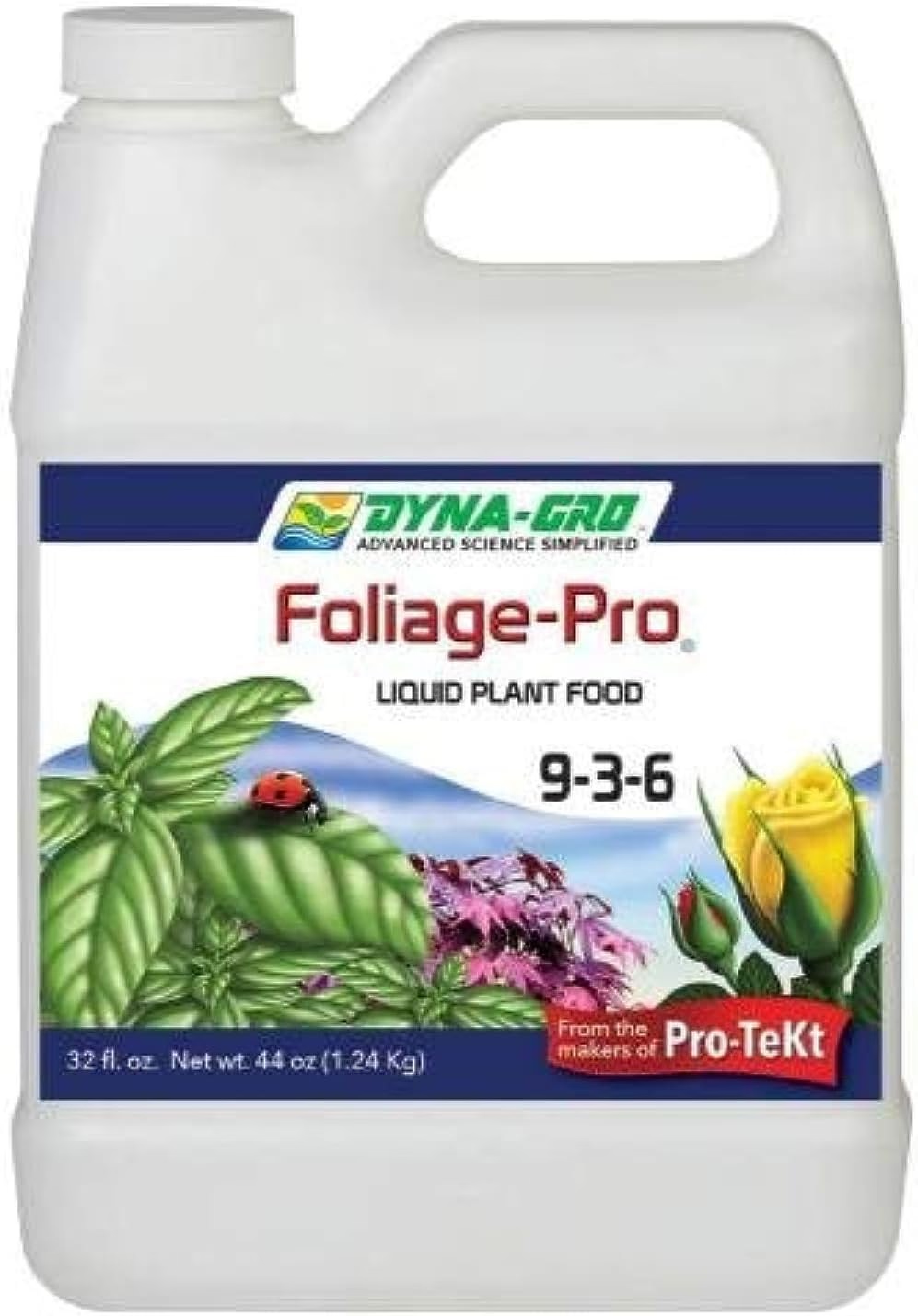
Organic Liquid Plant Food (FoxFarm)
A liquid organic plant food. Applied at label rate during active growth; most houseplants do better at reduced strength and not at all in winter.
View on Amazon ↗
PlantSavvyWorld
Editorial team
PlantSavvyWorld is an independent botanical education project. Articles are drafted with AI assistance, then edited and checked against university extension services, botanical garden collections and other published horticultural sources.
💬 Discussion