


Did you know you can grow up to 50 lemons a year, right on your apartment balcony?
Written with AI assistance, edited and checked against horticultural sources.
Today, I want to show you exactly how to apply this biological understanding to harvest up to 50 organic, juicy lemons a year, right on your apartment balcony.
1. Botanical Overview & Natural Habitat
To successfully cultivate citrus in a confined urban space, we must first look at the evolutionary history of the plant. The Improved Meyer lemon, the most successful cultivar for balcony growing, is a natural hybrid native to China. It is a cross between a traditional sour lemon (Citrus limon) and a sweet mandarin or orange (Citrus reticulata). This genetic heritage gives the Meyer lemon its signature thin, sweet rind, high juice content, and—most importantly for balcony gardeners—a semi-dwarf, highly adaptive growth habit.

PLAY22 Gardening Tools Set of 10
A 10-piece hand tool set with a carry bag — trowel, transplanter, pruners and weeder. Suited to repotting and general container work.
View on Amazon ↗In their native subtropical environments, these plants grow in highly aerated, organic-rich slopes where rainfall is frequent but drainage is instantaneous. They do not tolerate soggy, stagnant roots.
At the root zone (rhizosphere), gas exchange is just as critical as moisture. When potting mix becomes dense, muddy, or suffocated by standing drainage water, fine root hairs quickly suffer from hypoxia (oxygen deprivation), leaving the door wide open for opportunistic fungal pathogens like Pythium and Phytophthora. Conversely, an open, biologically active substrate enables robust nutrient uptake and rapid vegetative vigor.
Understanding the mechanics of the plant’s vascular system is key. Water and dissolved minerals travel upward from the roots through the xylem, driven by transpirational pull from the leaves. Meanwhile, sugars produced during photosynthesis travel downward via the phloem to feed the root system. If the roots are suffocated by dense soil, they cannot produce the adenosine triphosphate (ATP) required for active nutrient transport, halting this vascular loop.
For a comprehensive look at how citrus species grow and react to different environmental pressures, you can consult the Royal Horticultural Society's guide on citrus cultivation.
2. Essential Environmental & Care Requirements
Balconies are unique microclimates. Depending on your building's orientation, a balcony can experience intense, wind-whipped drafts, extreme radiant heat from concrete walls, and sharp fluctuations in relative humidity. To offset these factors, we must systematically design a supportive micro-environment.
"Successful indoor gardening isn't a game of luck—it is the art of respecting root biology and working in harmony with natural physiological cycles."
To achieve a bounty of 50 lemons per year, your tree must receive adequate solar radiation. Citrus leaves require light energy to drive the heavy metabolic cost of flower production and fruit maturation. If your balcony receives fewer than 8 hours of direct sun, you must supplement their light requirements.
Temperature management is equally critical. Citrus trees grow best when ambient temperatures range from 50°F to 85°F (10°C to 29°C). When temperatures fall below 50°F (10°C), the plant enters a semi-dormant state where root activity slows down drastically. If temperatures plunge below 29°F (-1.6°C), ice crystals can form within the plant cells, causing systemic tissue damage and crop loss.
The table below outlines the precise care parameters required to keep your balcony lemon tree in peak physiological health:
3. Step-by-Step Cultivation, Feeding & Propagation
Here is the proven, systematic protocol I personally follow in a greenhouse to guarantee a heavy fruit set on a balcony:
Step 1: Optimize Container Aeration and Drainage
Select a deep container made of breathable terracotta, glazed ceramic, or heavy-duty fabric. The pot should measure at least 12 to 15 inches (30 to 38 cm) in diameter. Ensure the pot has multiple wide drainage holes. Line the bottom with a fine mesh screen to prevent substrate loss. Never use gravel at the bottom of the pot; this actually raises the perched water table, increasing the risk of root rot. Mix 30% coarse perlite or pumice into a high-quality organic potting mix to keep the aggregate airy and loose.
Step 2: Stabilize Climate & Micro-Environment
Position your potted lemon tree in the most sun-drenched spot on your balcony, preferably facing south or west. Position plants at least 3 feet (1 meter) away from cold winter drafts and forced-air heating registers to prevent humidity shock when bringing the tree indoors for the winter. On windy balconies, place a windbreak (such as a lattice screen or larger balustrade plants) to shield the delicate blossoms from being torn away by strong gusts.
Step 3: Implement the "Soak and Dry" Hydration Cycle
Water your lemon tree slowly and deeply. Apply water until it flows freely out of the drainage holes at the bottom of the pot. This deep watering flushes out accumulated fertilizer salts and ensures all root hairs are hydrated. Do not water again until the top 2 inches (5 cm) of the soil feels dry to the touch.
Step 4: Apply Dilute Organic Nutrients
During active vegetative and blooming phases (early spring through late summer), nourish with half-strength organic liquid feeds to gently fuel cell division without root burn. Use a fertilizer specifically formulated for citrus, which includes essential micronutrients like iron, manganese, and zinc. Apply this feed every 14 days. During the winter dormancy period, suspend all fertilizer applications.
Step 5: Facilitate Hand-Pollination
While outdoor bees handle pollination in nature, high-rise balconies often lack active insect populations. To ensure your flowers transform into fruit, you must act as the pollinator. When the fragrant white flowers open, use a soft artist's paintbrush or a cotton swab to gently sweep the inside of each blossom. Transfer the yellow pollen grains from the outer anthers to the sticky, central stigma. Perform this simple task midday when the air is warm and dry.
Step 6: Prune for Structural Integrity and Yield
Prune your dwarf lemon tree in late winter while it is semi-dormant. Remove any "water sprouts"—vigorous, straight branches that grow rapidly upright from the main trunk but do not produce fruit. Thin out overlapping inner branches to improve airflow and allow sunlight to reach the center of the canopy. This keeps the tree compact and structurally strong enough to support up to 50 heavy, mature fruits.
💡 Pro-Tip: Always hydrate with room-temperature water; icy tap water induces thermal root shock and halts nutrient absorption for hours. If your tap water is highly chlorinated, let it sit open in a bucket for 24 hours before watering, or use collected rainwater to protect sensitive root tissues.
⚠️ Important Caution: Never let pots stand in saucer runoff water for more than fifteen minutes; stagnant water creates anaerobic conditions that rapidly cause root rot (Phytophthora). If using a saucer, elevate the pot on pot feet or decorative stones to keep the base completely clear of the drainage pool.
4. Common Problems, Pests & Troubleshooting
Growing citrus in pots on a balcony can occasionally present challenges. Because the root volume is restricted, stress symptoms can appear quickly. Understanding these visual signs will help you resolve issues before they threaten your harvest.
Problem 1: Sudden Leaf Drop
If your lemon tree sheds healthy, green leaves overnight, it is almost always a response to environmental shock. This occurs when the tree is moved abruptly from a humid outdoor balcony to a dry, heated indoor room in autumn, or when it experiences a sudden, cold draft. To fix this, always transition your tree gradually over a period of 10 to 14 days, slowly increasing its exposure to the new environment.
Problem 2: Yellow Leaves with Green Veins (Interveinal Chlorosis)
This is a classic sign of nutrient deficiency, specifically a lack of iron or magnesium. This deficiency is rarely caused by a lack of fertilizer in the soil; instead, it is usually triggered by a soil pH that is too high (alkaline), which locks up these nutrients. Citrus trees require an acidic soil pH between 5.5 and 6.5. Test your soil pH. If it is above 7.0, apply an organic soil acidifier containing elemental sulfur or use a liquid chelated iron drench to unlock the nutrients.
Problem 3: Pest Infestations (Scale, Mealybugs, and Spider Mites)
Balcony settings can dry out quickly, creating the perfect environment for sap-sucking pests.
- Scale Insects: These look like small, brown, waxy bumps along the stems and leaf veins. They feed on plant sap and excrete a sticky residue called honeydew. Treat them by scraping them off gently with a soft toothbrush dipped in a 70% isopropyl alcohol solution.
- Spider Mites: These tiny arachnids create fine webbing on the undersides of leaves and cause speckled, yellow discoloration. Blast them off with a strong stream of water, then spray the foliage thoroughly with organic neem oil or insecticidal soap.
For detailed identification guides and organic control methods for common citrus pests, consult the University of California Statewide Integrated Pest Management Program.
5. Frequently Asked Questions
When is the best time of year to implement these changes?
Early spring through mid-summer represents the active metabolic window when plants can rapidly utilize increased light and fresh nutrients. If you plan to repot your lemon tree, prune it, or change its fertilizer regimen, wait until you see the first signs of active growth in early spring. During winter dormancy, reduce hydration frequency and stop fertilizing entirely.
How quickly will I see visible improvements?
Most foliage houseplants and citrus respond within 7 to 14 days with noticeable leaf turgidity, deeper emerald color, and active apical shoot emergence. If you are correcting an iron deficiency or adjusting soil pH, expect to see new, healthy green leaves appear within 3 to 4 weeks.
Is this technique suitable for all indoor plant varieties?
Yes! Respecting root zone oxygenation, optimizing substrate aeration, and avoiding anaerobic drainage conditions is exceptionally effective for Monsteras, Philodendrons, Pothos, Snake Plants, and tropical foliage collections, as well as woody containerized plants like olives, figs, and dwarf citrus.
Why are my tiny baby lemons turning yellow and falling off?
This is a natural process known as "fruit drop" or "self-thinning." A healthy dwarf lemon tree produces hundreds of blossoms, but it can only support a small fraction of them as full-sized fruit. The tree naturally sheds excess fruit when they are about the size of a pea or a small cherry. However, if lemons the size of a golf ball begin dropping, this points to environmental stress—most commonly irregular watering, high winds, or a sudden drop in temperature.
Have you tried this technique with your own houseplants or balcony citrus? Share your results with our global grower community on our Community Forum, explore more expert guides on Plant Tips, or visit our Home Page for comprehensive plant care archives.
📋 Table of Contents ▼ Click to expand
PlantSavvyWorld
Editorial team
PlantSavvyWorld is an independent botanical education project. Articles are drafted with AI assistance, then edited and checked against university extension services, botanical garden collections and other published horticultural sources.
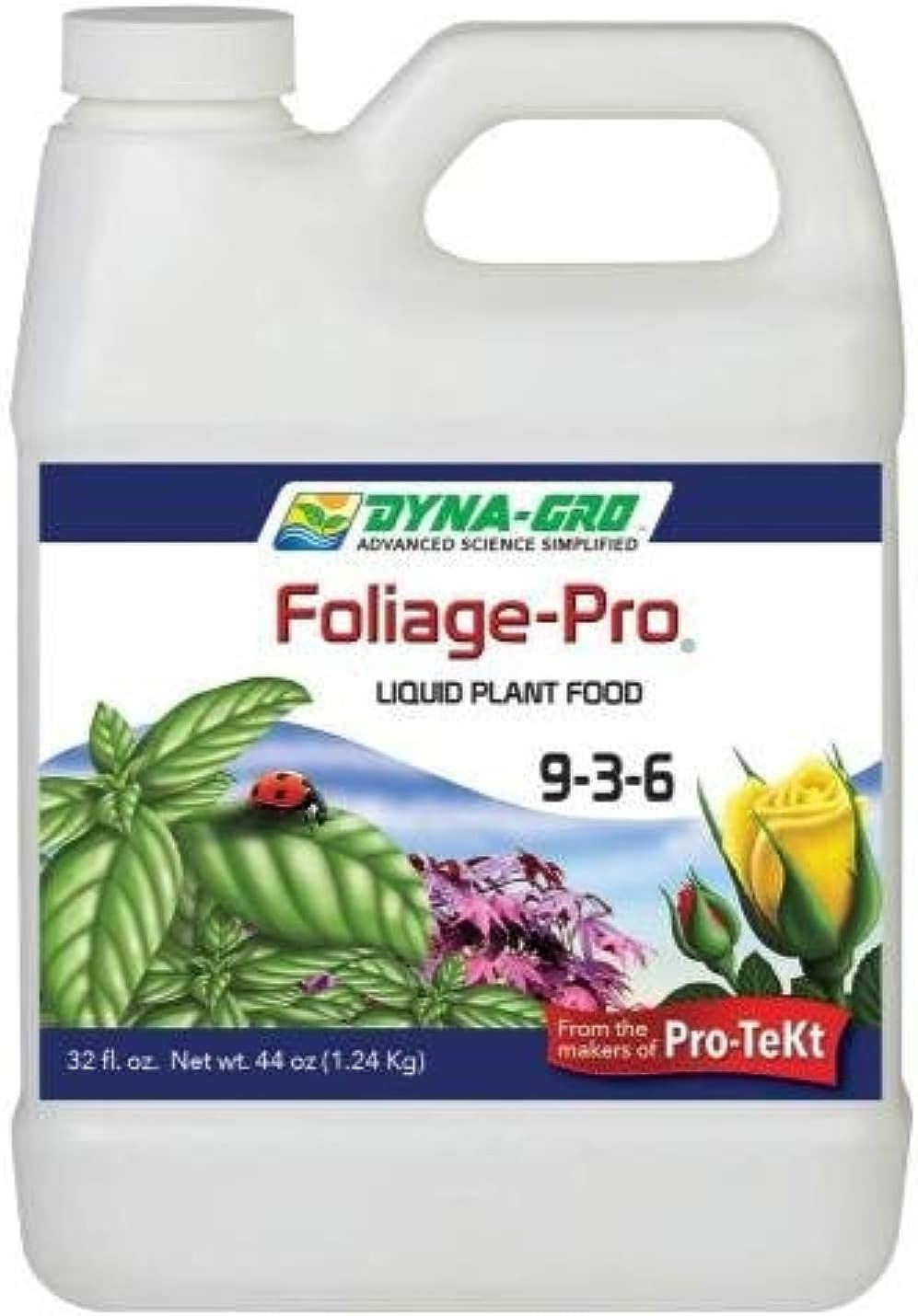
Organic Liquid Plant Food (FoxFarm)
A liquid organic plant food. Applied at label rate during active growth; most houseplants do better at reduced strength and not at all in winter.
View on Amazon ↗
PlantSavvyWorld
Editorial team
PlantSavvyWorld is an independent botanical education project. Articles are drafted with AI assistance, then edited and checked against university extension services, botanical garden collections and other published horticultural sources.
💬 Discussion