


Those yellow spots on your pothos?
Written with AI assistance, edited and checked against horticultural sources.
If you have discovered mysterious yellow spots scattered across your pothos (Epipremnum aureum) leaves, do not panic. Yellowing (chlorosis) and spot lesions are simply your plant's vascular system sending out a distress signal. By understanding the underlying botanical mechanisms, you can accurately diagnose the culprit—whether it is fungal leaf spot, sap-sucking pests, moisture stress, or chemical edema—and restore your plant to lush, trailing health.
1. Botanical Overview & Natural Habitat
To fix problems on your indoor pothos, you must first understand where it evolved. Epipremnum aureum is an epiphytic vine native to the tropical understory of the Solomon Islands in the South Pacific. In its wild habitat, pothos does not grow in dense, waterlogged soil on the forest floor. Instead, it uses aerial roots to climb tree trunks into the canopy, reaching heights of 40 to 60 feet (12 to 18 meters), anchored into moss, decaying tree bark, and pockets of organic debris.

PLAY22 Gardening Tools Set of 10
A 10-piece hand tool set with a carry bag — trowel, transplanter, pruners and weeder. Suited to repotting and general container work.
View on Amazon ↗Because of this epiphytic nature, pothos roots evolved in high-oxygen micro-environments exposed to frequent rainfall followed by rapid airflow and drying. At the root zone (rhizosphere), gas exchange is just as critical as moisture. When potting mix becomes dense, muddy, or suffocated by standing drainage water, fine root hairs quickly suffer from hypoxia (oxygen deprivation), leaving the door wide open for opportunistic fungal pathogens like Pythium and Phytophthora. Conversely, an open, biologically active substrate enables robust nutrient uptake and rapid vegetative vigor.
"Successful indoor gardening isn't a game of luck—it is the art of respecting root biology and working in harmony with natural physiological cycles."
When a pothos leaf develops yellow spots, the plant is telling you that cellular processes are breaking down. Yellowing occurs when chlorophyll breaks down faster than it can be synthesized. When pathogen attacks, pest damage, or cellular rupture (edema) disrupt the leaf tissue, surrounding cells collapse and lose green pigments, revealing bright yellow halos or necrotic brown centers.
2. Essential Environmental & Care Requirements
Creating an environment that mimics tropical understory conditions prevents yellow spots before they start. Below is an overview of the foundational environmental parameters required for vibrant, spot-free pothos growth.
Light & Photoperiod
Pothos thrives in medium to bright, indirect light measuring 100 to 500 foot-candles (1,000 to 5,000 lux) for 12 to 14 hours daily. While pothos can tolerate lower light levels, variegated varieties (N'Joy, Marble Queen) lose their chlorophyll-rich sectors in dim corners, leading to stress spots. Avoid placing pothos in direct afternoon sun, which quickly scorches leaf tissue, causing bleached yellow patches with crisp brown centers.
Substrate Architecture
Never plant pothos in heavy, moisture-retentive garden soil or cheap, unamended potting mix. Use a coarse, airy aggregate mix composed of:
- 40% Coarse Coconut Coir or Peat Moss (moisture retention)
- 30% Perlite or Pumice (pore space for oxygen)
- 30% Fine Orchid Bark (structure and structural aeration)
This target porosity ensures water drains through within seconds while retaining a light film of moisture over root surfaces.
Hydration & Water Quality
Hydrate your pothos deeply only when the top 2 inches (5 cm) of the substrate have dried out completely. Always flush the substrate until water flows freely out of the drainage holes. Never let the root system sit in standing water. Furthermore, water temperature matters: tap water below 55°F (13°C) triggers cold shock in tropical roots, causing cellular damage that manifests days later as yellowing leaf margins.
Temperature & Humidity
Maintain indoor temperatures between 65°F and 85°F (18°C to 29°C). Avoid dropping below 55°F (13°C), as prolonged cold exposure halts metabolic activity and triggers rapid leaf drop. While pothos tolerates average ambient room humidity (30% to 40%), keeping relative humidity between 50% and 70% encourages larger leaf development, aerial root formation, and prevents crispy, yellowed tips.
3. Step-by-Step Cultivation, Feeding & Propagation
To resolve active yellowing issues and encourage healthy new growth, follow this systematic management protocol:
- Inspect and Clean Container Drainage: Ensure your pot has at least one functional bottom drainage hole minimum 0.5 inches (1.3 cm) in diameter. Re-pot into a container that is no more than 1 to 2 inches (2.5 to 5 cm) larger than the current root mass. Amend standard potting mix with 30% perlite or coarse pumice to maximize oxygen diffusion.
- Stabilize Climate & Micro-Environment: Position your plant at least 3 feet (90 cm) away from cold winter window panes, exterior doors, and forced-air heating vents. Constant thermal fluctuations damage sensitive epidermal cells.
- Execute the Flush-and-Drain Hydration Protocol: Water thoroughly with room-temperature water (around 70°F / 21°C) until 20% of the total volume drains out the bottom holes. Allow all runoff to drain fully before returning the pot to its decorative cover pot or saucer.
- Apply Dilute Organic Nutrients: During the active growing phase (March through September), nourish every 14 to 21 days with a balanced, liquid organic fertilizer (NPK 3-1-2 or 1-1-1) diluted to half-strength (approx. 200–250 ppm nitrogen). This supplies essential macro and micronutrients without causing root-burning salt accumulation.
- Prune and Propagate Damaged Stems: Remove leaves that are more than 50% yellowed using sterile pruning shears sanitized with 70% isopropyl alcohol. To propagate healthy vines, cut stem sections containing at least one node and 1 to 2 leaves. Submerge the node in clean water or moist sphagnum moss at 72°F (22°C). New root systems will form within 14 to 21 days.
💡 Pro-Tip: Always hydrate your pothos with room-temperature water. Cold tap water induces thermal root shock, shutting down water and nutrient absorption for up to 48 hours and triggering cellular damage that appears as unsightly chlorotic spots.
⚠️ Important Caution: Never let your pots stand in saucer runoff water for more than 15 minutes. Stagnant runoff creates anaerobic conditions at the base of the pot, causing fine root hairs to die from hypoxia in less than 24 hours.
4. Common Problems, Pests & Troubleshooting
When yellow spots appear on your pothos leaves, correct diagnosis is key. Use this breakdown to identify the exact cause and take appropriate action:
1. Fungal or Bacterial Leaf Spot (Xanthomonas / Pseudomonas / Alternaria)
- Symptoms: Small, water-soaked brown or black spots surrounded by distinct, bright yellow halos scattered across the leaf blade.
- Root Cause: Wet foliage paired with stagnant air movement creates an ideal environment for bacterial and fungal spores to germinate.
- Solution: Prune away infected leaves immediately. Stop misting the leaves! Improve room airflow with a gentle fan and treat the plant with a copper-based fungicide or biological bactericide (e.g., Bacillus amyloliquefaciens). For detailed research on managing ornamental foliage diseases, consult the University of Florida IFAS Extension Leaf Spot Guide.
2. Sap-Sucking Pests (Spider Mites, Thrips, Mealybugs, Scale)
- Symptoms: Tiny, pinprick yellow spots (stippling) across the upper leaf surface, sticky honeydew residue, or fine webbing under the leaves.
- Root Cause: Pests pierce individual leaf cells and suck out chlorophyll and cell sap, leaving behind damaged, discolored spots.
- Solution: Isolate the plant. Wipe down all leaves with a mild solution of insecticidal soap or pure cold-pressed neem oil (diluted to 0.5%). Repeat every 5 to 7 days for three consecutive weeks to break the pest life cycle.
3. Edema (Cellular Rupture from Irregular Moisture)
- Symptoms: Translucent, blister-like spots on the undersides of leaves that later turn yellow and dry into corky, tan spots.
- Root Cause: The plant absorbs water through its roots faster than it can transpired through its stomata, causing internal cells to burst under hydraulic pressure.
- Solution: Establish a consistent watering routine. Never allow the soil to bone-dry for weeks and then drench it heavily in low-light conditions.
4. Overwatering & Root Rot (Pythium / Phytophthora)
- Symptoms: Lower leaves turn completely yellow; soft, yellow-spotted leaves that droop despite wet soil; black, mushy, foul-smelling roots.
- Root Cause: Anaerobic root zone conditions cause root decay, stopping water and nutrient transport to the upper foliage.
- Solution: Unpot the plant, gently wash away old soil, trim off black or mushy roots with sanitized shears, dip the remaining healthy roots in 3% hydrogen peroxide, and repot in a fresh, airy substrate.
For broader species profile details and taxonomic confirmation, cross-reference your observations with the Missouri Botanical Garden Epipremnum Aureum Directory.
5. Frequently Asked Questions
Why does my pothos leaf have yellow spots with brown centers?
Yellow spots with dark brown or black centers are typically caused by fungal or bacterial leaf spot infections (Xanthomonas or Alternaria). This happens when leaves stay wet for extended periods in low airflow environments. Isolate the plant, remove affected leaves with sanitized shears, and avoid getting water on the foliage during future waterings.
Should I cut off yellow spotted leaves on my pothos?
Yes, you should prune leaves that are more than 50% yellowed or damaged by spots. Leaves with severe chlorosis can no longer produce energy through photosynthesis; instead, they draw resources from the rest of the plant. Pruning them redirects vital nutrients toward healthy leaves and new stem growth.
How quickly will my pothos recover after fixing yellowing leaf issues?
Once environmental adjustments are made (such as fixing moisture levels or resolving a pest issue), you will typically see noticeable improvements in leaf firmness and new growth within 7 to 14 days. However, existing yellow spots on damaged leaves will not turn green again; focus on monitoring new growth to confirm the issue is resolved.
Is this care routine suitable for other indoor foliage plants?
Yes! The airy substrate blend, thorough watering protocol, and climate stabilization steps described here work exceptionally well for all Araceae family members, including Monstera deliciosa, Philodendrons, Syngoniums, as well as Snake Plants (Sansevieria) and ZZ Plants.
Have you tried these diagnosis and care techniques with your own indoor jungle? Share your photos and recovery stories with our global grower community on the Community Forum, explore more expert growing advice on our Plant Tips page, or visit our Home Page for comprehensive plant care archives.
📋 Table of Contents ▼ Click to expand
PlantSavvyWorld
Editorial team
PlantSavvyWorld is an independent botanical education project. Articles are drafted with AI assistance, then edited and checked against university extension services, botanical garden collections and other published horticultural sources.
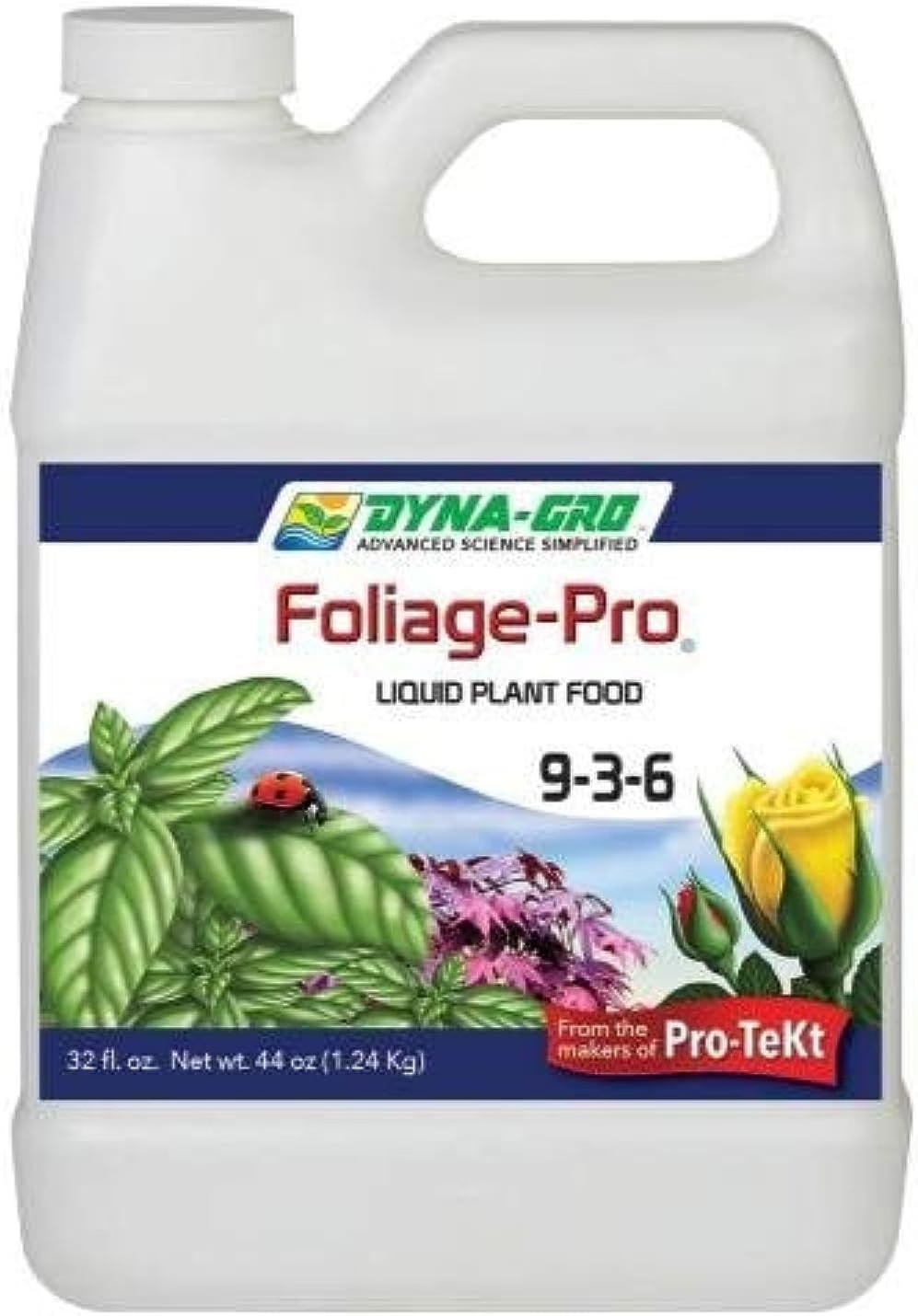
Organic Liquid Plant Food (FoxFarm)
A liquid organic plant food. Applied at label rate during active growth; most houseplants do better at reduced strength and not at all in winter.
View on Amazon ↗
PlantSavvyWorld
Editorial team
PlantSavvyWorld is an independent botanical education project. Articles are drafted with AI assistance, then edited and checked against university extension services, botanical garden collections and other published horticultural sources.
💬 Discussion