


The Drowning Method: A Revolutionary Botanical Hack for Faster Tradescantia Propagation
Written with AI assistance, edited and checked against horticultural sources.
When propagating Tradescantia zebrina cuttings under ideal indirect lighting conditions, lower leaves inevitably crisp up and die off before nodes push out meaningful roots when using traditional single-node-in-a-glass-of-water methods, whereas submerging the entire cutting underwater prevents this shriveling.
It sounded like absolute plant murder. Conventional plant propagation wisdom strictly dictates keeping foliage dry to prevent fungal outbreaks and rot. But I knew that transpirational water loss was the silent killer of stem cuttings. When I fully submerged those rebellious Tradescantia cuttings—leaves, stems, nodes, and all—everything changed. Within days, roots were exploding from every single submerged node.
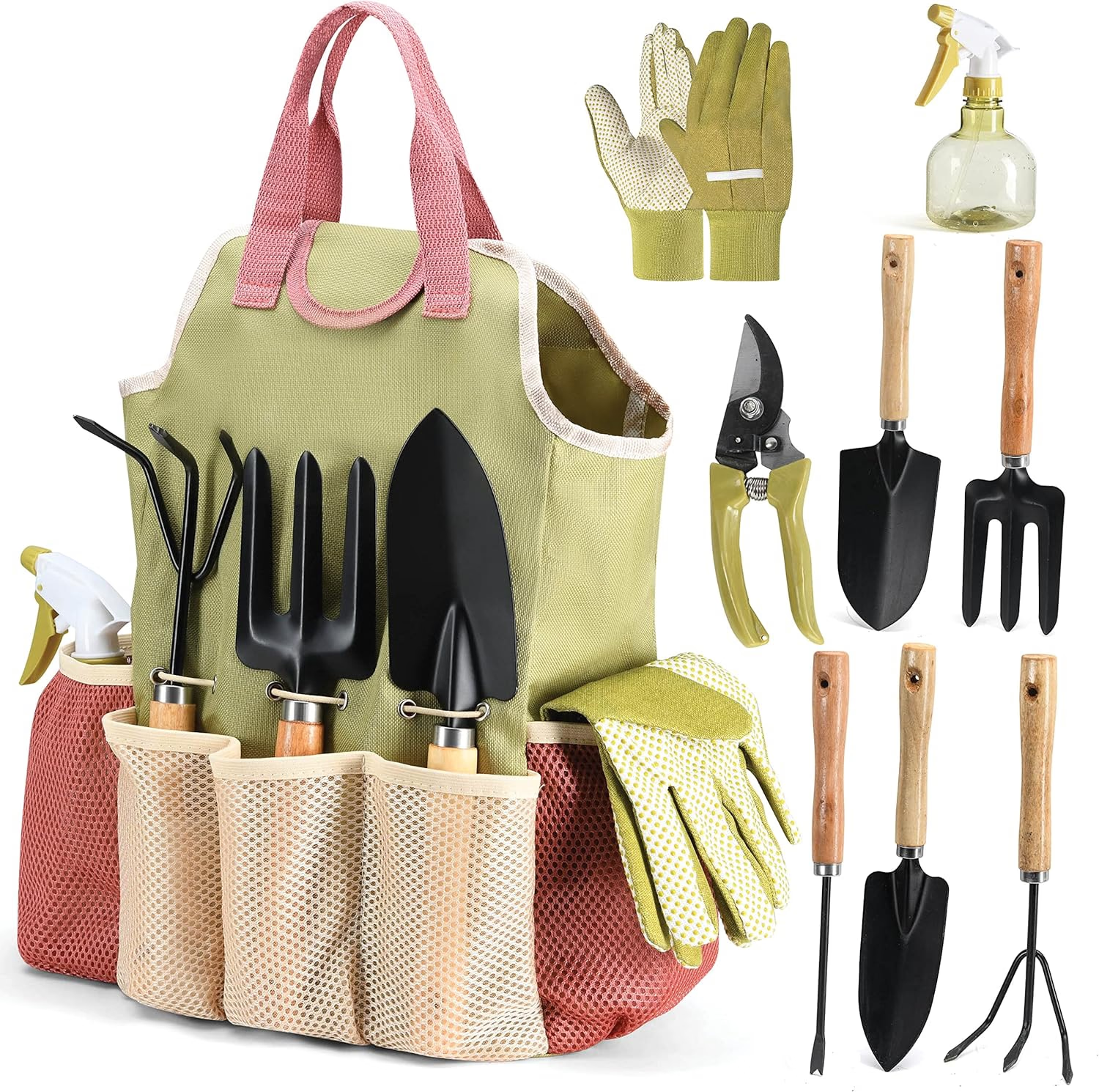
PLAY22 Gardening Tools Set of 10
A 10-piece hand tool set with a carry bag — trowel, transplanter, pruners and weeder. Suited to repotting and general container work.
View on Amazon ↗The Botanical Science Behind Full Submersion Propagation
To understand why this wild technique works so brilliantly, we have to look at cellular mechanics. When you sever a stem from a mother plant, you trigger a massive survival panic. The vascular system (the xylem and phloem) is ruptured, and the cutting immediately begins losing moisture through stomata—tiny microscopic pores on the leaves. Because there are no roots to absorb replacement water, the plant sacrifices its lower leaves to conserve moisture.
By completely submerging the cutting underwater, you instantly halt transpiration. The ambient water pressure and 100% saturation eliminate the vapor pressure deficit between the leaf tissue and the surrounding environment. Relieved of the necessity to fight dehydration, the plant redirects 100% of its metabolic energy into adventitious root development.
When you stop a cutting from panicking about dehydration, you unlock its maximum biological capacity for rapid, vigorous cellular division and root generation.
Traditional Propagation vs. The Total Submersion Method
Let us break down how this unusual technique stacks up against standard methods across key botanical metrics:
| Metric / Factor | Traditional Water Prop | Total Submersion Hack |
|---|---|---|
| Transpiration Rate | High (causes leaf drop) | Zero (leaves stay plump) |
| Root Initiation Speed | 7 to 14 days | 3 to 6 days |
| Node Activation | Usually only bottom node | Every submerged node |
| Dehydration Risk | Moderate to High | Practically Non-Existent |
Step-by-Step Guide to Submersion Propagation
Ready to try this in your indoor jungle? Follow these exact steps to ensure success without rotting your prized specimens:
- Select Healthy Stock: Choose vibrant, disease-free Tradescantia stems with at least 3 to 4 visible leaf nodes.
- Sterilize Your Tools: Use isopropyl alcohol to clean your pruning shears, preventing bacterial introduction.
- Make the Cut: Snip just below a node at a 45-degree angle to maximize surface area for root cell production.
- Submerge Completely: Place the entire stem—leaves and all—into a clean glass container filled with fresh, filtered water so that zero plant matter sticks out above the surface.
- Monitor and Refresh: Place the container in bright, indirect sunlight. Change the water every 3 to 4 days to maintain high dissolved oxygen levels.
- Mrow>Pot Up: Once the root system reaches roughly 2 inches in length, gently plant them into a well-draining soil mix found via our Plant Tips guide.
Ideal Plant Candidates for Submersion
Beyond just wandering dudes, you can experiment with this technique across several hardy varieties:
- Tradescantia zebrina, Tradescantia pallida, and Tradescantia fluminensis
- Heartleaf Philodendron (Philodendron hederaceum)
- Golden Pothos (Epipremnum aureum)
- English Ivy (Hedera helix)
If you want to connect with other botanical experimenters testing crazy methods like this, be sure to drop by our Community Forum to share your propagation wins and failures!
Frequently Asked Questions
1. Won't the submerged leaves rot and decay underwater?
Surprisingly, no! Because the water is fresh and well-oxygenated, healthy Tradescantia leaves adapt temporarily to an aquatic state without rotting immediately. However, if you notice any leaf turning translucent or mushy, remove the cutting, trim off the decaying part, and place it in fresh water.
2. How long can I keep the cutting fully submerged before planting it in soil?
You should transition the cutting to soil as soon as the roots reach about 1 to 2 inches in length—usually within 7 to 10 days. Leaving them fully submerged indefinitely will eventually cause the plant to adapt to an entirely aquatic life cycle, making the transition to terrestrial soil much harder.
3. Does this method require specialized lighting or fertilizers?
No fertilizers are needed during the initial root-pushing phase; the stem contains plenty of stored carbohydrates. Simply provide bright, indirect ambient light. Direct scorching sunlight will heat up the water container and cook your delicate submerged cuttings.
PlantSavvyWorld
Editorial team
PlantSavvyWorld is an independent botanical education project. Articles are drafted with AI assistance, then edited and checked against university extension services, botanical garden collections and other published horticultural sources.
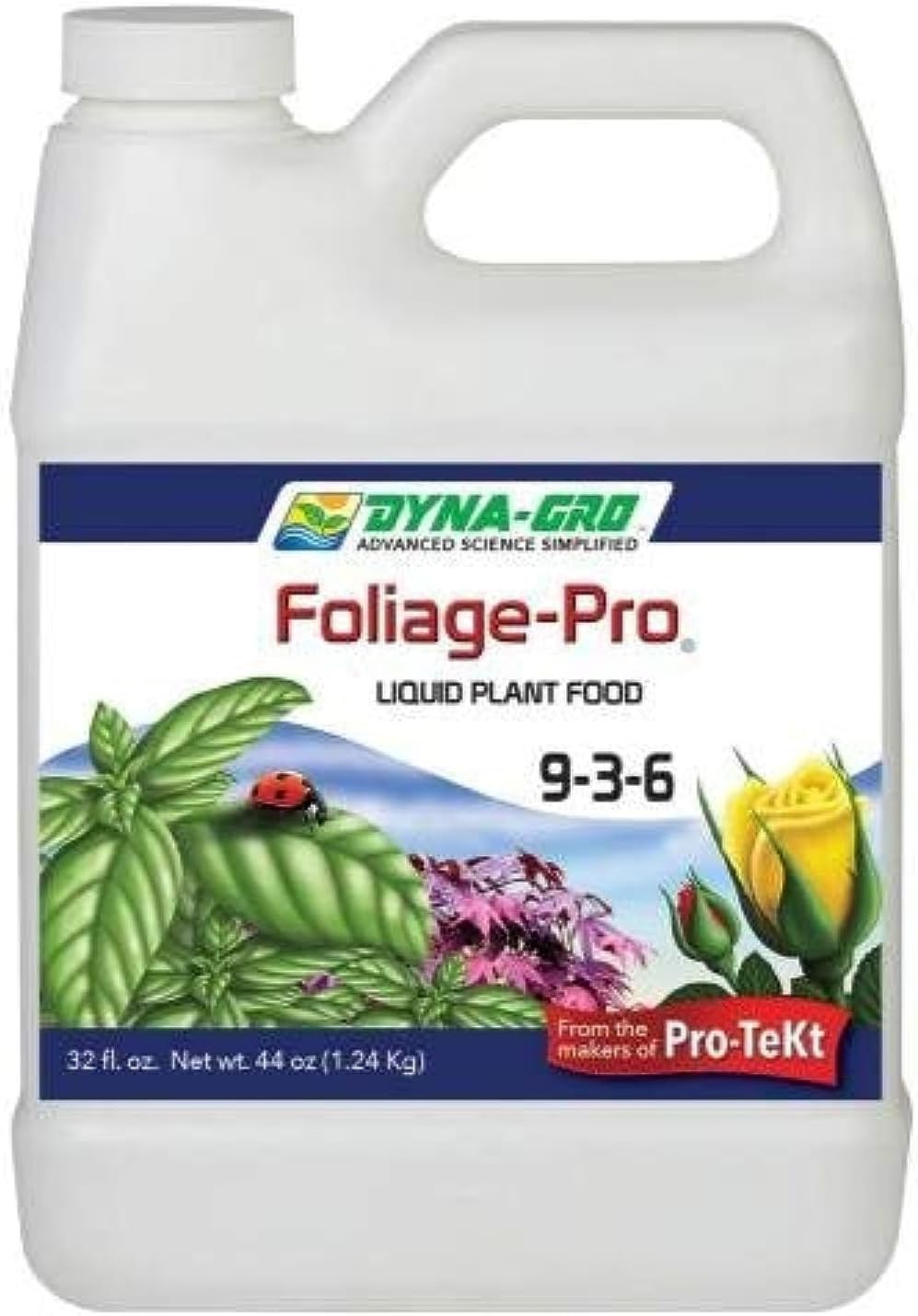
Organic Liquid Plant Food (FoxFarm)
A liquid organic plant food. Applied at label rate during active growth; most houseplants do better at reduced strength and not at all in winter.
View on Amazon ↗
PlantSavvyWorld
Editorial team
PlantSavvyWorld is an independent botanical education project. Articles are drafted with AI assistance, then edited and checked against university extension services, botanical garden collections and other published horticultural sources.
💬 Discussion