


✋STOP watering your succulents every few weeks!
Written with AI assistance, edited and checked against horticultural sources.
The truth is, watering succulents on a fixed chronological schedule is one of the quickest ways to kill them. Succulents are highly specialized organisms designed to survive on environmental cues, not human calendars. To keep them thriving, we must understand the physics of their soil and the cellular mechanisms that dictate their hydration.
1. Botanical Overview & Natural Habitat
Succulents are evolutionary marvels. Unlike typical tropical house plants, the vast majority of succulents have evolved in arid and semi-arid environments across South Africa, Mexico, and South America. In these habitats, rainfall is scarce but highly dramatic—characterized by long periods of bone-dry drought punctuated by sudden, torrential downpours.
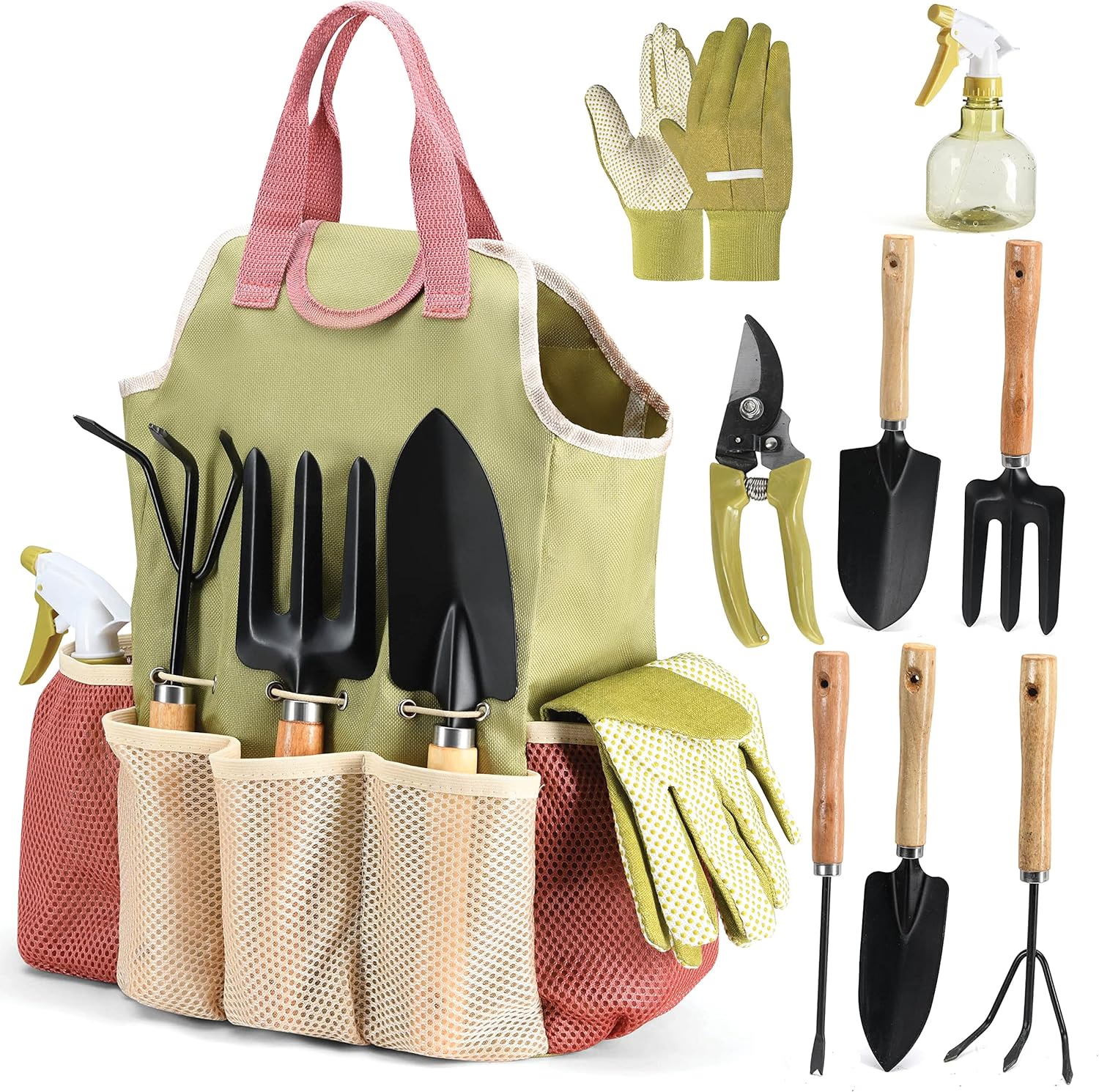
PLAY22 Gardening Tools Set of 10
A 10-piece hand tool set with a carry bag — trowel, transplanter, pruners and weeder. Suited to repotting and general container work.
View on Amazon ↗To survive, these plants developed Crassulacean Acid Metabolism (CAM). During the hottest parts of the day, succulents keep their stomata (the microscopic pores on their leaves) tightly closed to prevent evaporative water loss. At night, when temperatures drop and relative humidity rises, they open their stomata to capture carbon dioxide, storing it as malic acid for use in photosynthesis the following day.
Within their leaves, stems, and roots, succulents feature specialized, thin-walled cells known as water-storage parenchyma. When water is available, these cells expand rapidly, inflating the plant tissues—a state known as high turgidity. During drought, the plant slowly draws down these internal reservoirs, causing the leaves to subtly wrinkle or soften.
At the root zone (rhizosphere), gas exchange is just as critical as moisture. When potting mix becomes dense, muddy, or suffocated by standing drainage water, fine root hairs quickly suffer from hypoxia (oxygen deprivation), leaving the door wide open for opportunistic fungal pathogens like Pythium and Phytophthora. Conversely, an open, biologically active substrate enables robust nutrient uptake and rapid vegetative vigor.
Succulent roots are also uniquely ephemeral. During prolonged dry spells, a succulent's fine root hairs die back to prevent moisture from being drawn back out into the dry soil. When rain finally arrives, the plant utilizes its remaining energy reserves to rapidly regenerate these root hairs within 24 to 48 hours, absorbing as much water as possible before the soil dries out again. If you water on a strict calendar "every few weeks" when the soil is still damp, the plant never goes through this essential wet-dry cycle, leading to root suffocation and decay.
"Successful indoor gardening isn't a game of luck—it is the art of respecting root biology and working in harmony with natural physiological cycles."
For more detailed information on the physiological mechanics of arid plants, you can consult the Royal Horticultural Society database of plant profiles.
2. Essential Environmental & Care Requirements
To successfully mimic a succulent’s natural habitat indoors, you must manage three interconnected environmental variables: light intensity, substrate composition, and watering style.
If you do not provide enough light, your succulent's metabolic rate drops to near zero. When this happens, the plant stops absorbing water from the soil, meaning even a small amount of moisture can sit around the roots for weeks and cause rot. Conversely, in bright, direct light, the plant's metabolic engine runs at full speed, processing water efficiently.
Optimal Growth Parameters
To keep your collection in peak condition, aim for the following environmental baselines:
- Light: Minimum of 6 hours of bright, direct sunlight daily, or 12 to 14 hours under a high-output LED grow light emitting at least 300 to 500 micromoles ($\mu$mol/m²/s) of PAR.
- Temperature: Day temperatures between 70°F to 85°F (21°C to 29°C) and night temperatures between 50°F to 65°F (10°C to 18°C). This temperature drop mimic desert nights, which optimizes CAM photosynthesis.
- Air Circulation: Gentle but constant air movement is crucial. Stagnant air allows high humidity to pool around leaf joints, promoting fungal infections like powdery mildew.
Below is an overview of the key parameters you must manage to transition your succulent care from a guessing game to a science:
3. Step-by-Step Cultivation, Feeding & Propagation
Transitioning your plants to an environment-driven watering routine requires a systematic overhaul of your potting setup and hydration technique. Follow this precise botanical protocol, which I use throughout a greenhouse and share with our members at PlantSavvyWorld.
Step 1: Optimize Container Aeration and Substrate Porosity
The foundation of proper hydration starts with the physical structure of your growing medium. Never plant succulents in standard, unamended potting soil.
- Select an unglazed terracotta pot that is no more than 1 to 2 inches (2.5 to 5 cm) wider than the plant's root ball. Terracotta is porous, allowing lateral water evaporation and oxygen penetration through the sides of the pot.
- Prepare a custom substrate mix. Combine 40% organic matter (such as coconut coir or premium peat-free compost) with 60% inorganic aggregates. I highly recommend a 1:1:1 mix of coarse perlite, pumice (size-graded to 1/4 inch or 6 mm), and horticultural sand. This creates wide macropores that allow water to flush through instantly while retaining oxygen pockets.
Step 2: Implement the "Soak and Dry" Method
Forget the calendar. Instead, use physical cues to determine when to water.
- Insert a clean wooden chopstick or skewer down to the very bottom of the pot. Leave it there for 10 seconds, then pull it out. If you see any soil clinging to it or feel any dampness, do not water.
- Alternatively, lift the pot. With practice, you will easily distinguish the heavy weight of a wet pot from the feather-light weight of a completely dry one.
- Only when the substrate is dry from top to bottom should you proceed to water.
Step 3: Execute the Deep-Soak Flush
When it is time to water, do not give your plants small, cautious sips. This only dampens the top layer of soil, leaving the lower root zone dry and causing roots to grow shallow and weak.
- Take the pot to a sink or tray. Pour lukewarm water gently over the substrate surface until it is fully saturated and flows freely out of the bottom drainage holes.
- Repeat this process two or three times over a 10-minute window to ensure the dry organic particles absorb the moisture. This mimics the heavy, seasonal downpours of their native habitats, encouraging deep, robust root systems.
Step 4: Manage Climate and Ambient Airflow
- Position your succulents away from cold winter drafts near drafty windows, and keep them away from dry, forced-air heating vents. Extreme temperature swings down to 40°F (4°C) or up to 95°F (35°C) can cause thermal shock, halting the plant's metabolic activity and preventing it from processing water.
- During humid summer months, place a small, low-wattage personal fan near your collection to keep air circulating around the leaves.
Step 5: Apply Dilute, Low-Nitrogen Nutrients
- Succulents are light feeders. Over-fertilizing with nitrogen-heavy products leads to rapid, weak, and watery growth that is highly susceptible to pests.
- During the active growing season (early spring to late summer), nourish your plants every third watering with a half-strength, low-nitrogen liquid organic fertilizer. Look for an N-P-K ratio around 2-7-7. Always apply fertilizer to damp soil—never dry soil—to protect sensitive roots from chemical burn.
For excellent, peer-reviewed advice on managing houseplant nutrition and soil sciences, check out the University of Minnesota Extension gardening portal.
💡 Pro-Tip: Always hydrate your plants with room-temperature water between 68°F and 74°F (20°C to 23°C). Pouring icy tap water directly onto succulent roots causes thermal shock. This shock triggers rapid root-hair cell death and can stop nutrient and water absorption for up to 48 hours.
⚠️ Important Caution: Never let your pots sit in standing saucer runoff water for more than fifteen minutes. This stagnant water creates an anaerobic (oxygen-deprived) environment that suffocates roots. Under these conditions, opportunistic fungi like Pythium and Phytophthora thrive, rotting your succulent's root system and turning the lower stem mushy in just a few days.
4. Common Problems, Pests & Troubleshooting
When you move away from a fixed watering schedule, you may encounter a few signs of transition. Use this visual diagnostic guide to identify and address issues early:
Pathogen Eradication: Root Rot Recovery Protocol
If your succulent's leaves are turning translucent and dropping off at the slightest touch, root rot has likely set in. Here is how to save the plant:
- Unpot and Inspect: Gently remove the plant from its pot and brush away the wet soil. Healthy roots are firm and white or light tan; rotted roots are black, slimy, stringy, and smell like decay.
- Prune Damaged Tissue: Use a sterile razor blade or pruning shears disinfected with 70% isopropyl alcohol to cut away all soft, dark, and rotted roots. If the rot has reached the stem (visible as dark brown or black discoloration inside the stem core), you must cut above the rot to save the healthy top portion of the plant.
- Callus and Heal: Place the healthy cutting in a warm, dry, and shaded spot out of direct sunlight for 3 to 5 days. This allows the cut end to form a dry, protective callus, which prevents soil-borne pathogens from invading the tissue once replanted.
- Re-Root in Dry Medium: Place the calloused cutting on top of a fresh, dry, highly porous succulent mix. Do not water it. Keep it in bright, indirect light. After 2 to 3 weeks, gently tug on the cutting. If you feel resistance, new roots have formed, and you can begin your deep-soak watering routine.
5. Frequently Asked Questions
How do I know if my succulent is overwatered or underwatered?
Look closely at the leaf texture and color. Overwatered succulents have leaves that look bloated, slightly translucent, pale yellow, and feel mushy. They will often drop off the stem if lightly bumped. Underwatered succulents have leaves that look deflated, wrinkled, and feel soft or flexible, but they retain their normal color and remain firmly attached to the stem.
Can I use regular potting soil for succulents?
No, regular potting soil is formulated to hold onto moisture for foliage plants, which is too dense for succulents. It lacks the coarse aggregate needed for fast drainage, meaning it stays wet for too long and deprives succulent roots of oxygen. If you only have standard potting soil on hand, amend it with at least 50% coarse perlite or pumice before planting your succulents.
When is the best time of year to adjust my watering routine?
Early spring through mid-summer is the ideal time to adjust your watering. This is when your succulents are actively growing and can quickly adapt to environmental changes. During winter dormancy, when light levels are lower and temperatures drop, you should significantly reduce your watering. Only water when the plant shows clear signs of slight dehydration, such as mild leaf wrinkling.
How quickly will my succulent show signs of recovery?
Most succulents will show noticeable improvements within 7 to 14 days of a deep watering. You will see the leaves plump up, regain their firm texture, and grow deeper in color. For severely dehydrated plants, it may take two or three watering cycles over several weeks for the tissues to fully recover.
Have you tried switching your succulents to an environment-based watering routine? Share your successes and experiences with our global grower community on our Community Forum, explore more of our expert guides on Plant Tips, or head back to our Home Page to browse our extensive plant care archives.
📋 Table of Contents ▼ Click to expand
PlantSavvyWorld
Editorial team
PlantSavvyWorld is an independent botanical education project. Articles are drafted with AI assistance, then edited and checked against university extension services, botanical garden collections and other published horticultural sources.
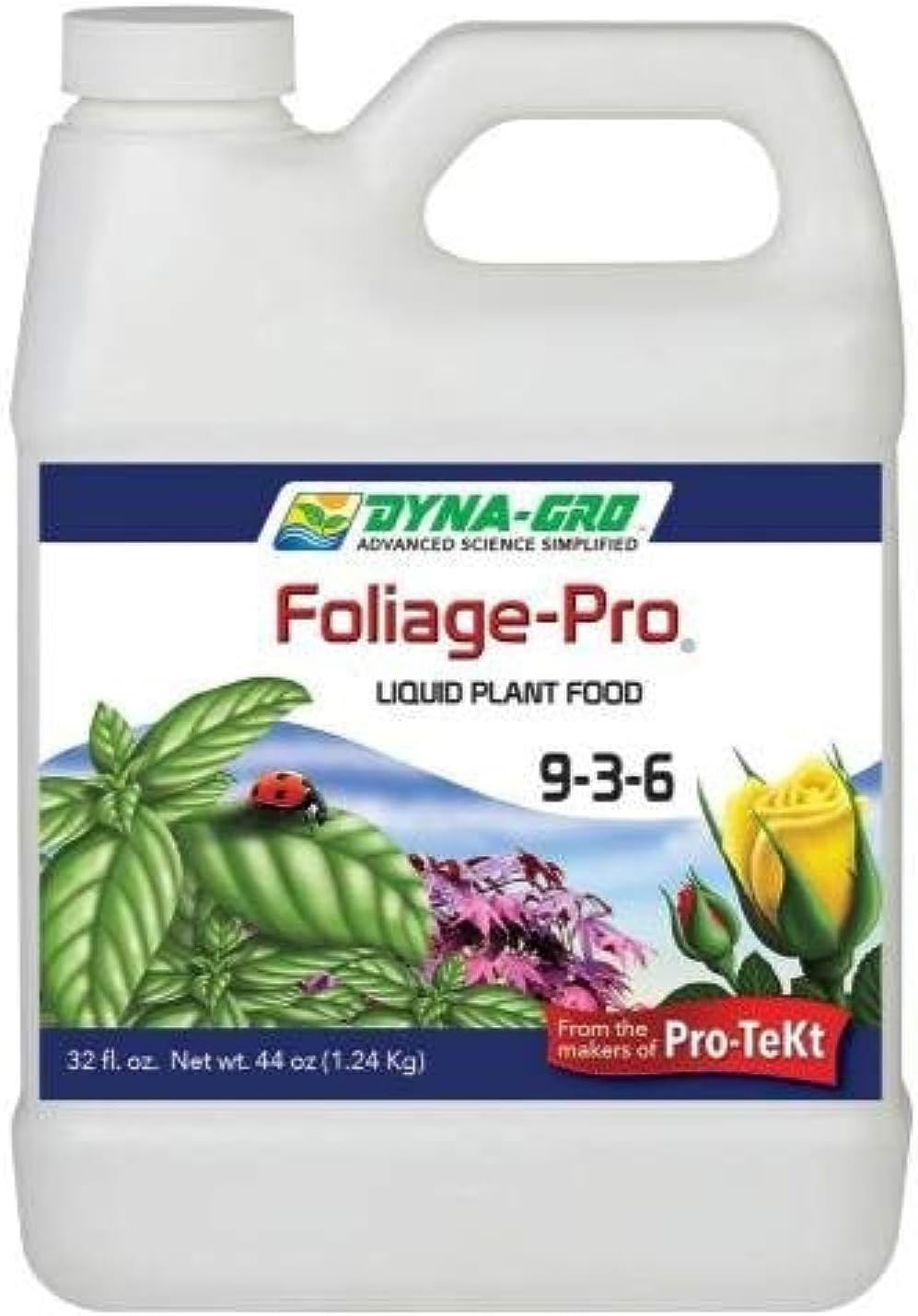
Organic Liquid Plant Food (FoxFarm)
A liquid organic plant food. Applied at label rate during active growth; most houseplants do better at reduced strength and not at all in winter.
View on Amazon ↗
PlantSavvyWorld
Editorial team
PlantSavvyWorld is an independent botanical education project. Articles are drafted with AI assistance, then edited and checked against university extension services, botanical garden collections and other published horticultural sources.
💬 Discussion