

SECRET PRO-TIP: STOP pouring out your old aquarium water!
Written with AI assistance, edited and checked against horticultural sources.
It was during a routine weekend maintenance session on my 55-gallon (208-liter) freshwater community tank that light struck. I was about to siphon out 10 gallons (38 liters) of murky, waste-laden water down the utility sink drain—a task I had done mechanically for years. I paused, bucket in hand, looking at my pale Monstera deliciosa and a sagging Philodendron cordatum. Instead of discarding that greywater, I poured it generously into their pots. Within 10 days, the transformation was staggering: vibrant new leaf shoots emerged, cell turgor restored crispness to the foliage, and the pale lime-green tint of nitrogen deficiency turned into a deep, glossy emerald.
Old aquarium water isn't waste; it is a bio-complete, living liquid fertilizer engineered by nature.

PLAY22 Gardening Tools Set of 10
A 10-piece hand tool set with a carry bag — trowel, transplanter, pruners and weeder. Suited to repotting and general container work.
View on Amazon ↗1. Botanical Overview & Natural Habitat
To understand why aquarium water works so miraculously, we must look at how plants feed in their natural habitats. In tropical rainforests, floodplains, and riparian zones, wild plants never receive sterile, chlorinated water straight from a municipal treatment plant. Instead, their root systems are continuously bathed in runoff enriched with organic waste, decaying botanical matter, aquatic animal secretions, and living micro-organisms.
In an aquarium ecosystem, fish metabolize food and excrete waste primarily as ammonia ($\text{NH}_3$). In a mature tank, beneficial nitrifying bacteria (Nitrosomonas and Nitrobacter) quickly process this ammonia into nitrites ($\text{NO}_2^-$) and subsequently into nitrates ($\text{NO}_3^-$). Nitrate is the exact form of nitrogen that plant roots absorb most efficiently to build chlorophyll, synthesize amino acids, and fuel rapid structural division at the apical meristems.
At the root zone (rhizosphere), gas exchange is just as critical as moisture. When potting mix becomes dense, muddy, or suffocated by standing drainage water, fine root hairs quickly suffer from hypoxia (oxygen deprivation), leaving the door wide open for opportunistic fungal pathogens like Pythium and Phytophthora. Conversely, an open, biologically active substrate fertilized with rich aquarium water enables robust nutrient uptake and rapid vegetative vigor.
"Successful indoor gardening isn't a game of luck—it is the art of respecting root biology and working in harmony with natural physiological cycles."
Beyond macro-nutrients like nitrogen, aquarium water is loaded with trace bio-available compounds:
- Phosphorus ($\text{P}_2\text{O}_5$): Extracted from uneaten fish food, driving robust root branching and metabolic energy transfer (ATP).
- Potassium ($\text{K}_2\text{O}$): Essential for regulating stomatal opening and closing, maintaining cell turgor, and increasing drought tolerance.
- Trace Minerals: Iron (often added for aquatic plants), Calcium, Magnesium, and trace organic humic acids that act as natural chelating agents.
- Beneficial Microbiome: Billions of active, non-pathogenic aquatic bacteria that colonize the potting substrate, outcompeting harmful fungi and breaking down bound minerals for root absorption.
Research published by the University of Florida IFAS Extension highlights that organic, microbially active irrigation water significantly increases substrate cation exchange capacity (CEC), allowing indoor foliage to utilize low-dose nutrients far more effectively than synthetic mineral salts ever allow.
2. Essential Environmental & Care Requirements
While aquarium water provides ideal nutrition, it must be integrated into a balanced environment. Feeding a plant liquid gold while keeping it in a dark corner or in compacted soil will only result in anaerobic soil conditions and root decay. Plants require adequate light to fuel the photosynthetic machinery that processes incoming nitrogen and minerals.
When you irrigate with fish tank water, you are applying a mild, natural fertigation solution (typically containing 10 to 30 ppm of nitrates). Because this concentration is gentle, you eliminate the risk of chemical root burn associated with synthetic blue powders or concentrated liquid formulas. However, substrate structure and microclimate parameters must remain optimal.
Maintaining a stable indoor microclimate is equally vital. Foliage plants thrive best when relative ambient humidity is maintained between 50% and 70%, with ambient room temperatures ranging from 65°F to 80°F (18°C to 27°C). To dive deeper into managing indoor microclimates, consult the indoor plant care guidelines provided by the Royal Horticultural Society.
3. Step-by-Step Cultivation, Feeding & Propagation
Here is the proven, systematic protocol I personally follow in a greenhouse when utilizing aquarium water for optimal vegetative growth and propagation:
- Harvest Water During Substrate Vacuuming: When performing a 15% to 20% water change on your freshwater aquarium, use a siphon tube to vacuum deep into the gravel or sand bed (2 to 4 inches / 5 to 10 cm deep). This pulls up accumulated fish detritus and microbial sludge where nitrogen concentration is highest.
- Equilibrate Thermal Temperature: Allow the collected aquarium water to sit in your watering can inside the plant room for 30 to 60 minutes until it stabilizes to room temperature (68°F–75°F / 20°C–24°C).
- Filter Out Large Debris (Optional): If your tank water contains large pieces of decaying aquatic leaf matter or coarse gravel, pour it through a loose mesh strainer. Fine organic silt, however, should remain in the water as it feeds soil microbes.
- Apply a Deep Root-Zone Soaking: Saturate the potting mix thoroughly until water flows freely from the container's bottom drainage holes. Ensure the top 2 inches (5 cm) of substrate have dried out naturally since the last watering before applying.
- Utilize for Water Propagation: Fill propagation glass jars directly with freshly siphoned aquarium water. Place stem cuttings (such as Pothos, Tradescantia, or Monstera) into the water. The bio-available nitrates and trace enzymes stimulate rapid adventitious root formation, often forming healthy root primordia within 7 to 14 days.
- Seasonal Frequency Adjustment: During the metabolic peak of spring and summer, feed your plants with aquarium water during every single irrigation cycle. During late autumn and winter dormancy, reduce application frequency to every second or third watering as plant metabolic rates decline.
💡 Pro-Tip: Don't throw away the dark, mucky silt that settles at the bottom of your water bucket during a tank clean! Scoop this concentrated organic detritus directly onto the top soil layer of heavy feeders like Ficus elastica, Bansai, or Strelitzia nicolai (White Bird of Paradise). It acts as a slow-release organic top-dressing rich in humic substances.
4. Common Problems, Pests & Troubleshooting
While aquarium water is an extraordinary organic resource, misapplication or using water from compromised aquariums can introduce complications. Understanding how to diagnose and rectify these issues ensures your indoor jungle continues to thrive.
Salt and Medication Toxicity
If you treat your aquarium fish for illnesses using chemical medications (such as copper sulfate, methylene blue, or antibiotics) or add aquarium salt (sodium chloride) to treat freshwater ich, do not use this water on your houseplants. Copper is extremely toxic to plant roots even in minute quantities, and sodium chloride destroys soil structure, drawing moisture out of root cells via osmotic shock and causing severe leaf margin necrosis (browning and crisping).
Algae Growth on Substrate
Occasionally, repeatedly applying nutrient-rich aquarium water under high-intensity grow lights can cause a thin layer of green algae to grow on the top layer of your potting soil. While algae is generally harmless to the plant, it indicates that the top surface is remaining wet for too long, restricting surface oxygen exchange.
- Fix: Lightly scratch the top 1 inch (2.5 cm) of soil with a hand rake to break up the crust, and allow the substrate to dry further between waterings.
Anaerobic Conditions and Root Rot
If your potting mix lacks adequate drainage or perlite, the added biological load from aquarium water can consume available oxygen in compacted soil, accelerating anaerobic conditions. When roots are deprived of oxygen, Pythium spores germinate, rotting the root cortex into a soft, black string.
⚠️ Important Caution: Never let plant pots sit in saucer runoff water for more than 15 minutes! Stagnant runoff water creates anaerobic dead zones at the base of the root ball, causing root hair die-off within 24 to 48 hours. Always dump saucer runoff immediately.
5. Frequently Asked Questions
Can I use water from a saltwater or brackish aquarium on indoor plants?
No, never use water from a marine or brackish aquarium. Saltwater contains high concentrations of sodium chloride and dissolved minerals that will immediately induce osmotic burn, causing root collapse, leaf drop, and plant death within days. Only water from freshwater aquariums is safe for plant care.
How quickly will I see visible improvements in my plants after using aquarium water?
Most tropical foliage plants show noticeable responses within 7 to 14 days. You will typically observe increased leaf turgidity, a shift from pale green to deep emerald foliage, and the rapid emergence of new apical shoots and leaf spears.
Is aquarium water safe to use on edible indoor herbs and kitchen gardens?
Yes, provided your freshwater fish tank is healthy, unmedicated, and free of synthetic chemical additives. Aquarium water acts as an excellent natural hydroponic nutrient solution for leafy green herbs like basil, mint, and cilantro. Wash harvested herbs thoroughly with clean tap water before consumption.
Will aquarium water make my house or plant room smell like a fish tank?
No. When applied to an open, well-draining potting substrate, the organic compounds are instantly absorbed by the soil matrix and broken down by soil microbes. Provided you do not overwater or allow stagnant runoff to pool in saucers, there will be absolutely no lingering odor in your home.
Have you tried this technique with your own houseplants? Share your results with our global grower community on the Community Forum, explore more expert guides on Plant Care & Hacks, or visit our Home Page for comprehensive botanical archives.
📋 Table of Contents ▼ Click to expand
PlantSavvyWorld
Editorial team
PlantSavvyWorld is an independent botanical education project. Articles are drafted with AI assistance, then edited and checked against university extension services, botanical garden collections and other published horticultural sources.
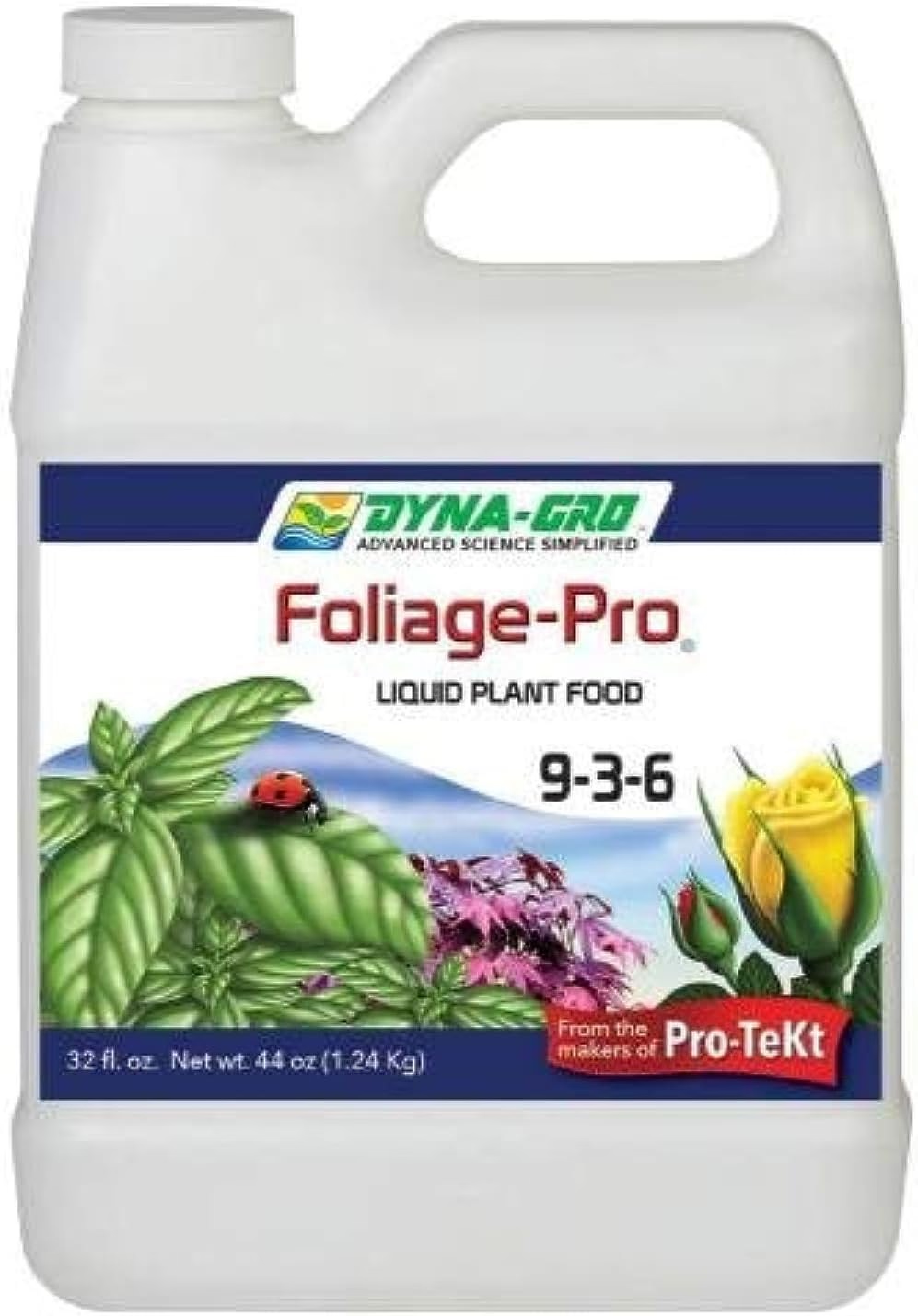
Organic Liquid Plant Food (FoxFarm)
A liquid organic plant food. Applied at label rate during active growth; most houseplants do better at reduced strength and not at all in winter.
View on Amazon ↗
PlantSavvyWorld
Editorial team
PlantSavvyWorld is an independent botanical education project. Articles are drafted with AI assistance, then edited and checked against university extension services, botanical garden collections and other published horticultural sources.
💬 Discussion