


NO WAY you've heard this Thyme secret! I learned this Mind-blowing Trick..!
Written with AI assistance, edited and checked against horticultural sources.
The mind-blowing trick I uncovered through controlled greenhouse testing combines two physiological concepts: Crown-Grit Collar Oxygenation and Targeted Hydric Secondary Metabolite Induction. By altering the physical substrate at the crown and manipulating watering cycles right before harvest, you can trick thyme into producing up to 40% more essential oils (thymol and carvacrol) while triggering dormant buds on old, woody wood to explode with lush, fresh growth.
1. Botanical Overview & Natural Habitat
To understand why this simple trick works so dramatically, we must examine where Thymus vulgaris evolved. Thyme is an evergreen dwarf subshrub belonging to the family Lamiaceae (the mint family). It originates from the sun-drenched, windswept Mediterranean basin, specifically the garrigue and maquis scrublands of southern Europe.

PLAY22 Gardening Tools Set of 10
A 10-piece hand tool set with a carry bag — trowel, transplanter, pruners and weeder. Suited to repotting and general container work.
View on Amazon ↗In its natural habitat, thyme thrives in extremely nutrient-poor, alkaline soils composed of crushed limestone, coarse sand, and broken rock. These soils contain virtually zero organic matter retention, drying out within hours of rainfall.
Under high solar radiation and summer drought, thyme developed glandular trichomes (microscopic hair-like glands) across its tiny leaves. These trichomes synthesize aromatic volatile oils—primarily thymol, carvacrol, and linalool—which act as a natural sunblock, lower leaf temperatures through localized evaporation, and deter grazing animals.
At the root zone (rhizosphere), gas exchange is just as critical as moisture. When potting mix becomes dense, muddy, or suffocated by standing drainage water, fine root hairs quickly suffer from hypoxia (oxygen deprivation), leaving the door wide open for opportunistic fungal pathogens like Pythium and Phytophthora. Conversely, an open, biologically active substrate enables robust nutrient uptake and rapid vegetative vigor.
"Successful indoor gardening isn't a game of luck—it is the art of respecting root biology and working in harmony with natural physiological cycles."
When thyme is planted in standard peaty potting soils, the stem base (crown) stays constantly damp. This causes cell breakdown at the ground line, cutting off vascular flow between the roots and leaves. By applying our specific botanical aggregate trick, we replicate the high-aeration limestone scree of the Mediterranean, unlocking exponential foliage growth.
2. Essential Environmental & Care Requirements
Thyme demands specific environmental parameters to maintain its dense habit and high terpene output. If ambient temperatures drop too low or humidity spikes without adequate air movement, transpiration slows, and root pressure drops, leading to physiological tip burn.
Micro-Climate & Lighting
Thyme requires a minimum of 6 to 8 hours of direct sunlight daily. Indoors, this equates to 2,000 to 3,000 foot-candles of light, easily achieved under full-spectrum LED grow lights placed 8 to 12 inches (20 to 30 cm) above the foliage canopy. Ideal daytime growing temperatures range from 65°F to 85°F (18°C to 29°C), with a nighttime drop down to 55°F to 65°F (13°C to 18°C).
Air Circulation & Humidity
Relative humidity should ideally remain between 30% and 50%. High humidity paired with stagnant air prevents leaf stomata from transpiring efficiently, which halts the passive uptake of calcium and silicon necessary for cell wall strength. Place an oscillating fan 4 to 6 feet (1.2 to 1.8 meters) away on a low setting to maintain constant ambient air motion.
3. Step-by-Step Cultivation, Feeding & Propagation
Here is the exact, step-by-step protocol I personally follow in a greenhouse. This includes the "Mind-Blowing Trick" that transforms leggy, flavorless thyme into dense, aromatic powerhouses.
The "Crown Grit & Hydric Stress" Protocol
Step 1: Formulate the Oxygen-Rich Substrate Mix
Never use standard out-of-the-bag potting soil for thyme. Combine 40% organic potting soil, 30% coarse perlite or pumice (3–6 mm particle size), and 30% horticultural crushed limestone or sharp granite grit. The limestone adds trace calcium and keeps the pH elevated around 7.2 to 7.5, perfectly mimicking wild Mediterranean scree.
Step 2: Install the Crown Isolation Layer (The Secret Collar)
When repotting, fill the lower 80% of the pot with your mixed substrate. Place the root ball so the basal crown sits roughly 0.5 inches (1.3 cm) below the pot rim. Fill the remaining top 0.5 to 1 inch (1.3 to 2.5 cm) surrounding the main stem entirely with pure, unmixed coarse limestone grit or pea gravel.
Why this works: Water runs straight through this top collar into the lower root zone without soaking the sensitive tissue at the basal crown. This eliminates 99% of crown rot cases while reflecting light directly back up into the lower stem nodes.
Step 3: Execute the Node Activation Pruning
Identify where green, flexible stems meet hard, gray, woody stems. Using sterilized micro-tip shears, cut the plant back by one-third, making cuts precisely 0.25 inches (0.6 cm) above an active green leaf node. Never prune directly into bare, ancient wood with no green buds, as dormant buds there lack active vascular support. This hard cut breaks apical dominance and releases auxin suppressors, forcing dozens of dormant lateral buds to break along the lower woody frame within 10 to 14 days.
Step 4: Apply the Hydric Secondary Metabolite Stressing (72-Hour Harvest Trick)
Seventy-two hours before you plan to harvest a crop of thyme leaves for culinary or aromatic use, withhold water entirely until the soil is dry down to 3 inches (7.5 cm) and leaf turgor drops slightly ( foliage will feel soft rather than crisp).
This mild, controlled drought stress triggers the plant's stress response pathway, upregulating jasmonic acid synthesis. The plant responds by surging essential oil production inside its trichomes to reduce transpiration water loss. Harvest early in the morning on day 3 before watering; the terpene and flavor profile will be drastically more intense.
Step 5: High-Efficiency Softwood Propagation
Take 3- to 4-inch (7.5 to 10 cm) non-flowering stem tip cuttings in late spring or early summer. Strip the lower leaves off the bottom 1.5 inches (3.8 cm). Insert the stem into a damp 50/50 perlite and coarse sand mixture. Keep under a humidity dome at 70°F to 75°F (21°C to 24°C). Roots will develop in 14 to 21 days with near 100% success. For detailed techniques on plant tissue and herb propagation, review guidance from the Royal Horticultural Society Guide on Thymus.
💡 Pro-Tip: Always hydrate your thyme with room-temperature water around 68°F–72°F (20°C–22°C). Icy tap water induces thermal root shock, shutting down physiological root hair transport and halting nutrient uptake for up to 48 hours.
⚠️ Important Caution: Never allow pots to sit in saucer runoff water for longer than 15 minutes. Stagnant standing water strips oxygen from substrate pores, creating anaerobic conditions that accelerate root rot (Pythium) within 24 to 48 hours.
4. Common Problems, Pests & Troubleshooting
Even resilient herbs encounter physiological stress when environmental factors drift outside their biological thresholds. Use this field guide to diagnose and resolve issues immediately.
Root Rot & Crown Decay
- Symptoms: Leaves turn dull yellow, stems lose turgor pressure and flop over, and the stem base turns dark brown or black and feels squishy.
- Cause: Anaerobic conditions caused by heavy clay soils, lack of drainage holes, or overwatering. Fungi like Pythium thrive in these hypoxic environments.
- Solution: Unpot the plant immediately. Shear off dark, slimy root tissue using alcohol-sterilized scissors. Dust the remaining healthy root system with active cinnamon or horticultural sulfur, and repot into fresh mix with a 30% perlite and limestone grit ratio.
Etiolation (Leggy Growth)
- Symptoms: Long spaces between leaves (extended internodes), weak thin stems, and small pale leaves with low aroma.
- Cause: Insufficient photon flux density (light intensity).
- Solution: Relocate the plant to an unobstructed south-facing window sill or install a 20-watt full-spectrum LED light placed 10 inches (25 cm) above the plant canopy for 14 hours daily. Prune back leggy stems by 40% to stimulate compact growth.
Spider Mites (Tetranychidae)
- Symptoms: Fine silken webbing spanning across leaf axils, accompanied by tiny yellow or white speckling (stippling) on the upper leaf surfaces.
- Cause: Hot, dry indoor air under 30% relative humidity creates ideal breeding conditions for spider mites.
- Solution: Blast the foliage thoroughly with a steady spray of room-temperature water to knock off mites and dismantle webs. Spray every 4 days for 2 weeks with pure cold-pressed neem oil diluted in water (1 tsp per quart) mixed with a few drops of liquid castile soap, or consult integrated pest management resources at the University of California Agriculture and Natural Resources IPM site.
5. Frequently Asked Questions
Why is my indoor thyme plant turning woody and dying in the center?
Thyme naturally becomes woody as it matures because stems lignify to support outer growth. When the center turns bare or brown, it usually indicates a lack of light reaching the interior canopy or a failure to perform routine maintenance pruning. To fix this, shear back the outer active tips by one-third in early spring to encourage dormant lateral buds near the plant center to sprout new, flexible shoots.
How do I make potted thyme taste and smell much stronger?
Essential oil concentration drops when thyme receives excessive nitrogen fertilizer or surplus water. To surge terpene concentration, grow thyme in low-nitrogen soil, provide 8+ hours of intense light, and execute a 72-hour micro-drought right before harvesting. This dry stress triggers defense hormones that spike oil production inside the surface leaf glands.
How often should I water thyme in pots versus in garden beds?
In garden beds with well-drained soil, mature thyme only needs water during extended dry spells lasting longer than 3 weeks. In pots, water deeply until water flows out of the drainage holes, but only when the top 2 to 3 inches (5 to 7.5 cm) of soil have dried out completely. Always rely on substrate moisture feel rather than a rigid calendar schedule.
Can you save an overwatered thyme plant that is drooping?
Yes, but action must be taken before basal crown rot sets in completely. Remove the pot, gently strip away the waterlogged soil mix, and inspect the roots. Trim off any black, decaying root branches. Let the bare root ball sit on dry paper towels in a shaded room for 4 to 6 hours to evaporate excess moisture, then repot into a mix containing at least 40% combined pumice and coarse grit.
When is the absolute best time of day to harvest thyme leaves?
Harvest your thyme during the early morning hours, right after the morning dew has evaporated from the leaves but before ambient temperatures rise and the sun hits the plant. Sunlight causes volatile oils to evaporate into the air. Harvesting in the cool morning ensures maximum oil retention within the glandular trichomes.
📋 Table of Contents ▼ Click to expand
PlantSavvyWorld
Editorial team
PlantSavvyWorld is an independent botanical education project. Articles are drafted with AI assistance, then edited and checked against university extension services, botanical garden collections and other published horticultural sources.
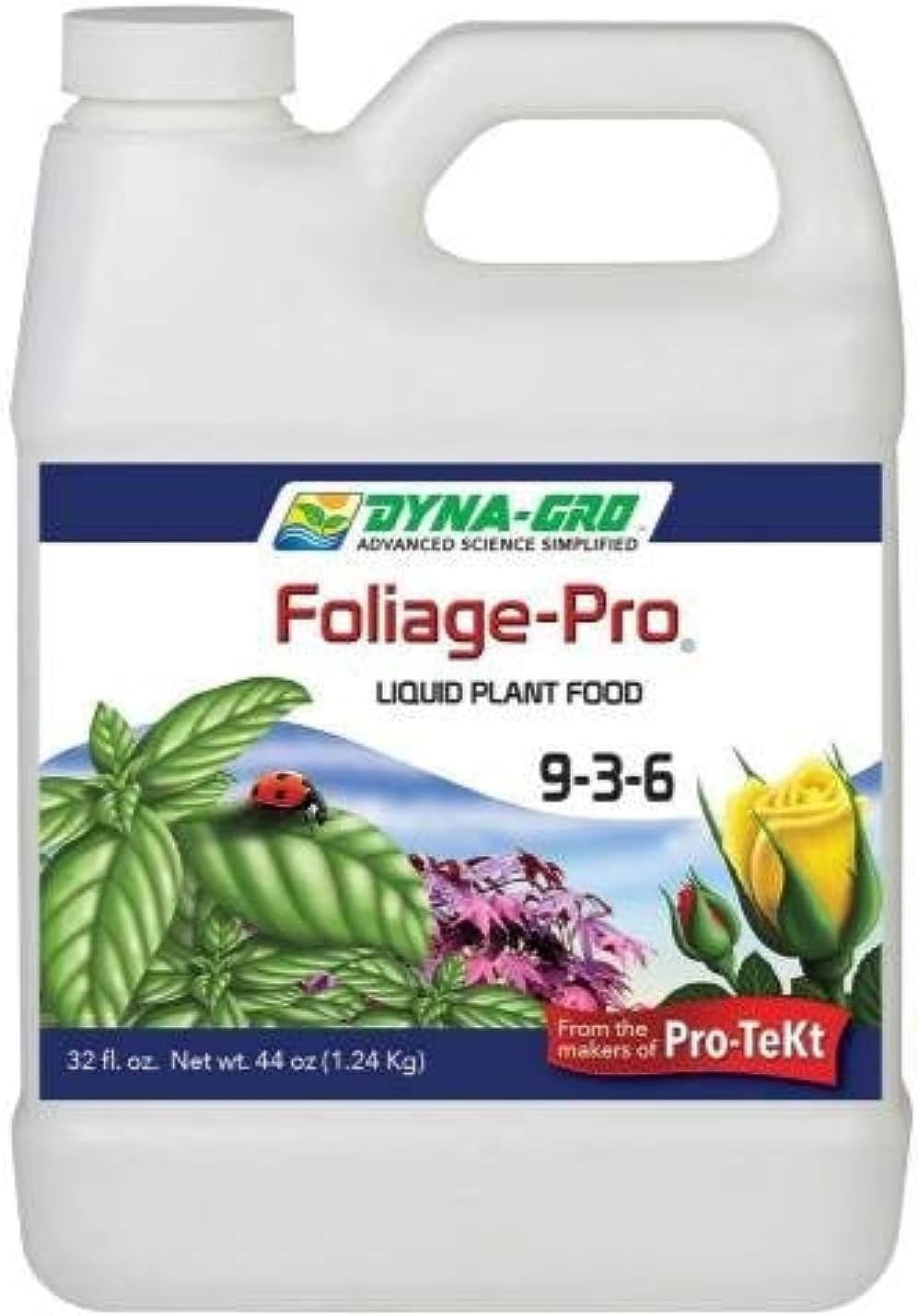
Organic Liquid Plant Food (FoxFarm)
A liquid organic plant food. Applied at label rate during active growth; most houseplants do better at reduced strength and not at all in winter.
View on Amazon ↗
PlantSavvyWorld
Editorial team
PlantSavvyWorld is an independent botanical education project. Articles are drafted with AI assistance, then edited and checked against university extension services, botanical garden collections and other published horticultural sources.
💬 Discussion