


My 90-year-old botanist mentor told me this WILD secret for a super healthy Venus Flytrap!
Written with AI assistance, edited and checked against horticultural sources.
Desperate for answers, I paid a visit to my 90-year-old botanist mentor, Dr. Arthur "Artie" Sterling, a legendary figure who had spent over six decades studying bog ecosystems and carnivorous flora. He took one look at my sad, blackening specimens, chuckled softly, and told me a wild, unconventional secret that completely revolutionized my approach to growing these spectacular plants. "the PlantSavvyWorld editorial team," he said, holding a handful of fresh sphagnum moss, "everyone treats the Venus Flytrap like a delicate invalid. They drown the roots in stagnant, warm water, thinking they are replicating a swamp. But a Carolina bog is a dynamic, highly oxygenated system. You are suffocating their lungs!"
1. Botanical Overview & Natural Habitat
To understand why my mentor's oxygenation secret works so miraculously, we must first understand the native home of Dionaea muscipula. The Venus Flytrap is not a tropical jungle dweller; it is native exclusively to a very narrow, subtropical strip of the coastal plain in North and South Carolina, primarily within a 75-mile (120 km) radius of Wilmington, North Carolina. Here, they grow in nutrient-deficient, highly acidic, sandy peat bogs.

PLAY22 Gardening Tools Set of 10
A 10-piece hand tool set with a carry bag — trowel, transplanter, pruners and weeder. Suited to repotting and general container work.
View on Amazon ↗These coastal bogs are characterized by wet, nutrient-poor soils with a low pH ranging from 4.0 to 5.0. While the soil is constantly moist, it is not stagnant. Regular rainfall and slow surface seepage keep the water flowing, carrying dissolved oxygen directly through the upper root zone.
At the root zone (rhizosphere), gas exchange is just as critical as moisture. When potting mix becomes dense, muddy, or suffocated by standing drainage water, fine root hairs quickly suffer from hypoxia (oxygen deprivation), leaving the door wide open for opportunistic fungal pathogens like Pythium and Phytophthora. Conversely, an open, biologically active, and well-oxygenated substrate enables robust nutrient uptake and rapid vegetative vigor.
The Flytrap's trapping mechanism is a masterpiece of evolutionary engineering. The trap itself is a modified leaf blade (the lamina) divided into two lobes. Each lobe features three to four highly sensitive trigger hairs (trichomes). When an insect brushes against these hairs twice within a window of 20 seconds, an action potential—an electrical signal akin to a animal nerve impulse—surges through the plant tissue. This triggers a rapid shift in cell turgor, causing water to pump instantly from the inner cell layers to the outer layers, snapping the trap shut in less than 100 milliseconds.
If the trap is starved of oxygen at its roots, or if the plant is suffering from cellular stress due to mineral toxicity, this electrical pathway fails. The traps become sluggish, fail to close fully, and will ultimately rot when trying to digest prey.
"Successful indoor gardening isn't a game of luck—it is the art of respecting root biology and working in harmony with natural physiological cycles."
For more details on the geographical distribution and conservation of this vulnerable species, you can consult the NC State University Cooperative Extension.
2. Essential Environmental & Care Requirements
To cultivate a Venus Flytrap that boasts massive, deep-red traps and lightning-fast snapping reflexes, you must mimic its natural, highly dynamic habitat. This requires meticulous control over light, water purity, temperature, and substrate aeration.
Light and Photoperiod
Venus Flytraps are absolute sun worshippers. To drive the intense metabolic processes required to synthesize digestive enzymes, they need a minimum of 10,000 to 15,000 lux of light. Outdoors, this translates to 6 to 8 hours of direct, unfiltered sun. Indoors, they should be placed on a south-facing windowsill or kept under high-intensity LED grow lights with a 12-to-16-hour photoperiod during the active growing season. Without sufficient light, the traps will lose their red interior pigmentation and the petioles will become wide, flat, and weak.
The Purity of Hydration
Perhaps the most common pitfall in Flytrap cultivation is water quality. Because their root systems evolved in pure rainwater running over nutrient-stripped sand, they have no mechanism to filter out dissolved minerals. Watering with tap water, spring water, or mineral water will lead to mineral burn within weeks, causing the root tips to blacken and die. You must exclusively use water with a Total Dissolved Solids (TDS) reading of under 50 ppm—such as distilled water, reverse osmosis (RO) water, or clean rainwater.
Temperature and Dormancy Cycles
These plants thrive in summer temperatures ranging from 70°F to 95°F (21°C to 35°C). However, they are temperate plants, meaning they require a distinct winter dormancy period of 3 to 4 months (typically from November through February) to survive long-term. During dormancy, the photoperiod should drop to 8 to 10 hours, and temperatures should hover between 35°F and 50°F (1.6°C to 10°C). Without this rest period, the plant will exhaust itself and perish within two seasons.
Below is a breakdown of the key parameters you must manage to ensure your Venus Flytrap remains in peak physiological health:
⚠️ Important Caution: Never let your Venus Flytrap sit in warm, stagnant runoff water for weeks at a time. This creates anaerobic conditions that trigger root rot (Pythium) and blackens traps. Use the oxygen-flush method instead, ensuring the root zone has access to fresh, oxygen-rich water and atmospheric air.
3. Step-by-Step Cultivation, Feeding & Propagation
Now, let me share the "WILD" secret my 90-year-old mentor, Artie, bestowed upon me.
Most growers use the "tray method," keeping the pot sitting in an inch of standing water constantly. While this keeps the plant moist, the water in the tray quickly becomes stagnant, warm, and depleted of dissolved oxygen, leading to root suffocation.
Artie's secret was The Oxygen-Shaken Top Flush. Instead of letting the plant sit in stagnant water, he had me shake my distilled water vigorously in a half-gallon glass jar for 30 seconds before watering. This simple mechanical action fully saturates the water with dissolved atmospheric oxygen. When you pour this oxygenated water over the top of the pot, it behaves like a fresh rainfall, pulling fresh air down into the substrate pores, flushing out harmful anaerobic gases, and supercharging the roots with oxygen.
Here is the systematic protocol I personally follow in a greenhouse:
- Assemble your Acidic, High-Aeration Mix: Measure out equal parts (50/50) of organic sphagnum peat moss and coarse horticultural perlite (or pure silica sand). Ensure the peat moss has absolutely no added fertilizers or wetting agents. Dampen the mix thoroughly with distilled water before potting until it holds its shape when squeezed but does not drip.
- Select and Prepare the Container: Choose a deep plastic or glazed ceramic pot (minimum 4 to 6 inches / 10 to 15 cm deep). Flytraps have surprisingly long taproots that grow straight down. Ensure the pot has generous bottom drainage holes. Avoid unglazed terracotta, as it slowly leaches calcium and mineral salts into the acidic substrate over time.
- Execute the Oxygen-Shaken Water Flush: Every 2 to 3 days (or when the top 0.5 inches / 1.2 cm of substrate begins to feel slightly dry to the touch), fill a clean jar with room-temperature distilled water. Shake it vigorously for 30 seconds. Pour this oxygen-saturated water over the top of the substrate until it flows freely out of the drainage holes, flushing the old water out of the tray. Keep a shallow layer of fresh water (no more than 0.25 inches / 6 mm) in the tray between watering to maintain humidity, but never let it become deep, warm, or stagnant.
- Trigger Active Feeding and Digestion: If growing indoors, your Flytrap must be fed manually. Feed only one trap per plant every 14 to 21 days during the active growing season. Select a live insect (such as a small fly, spider, or mealworm) that is no larger than 1/3 the size of the trap. Once the trap snaps shut on the live prey, gently squeeze the sides of the trap 3 to 4 times over a span of 5 seconds. This mimics the struggle of a trapped insect, which is biologically necessary to stimulate the internal trigger hairs and signal the plant to begin secreting digestive fluids.
- Manage Propagation via Rhizome Division: In early spring, as the plant emerges from dormancy, gently unpot the specimen. You will notice the main growth point has split into multiple distinct crowns clustered around a white, bulb-like rhizome. Using a sterile blade, carefully slide down the rhizome, separating the crowns making sure each division retains a few healthy root strands. Repot these divisions immediately into fresh, pre-moistened 50/50 peat-perlite mix.
💡 Pro-Tip: Always hydrate your Flytraps with room-temperature water (around 68°F to 72°F / 20°C to 22°C). Using icy water directly from a cold tap or unheated garage induces severe thermal root shock, immediately halting nutrient absorption and closing traps prematurely without digesting prey.
To read further on advanced carnivorous plant propagation techniques, visit the official Royal Horticultural Society guide.
4. Common Problems, Pests & Troubleshooting
Even with my mentor's secret, Venus Flytraps can run into trouble if their delicate physiological balance is disrupted. Here is how to diagnose and treat issues before they become fatal.
Blackening Traps and Leaves
It is entirely normal for individual traps to turn black and die after digesting 3 to 4 meals or simply reaching the end of their natural lifespan (usually 1 to 2 months). Simply snip them off at the base of the petiole with sterile scissors to prevent mold. However, if multiple traps are turning black simultaneously without ever closing or digesting food, this points to mineral burn from tap water or a suffocating, waterlogged root zone causing hypoxia. Flush the substrate immediately with copious amounts of oxygen-shaken distilled water and check your drainage.
Etiolation (Weak, Spindly Growth)
If your Flytrap is producing long, thin, wide leaves with tiny, undeveloped traps that lack any red coloration, it is starving for light. The plant is widening its leaf surface area in a desperate bid to capture more photons for photosynthesis. Gradually move the plant into a brighter location over 4 to 5 days to avoid sunburn, or position a high-output LED grow light 6 to 8 inches (15 to 20 cm) directly above the plant crown.
Mineral Burn and Salt Buildup
If you notice a crusty white or orange residue forming on the surface of your peat moss, this is a sign of mineral buildup. The plant's root tips will turn black, new traps will emerge deformed, and the margins of existing leaves will brown and curl. Immediately flush the pot from the top with at least one gallon of pure distilled water to wash away the accumulated salts, or repot the plant completely in fresh, mineral-free substrate.
Pests: Aphids and Spider Mites
Though they eat bugs, Venus Flytraps are still susceptible to insect pests. Aphids love to feed on new, tender growth in spring, causing the emerging traps to grow twisted and deformed. Spider mites can attack during hot, dry summer spells, weaving tiny webs across the traps.
- Do not use standard systemic houseplant insecticides, as many contain chemical carriers that will dissolve the sensitive protective cuticles of carnivorous plants.
- Instead, submerge the entire pot under pure distilled water for 24 hours to drown aphids naturally, or use a highly diluted, organic pyrethrin-based spray directly on the pests.
5. Frequently Asked Questions
Why are my Venus Flytrap's traps turning black and dying?
Individual traps turning black is a normal part of the plant’s life cycle. A single trap can only open and close about 5 to 7 times (or digest 3 to 4 insects) before its cells wear out. When this happens, the trap naturally turns black and dies so the plant can recycle those nutrients into new growth. However, if the entire plant is blackening rapidly, it is a sign of mineral toxicity from your water source or root rot caused by stagnant, anaerobic substrate conditions.
Can I feed my Venus Flytrap dead bugs or raw meat?
You can feed your Flytrap recently deceased insects, but you must manually stimulate the digestion process. Because a dead insect does not move, it will not trigger the internal hairs after the trap closes. The trap will remain only partially sealed and will reopen the next day without digesting the insect. To prevent this, gently squeeze the closed trap with your fingers for 5 seconds to simulate a live struggle. Never feed your plant raw meat, cheese, or human food. The fats and complex proteins in these foods will rot the trap, killing the leaf and attracting mold.
How do I know if my Venus Flytrap is entering winter dormancy?
As autumn approaches and day lengths shorten, your Venus Flytrap will naturally slow down. It will stop producing large, upright traps and instead grow low-growing, wide-petioled leaves that hug the soil. The traps themselves will become sluggish and may not close at all. This is perfectly normal and indicates the plant is entering its winter rest. Keep the plant in a cool environment (35°F to 50°F / 1.6°C to 10°C) and reduce watering so the soil remains damp but never soggy.
Can I water my Venus Flytrap with tap water if I boil it first?
No. Boiling tap water will kill pathogens, but it does absolutely nothing to remove dissolved minerals like calcium, magnesium, sodium, and fluoride. In fact, boiling water causes pure water to evaporate, which actually concentrates the mineral salts left behind. Using boiled tap water will accelerate mineral burn and kill your plant. You must use distilled water, reverse osmosis water, or clean rainwater.
Have you tried this oxygen-shaking top flush technique with your own Venus Flytraps? Share your results with our global grower community on our online forum, explore more expert guides on caring for carnivorous plants, or visit our home page for comprehensive botanical archives.
📋 Table of Contents ▼ Click to expand
PlantSavvyWorld
Editorial team
PlantSavvyWorld is an independent botanical education project. Articles are drafted with AI assistance, then edited and checked against university extension services, botanical garden collections and other published horticultural sources.
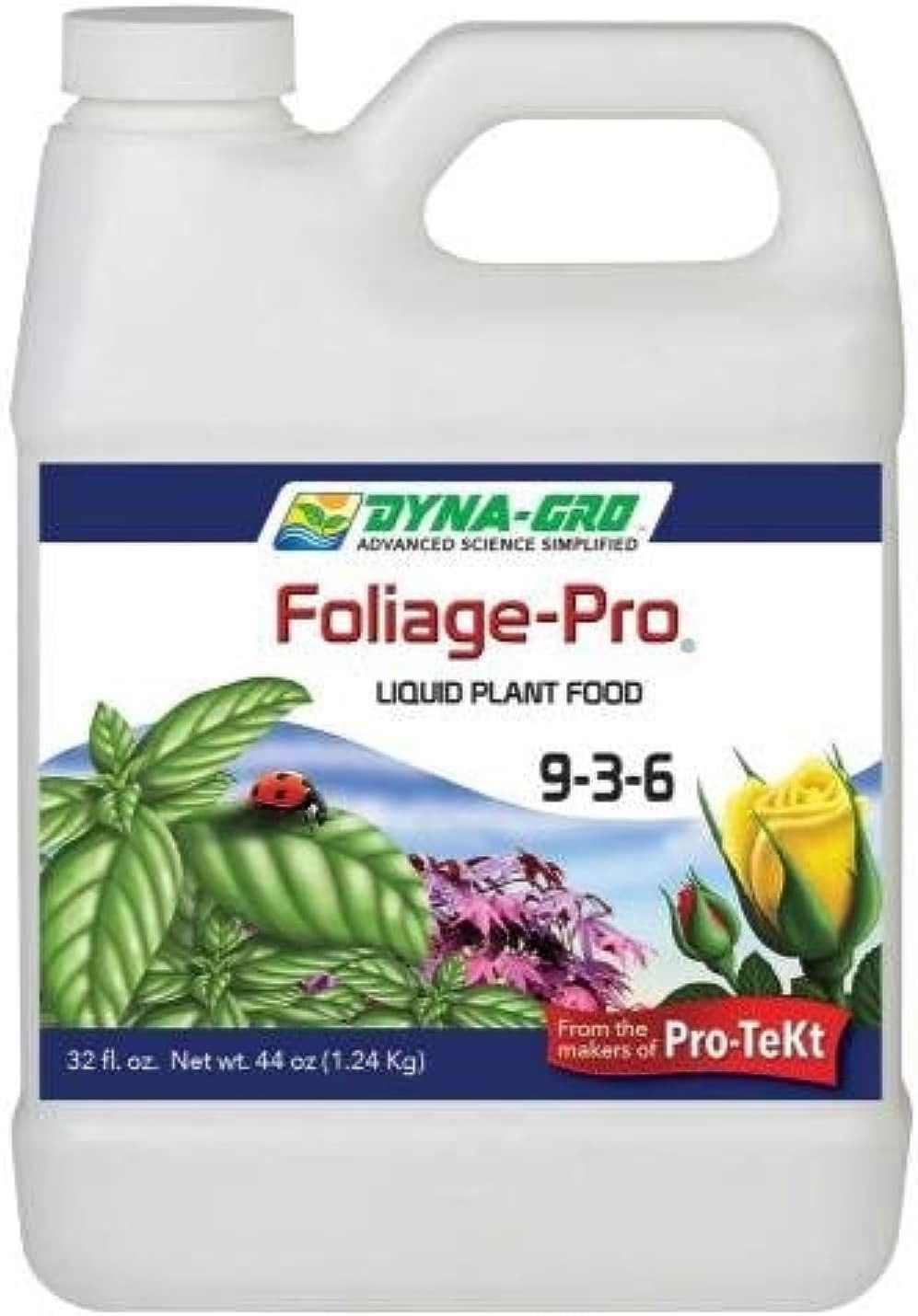
Organic Liquid Plant Food (FoxFarm)
A liquid organic plant food. Applied at label rate during active growth; most houseplants do better at reduced strength and not at all in winter.
View on Amazon ↗
PlantSavvyWorld
Editorial team
PlantSavvyWorld is an independent botanical education project. Articles are drafted with AI assistance, then edited and checked against university extension services, botanical garden collections and other published horticultural sources.
💬 Discussion