


Imagine waiting up to a decade for a flower to bloom... only to find out it smells like a....
Written with AI assistance, edited and checked against horticultural sources.
It was during that same season that a fellow collector invited me to witness a legendary event: the blooming of an Amorphophallus titanum—the infamous Titan Arum, or "Corpse Flower." After watching this slow-growing giant vegetative corm mature over a grueling 7 to 10 years (that is up to 3,650 days of meticulous feeding, watering, and repotting!), the massive spadix finally unveiled its breathtaking crimson spathe. But as I leaned in to admire the botanical marvel, I was hit by an unmistakable, overwhelming stench: a putrid mixture of rotting carcass, sweaty gym socks, and overripe cheese.
Imagine waiting up to a decade for a flower to bloom... Only to find out it smells like a decomposing body! Yet, I was enthralled. The plant was using thermogenesis, heating its internal core to 98°F (36.7°C) to vaporize volatile sulfur compounds, convincing flesh flies and carrion beetles that a dead animal lay nearby. Whether you are cultivating rare botanical oddities like the Titan Arum and Stapelia gigantea, or nurturing beloved indoor foliage like Monstera deliciosa, the core physiological principles remain identical.

PLAY22 Gardening Tools Set of 10
A 10-piece hand tool set with a carry bag — trowel, transplanter, pruners and weeder. Suited to repotting and general container work.
View on Amazon ↗1. Botanical Overview & Natural Habitat
To understand why extreme plants behave the way they do—and why everyday houseplants stall or thrive—we must examine their evolutionary origins. The Titan Arum, native to the equatorial rainforests of Sumatra, Indonesia, grows beneath a dense canopy where humidity sits consistently at 70% to 90%, and temperatures range between 75°F and 88°F (24°C to 31°C). In this environment, competition for light and pollinators is fierce.
Instead of spending precious metabolic energy on bright, sweet-smelling floral display, the plant synthesizes chemical compounds like dimethyl trisulfide (which smells like limburger cheese and garlic) and isovaleric acid (which mimics sweaty feet). These volatile gases travel through the humid canopy air, reaching pollinators kilometers away.
For years before blooming, the plant exists purely as a vegetative machine. Above ground, a single leaf stem can tower 15 feet (4.5 meters) high, collecting solar radiation to power photosynthesis. Below the surface, an enormous subterranean corm stores starch. Photosynthetic sugars travel downward through phloem tissue, filling the corm until it reaches a critical mass—often exceeding 50 to 110 pounds (22 to 50 kg). Only when energy reserves cross this metabolic threshold does the corm send up its famous, foul-smelling inflorescence.
Whether managing a massive Sumatran corm or a potted Philodendron, the vegetative machinery operates on identical cell mechanics. Leaves require atmospheric moisture to regulate guard cells around stomata. When humidity drops below 40%, stomata close to prevent desiccation, which halts carbon dioxide uptake and stops photosynthesis in its tracks. To learn more about global plant conservation and tropical specimens, explore the collections at the Royal Botanic Gardens, Kew.
2. Essential Environmental & Care Requirements
At the root zone (rhizosphere), gas exchange is just as critical as moisture. When potting mix becomes dense, muddy, or suffocated by standing drainage water, fine root hairs quickly suffer from hypoxia (oxygen deprivation), leaving the door wide open for opportunistic fungal pathogens like Pythium and Phytophthora. Conversely, an open, biologically active substrate enables robust nutrient uptake and rapid vegetative vigor.
To keep long-lived foliage and rare tubered species healthy across multi-year growing cycles, you must precisely balance light, substrate structure, moisture, and microclimatic stability.
"Successful indoor gardening isn't a game of luck—it is the art of respecting root biology and working in harmony with natural physiological cycles."
The table below outlines the core parameters required to preserve root integrity, optimize cell turgor, and avoid common cultivation pitfalls:
3. Step-by-Step Cultivation, Feeding & Propagation
Nurturing long-lived tropical foliage or rare blooming specimens requires a methodical hands-on approach. Here is the proven, systematic protocol I personally follow in a greenhouse:
- Optimize Container Aeration & Substrate Mechanics: Choose a container constructed with multiple basal drainage holes. Line or fill the vessel using a custom blend made of 30% coarse perlite or horticultural pumice, 30% medium pine orchid bark, and 40% high-quality coconut coir. This open aggregate texture prevents mechanical soil compaction and preserves high rhizosphere air porosity.
- Stabilize Climate & Micro-Environment: Position your plants at least 3 feet (90 cm) away from cold winter drafts, air conditioning units, and forced-air heating registers. Maintain ambient temperatures between 68°F and 82°F (20°C to 28°C) to prevent thermal shock, leaf drops, and transpirational collapse.
- Establish a Strategic Hydration Protocol: Never irrigate on a strict calendar schedule. Insert your finger or a digital moisture meter into the soil; hydrate thoroughly only when the top 2 inches (5 cm) of the substrate feel dry to the touch. Saturate the medium until liquid flows freely from the bottom drainage holes.
- Apply Dilute Organic Nutrients: During active vegetative phases (spring through early autumn), nourish your plants every two to three weeks with a balanced half-strength organic liquid fertilizer (NPK ratio approximately 3-1-2 or 5-5-5). This gently fuels cell division, leaf expansion, and underground storage without risking chemical fertilizer burn to sensitive root tips.
- Manage Seasonal Transitions & Dormancy: As natural photoperiods shorten in late autumn, metabolic activity slows down. Reduce watering frequency by 50%, withholding all synthetic and organic fertilizers entirely until active vegetative growth resumes in spring.
💡 Pro-Tip: Always hydrate your plants with room-temperature water (65°F–72°F / 18°C–22°C). Applying icy cold tap water directly to containerized root systems induces severe thermal root shock, triggering vascular constriction that halts water and nutrient absorption for up to 48 hours.
⚠️ Important Caution: Never let potted plants stand in stagnant saucer runoff water for more than fifteen minutes! Waterlogged saucers create immediate anaerobic conditions at the base of the pot, suffocating fine root hairs and triggering rapid Pythium outbreaks.
4. Common Problems, Pests & Troubleshooting
When environmental variables fall out of balance, plants communicate their distress through specific physiological signals. Recognizing these warning signs early allows you to correct underlying issues before irreversible root decay sets in.
Hypoxia and Root Rot (Pythium & Phytophthora)
If leaves turn pale yellow, drop prematurely, or stems feel soft near the soil line, inspect the root zone immediately. Healthy tropical roots are firm, white, or light tan. Dark brown, mushy roots that slide apart easily indicate severe fungal infection induced by oxygen deprivation.
- Solution: Unpot the plant, gently wash away soggy substrate, and clip away all infected tissue using sterilized shears. Treat the remaining root system with a 3% hydrogen peroxide wash, then repot into fresh, coarse aggregate mix with 30% perlite and orchid bark.
Leaf Margin Browning and Crisp Tips
When leaf edges crisp up and brown margins extend inward, the culprit is typically low atmospheric humidity or excessive mineral salt accumulation from municipal water and synthetic fertilizers.
- Solution: Increase room humidity above 50% using a cool-mist ultrasonic humidifier. Flush the potting substrate thoroughly with distilled or reverse-osmosis water to leach out accumulated calcium, fluoride, and fertilizer salts.
Common Pests: Spider Mites, Mealybugs, and Fungus Gnats
Warm, indoor micro-environments can attract sap-sucking pests:
- *Spider Mites (Tetranychidae):* Identified by fine webbing underneath leaf surfaces and stippled foliage. Increase humidity and wipe leaves with a soft cloth dipped in insecticidal soap.
- *Mealybugs (Pseudococcidae):* Appear as white, cotton-like clusters along stem nodes and leaf petioles. Dab individual insects directly with a cotton swab soaked in 70% isopropyl alcohol.
- *Fungus Gnats (Sciaridae): Tiny black flies hovering around the soil surface indicate overly wet topsoil. Allow the top 2 inches (5 cm) of soil to dry out, and apply beneficial nematodes (Steinernema feltiae) or Bacillus thuringiensis israelensis* (BTI) to suppress larvae.
For broader diagnostic resources on plant pathology and pest identification, consult the University of Florida IFAS Extension.
5. Frequently Asked Questions
Why does the corpse flower smell like rotting meat when it blooms?
The Titan Arum (Amorphophallus titanum) and carrion flowers like Stapelia produce sulfurous chemical compounds—including dimethyl disulfide, dimethyl trisulfide, and isovaleric acid—that mimic the scent of decaying animal flesh. In their native habitats, this pungent aroma tricks flesh flies and carrion beetles into entering the bloom, ensuring successful cross-pollination.
How long does a corpse flower take to bloom for the first time?
From seed or bulb initiation, a Titan Arum typically requires 7 to 10 years of continuous vegetative growth before it accumulates enough starch reserves in its underground corm to produce its first inflorescence. Once mature, subsequent blooms occur only once every 2 to 5 years, with the actual flower lasting merely 24 to 48 hours.
When is the best time of year to adjust substrate and fertilize indoor tropicals?
Early spring through mid-summer represents the active metabolic window when plants can rapidly utilize increased natural daylight and fresh nutrients. During winter dormancy, when daylight drops and metabolic growth slows, reduce hydration frequency and hold off on applying fertilizers.
How quickly will I see visible improvements after fixing my substrate and watering?
When you eliminate root hypoxia by transitioning to an aerated, porous substrate (such as a 30% perlite and orchid bark mix) and optimizing hydration, most foliage houseplants respond within 7 to 14 days with noticeable leaf turgidity, deeper emerald color, and active apical shoot emergence.
Is this coarse substrate technique suitable for all indoor plant varieties?
Yes! This open aggregate methodology is exceptionally effective for Monsteras, Philodendrons, Pothos, Snake Plants, Aroids, and general tropical foliage collections. Adjusting the coarse-to-fine ratio allows you to cater to succulents (higher perlite content) or ferns (slightly higher moisture-retentive coir content) with ease.
Have you ever encountered a carrion flower or managed a long-term blooming plant in your own collection? Share your stories and diagnostic photos with our global grower community on the PlantSavvyWorld Forum, check out additional hands-on tutorials across our Plant Tips Archive, or visit our Home Page for comprehensive botanic guides!
📋 Table of Contents ▼ Click to expand
PlantSavvyWorld
Editorial team
PlantSavvyWorld is an independent botanical education project. Articles are drafted with AI assistance, then edited and checked against university extension services, botanical garden collections and other published horticultural sources.
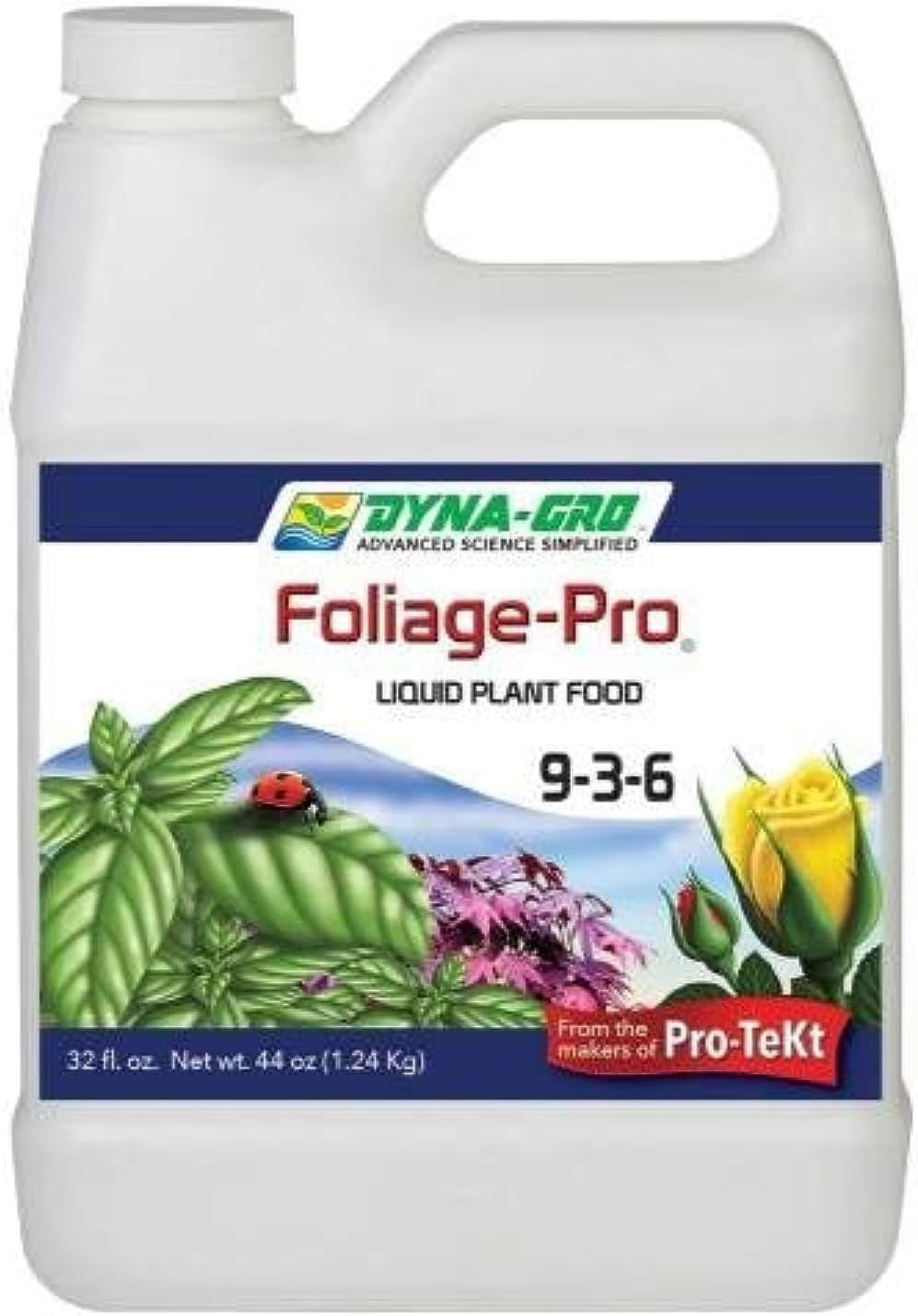
Organic Liquid Plant Food (FoxFarm)
A liquid organic plant food. Applied at label rate during active growth; most houseplants do better at reduced strength and not at all in winter.
View on Amazon ↗
PlantSavvyWorld
Editorial team
PlantSavvyWorld is an independent botanical education project. Articles are drafted with AI assistance, then edited and checked against university extension services, botanical garden collections and other published horticultural sources.
💬 Discussion