


Forget catching flies! I learned THIS trick from an elderly botanist who made her Sundews EXPLODE.!
Written with AI assistance, edited and checked against horticultural sources.
It was during this period of horticultural despair that I met Dr. Evelyn Vance, a retired research botanist who had spent over forty years studying wetland ecosystems. At eighty-two, her home greenhouse was a spectacle of absolute vitality. Her Sundews didn't just grow; they exploded in giant, glistening mounds of crimson tentacles, dripping with sticky mucilage.
Evelyn taught me a revolutionary feeding and cultivation hack that completely bypassed the slow, unreliable process of waiting for indoor fruit flies. By targeting the plant’s cellular pathways directly, she unlocked rapid growth rates that standard textbooks claimed were impossible.
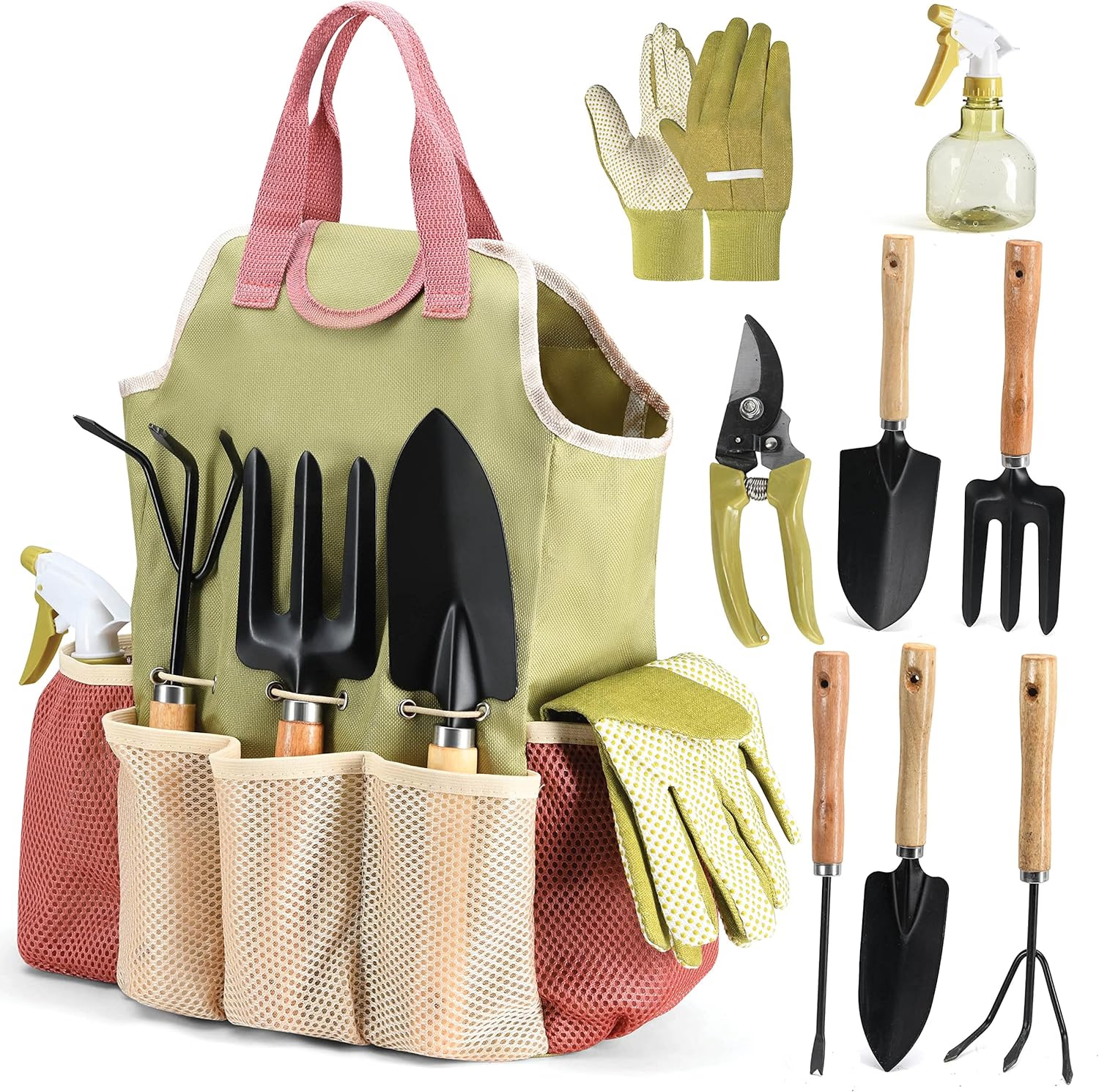
PLAY22 Gardening Tools Set of 10
A 10-piece hand tool set with a carry bag — trowel, transplanter, pruners and weeder. Suited to repotting and general container work.
View on Amazon ↗1. Botanical Overview & Natural Habitat
To understand why Evelyn’s trick works so phenomenally, we must first look at where Drosera originate. Sundews are native to nutrient-poor, highly acidic peat bogs across the globe, from the chilly wetlands of North America to the sun-drenched seaboards of Australia. In these environments, essential macronutrients like nitrogen (N), phosphorus (P), and potassium (K) are virtually locked away or washed out of the acidic soil.
To survive, these evolutionary marvels adapted to obtain their nutritional building blocks from the organic digestion of insects. When an insect touches the glistening, dew-tipped tentacles, it triggers an action potential—an electrical signal that travels at roughly 0.2 inches (5 mm) per second across the leaf blade. This signal stimulates the jasmonic acid pathway, causing the tentacles to curl inward, trapping the insect in a death grip while acid phosphatases, proteases, and nucleases dissolve the prey's soft tissues.
However, many growers fail to realize that while Sundews catch insects for nutrients, their roots are not mere anchors. At the root zone (rhizosphere), gas exchange is just as critical as moisture. When potting mix becomes dense, muddy, or suffocated by standing drainage water, fine root hairs quickly suffer from hypoxia (oxygen deprivation), leaving the door wide open for opportunistic fungal pathogens like Pythium and Phytophthora. Conversely, an open, biologically active substrate enables robust nutrient uptake and rapid vegetative vigor.
Even though these plants grow in saturated bogs in the wild, those bogs are dynamic, open-water systems with constant oxygenation from water movement and atmospheric diffusion. Replicating this delicate balance in a small, stagnant plastic pot indoors is the ultimate challenge of Sundew cultivation.
"Successful indoor gardening isn't a game of luck—it is the art of respecting root biology and working in harmony with natural physiological cycles."
2. Essential Environmental & Care Requirements
Sundews are highly sensitive to environmental shifts. Because they have evolved to thrive in pristine, nutrient-poor niches, they lack the genetic mechanisms to filter out heavy dissolved minerals, chloramines, or excessive synthetic fertilizers through their root systems. To set up your Sundews for explosive growth, you must strictly control their environmental parameters.
Below is the foundational framework required to stabilize your growing space before applying the elderly botanist's feeding trick:
To verify the quality of your water and substrate, I highly recommend reading the cultivation standards set by the International Carnivorous Plant Society, which details the physiological damage caused by mineral toxicities in carnivorous species.
3. Step-by-Step Cultivation, Feeding & Propagation
Now, let us dive into the core protocol that Dr. Evelyn Vance shared with me. The "exploding Sundew" trick relies on a highly specialized, non-burning micro-feeding technique.
Instead of waiting for a random fly to land on the tentacles—which only provides localized, inconsistent nutrition—we deliver a highly bioavailable, rehydrated organic nitrogen source directly to the leaf surface while maintaining a highly oxygenated, pristine root zone.
The secret ingredient is freeze-dried bloodworms (commonly sold as fish food), rehydrated with distilled water and supplemented with an incredibly dilute foliar mist of organic seaweed-based fertilizer. Here is the step-by-step practical application guide to execute this protocol flawlessly:
Step 1: Optimize Container Aeration & Substrate
Ensure your cultivation containers have generous drainage holes. Instead of using standard potting mix, blend a custom substrate consisting of 50% organic, additive-free sphagnum peat moss and 50% coarse perlite or pure silica sand. This aggregate mix prevents compaction, allows oxygen to reach the rhizosphere, and mitigates the risk of root hypoxia. If you are repotting, gently rinse the roots of your Sundew with distilled water to remove any old, decayed media before placing it into its new, airy home.
Step 2: Stabilize the Climate & Micro-Environment
Position your Sundews in a location that receives either 4 to 6 hours of morning sun or sits 8 to 12 inches (20 to 30 cm) directly beneath a full-spectrum LED grow light. Position plants at least 3 feet (1 meter) away from cold winter drafts and forced-air heating registers to prevent sudden humidity shock. To maintain stable humidity, place the pots in a shallow tray filled with 1 inch (2.5 cm) of distilled, reverse-osmosis, or rainwater.
Step 3: Prepare the "Elderly Botanist's" Rehydrated Micro-Feed
Purchase high-quality, freeze-dried bloodworms. Take a small pinch (about 10 to 15 worms) and place them on a clean ceramic saucer. Using an eye-dropper, add 3 to 5 drops of pure distilled water. Let the worms sit for 5 minutes until they absorb the water and swell, turning into a soft, malleable paste. If you want to supercharge this paste, add a single drop of highly diluted organic seaweed extract (diluted to a total dissolved solids [TDS] reading of no more than 50 parts per million [ppm]).
Step 4: Apply the Micro-Feed to the Tentacles
Using a fine pair of tweezers or a wooden toothpick, pick up a tiny, pinhead-sized portion of the rehydrated bloodworm paste. Gently place this portion directly onto the center of a healthy, dew-covered leaf. Do not coat the entire plant! Apply this feed to only 2 or 3 leaves per plant at any given time.
Within 2 to 6 hours, you will witness the leaf curl dramatically around the rehydrated bloodworm, initiating rapid enzymatic digestion. Repeat this targeted feeding once every 14 days during the active spring and summer growing seasons.
Step 5: Execute Propagation to Expand Your Collection
With this elevated nutritional intake, your Sundews will rapidly produce offshoots, flower stalks, and dense foliage. You can easily propagate them via leaf cuttings. Snip a healthy, mature leaf at the base of the petiole and float it in a clear, sealed vial of distilled water under bright light. Within 21 to 30 days, tiny, adventitious plantlets will emerge along the leaf margins. Once these baby sundews develop roots measuring 0.25 inches (6 mm) in length, plant them into the standard peat-sand substrate.
💡 Pro-Tip: Always hydrate your Sundews with room-temperature water (68°F to 74°F / 20°C to 23°C). Icy tap water or cold water straight from an outdoor rain barrel induces severe thermal root shock, which instantly halts nutrient absorption and dew production for several hours, leaving the plant vulnerable to opportunistic pathogens.
⚠️ Important Caution: Never let your Sundews sit in stagnant, un-oxygenated runoff water that has accumulated organic debris, and never use standard garden fertilizers in their water trays. Stagnant, mineral-heavy, or over-fertilized water creates anaerobic conditions and root-zone mineral burn that will rapidly cause root rot and kill your plants within days. Keep your water trays clean and flushed weekly.
4. Common Problems, Pests & Troubleshooting
Even with the most meticulous care, growing indoor carnivores can present challenges. If your Sundew isn't thriving, it is communicating its distress through visible, physical cues.
Loss of Dew (Mucilage Production)
If your Sundew's tentacles look dry and lack their signature sticky droplets, the plant is struggling with either inadequate lighting or low ambient humidity. Sundews require significant photosynthetic energy to synthesize the complex, mucilage glycoprotein. If they are kept in a dark room, they will halt dew production to conserve sugars. Instantly increase the light exposure to 14 hours per day or move them closer to your grow lights.
Mold Growth on Fed Leaves
If you apply too much bloodworm paste, or if the ambient humidity is stagnant, white mold may develop over the leaf where the food was placed. If this occurs, clip the affected leaf off with sterile scissors to prevent the fungus from spreading to the crown. Reduce the size of your food portions to a micro-dose (no larger than a match head) and increase gentle air circulation around the growing area using a small USB-powered fan.
Yellowing Foliage & Soft Crowns
This is a classic sign of root hypoxia or mineral toxicity. Check the TDS of your runoff water using a digital meter. If the reading is over 50 ppm, you must thoroughly flush the substrate with pure distilled water until the runoff reads clean. Ensure your peat-perlite ratio is loose and not compacted into a dense, muddy clay.
For further botanical troubleshooting, you can refer to the extensive pest and disease databases hosted by the Royal Horticultural Society, which offers comprehensive guides on managing indoor plant physiological disorders.
5. Frequently Asked Questions
When is the best time of year to implement these changes?
Early spring through mid-summer represents the active metabolic window for Sundews. This is when the plants can rapidly utilize the increased light and the concentrated organic nutrients from our rehydrated bloodworm trick to fuel rapid cell division and offset production. If your temperate Sundews enter winter dormancy (marked by a slow down in growth and smaller leaves), halt all feeding entirely and reduce hydration frequency to keep the soil only barely damp.
How quickly will I see visible improvements?
Most Sundews respond to the rehydrated bloodworm micro-feeding protocol within 7 to 14 days. You will first notice a significant increase in leaf turgidity, followed by a deeper emerald or rich crimson color in the tentacles, and finally, a surge of active, new apical shoot emergence and copious dew production.
Is this feeding technique suitable for all carnivorous plant varieties?
Yes! It is exceptionally effective for all Drosera species (including Drosera capensis, Drosera spatulata, Drosera binata, and Drosera aliciae), as well as Venus Flytraps (Dionaea muscipula) and Butterworts (Pinguicula). However, avoid using this paste on Nepenthes pitchers, which prefer liquid-based micro-feeding directly inside their traps.
Can I use freeze-dried bloodworms without rehydrating them first?
No. Dry bloodworms will draw moisture out of the delicate tentacle cells of your Sundew, causing localized dehydration and tissue necrosis. Always fully rehydrate the bloodworms with distilled water before applying them to the plant to ensure the digestive enzymes can dissolve the nutrients safely.
Have you tried this technique with your own carnivorous plants? Share your results with our global grower community on the Community Forum, explore more expert guides on Plant Tips, or visit our Home Page for comprehensive plant care archives.
Tags: plant care, indoor jungle, gardening hacks, houseplant tips, carnivorous plants, sundews, drosera care
📋 Table of Contents ▼ Click to expand
PlantSavvyWorld
Editorial team
PlantSavvyWorld is an independent botanical education project. Articles are drafted with AI assistance, then edited and checked against university extension services, botanical garden collections and other published horticultural sources.
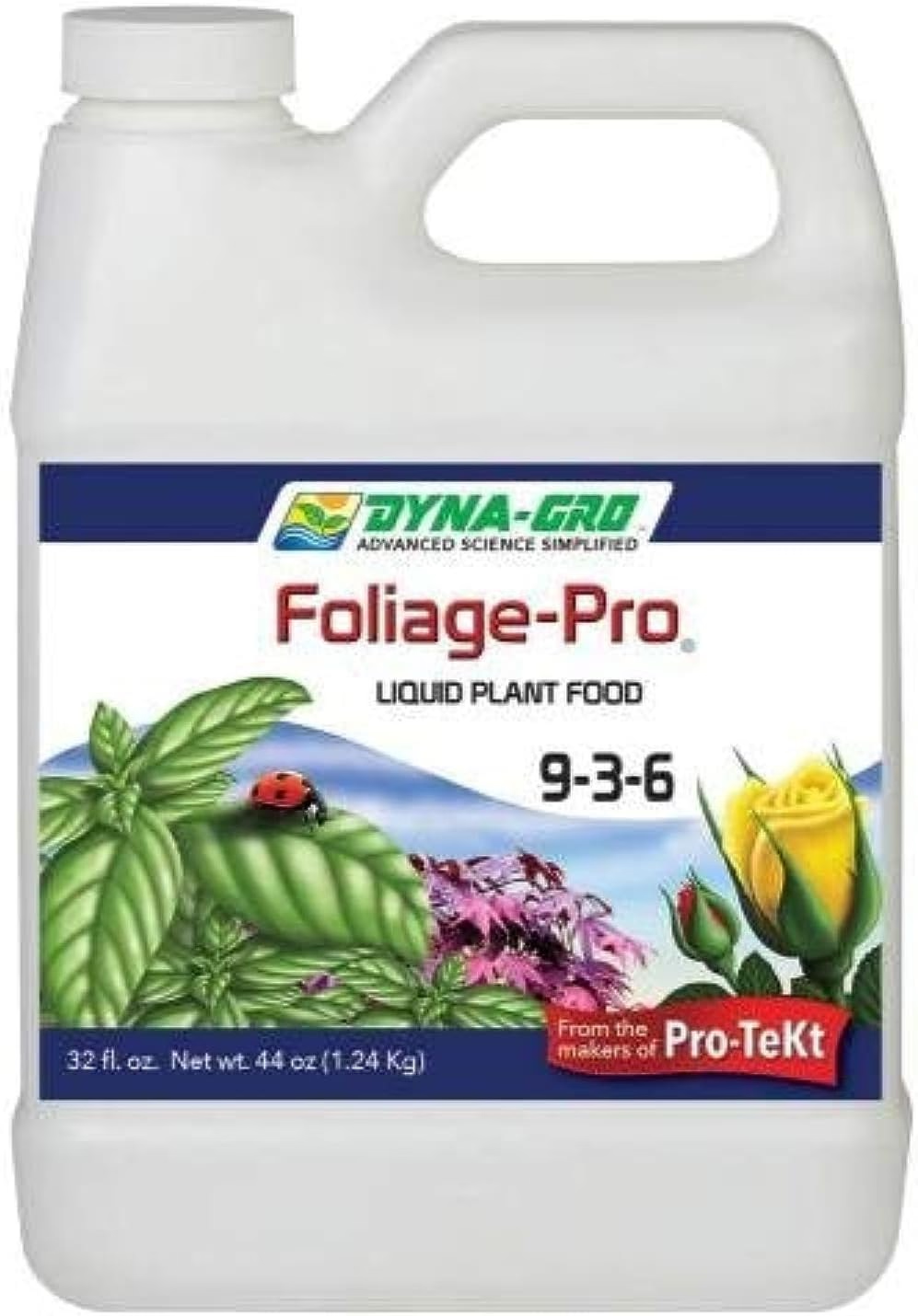
Organic Liquid Plant Food (FoxFarm)
A liquid organic plant food. Applied at label rate during active growth; most houseplants do better at reduced strength and not at all in winter.
View on Amazon ↗
PlantSavvyWorld
Editorial team
PlantSavvyWorld is an independent botanical education project. Articles are drafted with AI assistance, then edited and checked against university extension services, botanical garden collections and other published horticultural sources.
💬 Discussion