


Did you know that the stunning red "flower" on your Anthurium can actually fade completely to green?
Written with AI assistance, edited and checked against horticultural sources.
What I discovered shifted my entire approach to horticulture, transforming my frustration into a systematic, science-based practice.
If you have ever brought home a radiant red Anthurium only to watch its blooms turn completely green, you are not failing as a plant parent. You are simply witnessing a fascinating evolutionary survival mechanism.

PLAY22 Gardening Tools Set of 10
A 10-piece hand tool set with a carry bag — trowel, transplanter, pruners and weeder. Suited to repotting and general container work.
View on Amazon ↗1. Botanical Overview & Natural Habitat
To understand why your Anthurium’s "flower" changes color, we must first clear up a common botanical misconception. The brilliant red heart-shaped structure you admire is not actually a flower. It is a modified leaf called a spathe. The true flowers are microscopic, crowding the rough, pencil-like spike rising from the center of the spathe, known as the spadix.
In their native habitats throughout the wet tropical rainforests of Colombia, Ecuador, and Central America, Anthuriums exist primarily as epiphytes and hemiepiphyte climbing plants. They anchor themselves to the mossy branches of host trees high above the forest floor, completely bypassed by dense soil. Their roots are exposed to continuous, highly humid air currents and frequent, torrential rain showers that drain away instantly.
At the root zone (rhizosphere), gas exchange is just as critical as moisture. When potting mix becomes dense, muddy, or suffocated by standing drainage water, fine root hairs quickly suffer from hypoxia (oxygen deprivation), leaving the door wide open for opportunistic fungal pathogens like Pythium and Phytophthora. Conversely, an open, biologically active substrate enables robust nutrient uptake and rapid vegetative vigor.
The transition of the Anthurium spathe from brilliant red to green is a process known as senescence-associated regreening. When the spathe is young and fertile, it is flooded with red pigments called anthocyanins. These pigments act as visual beacons, guiding specific insect pollinators to the tiny flowers on the spadix. Once pollination is successful—or once the inflorescence reaches the end of its natural life cycle (usually 60 to 90 days)—the plant undergoes a metabolic shift.
Rather than discarding the spathe immediately, the plant systematically dismantles the red anthocyanin pigments and synthesizes chlorophyll in their place. The spathe turns green, transforming from an energy-consuming billboard into a functional, photosynthetic factory. This newly generated energy is redirected to support seed development on the spadix or to fuel new root and leaf growth.
"Successful indoor gardening isn't a game of luck—it is the art of respecting root biology and working in harmony with natural physiological cycles."
2. Essential Environmental & Care Requirements
Replicating an epiphytic canopy in a home environment requires balancing four critical pillars: light intensity, temperature stability, relative humidity, and structural substrate integrity.
Anthuriums require bright, indirect, diffused light. In their natural habitat, the dense rainforest canopy filters direct solar radiation, shielding the delicate leaves and spathes. If exposed to direct sunlight, the intense UV rays will destroy the anthocyanin pigments, causing the red spathes to fade prematurely to a bleached white or brown.
Conversely, if the plant is kept in a dark corner, it will suffer from a lack of energy. To compensate, the plant will rapidly trigger chlorophyll production in its colorful spathes to maximize light absorption, turning them green much faster than normal.
Temperatures must be kept within a stable range of 65°F to 85°F (18°C to 29°C). Drastic thermal shifts, such as cold winter drafts below 55°F (13°C) or hot air blowing from central heating vents, will shock the root system, causing immediate leaf drop and stunted growth.
To maintain healthy cell turgor and prevent crisping leaf margins, aim for a relative humidity level between 60% and 80%.
3. Step-by-Step Cultivation, Feeding & Propagation
To maintain your Anthurium's health, encourage consistent blooming, and safely manage the natural greening process, follow this systematic protocol:
- Construct the Epiphytic Substrate Mix:
In a large container, thoroughly blend 30% coarse orchid bark, 30% perlite or pumice, 20% peat moss or coco coir, and 20% horticultural charcoal. This combination creates large macropores within the substrate, allowing water to drain instantly while retaining a thin film of moisture around the roots.
- Optimize Container Aeration:
Select a pot—ideally a clear plastic orchid pot with drainage slits along the sides—that is only 1 to 2 inches (2.5 to 5 cm) larger than the plant's current root ball. This ensures the substrate dries out at an even rate and prevents a large "dead zone" of wet soil at the bottom of the pot. Ensure the container has generous drainage holes.
- Stabilize Climate & Micro-Environment:
Position your Anthurium 3 to 5 feet (0.9 to 1.5 meters) away from an east or north-facing window, or under a dedicated LED grow light running for 12 hours a day. Position the plant at least 3 feet away from cold winter drafts and forced-air heating registers to prevent humidity shock. Place a humidifier nearby to maintain ambient humidity above 60%.
- Establish the Hydration Routine:
Before watering, insert your finger or a wooden chopstick into the top 2 inches (5 cm) of the substrate. If it feels dry to the touch, carry the pot to the sink. Pour water evenly over the surface until it runs freely out of the drainage holes. Allow all excess water to drain away completely before returning the pot to its decorative saucer.
- Apply Dilute Organic Nutrients:
During the active vegetative phases of spring and summer, nourish your plant with a balanced, highly diluted liquid organic fertilizer (such as a 1-1-1 or a bloom-boosting 1-3-2 NPK formulation). Apply this at 1/4 strength every second watering. This gently fuels continuous cell division and anthocyanin production without causing root burn or salt buildup.
- Prune Senescing Spathes:
Once a red spathe has transitioned completely to green and begins to dry out, turn yellow, or shrivel at the edges, it is time to prune. Trace the long flower stem (peduncle) down to the base of the plant. Using a pair of sharp, sterile pruning shears, make a clean cut at a 45-degree angle about 1 inch (2.5 cm) from the main stem. This stops the plant from expending precious metabolic energy on a dying structure and redirects resources to the development of new, vibrant red spathes.
💡 Pro-Tip: Always hydrate with room-temperature water (68°F to 72°F / 20°C to 22°C); icy tap water induces thermal root shock, causes fine root hair collapse, and halts nutrient absorption for up to 48 hours.
⚠️ Important Caution: Never let pots stand in saucer runoff water for more than fifteen minutes. Stagnant water creates anaerobic conditions that rapidly cause root rot and invite devastating opportunistic fungal pathogens.
4. Common Problems, Pests & Troubleshooting
When troubleshooting your Anthurium, always differentiate between natural aging and physiological stress.
- Premature Greening of Young Spathes: If your Anthurium's spathes are turning green within just a couple of weeks of opening, the plant is likely not receiving enough light. It is producing chlorophyll in the spathe to compensate for low light levels. Move the plant to a brighter spot, ensuring the light remains indirect to prevent sunburn.
- Browning Leaf Margins and Crispy Tips: This is a classic symptom of low humidity or salt buildup from hard tap water. Switch to rainwater, distilled water, or filtered water, and group your plants together or use a humidifier to raise the local humidity.
- Yellowing Lower Leaves accompanied by Soft Stems: This points directly to root suffocation and early-stage root rot. Immediately slip the plant out of its pot and inspect the roots. Healthy roots should be thick, firm, and white or light tan. If you find mushy, brown, foul-smelling roots, clip them away with sterile shears, drench the remaining root system in a diluted solution of hydrogen peroxide, and repot the plant into a fresh, highly aerated orchid mix.
- Pest Infestations: Anthuriums are occasionally targeted by sap-sucking pests like spider mites, thrips, and mealybugs. Check the crevices where the leaves join the stems weekly. If you spot fine webbing or cottony white deposits, wipe down the foliage with a damp microfiber cloth and treat the plant with a mild insecticidal soap or a 1% solution of organic cold-pressed neem oil.
For more detailed information on managing persistent indoor plant pathogens and soil science, refer to the comprehensive disease management resources provided by the Clemson University Cooperative Extension and the structural cultivation guidelines from the Royal Horticultural Society.
5. Frequently Asked Questions
Why did my red Anthurium flower turn green?
This is a natural physiological process called senescence. The red "flower" is actually a modified leaf called a spathe. Once the microscopic flowers on the central spike (the spadix) are past their fertile window, the plant stops producing red anthocyanin pigments and begins synthesizing green chlorophyll. This allows the aging spathe to perform photosynthesis and generate energy for the plant rather than simply wasting resources.
Can I turn a green Anthurium flower red again?
No, once an individual spathe has transitioned from red to green, it cannot revert back to red. The cellular structure of that specific spathe has permanently shifted to prioritize photosynthesis. However, you can encourage the plant to produce new bright red spathes by providing optimal bright, indirect light and a phosphorus-rich, low-dose fertilizer routine during the active growing season.
Should I cut off the green Anthurium flowers?
Yes, you should prune them, but only once they start to fade, yellow, or dry out. While the spathe is still a healthy, firm green, it is actively photosynthesizing and supplying energy to the rest of the plant. Once it begins to brown and look untidy, use sterilized shears to cut the flower stem off at the very base to encourage new growth.
Why are my Anthurium leaves turning brown and crispy on the edges?
This is caused by dry indoor air (low humidity) or mineral burn from tap water. Anthuriums require relative humidity levels above 50% (ideally 60% to 80%) to keep their leaf margins hydrated. If your home has dry air, or if you use chlorinated tap water high in dissolved minerals, the leaf margins will quickly dry out and turn brown. Switch to filtered or rainwater and use a humidifier.
Have you tried this aeration and watering technique with your own houseplants? Share your results with our global grower community on the Community Forum, explore more expert guides on Plant Tips, or visit our Home Page for comprehensive plant care archives.
📋 Table of Contents ▼ Click to expand
PlantSavvyWorld
Editorial team
PlantSavvyWorld is an independent botanical education project. Articles are drafted with AI assistance, then edited and checked against university extension services, botanical garden collections and other published horticultural sources.
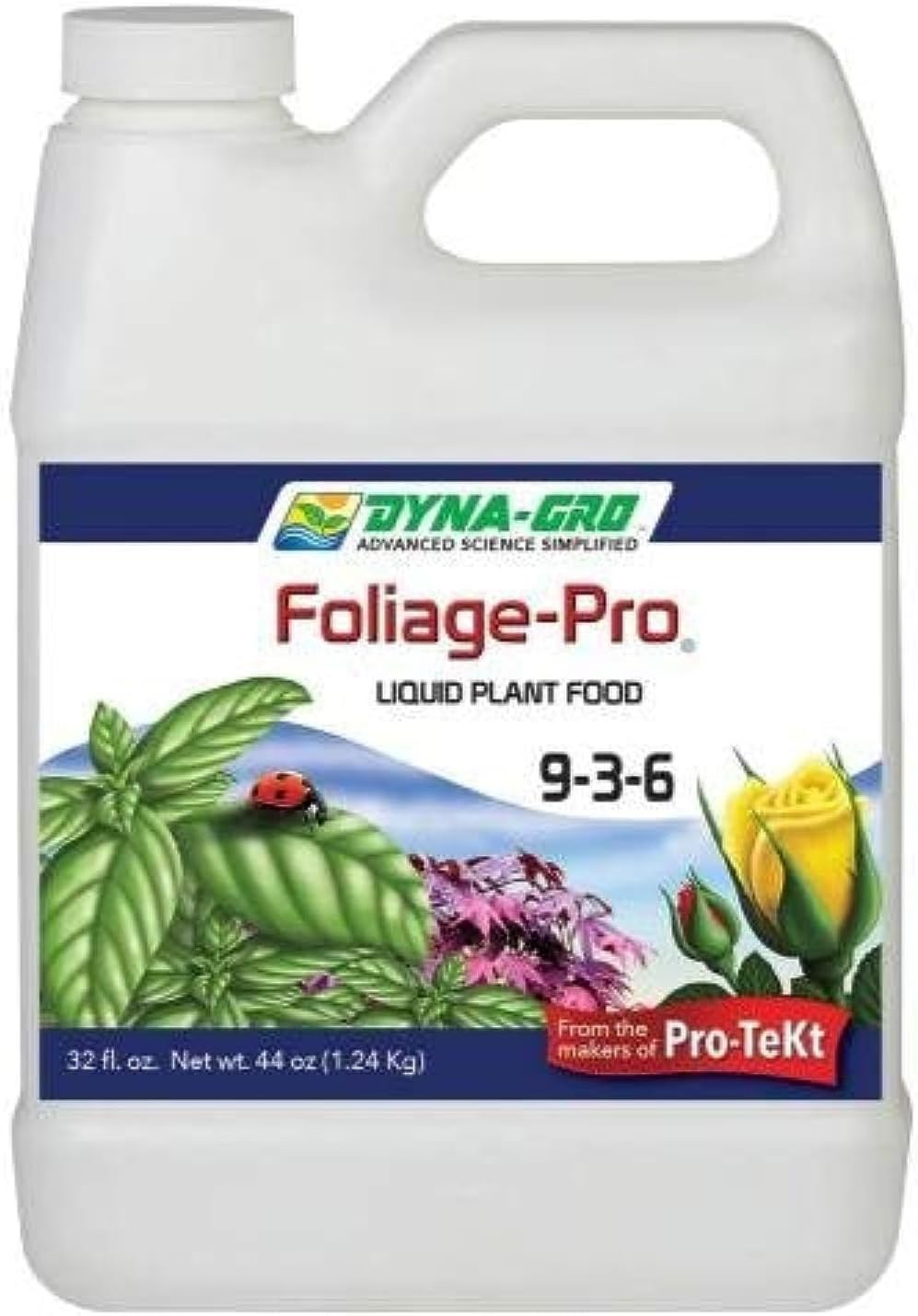
Organic Liquid Plant Food (FoxFarm)
A liquid organic plant food. Applied at label rate during active growth; most houseplants do better at reduced strength and not at all in winter.
View on Amazon ↗
PlantSavvyWorld
Editorial team
PlantSavvyWorld is an independent botanical education project. Articles are drafted with AI assistance, then edited and checked against university extension services, botanical garden collections and other published horticultural sources.
💬 Discussion