


✋ Did you know that "petting" your seedlings every day can actually make them stronger?
Written with AI assistance, edited and checked against horticultural sources.
I began running simple, controlled trials on my seed trays, incorporating a technique long known to commercial green-house growers but rarely explained to home gardeners: mechanical stimulation, or "petting" seedlings.
1. Botanical Overview & Natural Habitat
In nature, plants never grow in a sterile, perfectly motionless bubble. From the instant a radicle emerges from its seed coat in an open meadow or rainforest floor, it is subjected to constant environmental forces: gentle breezes blowing at 2 to 8 mph (3.2 to 12.8 km/h), falling raindrops impacting leaf surfaces, and brushing movements from passing wildlife.
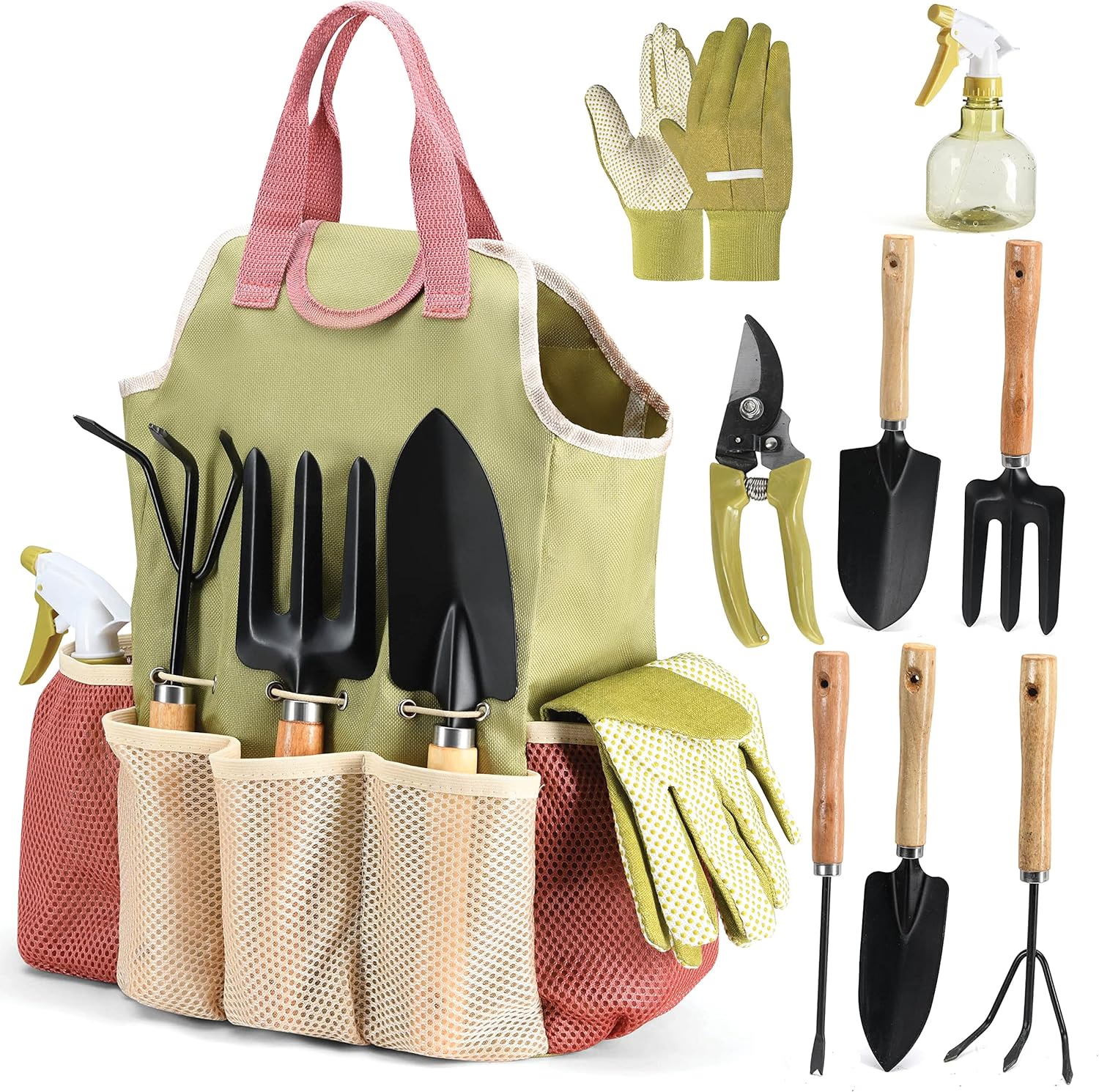
PLAY22 Gardening Tools Set of 10
A 10-piece hand tool set with a carry bag — trowel, transplanter, pruners and weeder. Suited to repotting and general container work.
View on Amazon ↗In response to these subtle mechanical stresses, plants undergo a complex physiological process called thigmomorphogenesis (derived from the Greek words thigma for "touch" and morphogenesis for "creation of form"). First coined by botanist Dr. Mark Jaffe in 1973, thigmomorphogenesis describes how mechanical touch alters growth patterns. When you run your palm across the tops of your seedlings every day, you trigger an immediate biochemical cascade:
- Calcium Ion Flux: Within milliseconds of tactile contact, specialized mechanoreceptors on the epidermal cell walls release calcium ions ($Ca^{2+}$) into the cytosol.
- Ethylene & Jasmonic Acid Release: This ion surge triggers an instantaneous micro-burst of plant hormones, primarily ethylene and jasmonate.
- Growth Redirection: The plant temporarily inhibits vertical cell elongation (cell stretching) in favor of radial cell expansion (cell widening).
Rather than expending energy growing tall and top-heavy, the touched plant allocates its structural resources to thickening its stem caliper, strengthening xylem cell walls, and expanding its root system depth to anchor itself securely.
At the root zone (rhizosphere), gas exchange is just as critical as moisture and mechanical stimulation. When potting mix becomes dense, muddy, or suffocated by standing drainage water, fine root hairs quickly suffer from hypoxia (oxygen deprivation), leaving the door wide open for opportunistic fungal pathogens like Pythium and Phytophthora (commonly responsible for damping-off disease). Conversely, combining tactile stem stimulation with an open, biologically active substrate enables robust nutrient uptake and rapid vegetative vigor.
"Successful indoor gardening isn't a game of luck—it is the art of respecting root biology and working in harmony with natural physiological cycles."
By mimicking outdoor mechanical dynamics indoors, you transform weak, etiolated sprouts into sturdy, stocky plants capable of handling transplant shock, heavy harvests, and indoor environmental shifts.
2. Essential Environmental & Care Requirements
While daily physical contact provides the mechanical cue for stockier growth, thigmomorphogenesis cannot compensate for poor environmental fundamentals. To achieve optimal stem caliper and leaf turgidity, balance your mechanical routines with precise light, humidity, temperature, and root-zone aeration.
For detailed research on seedling physiological responses under controlled environment agriculture, consult the Michigan State University Extension Guide on Growth Regulators.
💡 Pro-Tip: Always hydrate your seedlings with room-temperature water around 68°F to 72°F (20°C to 22°C). Icy tap water applied directly to small containers induces thermal root shock, causing stomata to lock down and halting nutrient absorption for hours, regardless of how ideal your lighting is.
3. Step-by-Step Cultivation, Feeding & Propagation
To achieve the best results, integrate mechanical petting into your regular seed-starting and plant maintenance routines. Here is the systematic protocol I follow in a greenhouse and advise all plant growers to practice:
1. Optimize Container Aeration and Substrate
Ensure every seed tray, nursery pot, or decorative planter has generous drainage holes. Amend standard peat- or coir-based seed-starting mix with 30% coarse perlite, pumice, or fine orchid bark aggregate. This loose texture allows emerging root tips to navigate air pockets easily while preventing water retention that causes root rot.
2. Establish the Daily "Petting" Protocol
Once your seedlings develop their first set of true leaves (typically 7 to 14 days after germination):
- Wash and dry your hands thoroughly to avoid introducing human oil or pathogens.
- Gently pass your open palm back and forth across the tops of the seedlings.
- Bend the main stems by roughly 30 to 45 degrees without creasing them.
- Perform 15 to 30 continuous brush strokes once or twice per day (morning and early evening yield the strongest physiological response).
- Alternatively, sweep a clean strip of lightweight cardboard or a soft feather duster lightly across the foliage canopy.
3. Maintain Supplemental Air Circulation
Pair your daily tactile petting with continuous micro-breezes. Mount a small, oscillating fan at least 3 to 4 feet (0.9 to 1.2 meters) away from your plant shelves on the lowest setting. The goal is gentle leaf flutter, not bending the stems over under severe wind load.
4. Stabilize Climate & Micro-Environment
Position seedling trays and tropical starts at least 3 feet (0.9 meters) away from drafty winter window sills, exterior doors, and forced-air heating registers. Rapid humidity drops force stomata to close, preventing transpirational cooling and stopping cell division.
5. Apply Dilute Organic Nutrients
During active vegetative phases (once plants have 2–3 sets of true leaves), nourish with a quarter to half-strength organic liquid seaweed or fish emulsion fertilizer once per week (NPK ratio around 2-1-2 or 3-1-2). This gently fuels continuous cell division and xylem thickening without causing fertilizer burn on fragile root hairs.
⚠️ Important Caution: Never let seedling trays or nursery pots stand in saucer runoff water for more than 15 minutes. Stagnant standing water starves root cells of dissolved oxygen, creating anaerobic conditions that trigger root decay within 24 to 48 hours. Always dump excess water promptly.
For additional insight into plant physiological structure and environmental adaptation, explore the Royal Horticultural Society Plant Care Resources.
4. Common Problems, Pests & Troubleshooting
Even when implementing mechanical physical care routines, indoor growing environments present challenges. Below are common symptoms, root causes, and corrective action plans:
1. Tall, Spindly, Weak Stems (Etiolation)
- Symptoms: Long spaces between leaf nodes (internodes); light green or yellow stem tissue; seedlings falling over under their own weight.
- Root Cause: Insufficient light intensity (PPFD) paired with static air lacking physical movement.
- Solution: Lower your LED grow light to 4–6 inches (10–15 cm) above the seedling tops and implement the daily 30-second petting routine twice per day. Within 5 to 7 days, vertical growth will slow down and stem diameter will expand.
2. Stem Base Collapsing or Damping-Off
- Symptoms: Seedling stems turn brown, threadlike, and pinch off right at the soil line, causing the entire plant to collapse overnight.
- Root Cause: Opportunistic soil fungi (Pythium, Rhizoctonia, or Phytophthora) flourishing in cold, overly wet, un-aerated soil.
- Solution: Remove and discard affected seedlings immediately. Re-pot remaining healthy plants into fresh substrate amended with 30% perlite or pumice. Ensure seedling heat mats keep soil temperatures at 70°F–75°F (21°C–24°C) and water only from the bottom.
3. Broken Stems or Bruised Leaves
- Symptoms: Leaves showing dark, water-soaked spots; stems bent at sharp, creased angles that do not recover.
- Root Cause: Overly aggressive petting or mechanical contact applied to under-hydrated seedlings suffering from low cell turgor.
- Solution: Always pet your plants after verifying cell turgor is high (1–2 hours after morning watering). Use light, gliding motions over the top 20% of the plant canopy rather than pushing down on the stems.
5. Frequently Asked Questions
Can you pet seedlings too hard and damage them?
Yes. Physical contact should bend the stem gently without folding, snapping, or creasing the cellular structure. Avoid pressing downward into the soil; instead, brush across the upper foliage canopy side-to-side. If leaves display bruised, water-soaked margins, reduce the force of your strokes.
Does petting seedlings really make them stronger?
Yes! Extensive scientific research in plant biology proves that mechanical friction induces thigmomorphogenesis. This physical stimulation triggers an immediate release of ethylene gas and calcium signaling, resulting in up to a 40% increase in stem diameter, reduced leggy stem elongation, thicker xylem walls, and stronger root anchoring systems.
How many times a day should I brush or pet my seedlings?
Brushing your seedlings 1 to 2 times daily for 30 to 60 seconds (roughly 20 to 30 passes across the tops of the leaves) provides optimal stimulation. You do not need to pet them constantly throughout the day; brief, daily touch sequences trigger the biological cascade effectively.
When is the best time of year to implement these changes?
Early spring through mid-summer represents the primary active metabolic window when seedlings and houseplants rapidly utilize increased light, warmth, and fresh nutrients. However, you can use mechanical petting year-round under grow lights whenever you start new seeds or propagate stem cuttings indoors.
How quickly will I see visible improvements?
Most seedlings and foliage houseplants respond within 5 to 10 days of daily physical stimulation. You will notice significantly stockier main stems, tighter node spacing, deeper leaf pigmentation, and increased resistance to air currents.
Is this technique suitable for all indoor plant varieties?
Yes! Mechanical petting is effective across many plant families, including vegetable seedlings (tomatoes, peppers, brassicas, squash), flowering annuals (dahlias, zinnias), and tropical foliage houseplants like Monstera, Philodendron, and Pothos. (Exceptions: Avoid touching sensitive species like Mimosa pudica or carnivorous plants like Venus flytraps, which expend massive energy closing their traps).
Have you tried this technique with your own houseplants or seed trays? Share your results with our global grower community on the Community Forum, explore more expert guides on Plant Tips, or visit our Home Page for comprehensive plant care archives.
📋 Table of Contents ▼ Click to expand
PlantSavvyWorld
Editorial team
PlantSavvyWorld is an independent botanical education project. Articles are drafted with AI assistance, then edited and checked against university extension services, botanical garden collections and other published horticultural sources.
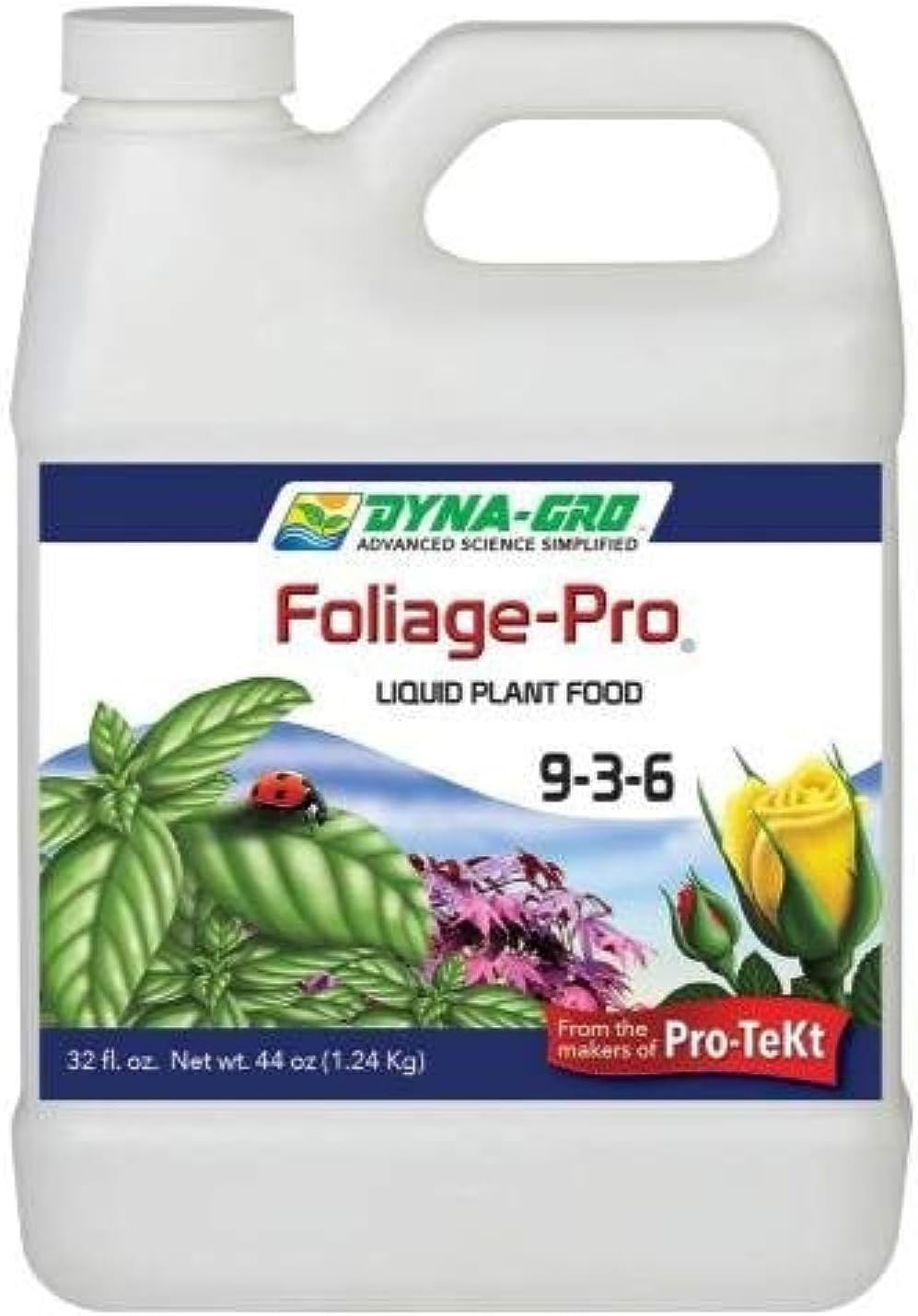
Organic Liquid Plant Food (FoxFarm)
A liquid organic plant food. Applied at label rate during active growth; most houseplants do better at reduced strength and not at all in winter.
View on Amazon ↗
PlantSavvyWorld
Editorial team
PlantSavvyWorld is an independent botanical education project. Articles are drafted with AI assistance, then edited and checked against university extension services, botanical garden collections and other published horticultural sources.
💬 Discussion