


Did you know one of the most common houseplants is secretly working the night shift?
Written with AI assistance, edited and checked against horticultural sources.
What I discovered transformed my approach to horticulture: while we sleep, certain ubiquitous houseplant species—most notably the iconic Snake Plant (Dracaena trifasciata, formerly Sansevieria trifasciata) and the indestructible ZZ Plant (Zamioculcas zamiifolia)—are actively performing metabolic heavy lifting. They are working the night shift.
1. Botanical Overview & Natural Habitat
To understand why your Snake Plant or Jade Plant (Crassula ovata) operates differently from a typical tropical foliage plant like a Monstera or Philodendron, we must examine its evolutionary adaptations. Most terrestrial plants utilize standard C3 or C4 photosynthetic pathways. Under these mechanisms, leaf stomata (microscopic epidermal pores) open during daytime hours to take in carbon dioxide ($CO_2$). However, opening stomata under intense sun causes rapid water loss via transpiration.

PLAY22 Gardening Tools Set of 10
A 10-piece hand tool set with a carry bag — trowel, transplanter, pruners and weeder. Suited to repotting and general container work.
View on Amazon ↗To survive extreme drought and high heat in their endemic habitats—such as the arid, rocky tropical regions of West Africa (from Nigeria to the Congo basin)—these resilient species evolved Crassulacean Acid Metabolism (CAM).
The nocturnal mechanics of CAM plants:
- Nocturnal $CO_2$ Fixation: At night, as ambient temperatures drop from daytime highs of 85–95°F (29–35°C) to cooler nighttime range of 60–70°F (15–21°C), the plant opens its stomata. Relative humidity naturally rises at night, drastically lowering the Vapor Pressure Deficit (VPD) and allowing $CO_2$ absorption with minimal moisture loss.
- Vacuolar Storage: The absorbed $CO_2$ is converted by the enzyme phosphoenolpyruvate (PEP) carboxylase into malic acid, which is stored inside cellular vacuoles overnight. If you were to taste a CAM plant leaf at 4:00 AM, it would taste distinctly sour due to this accumulation of acid!
- Daytime Photosynthesis: Once the sun rises, the stomata seal tightly to lock in water. The plant uses sunlight energy to decarboxylate the stored malic acid, releasing $CO_2$ internally directly into the Calvin cycle.
At the root zone (rhizosphere), gas exchange is just as critical as moisture. When potting mix becomes dense, muddy, or suffocated by standing drainage water, fine root hairs quickly suffer from hypoxia (oxygen deprivation), leaving the door wide open for opportunistic fungal pathogens like Pythium and Phytophthora. Conversely, an open, biologically active substrate enables robust nutrient uptake and rapid vegetative vigor. Because CAM plants process water with intense efficiency, their thick underground rhizomes and fibrous roots require high oxygen diffusion rates 24 hours a day.
Research published by the Royal Horticultural Society (RHS) highlights that structural substrate porosity directly correlates with subterranean gas transport and overall root-cap longevity in drought-adapted indoor species.
2. Essential Environmental & Care Requirements
Creating an optimal indoor micro-environment for night-shift CAM plants requires balancing light intensity, substrate aeration, and hydration timing. Because these species store carbon overnight, they require sufficient daytime light energy (photons) to process that stored energy.
"Successful indoor gardening isn't a game of luck—it is the art of respecting root biology and working in harmony with natural physiological cycles."
Micro-Climate Parameters
- Photoperiod & Light Intensity: Target 400 to 800 foot-candles (approx. 4,300 to 8,600 lux) of bright, indirect light for optimal growth. While Snake Plants can tolerate lower light levels down to 100 foot-candles (1,000 lux), their nighttime carbon fixation slows down dramatically, halting new growth.
- Temperature Differential: Maintain a daytime temperature of 70–85°F (21–29°C) and a nighttime drop to 60–70°F (15–21°C). This 10–15°F (5–8°C) nighttime temperature reduction is the primary trigger for efficient malic acid conversion inside the leaf vacuoles.
- Ambient Humidity: 30% to 50% relative humidity is ideal. High humidity above 65% combined with poor air circulation creates stagnant boundary layers around leaf surfaces, inhibiting nighttime gas exchange.
The following table breaks down key environmental parameters, optimal practices, common pitfalls, and their botanical impacts:
3. Step-by-Step Cultivation, Feeding & Propagation
Here is the proven, systematic protocol I personally follow in a greenhouse to keep nocturnal foliage thriving year-round:
- Optimize Container Aeration: Select an unglazed terracotta or thick ceramic pot with generous drainage holes (at least 0.75 inches / 2 cm in diameter). Line the base with porous mesh rather than gravel, which artificially raises the perched water table. Amend standard potting mix with 30% coarse perlite or pumice and 30% fine orchid bark (0.25 to 0.5 inches / 6 to 12 mm aggregate) to prevent compaction.
- Stabilize Climate & Micro-Environment: Position plants at least 3 feet (0.9 meters) away from cold winter drafts, air conditioning vents, and forced-air heating registers to prevent humidity shock and stomatal shutdown.
- Establish a Proper Hydration Cycle: Water deeply until fluid flows freely from the base drainage ports. Allow the potting medium to dry out completely down to a depth of 2 to 3 inches (5.0 to 7.5 cm) before watering again. During winter dormancy (November through February), cut hydration frequency in half.
- Apply Dilute Organic Nutrients: During active vegetative phases (early spring through mid-summer), nourish every 3 to 4 weeks with half-strength, balanced organic liquid feeds (such as a 3-1-2 NPK liquid kelp/fish hydrolysate). This gently fuels cell division without inducing root burn from synthetic salt buildup.
- Clean Leaf Surfaces Regularly: Wipe leaves down every month with a damp microfiber cloth. Dust accumulation creates an physical barrier that blocks photon absorption during the day and occludes stomatal pores during the night shift.
- Execute Clean Rhizome Propagation: Propagate overcrowded plants during late spring by unpotting, gently removing substrate from the root mass, and using a sterilized pruning blade to slice through central rhizomes, ensuring each section retains at least 2 to 3 healthy leaf stalks and a cluster of active roots.
💡 Pro-Tip: Always hydrate with room-temperature water around 68–72°F (20–22°C). Applying icy tap water directly to containerized soils induces thermal root shock, causing fine root hairs to contract, membrane permeability to fail, and halting nutrient absorption for up to 48 hours.
⚠️ Important Caution: Never let pots stand in saucer runoff water for more than fifteen minutes. Stagnant water creates anaerobic conditions (less than 2% dissolved oxygen) that rapidly kill healthy root tips and cause fatal Pythium stem rot within 72 hours.
4. Common Problems, Pests & Troubleshooting
Even resilient night-shift species encounter cellular stress when environmental parameters drift off-course. Learning to diagnose visual symptoms early will help you correct culture before permanent damage occurs.
Pathogens & Root Hypoxia
When soil aggregate becomes waterlogged, anaerobic conditions inhibit cellular respiration in the root zone. Fine feeder roots slough off, and leaves turn soft, yellow, and translucent starting from the soil line up.
- Solution: Immediately extract the root ball from its container. Prune away all blackened, mushy, or foul-smelling roots using shears disinfected with 70% isopropyl alcohol. Dust remaining sound root tissue with powdered cinnamon or sulfur (natural fungicides), and repot into fresh, dry perlite-heavy substrate.
Physiological Edema & Leaf Splitting
If a plant absorbs water rapidly through its roots while nighttime relative humidity is excessively high (above 80%) and air circulation is low, cells within the leaf parenchyma can become over-pressurized with water. The epidermal walls rupture, forming tiny corky blisters or long vertical splits along the leaves.
- Solution: Never water late in the evening. Apply water during early morning hours so excess substrate moisture can evaporate before nocturnal stomatal opening occurs.
Pests: Mealybugs & Scale Insects
Mealybugs (Pseudococcidae) love nesting in the tight, protected leaf axils and structural folds of CAM succulents. They insert piercing-sucking mouthparts into vascular tissues, draining sugars and secreting sticky honeydew that attracts black sooty mold.
- Solution: Dip a cotton swab in 70% rubbing alcohol and touch each insect directly to dissolve their protective waxy coat. For widespread infestations, spray thoroughly with an organic horticultural oil or cold-pressed neem oil solution emulsion every 7 days for 3 consecutive weeks to disrupt the insect breeding cycle. Detail on integrated pest management protocol is available through the University of Florida IFAS Extension.
5. Frequently Asked Questions
Do snake plants really produce oxygen at night?
Yes! Thanks to Crassulacean Acid Metabolism (CAM), snake plants take in carbon dioxide and perform key gas exchange processes during the night. While primary oxygen release is tied to light-driven reactions, their unique nocturnal $CO_2$ absorption improves indoor air circulation and continuous biological activity overnight, making them ideal bedroom plants.
How often should I water my snake plant in winter versus summer?
During active summer growth, water thoroughly every 14 to 21 days once the top 2 to 3 inches (5–7.5 cm) of soil are completely dry. In winter, when light levels drop and metabolic rates slow by up to 70%, reduce watering to once every 6 to 8 weeks. Always verify soil moisture with a wooden dowel inserted deep into the root zone before applying water.
Why are my snake plant leaves soft, wrinkled, and falling over?
Soft, flopping leaves are almost always caused by root rot triggered by overwatering and dense, waterlogged soil. When roots die from lack of oxygen, the plant can no longer take up water, causing leaves to look wrinkled and dehydrated despite wet soil. Check roots immediately: if mushy, trim them back and repot into an airy, porous substrate.
Can CAM plants grow under standard LED artificial grow lights?
Absoltely. Standard full-spectrum LED grow lights delivering 15 to 25 watts per square foot work wonderfully. Keep the lights on for 12 to 14 hours during the day, then ensure the plant receives a full 10 to 12 hours of total darkness. Continuous 24-hour lighting disrupts the plant's natural circadian clock, stopping nocturnal stomatal opening and malic acid storage.
When is the best time of year to implement these repotting and substrate changes?
Early spring through mid-summer represents the active metabolic window when plants can rapidly recover from root disruption and utilize increased light and fresh nutrients. During winter dormancy, minimize repotting unless you are treating active root rot. Most foliage houseplants respond to proper repotting within 7 to 14 days with noticeable leaf turgidity, deeper emerald color, and active apical shoot emergence.
Have you observed the night shift in action with your own houseplants? Share your results with our global grower community on the Community Forum, explore more expert guides on Plant Tips, or visit our Home Page for comprehensive plant care archives.
📋 Table of Contents ▼ Click to expand
PlantSavvyWorld
Editorial team
PlantSavvyWorld is an independent botanical education project. Articles are drafted with AI assistance, then edited and checked against university extension services, botanical garden collections and other published horticultural sources.
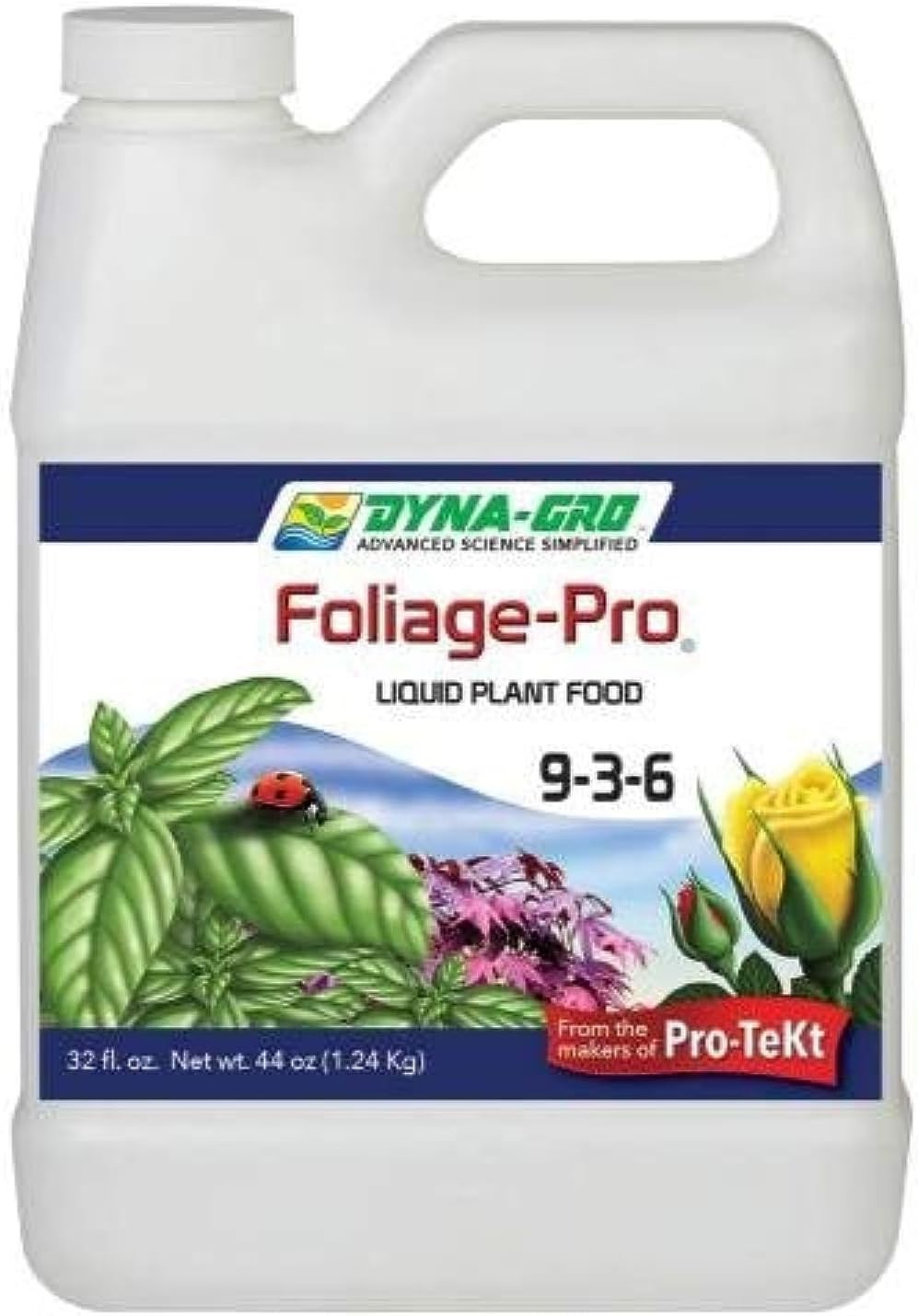
Organic Liquid Plant Food (FoxFarm)
A liquid organic plant food. Applied at label rate during active growth; most houseplants do better at reduced strength and not at all in winter.
View on Amazon ↗
PlantSavvyWorld
Editorial team
PlantSavvyWorld is an independent botanical education project. Articles are drafted with AI assistance, then edited and checked against university extension services, botanical garden collections and other published horticultural sources.
💬 Discussion