


⏱ Did you know a plant can have a built-in timer and a "memory"? Talk about a lucky escape!
Written with AI assistance, edited and checked against horticultural sources.
What saved those plants during that heat shock was a phenomenon I had studied in academic labs but had underestimated in my home collection: plants possess both an internal molecular "built-in timer" (a circadian clock) and a form of cellular "memory" (known as stress priming or epigenetic memory). Because my Philodendron had experienced mild, controlled moisture fluctuations weeks earlier, its root and leaf tissues were already primed to synthesize protective heat-shock proteins and rapidly close stomata. Talk about a lucky escape!
1. Botanical Overview & Natural Habitat
At the core of plant survival is the plant's endogenous circadian clock—a network of oscillating genes (such as CIRCADIAN AND CLOCK ASSOCIATED 1 [CCA1] and TIMING OF CAB EXPRESSION 1 [TOC1]) that operates on a roughly 24-hour cycle. This internal biological timer allows plants to anticipate environmental changes rather than merely reacting to them. Hours before sunrise, your indoor plants are already opening stomatal pores and mobilizing photosynthetic machinery to capture early morning light. By late afternoon, the timer signals the plant to reduce transpiration and redirect photosynthates (sugars) down into the root system for cellular repair and storage.

PLAY22 Gardening Tools Set of 10
A 10-piece hand tool set with a carry bag — trowel, transplanter, pruners and weeder. Suited to repotting and general container work.
View on Amazon ↗Complementing this built-in timer is "plant memory." When a plant survives a period of mild environmental stress—such as a temporary drought lasting 3 to 5 days or a sudden temperature drop to 55°F (13°C)—it undergoes chemical modifications at the chromatin level. Through histone acetylation and DNA methylation, genes responsible for stress tolerance remain "marked." When a second, more severe stress event occurs, the plant retrieves this physiological memory, activating defense pathways, such as abscisic acid (ABA) synthesis, in minutes rather than hours.
At the root zone (rhizosphere), gas exchange is just as critical as moisture. Root cells undergo respiration 24 hours a day, consuming oxygen and releasing carbon dioxide. When potting mix becomes dense, muddy, or suffocated by standing drainage water, fine root hairs quickly suffer from hypoxia (oxygen deprivation). Hypoxic conditions starve the root tips of ATP (cellular energy), causing root cell lysis and leaving the door wide open for opportunistic fungal pathogens like Pythium and Phytophthora. Conversely, an open, biologically active substrate enables robust nutrient uptake and rapid vegetative vigor.
"Successful indoor gardening isn't a game of luck—it is the art of respecting root biology and working in harmony with natural physiological cycles."
Understanding how these mechanisms operate in a plant's wild habitat is crucial. Tropical understory plants like Monstera, Philodendron, and Epipremnum evolved in nutrient-rich, high-porosity leaf litter where soil moisture drains instantly, and oxygen levels around the roots remain near ambient atmospheric levels (21% O₂). To keep these species thriving indoors, we must replicate this high-oxygen, high-drainage micro-environment while honoring their natural physiological rhythms. For deeper research on how environmental factors influence plant metabolic pathways, consult the comprehensive guides available through the University of Florida IFAS Extension.
2. Essential Environmental & Care Requirements
To keep a plant's internal clock and stress memory working to its advantage, you must provide stable, predictable environmental cues. Inconsistent lighting, erratic watering schedules, and stagnant air throw off circadian regulation, putting the plant in a state of chronic metabolic exhaustion.
Photoperiod and Light Intensity
Plants require a consistent day-night signal to calibrate their internal timer. Aim for 12 to 14 hours of bright, indirect light daily, followed by 10 to 12 hours of complete darkness. Light levels between 1,000 and 2,500 lux (100 to 250 foot-candles) are ideal for medium-light foliage plants, while bright-light tropicals thrive between 5,000 and 10,000 lux (500 to 1,000 foot-candles). Avoid shifting plants frequently between light conditions; rapid changes degrade their stress memory and force the plant to shed energy-expensive leaves.
Temperature and Relative Humidity
Maintain ambient daytime temperatures between 70°F and 80°F (21°C to 27°C) and nighttime temperatures between 62°F and 68°F (16°C to 20°C). This natural 8°F to 10°F (4°C to 6°C) night drop signals the plant to transition from active photosynthesis to nighttime respiration and carbohydrate translocation. Relative humidity should ideally sit between 50% and 70%. Dropping below 30% RH accelerates transpirational water loss beyond what roots can extract, triggering emergency stomatal closure and halting carbon dioxide uptake.
Soil Structure and Hydration
Never treat soil as mere dirt; view it as an oxygenation matrix. A potting medium must hold water while retaining a minimum air-filled porosity of 20% to 30% after saturation.
3. Step-by-Step Cultivation, Feeding & Propagation
To put these biological principles into practice, follow this step-by-step protocol to optimize root health, leverage plant memory, and keep your indoor garden resilient.
Step 1: Prepare the Root Zone Container
Select a pot equipped with ample bottom drainage holes. If using decorative ceramic or terracotta, ensure the interior base does not hold pooled water. Place a small mesh screen over the drainage holes to retain substrate while allowing water and gas to pass freely.
Step 2: Blend a High-Porosity Substrate
Mix your planting medium using the following volumetric ratio:
- 40% coarse coconut coir or high-grade sphagnum peat moss (for cation exchange capacity and base water retention)
- 30% coarse perlite or horticultural pumice (for long-term structural aeration)
- 30% medium-grade pine bark or orchid bark (to create macro-pores for root tip navigation)
Mix these ingredients thoroughly while slightly damp. This prevents segregation of lightweight perlite and creates uniform macro- and micro-pores throughout the root zone.
Step 3: Buffer the Micro-Environment
Position plants at least 3 feet (0.9 meters) away from cold winter drafts, air conditioning units, and forced-air heating registers. Temperature swings greater than 15°F (8°C) within a few hours trigger heat-shock or cold-shock pathways, interrupting the plant's natural circadian rhythm and stalling growth for 10 to 14 days.
Step 4: Implement Circadian-Aligned Hydration
Water your plants early in the morning, between 6:00 AM and 9:00 AM, matching the window when stomata naturally open and transpirational pull begins.
- Check the moisture level by inserting a finger or moisture meter 2 inches (5 cm) into the substrate.
- If dry, apply water evenly across the entire surface until it drains freely from the bottom holes.
- Allow all excess water to drain out completely over 10 to 15 minutes before returning the pot to its decorative saucer.
💡 Pro-Tip: Always hydrate with room-temperature water between 68°F and 72°F (20°C to 22°C). Applying ice-cold tap water directly to container roots induces thermal root shock, causes vascular constriction, and halts nutrient absorption for up to 24 hours.
Step 5: Feed with Dilute Organic Nutrients
During active growth periods (early spring through mid-autumn), nourish your plants every second or third watering using a balanced, organic liquid fertilizer diluted to half strength (e.g., N-P-K 3-1-2 or 2-2-2). Organic nutrients rich in amino acids and kelp extracts provide natural osmoprotectants that enhance the plant's stress memory without burning delicate root hairs.
⚠️ Important Caution: Never let pots stand in saucer runoff water for more than 15 minutes. Stagnant water creates anaerobic conditions, rapidly destroying fine root hairs and triggering destructive outbreaks of Pythium and Phytophthora root rot.
Step 6: Time Propagation to Tap into Biological Vigor
When taking stem cuttings for propagation, schedule your cuts during early morning hours in late spring or early summer.
- Select a healthy, mature stem node that has been well-hydrated the previous day.
- Using a sanitized razor, make a clean cut 0.25 inches (0.6 cm) below the node.
- Submerge the node in room-temperature water or press it into damp, aerated perlite.
- Keep the cutting in a high-humidity environment (70%+ RH) under bright indirect light. Roots typically initiate within 14 to 21 days due to high morning auxin concentrations.
For detailed guidelines on seasonal plant development and propagation techniques, explore the plant care resources provided by the Royal Horticultural Society.
4. Common Problems, Pests & Troubleshooting
When a plant's environmental cues are disrupted, it displays clear physical signs of stress. Use this diagnostic reference to identify the biological cause and apply targeted corrections:
Hypoxia and Root Rot (Pythium / Phytophthora)
- Symptoms: Lower foliage turns yellow, stems feel soft or mushy at the soil line, and the soil gives off a sour, anaerobic odor. When inspected, root tips appear black, stringy, and slough off easily.
- Root Cause: Compacted substrate, lack of drainage, or over-watering leading to zero oxygen availability around root tissues.
- Targeted Solution: Remove the plant from its container. Trim away all compromised, dark, or mushy roots using sterilized shears. Wash remaining healthy roots in a 3% hydrogen peroxide solution diluted 1:4 with water. Repot into fresh, coarse substrate featuring 30% perlite and 30% orchid bark.
Circadian and Photoperiod Desynchronization
- Symptoms: Leaves develop pale, bleached patches (photo-oxidation), internodes become weak and stretched (etiolation), or the plant fails to enter nighttime leaf drooping (nyctinasty).
- Root Cause: Irregular light exposure, such as leaving grow lights on for 24 hours straight or inconsistent seasonal positioning.
- Targeted Solution: Put grow lights on a strict digital timer set for 12 to 14 hours of continuous light followed by absolute darkness. Avoid turning on overhead room lights during the plant's dark period.
Soluble Salt Accumulation & Osmotic Stress
- Symptoms: Brown, dry leaf tips (tip burn), leaf margins curling downward, and a white, crusty film visible on the top layer of substrate or clay pot rim.
- Root Cause: Over-application of synthetic fertilizers or high-mineral tap water causing salt accumulation in the substrate. This draws water out of root cells via reverse osmosis.
- Targeted Solution: Leach the substrate by running room-temperature distilled or reverse-osmosis water through the pot for 2 to 3 minutes. Allow it to drain completely. Pause fertilization for 30 days, then resume at quarter-strength.
Opportunistic Pest Outbreaks
- *Spider Mites (Tetranychidae):* Thrives in low-humidity conditions (under 30% RH) when plants are drought-stressed. Look for fine webbing on leaf undersides and speckled yellow stippling. Wash foliage thoroughly with warm water and spray with insecticidal soap every 5 days for 3 cycles.
- *Fungus Gnats (Sciaridae): Larvae feed on decaying organic matter and fine root hairs in continuously wet upper soil layers. Allow the top 2 inches (5 cm) of soil to dry out between waterings and apply biological control spores (Bacillus thuringiensis israelensis*) during your regular hydration routine.
5. Frequently Asked Questions
Do plants really remember when you water them?
Yes, plants retain a biochemical "memory" of water availability through epigenetic modifications and hormonal signaling pathways. When a plant experiences mild, controlled moisture depletion, it increases its baseline production of abscisic acid (ABA) and alters gene expression related to cellular osmolytes. This memory enables the plant to respond faster and preserve internal moisture more efficiently when exposed to subsequent dry periods.
When is the best time of day to water indoor plants?
The ideal time to water indoor plants is early in the morning, between 6:00 AM and 9:00 AM. This timing aligns with the plant's natural circadian rhythm: as morning light hits the foliage, stomata open and transpirational pull begins, driving efficient water and mineral uptake through the roots. Evening watering should be avoided, as stagnant moisture on leaves and in the root zone overnight increases the risk of fungal infections.
How quickly will my plant recover from severe watering or lighting stress?
Most tropical foliage houseplants show visible signs of recovery—such as improved leaf turgor, upright stems, and renewed color saturation—within 7 to 14 days after environmental parameters are corrected. Root-system recovery takes longer: regenerating fine root hairs and rebuilding vascular tissue typically requires 3 to 6 weeks under optimal lighting, substrate porosity, and temperature conditions.
Can artificial grow lights confuse a plant's internal circadian timer?
Yes, leaving grow lights on continuously for 24 hours or turning them on and off at irregular times confuses the plant's circadian clock. Plants require a distinct, uninterrupted dark period of 10 to 12 hours every night to complete key metabolic processes, including dark respiration, cellular repair, and carbohydrate transport to the roots. Always use a timer to maintain a consistent 12-to-14-hour photoperiod.
Is this elevated root-care technique suitable for all houseplant varieties?
Absolutedly! This focus on root zone oxygenation, structured hydration, and circadian alignment works across a wide variety of indoor plants, including Monstera, Philodendron, Pothos (Epipremnum), Sansevieria (Dracaena), Ficus, and Spathiphyllum. Adjust the substrate particle size slightly depending on the plant family: fine-rooted plants prefer slightly smaller aggregates, while thick-rooted epiphytes thrive in coarser mixtures.
📋 Table of Contents ▼ Click to expand
PlantSavvyWorld
Editorial team
PlantSavvyWorld is an independent botanical education project. Articles are drafted with AI assistance, then edited and checked against university extension services, botanical garden collections and other published horticultural sources.
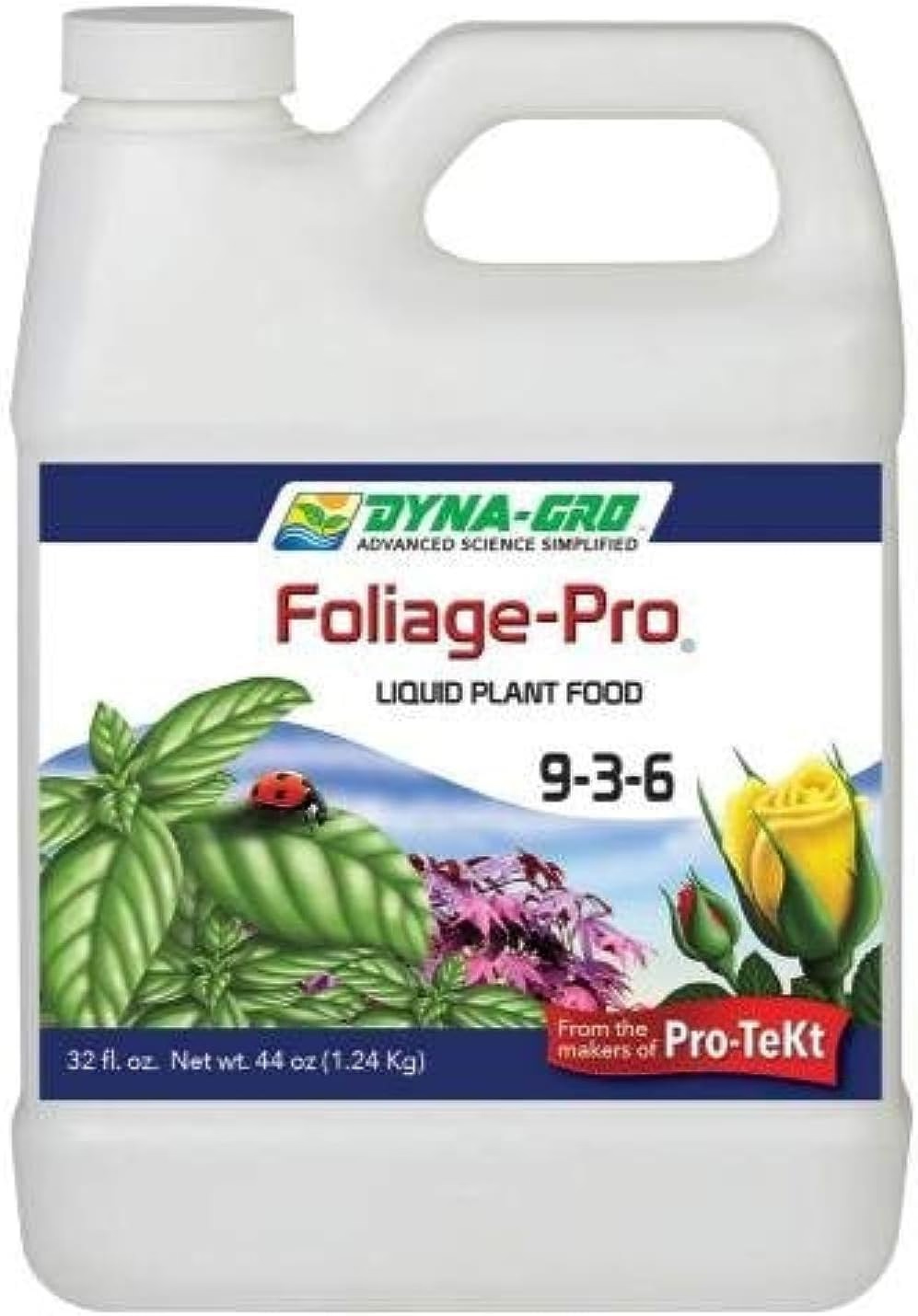
Organic Liquid Plant Food (FoxFarm)
A liquid organic plant food. Applied at label rate during active growth; most houseplants do better at reduced strength and not at all in winter.
View on Amazon ↗
PlantSavvyWorld
Editorial team
PlantSavvyWorld is an independent botanical education project. Articles are drafted with AI assistance, then edited and checked against university extension services, botanical garden collections and other published horticultural sources.
💬 Discussion