


Are your tomato leaves turning yellow while the veins stay stubbornly green?
Written with AI assistance, edited and checked against horticultural sources.
If you are looking at your tomato plants today and asking, "Are your tomato leaves turning yellow while the veins stay stubbornly green?", you are witnessing a classic botanical distress signal known as interveinal chlorosis. Let's deconstruct the science behind this phenomenon and map out a precise, root-up restoration plan.
1. Botanical Overview & Natural Habitat
To resolve interveinal chlorosis, we must first look at the biochemistry of the tomato plant (Solanum lycopersicum). Chlorophyll, the pigment responsible for capturing light and driving photosynthesis, requires specific elemental building blocks. When these blocks are missing or inaccessible, the plant cannot synthesize green chlorophyll evenly across the leaf blade.

PLAY22 Gardening Tools Set of 10
A 10-piece hand tool set with a carry bag — trowel, transplanter, pruners and weeder. Suited to repotting and general container work.
View on Amazon ↗There are two primary physiological culprits behind this green-veined yellowing: Magnesium (Mg) deficiency and Iron (Fe) deficiency. Distinguishing between them requires understanding nutrient mobility within the vascular system (the xylem and phloem):
Magnesium Deficiency (Mobile Nutrient)
Magnesium is the central coordinating atom in the chlorophyll molecule, much like iron is at the center of human hemoglobin. It is a highly mobile nutrient. When a tomato plant experiences a magnesium deficit, it strategically salvages magnesium from its older, lower leaves to sustain new, apical growth. Consequently, the lower leaves turn yellow first, while the veins—housing the vascular bundles still transporting the salvaged nutrients—remain green.
Iron Deficiency (Immobile Nutrient)
Iron acts as an essential catalyst in chlorophyll synthesis and electron transport. However, iron is immobile. Once deposited in plant tissue, it cannot be translocated. Therefore, if the plant cannot absorb iron from the soil, the youngest, uppermost leaves will emerge completely yellow or white with distinct green veins, while the older lower leaves remain green.
The Rhizosphere Connection
Often, the problem is not a lack of nutrients in the soil, but rather a structural collapse of the root zone (rhizosphere). At the rhizosphere, gas exchange is just as critical as moisture. When potting mix becomes dense, muddy, or suffocated by standing drainage water, fine root hairs quickly suffer from hypoxia (oxygen deprivation).
Under hypoxic conditions, root cells cannot produce the adenosine triphosphate (ATP) required to drive active transport pumps. Because nutrients like magnesium and iron require active transport to cross the root cell membranes, a waterlogged soil physically prevents their uptake. This leaves the door wide open for opportunistic fungal pathogens like Pythium and Phytophthora to destroy the remaining root system. Conversely, an open, biologically active substrate enables robust nutrient uptake and rapid vegetative vigor.
"Successful indoor gardening isn't a game of luck—it is the art of respecting root biology and working in harmony with natural physiological cycles."
2. Essential Environmental & Care Requirements
Tomatoes are highly demanding, fast-growing annuals that require precise environmental parameters to maintain active transpiration and nutrient transport. If any of these parameters fall out of equilibrium, nutrient transport pathways break down, manifesting as leaf discoloration.
To understand how to keep your tomato plants at peak physiological performance, consult the reference table below:
Transpirational Pull and Relative Humidity
Nutrients like magnesium and calcium travel through the plant primarily via the transpirational stream. This process works like a straw: water evaporates through the stomata on the undersides of the leaves, pulling water and dissolved mineral ions up from the roots.
If the relative humidity is too high (above 80%), water cannot evaporate from the leaf surface, and transpirational flow stalls. If humidity is too low (below 40%), the plant closes its stomata to conserve water, which also halts nutrient delivery. Aim for a moderate relative humidity of 50% to 65% to keep the vascular superhighway moving.
3. Step-by-Step Cultivation, Feeding & Propagation
If your tomato leaves are already showing the yellow-leaf, green-veined signature of interveinal chlorosis, follow this systematic, step-by-step protocol to diagnose, treat, and protect your crop.
Step 1: Diagnose the Deficiency Location
Look closely at where the yellowing starts:
- If the chlorosis is isolated to the older, lower leaves, you are dealing with a Magnesium (Mg) deficiency.
- If the chlorosis is on the new, emerging leaves at the top of the plant, you are dealing with an Iron (Fe) deficiency.
- To learn more about diagnostic criteria and physiological symptoms, refer to the Royal Horticultural Society guides on plant nutrient deficiencies.
Step 2: Measure and Correct Soil pH
Nutrient deficiencies are often chemical "lockouts" caused by incorrect soil pH rather than an actual absence of minerals.
- Collect a soil core sample or test the runoff water using a calibrated digital pH pen.
- If your pH is above 7.0, iron molecules bind tightly to soil particles and become insoluble. Lower the pH to 6.5 by applying organic elemental sulfur or iron sulfate.
- If your pH is below 5.8, magnesium absorption is blocked. Raise the pH to 6.5 by top-dressing with agricultural limestone or dolomite lime (which naturally contains both calcium and magnesium).
Step 3: Administer Fast-Acting Foliar Sprays
While soil adjustments take weeks to show results, foliar feeding bypasses the root system entirely, delivering nutrients directly to the leaf cells.
- For Magnesium Deficiency: Dissolve 1 tablespoon (15 ml) of pure pharmaceutical-grade magnesium sulfate (Epsom salt) into 1 gallon (3.8 liters) of lukewarm water.
- For Iron Deficiency: Mix a high-quality chelated iron powder (such as Iron EDTA or Iron EDDHA) at half-strength.
- Application: Pour the mixture into a clean spray bottle. Spray the undersides and tops of the leaves in the early morning when the stomata are open and temperatures are cool. Repeat once a week for three weeks.
Step 4: Optimize Container Aeration and Substrate
To prevent root-zone hypoxia and the root rot that cuts off nutrient uptake:
- Ensure your containers have generous, unobstructed drainage holes.
- If repotting, amend standard potting soil with 30% coarse aggregate (such as perlite, pumice, or clean orchid bark) to preserve capillary air space.
- If growing outdoors in heavy clay, top-dress with 2 to 3 inches (5 to 7.5 cm) of well-composted organic matter to naturally loosen the soil profile over time.
Step 5: Stabilize the Micro-Environment
- Position indoor plants at least 3 feet (1 meter) away from cold winter drafts, air conditioning vents, and forced-air heating registers to prevent environmental shock.
- Provide a small, oscillating fan nearby to ensure gentle, consistent air circulation, which prevents humid air pockets from settling around the leaves and stalling transpiration.
Step 6: Feed with a Balanced Nutrient Routine
- Once the immediate deficiency is corrected, support the plant's active vegetative phase with a high-quality, water-soluble organic fertilizer.
- Apply the fertilizer at half-strength every 10 to 14 days to gently fuel cell division and leaf expansion without overloading the root zone with excess salts, which can cause chemical root burn.
💡 Pro-Tip: Always hydrate your plants with room-temperature water (ideally around 68°F to 72°F / 20°C to 22°C). Icy cold tap water shocks the delicate root system, causing root hairs to instantly constrict. This thermal shock can halt nutrient absorption and stunt vegetative growth for up to 24 hours after watering.
⚠️ Important Caution: Never let your potted tomatoes or houseplants stand in saucer runoff water for more than fifteen minutes. Stagnant water quickly creates anaerobic (oxygen-depleted) conditions in the bottom of the pot. These conditions suffocate root cells and invite devastating water molds like Pythium, which can rot an entire root system in days.
4. Common Problems, Pests & Troubleshooting
When troubleshooting yellowing tomato leaves, it is easy to misdiagnose the symptoms. Several environmental stressors and pests mimic interveinal chlorosis. Use this guide to rule out lookalike issues:
1. Nitrogen Deficiency vs. Magnesium Deficiency
- The Difference: A nitrogen deficiency causes the entire leaf to turn a uniform, pale yellow, including the veins. The leaf will eventually dry up and drop off. Magnesium deficiency keeps the veins dark green while the tissue between them turns yellow.
- The Fix: Apply an organic nitrogen source, such as diluted fish emulsion or blood meal.
2. Overwatering Hypoxia
- The Difference: Overwatered tomato plants will show overall leaf yellowing, but the foliage will also look wilted, soft, and droopy despite wet soil. True nutrient chlorosis usually occurs on turgid, firm leaves.
- The Fix: Stop watering immediately. Allow the substrate to dry out entirely until the container feels lightweight. If the soil has become compacted and muddy, gently repot the plant into a highly aerated mix amended with perlite.
3. Spider Mites (Tetranychidae)
- The Difference: Spider mites pierce plant cells to suck out chlorophyll, leaving tiny yellow dots (stippling) across the leaves. From a distance, this can look like general yellowing.
- How to spot: Look for ultra-fine webbing on the undersides of the leaves and at the leaf joints.
- The Fix: Spray the plant thoroughly with insecticidal soap or organic neem oil, paying close attention to the undersides of the foliage.
4. Tomato Mosaic Virus (ToMV)
- The Difference: Unlike the symmetrical yellowing of nutrient deficiencies, mosaic virus causes a chaotic, blotchy yellow-and-green mottled pattern. The leaves will also appear puckered, distorted, and stunted.
- The Fix: There is no cure for viral plant infections. Promptly remove and destroy infected plants to prevent the virus from spreading via garden tools or hands.
5. Frequently Asked Questions
Why are my lower tomato leaves turning yellow with green veins?
This is a classic symptom of magnesium deficiency. Because magnesium is a mobile nutrient, the tomato plant draws it out of the older, lower leaves to feed the younger, developing leaves at the top. This can be caused by a lack of magnesium in the soil, acidic soil (pH below 6.0), or excess potassium and calcium, which chemically compete with magnesium for root absorption. For a deeper scientific explanation of these nutrient dynamics, explore the Clemson University Cooperative Extension agricultural guides.
How do I use Epsom salt to fix yellow tomato leaves?
Epsom salt is magnesium sulfate, making it an excellent quick fix for magnesium deficiencies. Dissolve 1 tablespoon (15 ml) of Epsom salt per gallon (3.8 liters) of water. To apply, spray it directly onto the leaves as a foliar spray in the early morning, or use it to water the root zone. Apply this treatment once a week for up to three weeks, or until you see healthy, solid green growth return.
How quickly will yellow leaves turn green again after treatment?
Mildly affected leaves can begin to recover their deep green color within 7 to 14 days of a foliar treatment. However, leaves that have turned completely yellow or white may have suffered too much cell damage to recover. The true gauge of success is your plant's new growth: look for vibrant, deep-green foliage emerging from the top of the plant, along with active apical shoot growth.
Can cold weather cause tomato leaves to turn yellow?
Yes. When soil temperatures drop below 55°F (13°C), the metabolic activity of tomato roots slows down dramatically. This cold-induced inactivity prevents the roots from taking up crucial nutrients, particularly phosphorus and magnesium, even if those nutrients are abundant in the soil. This temporary lockout usually resolves once the soil warms up back into the optimal 65°F to 75°F (18°C to 24°C) range.
Is this aerated substrate technique suitable for all indoor plant varieties?
Yes, absolutely! While we have focused on tomatoes, the physics of root-zone aeration applies to all vascular plants. Providing an open, highly oxygenated substrate is exceptionally effective for preventing root rot and improving nutrient uptake in houseplants like Monsteras, Philodendrons, Pothos, Snake Plants, and tropical foliage collections.
Have you tried these restorative techniques with your own garden or indoor plants? Share your results and connect with our global growing community on the Community Forum, explore more expert horticultural guides on Plant Tips, or visit our Home Page to browse our complete plant care archives.
📋 Table of Contents ▼ Click to expand
PlantSavvyWorld
Editorial team
PlantSavvyWorld is an independent botanical education project. Articles are drafted with AI assistance, then edited and checked against university extension services, botanical garden collections and other published horticultural sources.
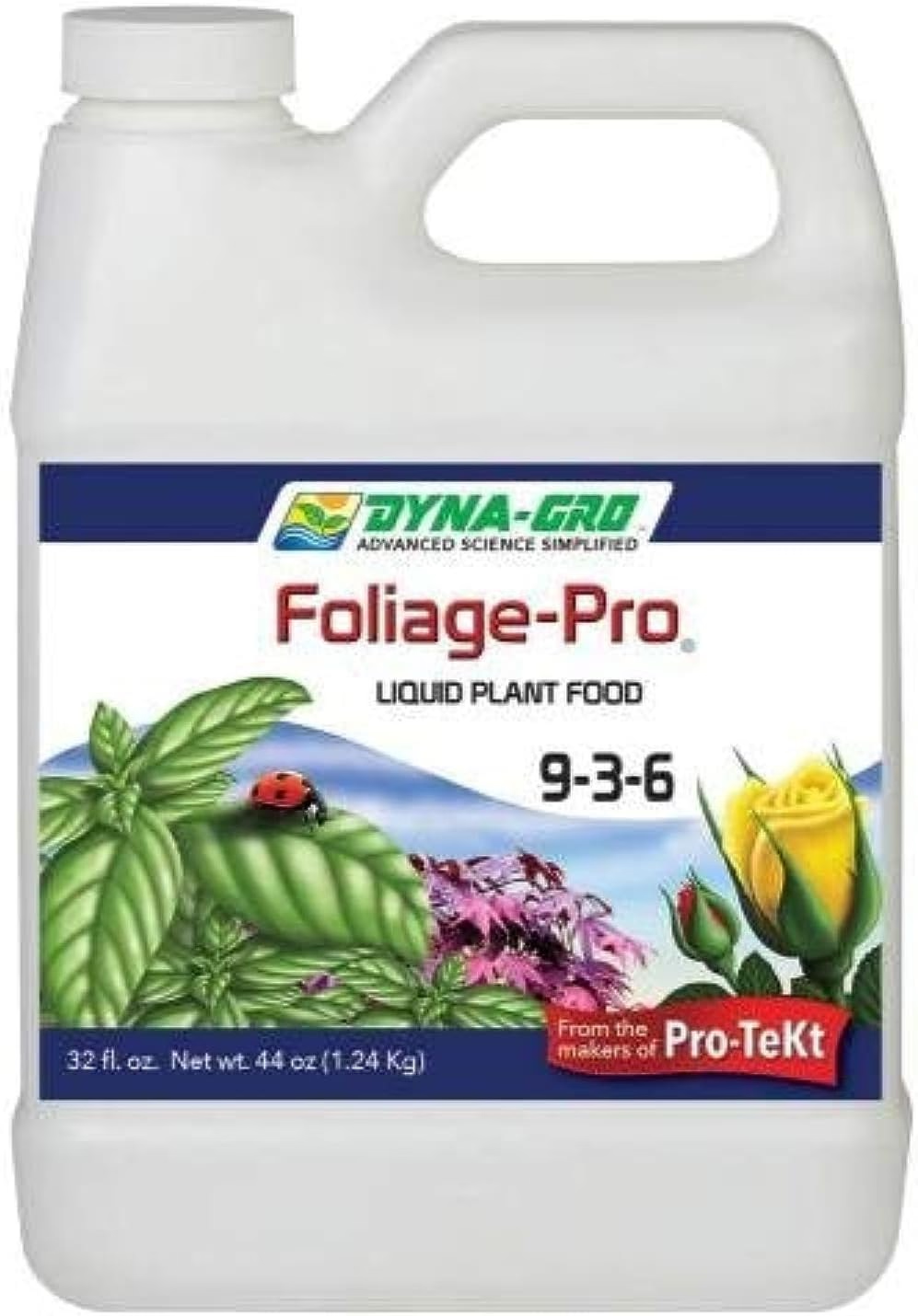
Organic Liquid Plant Food (FoxFarm)
A liquid organic plant food. Applied at label rate during active growth; most houseplants do better at reduced strength and not at all in winter.
View on Amazon ↗
PlantSavvyWorld
Editorial team
PlantSavvyWorld is an independent botanical education project. Articles are drafted with AI assistance, then edited and checked against university extension services, botanical garden collections and other published horticultural sources.
💬 Discussion