

Are you treating your succulents like regular houseplants?
Written with AI assistance, edited and checked against horticultural sources.
The fundamental mistake most indoor growers make is treating xerophytic succulents (Echeveria, Sedum, Haworthia, and Crassula) identical to mesic tropical foliage like Monstera, Philodendron, or Pothos. Tropical foliage evolved under dense forest canopies where ambient humidity stays above 60% and root systems nestle into rich, moisture-retentive leaf litter. Succulents, conversely, evolved to survive protracted droughts, intense solar radiation, and coarse mineral soils. Applying standard houseplant protocols to these desert dwellers leads directly to physiological stress, etiolation, and root rot.
1. Botanical Overview & Natural Habitat
To understand why succulents fail under standard tropical plant regimes, we must examine their underlying biochemical and anatomical adaptations.
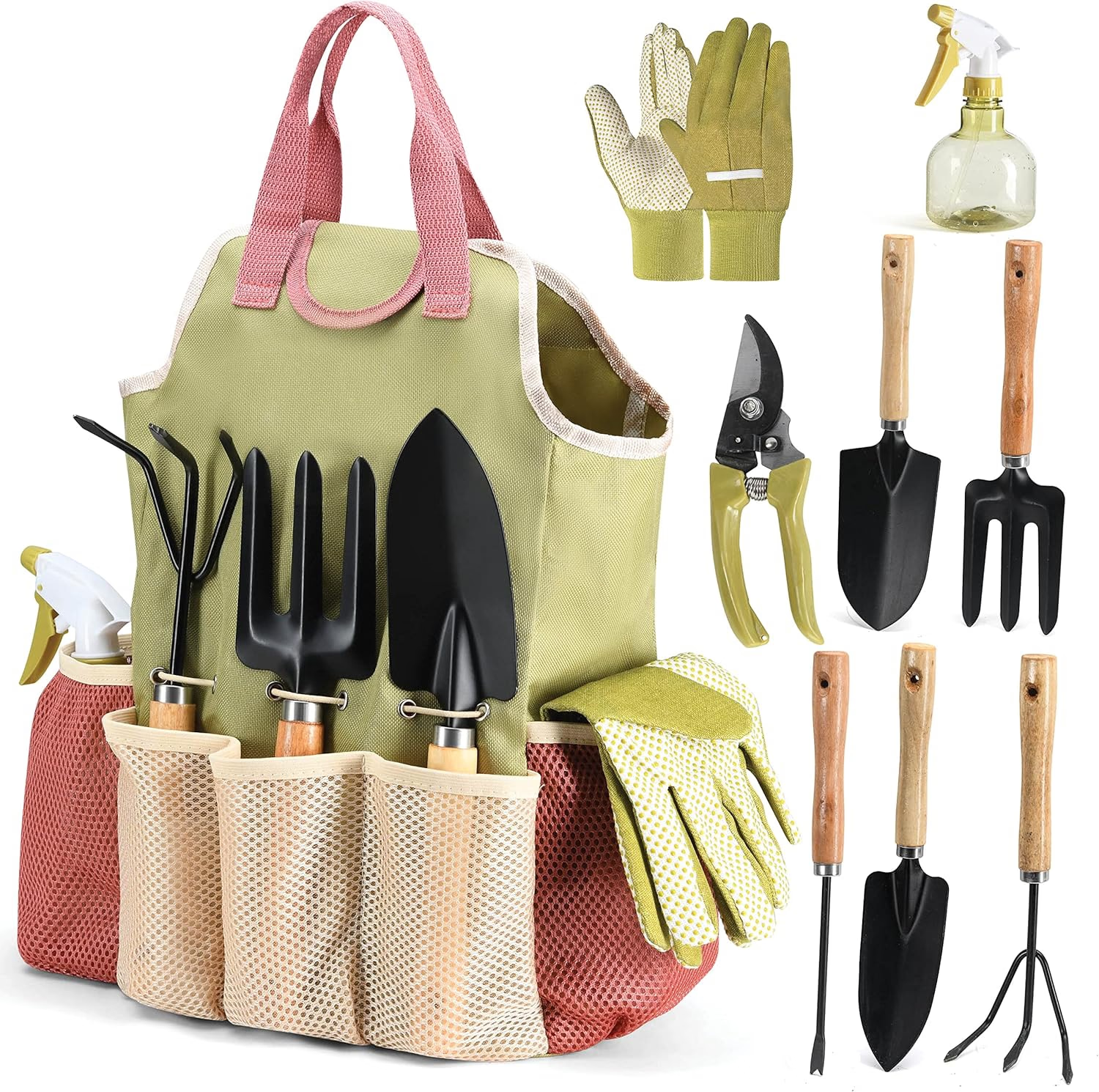
PLAY22 Gardening Tools Set of 10
A 10-piece hand tool set with a carry bag — trowel, transplanter, pruners and weeder. Suited to repotting and general container work.
View on Amazon ↗Crassulacean Acid Metabolism (CAM)
Unlike standard C3 houseplants that keep their stomata open during the daytime to absorb carbon dioxide ($CO_2$) for photosynthesis, most succulents utilize Crassulacean Acid Metabolism (CAM).
- Nighttime $CO_2$ Uptake: Succulents open their stomata exclusively at night when ambient temperatures drop (typically between 55°F to 68°F / 13°C to 20°C) and relative humidity rises. They capture atmospheric $CO_2$ and convert it into four-carbon organic acids (primarily malic acid), storing it inside large cell vacuoles.
- Daytime Fixation: During the heat of the day, stomata snap tightly shut to halt transpirational water loss. The stored malic acid is decarboxylated back into $CO_2$ inside the leaf tissue, allowing the plant to run the Calvin cycle using sunlight captured by chlorophyll without exposing internal moisture to dry desert air.
When you place a succulent in a humid, dim corner of a living room and water it continuously—as you might a tropical fern—you disrupt this metabolic clock. High daytime humidity coupled with inadequate light suppresses daytime photosynthetic activity while preventing proper nighttime cooling, resulting in rapid depletion of stored carbohydrates.
Soil Mechanics and Root Hypoxia
At the root zone (rhizosphere), gas exchange is just as critical as moisture. In their native habitats—ranging from the arid Karoo basin of South Africa to the granite outcrops of Mexico—succulents grow in skeletal soils rich in decomposed granite, coarse quartz sand, and volcanic slag, featuring an organic matter content often below 5%.
When potting mix becomes dense, muddy, or suffocated by standing drainage water, fine root hairs quickly suffer from hypoxia (oxygen deprivation). Deprived of oxygen, root cells cannot produce ATP through aerobic respiration; cellular membranes break down, leaving the door wide open for opportunistic fungal pathogens like Pythium, Rhizoctonia, and Phytophthora. Conversely, an open, biologically active substrate enables robust nutrient uptake and rapid vegetative vigor.
"Successful indoor gardening isn't a game of luck—it is the art of respecting root biology and working in harmony with natural physiological cycles."
2. Essential Environmental & Care Requirements
Transitioning succulents away from standard houseplant care requires precise control over four core environmental parameters: solar irradiance, substrate aeration, hydration dynamics, and atmospheric movement.
Light Quality and Photoperiod
Tropical houseplants thrive in low-to-medium light conditions (100 to 500 foot-candles or 1,000 to 5,000 lux). Succulents require direct solar radiation ranging between 2,000 and 5,000 foot-candles (20,000 to 50,000+ lux) for at least 6 hours daily. Without this light intensity, plants undergo rapid etiolation—stretching their internodes, shedding lower leaves, and losing the protective farina (epicuticular wax) that shields leaf cells from ultraviolet damage.
Substrate Porosity & Hydraulic Conductivity
Standard potting soils consist predominantly of peat moss, coir, and vermiculite designed to retain water for up to 14–21 days. Succulents require high-porosity mixes that drain completely within seconds and drop below field capacity within 48 to 72 hours. A standard formulation must incorporate 50% to 70% coarse inorganic mineral amendments by volume.
The Dynamics of Hydration
Never top-water succulents on a strict calendar interval. Standard houseplants prefer consistent, micro-damp soil conditions. Succulents demand a complete "Soak-and-Dry" cycle. The substrate must dry out 100% through its full depth (not just the top 2 inches / 5 cm) before receiving another thorough drenching.
For a deeper dive into plant physiological responses under controlled light conditions, consult the detailed field research provided by the Royal Horticultural Society (RHS).
3. Step-by-Step Cultivation, Feeding & Propagation
Repotting and maintaining succulents using standard tropical plant methods will quickly damage delicate root systems. Follow this systematic, professional protocol to establish healthy plants:
1. Formulate an Arid-Optimized Substrate
Mix your growing medium using precise volumetric ratios:
- 2 Parts Coarse Pumice or Perlite (1/8 inch to 1/4 inch / 3 mm to 6 mm size range)
- 1 Part Crushed Granite (Poultry Grit) or Coarse Lava Rock
- 1 Part Aged Bark Fine Mix or Low-Salt Coconut Coir
Never introduce fine sand or native clay into this mix, as microscopic particles pack tightly between larger aggregates, filling macro-pores and choking out oxygen.
2. Select the Ideal Container
Choose unglazed terracotta or high-fired breathable clay pots. Glazed ceramic and plastic containers trap moisture along the inner wall, extending drying time by 300%. Ensure the container has at least one unobstructed drainage hole measuring no less than 0.5 inches (1.3 cm) in diameter.
3. Root Barerooting & Sanitize
Remove the succulent from its original nursery soil. Gently massage the root ball until all peat moss and coconut coir drop away. Inspect the root system:
- Healthy roots are firm, white, or light tan.
- Hypoxic, rotted roots appear brown, stringy, squishy, and emit a sour odor.
Prune away any damaged roots using ethanol-sterilized shears. Allow cut root surfaces to callous in a shady, warm location for 24 to 48 hours before repotting.
4. Potting Technique & Moisture Rest
Place a small mesh screen over the pot's drainage hole. Fill the container with your dry mineral substrate, position the plant so the root crown sits exactly level with the pot rim, and work the aggregate around the roots. Do not water immediately. Allow the plant to settle in dry mix for 5 to 7 days. This crucial waiting period lets microscopic root tears callous over, completely preventing fungal infection upon first hydration.
5. Targeted Nutrient Application
During active vegetative phases (early spring through mid-summer), feed succulents using a low-nitrogen, high-potassium mineral liquid fertilizer (such as an N-P-K ratio of 2-7-7 or 3-1-2). Dilute the nutrient solution to one-quarter strength (roughly 100–150 ppm Nitrogen). Standard strength houseplant fertilizers carry excessive nitrogen levels, which induce soft, watery vegetative growth that easily collapses under heat stress or pest attacks.
💡 Pro-Tip: Always hydrate with room-temperature water (65°F–75°F / 18°C–24°C); icy tap water induces thermal root shock, causes vascular bundle constriction, and halts nutrient absorption for up to 48 hours.
⚠️ Important Caution: Never let pots stand in saucer runoff water for more than fifteen minutes; stagnant water creates anaerobic conditions that rapidly cause root rot.
4. Common Problems, Pests & Troubleshooting
Diagnosing succulent distress requires observing structural symptoms rather than making assumptions based on tropical plant behaviors.
Overwatering vs. Underwatering
- Overwatering Symptoms: Leaves become yellow, translucent, soft, and mushy to the touch. The slightest pressure causes the leaf skin to rupture, releasing watery fluid. Lower leaves drop off at the lightest contact. This occurs because leaf parenchyma cells absorb water beyond their structural limit until the cell walls burst.
- Underwatering Symptoms: Leaves look thin, wrinkled, deflated, and leathery, but retain their normal pigment without turning translucent. The leaf margins may curl inward to reduce surface area.
Etiolation & Phototropic Leaning
When succulents do not receive enough light, their internodes stretch out, and leaves point downwards to maximize surface area contact with available light rays.
- Correction: You cannot shrink stretched stems back down. Chop the top rosette using a sterile blade, leaving 1 inch (2.5 cm) of stem. Allow the cutting to callous for 5 days, then plant it in dry mineral substrate under full lighting. The remaining rooted stem base will produce multiple small offsets (pups) along its nodes.
Common Pests
- *Mealybugs (Pseudococcidae):* Cottony, white wax deposits nestled in stem axils and leaf crevices. Treat by spraying directly with 70% isopropyl alcohol or applying systemic imidacloprid granulars to the substrate.
- *Root Mealybugs (Rhizoecus):* White, powdery deposits clinging directly to the root system below the soil line. They stop plant growth entirely. Wash away all soil, submerge roots in 120°F (49°C) water for 10 minutes, treat with systemic insecticides, and repot in fresh substrate.
For extensive diagnostic keys on desert flora diseases, explore resources provided by the University of California Agriculture and Natural Resources (UC ANR).
5. Frequently Asked Questions
Why are my succulent leaves turning soft, yellow, and translucent?
Soft, yellow, translucent leaves are the classic sign of cellular over-saturation and root hypoxia. The root system has absorbed more water than the tissue can store, causing cell membranes to rupture. Immediately remove the plant from its container, discard the soil, cut away any black or mushy roots, let the plant dry out in open air for 3 days, and repot into a mineral substrate containing at least 60% pumice or perlite.
How often should I water indoor succulents compared to regular houseplants?
While typical tropical houseplants need water every 5 to 7 days, indoor succulents usually require thorough watering only once every 10 to 21 days, depending on humidity, light intensity, and seasonal growth phases. Never water on a fixed calendar schedule. Wait until the substrate is dry all the way to the bottom of the pot, and the lower leaves show slight loss of turgor before drenching the container completely.
Can succulents survive in standard commercial potting soil?
No, pure commercial potting soil is formulated to retain moisture using dense peat moss and coconut coir, which holds water far too long for xerophytic root systems. If planted in standard potting soil, succulents will eventually suffer root hair loss, hypoxia, and fungal root rot. Always amend standard potting mixes with 50% to 70% inorganic aggregates like perlite, coarse pumice, or crushed granite.
Why is my succulent growing tall, thin, and stretched out?
This stretching process is called etiolation. It happens when a succulent receives inadequate solar radiation and stretches its stem upward toward the nearest light source while spreading its leaves apart to maximize surface area. To fix this, gradually move the plant to a brighter location (such as a south-facing window or beneath a dedicated 6500K LED grow light) and propagate the stretched stem by decapitating the top rosette.
Have you tried this technique with your own houseplants? Share your results with our global grower community on the Community Forum, explore more expert guides on Plant Tips, or visit our Home Page for comprehensive plant care archives.
📋 Table of Contents ▼ Click to expand
PlantSavvyWorld
Editorial team
PlantSavvyWorld is an independent botanical education project. Articles are drafted with AI assistance, then edited and checked against university extension services, botanical garden collections and other published horticultural sources.
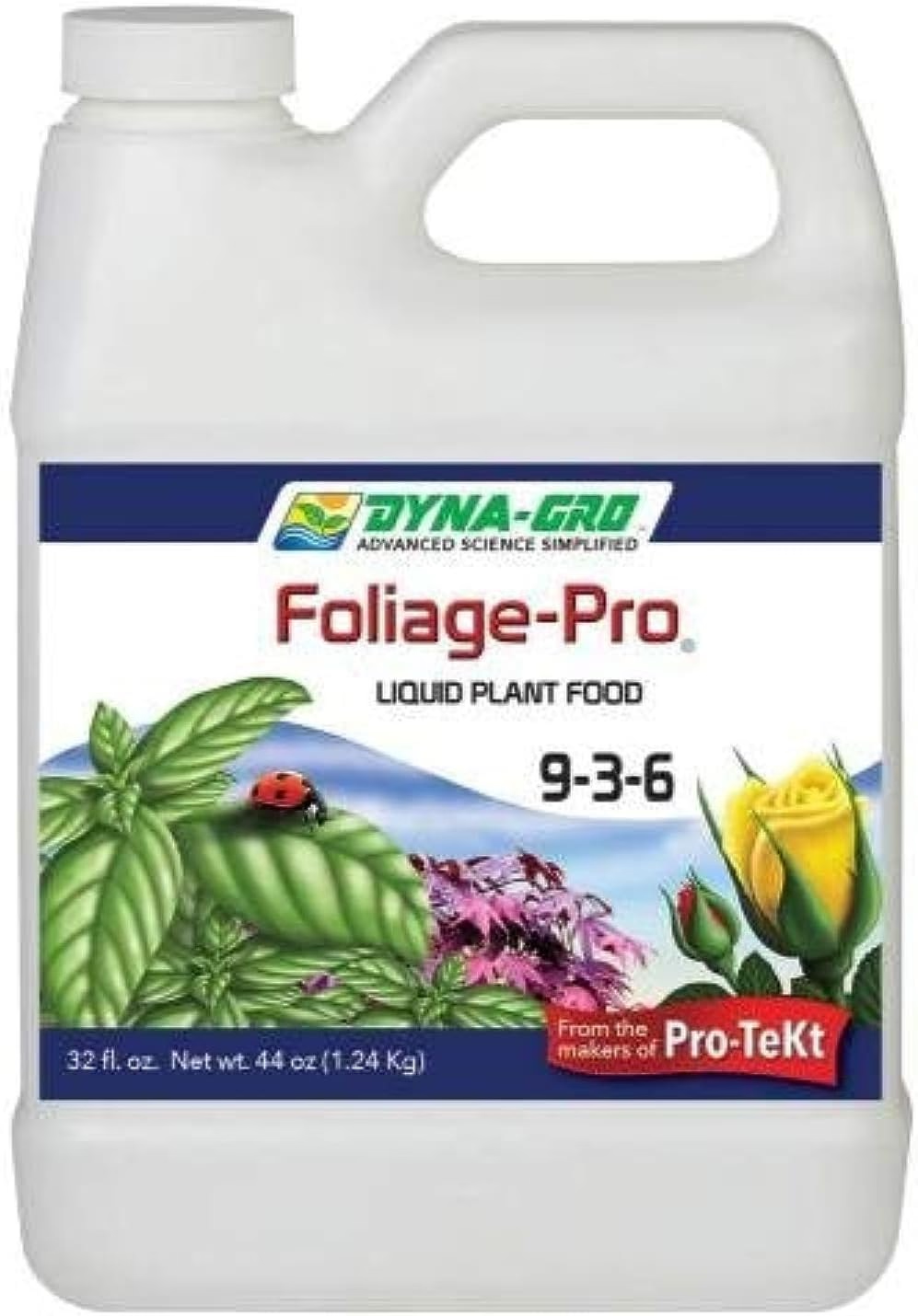
Organic Liquid Plant Food (FoxFarm)
A liquid organic plant food. Applied at label rate during active growth; most houseplants do better at reduced strength and not at all in winter.
View on Amazon ↗
PlantSavvyWorld
Editorial team
PlantSavvyWorld is an independent botanical education project. Articles are drafted with AI assistance, then edited and checked against university extension services, botanical garden collections and other published horticultural sources.
💬 Discussion