


🍅 Are you planting your tomatoes all by themselves this year?
Written with AI assistance, edited and checked against horticultural sources.
It was only when I began interplanting dense ribbons of aromatic herbs directly alongside my indeterminate vines that my yields exploded and pest management became almost effortless. Are you planting your tomatoes all by themselves this year? You might be missing out on the ultimate backyard cheat code!
When you pair tomatoes with their ideal botanical partners, you aren't just saving space—you are establishing a self-regulating micro-ecosystem. Let's dive into the fascinating plant biology and practical steps that turn a standard vegetable patch into an abundant, organic powerhouse.
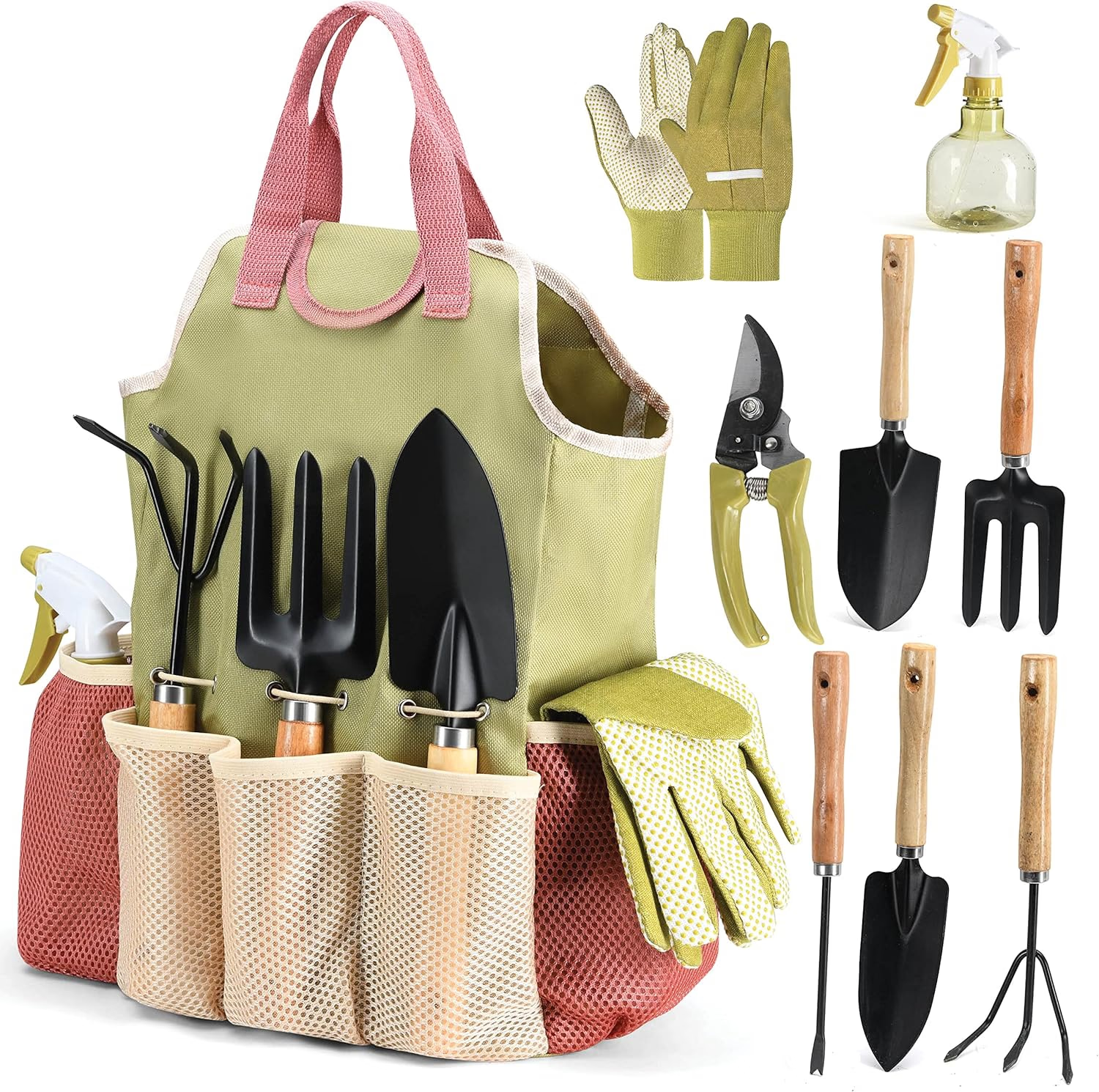
PLAY22 Gardening Tools Set of 10
A 10-piece hand tool set with a carry bag — trowel, transplanter, pruners and weeder. Suited to repotting and general container work.
View on Amazon ↗1. Botanical Overview & Natural Habitat
To understand why companion planting succeeds so dramatically, we must look at the evolutionary origins of our key players. The domestic tomato (Solanum lycopersicum) is a member of the Solanaceae (nightshade) family, originating in the western coastal and mountainous regions of South America, across modern-day Peru, Ecuador, and the Galápagos Islands. In their wild, native habitats, ancestral tomato species grew not as clean, monocultured crop lines, but as scrambling perennial vines nestled among diverse, aromatic groundcovers, wild shrubs, and native flowering herbs.
On the other hand, sweet basil (Ocimum basilicum) hails from the tropical regions of Central Africa and Southeast Asia, belonging to the Lamiaceae (mint) family. Despite their distinct geographic origins, both species have evolved under warm, sun-drenched tropical and subtropical regimes. When brought together in the garden, they form what scientists call a mutually beneficial biochemical partnership, or polyculture.
Meet the most powerful duo in the garden: Tomatoes and Basil! This isn't just a culinary match made in heaven; it is a brilliant biological partnership called companion planting. When planted side-by-side, basil acts as a highly effective natural pest repellent. Its strong, aromatic volatile organic compounds (VOCs)—including monoterpenes and sesquiterpenes like linalool, eugenol, 1,8-cineole, and methyl chavicol—actively confuse and drive away destructive insects like aphids (Aphis gossypii) and the dreaded tomato hornworm (Manduca quinquemaculata)!
These pests navigate their environment primarily through chemoreception—smelling out host plants by detectible foliage terpenes. The potent, diffusive oils emitted by basil mask the signature scent of tomato leaves, effectively rendering your tomato crop "invisible" to searching egg-laying moths and sap-sucking insects.
Furthermore, underground root dynamics play a major role. Both plants exude organic acids, sugars, and secondary metabolites into the rhizosphere. This root-zone activity stimulates beneficial soil bacteria (Rhizobacteria) and mycorrhizal fungi, which improve nutrient uptake efficiency. Plus, letting a few of your basil plants go to flower will attract a massive army of essential pollinators to your yard—especially bumblebees (Bombus spp.) capable of buzz-pollination—ensuring every single tomato blossom actually turns into a huge, juicy fruit.
Some master gardeners even swear that sharing the same soil makes the tomatoes taste significantly sweeter! While the precise biochemical pathways are still being studied, evidence suggests that stress reduction caused by reduced pest damage, combined with optimized soil microbiology, allows tomato plants to devote more photosynthetic energy toward synthesizing soluble sugars (Brix) and organic acids during fruit ripening.
2. Essential Environmental & Care Requirements
Both tomatoes and basil thrive under full sunlight and rich, well-draining soil, but managing their spatial orientation and microclimate is critical to preventing fungal disease. Tomatoes require deep, intensive root volume, while basil has a somewhat shallower, fibrous root system that nestles perfectly within the understory of heavy tomato foliage.
To maximize crop yield, prioritize ambient warmth and soil temperature. Tomatoes should never be planted outdoors until daytime temperatures consistently exceed 70°F (21°C) and nighttime temperatures stay above 50°F (10°C). Soil temperatures must register at least 60°F (15.5°C) at a depth of 4 inches (10 cm) before transplanting. Basil is even more sensitive to cold: exposure to temperatures below 45°F (7°C) causes rapid tissue blackening and physiological decline.
💡 Pro-Tip: Install your tomato stakes, cages, or trellis systems before or during planting—never after. Driving a wooden stake or steel T-post into the ground near an established plant severly damages the expanding root systems of both your tomatoes and your companion basil, opening pathways for soil-borne pathogens.
⚠️ Important Caution: Avoid over-fertilizing your tomato-basil bed with high-nitrogen synthetic fertilizers. Excess nitrogen causes tomatoes to produce lush, dark green leaves at the expense of flowers and fruit, while causing basil leaves to lose their concentrated aromatic oils, reducing their natural pest-repellent strength.
3. Step-by-Step Cultivation, Feeding & Propagation
Ready to grow your biggest, healthiest harvest yet? Follow this field-tested, step-by-step planting and management sequence to establish a thriving companion planting system.
- Check Soil Readiness and Prepare the Bed: Test your soil temperature at a 4-inch (10-cm) depth using a probe thermometer. Ensure it reads at least 60°F to 65°F (15.5°C to 18°C). Amend the top 8 to 12 inches (20 to 30 cm) of soil with 2 to 3 inches (5 to 7.5 cm) of well-aged organic compost and a balanced organic slow-release fertilizer (such as a 4-6-6 NPK formula).
- Harden Off Transplants: Over a period of 7 to 10 days, gradually acclimate indoor-grown tomato and basil seedlings to outdoor sunlight, wind, and ambient temperatures by placing them outside for increasing durations each day, starting with 2 hours of morning shade.
- Deep-Plant Your Tomatoes: Dig a trench or deep hole for each tomato transplant. Strip away the bottom 2 to 3 sets of leaves and set the plant into the ground so that up to two-thirds of the main stem is buried beneath the soil line. Tomato stems possess adventitious roots that will sprout along the buried stem, creating a massive, wind-resistant root structure.
- Interplant Basil Companions: Space companion basil plants 12 to 18 inches (30 to 45 cm) away from the base of each tomato stem. This spacing is close enough for root interactions and pest-confusing scents to intermingle, but far enough to allow sunlight to hit the basil foliage without severe shading from the developing tomato canopy.
- Apply Mulch and Soak the Root Zone: Immediately after planting, water each root zone thoroughly with 0.5 to 1 gallon (2 to 4 liters) of water. Apply a 2- to 3-inch (5- to 7.5-cm) layer of clean, weed-free straw or shredded leaf mulch over the soil surface, leaving a 2-inch (5-cm) gap around the plant stems. Mulching conserves soil moisture, stabilizes temperatures, and prevents soil-borne fungal spores from splashing onto lower leaves during rainfall.
- Implement a Balanced Feeding Schedule: Apply an organic liquid fertilizer high in potassium and phosphorus (such as liquid bone meal or kelp meal, NPK ~2-5-6) every 14 to 21 days once tomato flower clusters open. Avoid high-nitrogen fertilizers that suppress bloom production.
- Prune and Manage Canopy Airflow: As indeterminate tomatoes grow, systematically pinch out lower suckers (the vegetative shoots that emerge at the 45-degree angle between the main stem and leaf branches) up to the first main fruit cluster. Prune away all tomato foliage growing within 12 inches (30 cm) of the soil ground line. Simultaneously, pinch back the growing tips of your basil every 10 to 14 days above a leaf node to promote bushy growth. Crucial: Allow approximately 10% to 20% of your basil plants to bloom later in the season to attract pollinators, while keeping the rest pinched back for culinary leaf production.
- Propagate Extra Plants via Cuttings: Easily clone your best-performing basil and tomato cultivars. Take a 4-inch (10-cm) tip cutting from a vigorous basil plant or a healthy, un-flowered 4-inch tomato sucker. Remove lower leaves and place the stem base in clean, non-chlorinated water. Roots will form in 7 to 12 days at room temperature (70°F / 21°C). Pot them up into high-quality potting mix once roots reach 1 inch (2.5 cm) in length.
4. Common Problems, Pests & Troubleshooting
Even with companion planting acting as a biological shield, environmental fluctuations can occasionally trigger stress, insect pressure, or fungal infections. Early detection and targeted intervention are critical to preserving your crop.
Pests
- *Tomato Hornworm (Manduca quinquemaculata): These massive green caterpillars can strip mature foliage and gouge green fruit within 24 to 48 hours. Inspect your plants daily at dawn or dusk. Look for chewed leaf stems, dark black droppings (frass) on lower leaves, or defoliated tops. While basil's volatile compounds reduce adult moth egg-laying rates, handpicking caterpillars remains your best line of defense. Use a UV flashlight at night; hornworms glow bright fluorescent neon under ultraviolet light! If infestations escalate, apply organic Bacillus thuringiensis* (Bt) spray, which selectively targets caterpillars without harming beneficial pollinators.
- *Aphids (Aphis gossypii and Myzus persicae):* Tiny, soft-bodied insects that cluster on young stem tips and undersides of leaves, sucking sap and secreting sticky honeydew. Wash minor colonies off with a sharp spray of fresh water early in the morning. For severe outbreaks, apply pure cold-pressed neem oil or potassium salts of fatty acids (insecticidal soap).
- *Flea Beetles (Epitrix spp.):* Small black beetles that chew tiny "shot-holes" into leaves, particularly on young basil and tomato transplants. Floating row covers placed over young transplants during their first 2 to 3 weeks outdoors completely exclude these pests until plants are sturdy enough to withstand minor feeding.
Fungal & Physiological Diseases
- *Early Blight (Alternaria solani):* Characterized by small, dark brown leaf spots with distinctive target-like concentric rings, usually appearing first on older lower leaves. Remove infected lower leaves immediately using sterilized shears (dipped in 70% isopropyl alcohol between cuts). Maintain strict bottom watering techniques—never spray leaves with a hose. To learn more about identifying fungal leaf pathogens on nightshade crops, review diagnostic protocols provided by the Cornell University Extension Plant Disease Diagnostic Clinic.
- Blossom End Rot: A physiological condition (not a pathogen) causing dark, leathery, sunken patches on the bottom (blossom end) of ripening tomatoes. It is caused by an inability of the plant to transport calcium to developing fruit tissue, almost always triggered by inconsistent soil moisture rather than a lack of soil calcium. Maintain a steady watering schedule and keep beds deeply mulched to protect root hydration. Detailed management strategies for nutrient transport issues can be explored through the University of California Integrated Pest Management Program.
5. Frequently Asked Questions
Does planting basil with tomatoes actually make the tomatoes taste sweeter?
Yes, many experienced growers and horticulture researchers observe improved flavor profiles when basil and tomatoes share soil. Scientifically, basil acts as a living biological control that reduces pest-induced stress on tomato plants. When tomatoes aren't constantly expending energy defending against foliage damage or sap loss from aphids and hornworms, they channel maximum photosynthesised sugars (Brix levels) directly into ripening fruit. Furthermore, complex biological interactions among mycorrhizal fungi in shared root zones enhance nutrient transport, boosting overall volatile terpene and organic acid synthesis within the tomato fruit.
How close should I plant basil to my tomato plants?
Plant basil approximately 12 to 18 inches (30 to 45 cm) away from the main stem of your tomato plant. Planting them closer than 12 inches causes the aggressive root systems of indeterminate tomatoes to outcompete the basil for nutrients and moisture, while the dense upper leaf canopy of the tomato may block sunlight from reaching the basil. Planting them farther than 24 inches (60 cm) reduces the pest-deterring effectiveness of basil's volatile aromatic oils around the tomato foliage.
Can I plant other companion plants besides basil with my tomatoes?
Absolutely! Marigolds (Tagetes spp.) are outstanding companions that exude alpha-terthienyl through their roots, suppressing destructive root-knot nematodes (Meloidogyne spp.) while attracting beneficial hoverflies and predatory wasps. French parsley, cosmos, nasturtium (which acts as a trap crop for aphids), and chives or garlic (which repel spider mites and aphids) also integrate seamlessly into a tomato-based polyculture system.
What should you NOT plant next to tomatoes?
Avoid planting tomatoes near members of the brassica family (such as cabbage, broccoli, cauliflower, and kale), as brassicas compete aggressively for nutrients and can stunt tomato development. Keep fennel far away from your tomato patch; fennel exudes soil compounds that inhibit growth in many nightshades. Finally, avoid planting tomatoes directly adjacent to potatoes or corn. Potatoes share vulnerability to early and late blight (Phytophthora infestans), allowing fungal pathogens to jump rapidly between crops, while corn attracts the corn earworm, which is identical to the destructive tomato fruitworm (Helicoverpa zea).
📋 Table of Contents ▼ Click to expand
PlantSavvyWorld
Editorial team
PlantSavvyWorld is an independent botanical education project. Articles are drafted with AI assistance, then edited and checked against university extension services, botanical garden collections and other published horticultural sources.
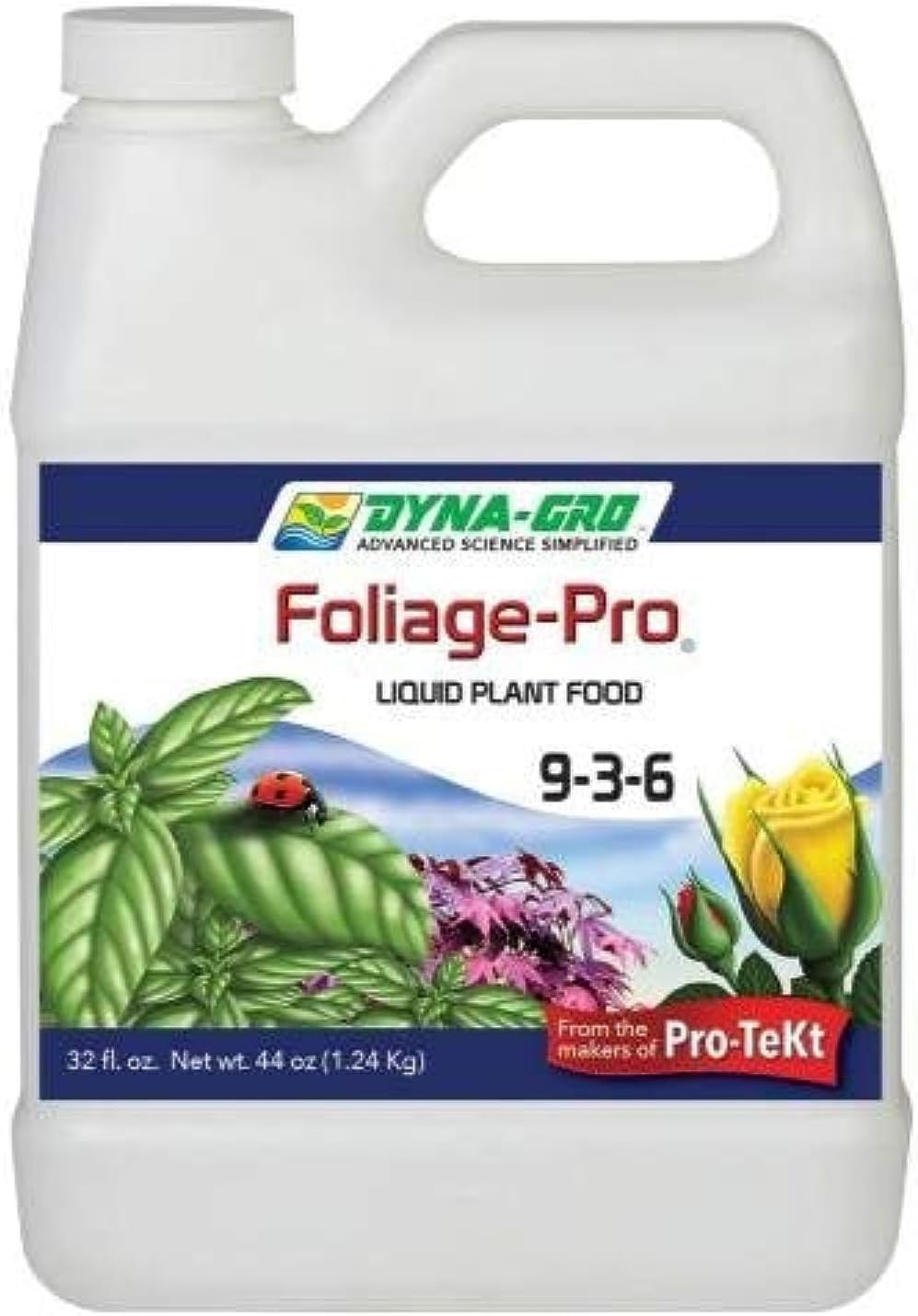
Organic Liquid Plant Food (FoxFarm)
A liquid organic plant food. Applied at label rate during active growth; most houseplants do better at reduced strength and not at all in winter.
View on Amazon ↗
PlantSavvyWorld
Editorial team
PlantSavvyWorld is an independent botanical education project. Articles are drafted with AI assistance, then edited and checked against university extension services, botanical garden collections and other published horticultural sources.
💬 Discussion