

Can Cucumbers And Peas Grow Together — Complete Care, Planting & Growth Masterclass
Written with AI assistance, edited and checked against horticultural sources.
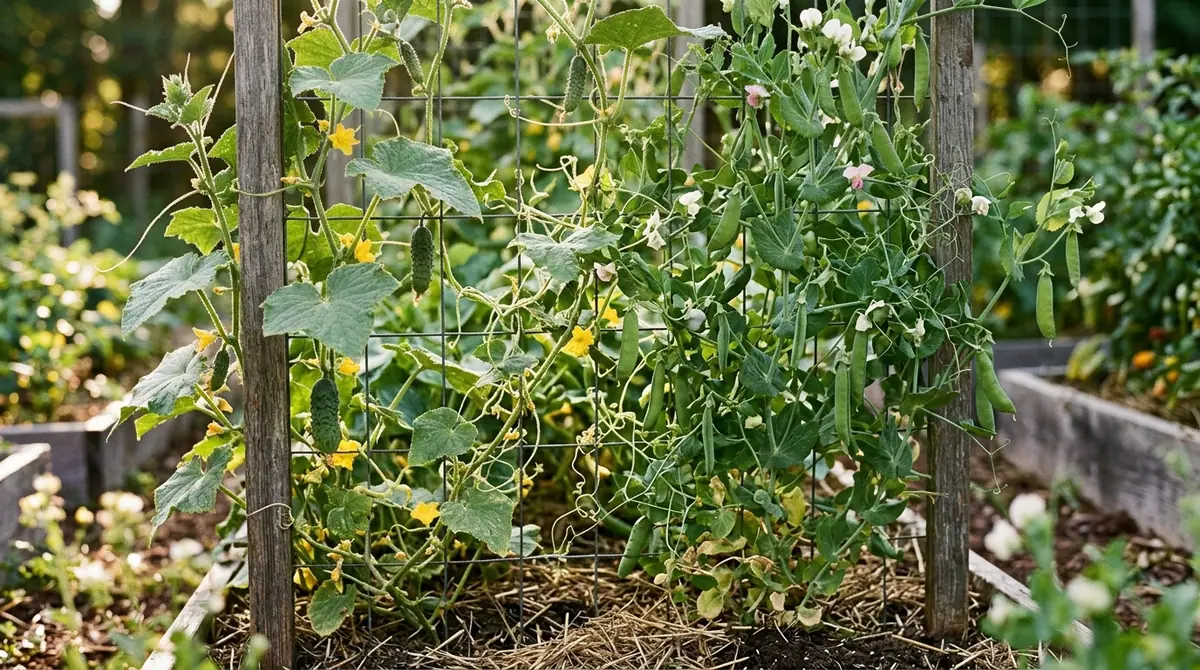
Planting cucumbers close to climbing peas raises a fair question: is the proximity a recipe for disaster or a productive partnership? The short answer is yes, cucumbers and peas can grow together, and with some planning they can even thrive side by side.

1. Botanical Overview & Natural Habitat
Cucumbers (Cucumis sativus) and peas (Pisum sativum) are both beloved members of the garden, offering gardeners fresh produce and the satisfying feeling of homegrown goodness. While they share a taste for similar growing conditions, understanding their individual botanical leanings helps us place them harmoniously.
Peas are cool-season annuals, originating from the Mediterranean and Middle East. They thrive in cooler temperatures, preferring to germinate and grow when soil temperatures are between 45°F and 65°F (7°C to 18°C). Their natural inclination is to climb, utilizing tendrils to seek support, which is a crucial characteristic when considering their placement alongside other plants. As legumes, peas have a unique symbiotic relationship with Rhizobia bacteria in the soil. These bacteria form nodules on their roots, converting atmospheric nitrogen into a form that the plant can use, effectively fertilizing themselves and enriching the soil for future crops. This nitrogen-fixing ability is a significant benefit when companion planting.
Cucumbers, on the other hand, are warm-season annuals, with ancestors tracing back to India. They are far less tolerant of cold and require soil temperatures to be consistently above 60°F (15.5°C), ideally between 70°F and 85°F (21°C to 29°C), for optimal growth. Cucumbers are heavy feeders and can become sprawling vines or bushy plants depending on the variety. While they can benefit from support, their primary growth habit is to vine outwards. They are susceptible to fungal diseases, especially in humid or overly wet conditions, making good air circulation paramount.
When considering them together, the key is to manage their differing temperature preferences and growth habits. Peas will generally be harvested before the peak heat of summer when cucumbers truly begin to produce. This natural succession can make them excellent early-season companions, with the peas finishing their cycle as the cucumbers reach their full potential.
2. Essential Environmental & Care Requirements
The success of growing cucumbers and peas together hinges on providing an environment that caters to their shared needs while mitigating their subtle differences.
Sunlight: Both cucumbers and peas thrive in Full Sun conditions, which means at least 6 to 8 hours of direct sunlight per day. However, in regions with intensely hot summers, cucumbers can benefit from Partial Afternoon Shade. This is where companion planting can naturally occur; taller pea plants, once they begin to senesce, might offer a bit of welcome shade to the base of young cucumber plants during the hottest part of the day. Conversely, if you are trellising them, ensure the cucumbers receive enough direct sun throughout the day, as they are the primary producers of fruit in this pairing.
Soil pH and Biology: Both crops prefer a slightly acidic to neutral soil pH, with an optimal range of 6.0 to 6.8. This slightly acidic environment ensures that essential nutrients are readily available for uptake by the plants. Richness in organic matter is crucial for both. Compost, well-rotted manure, and organic worm castings are excellent amendments. These not only provide a slow release of nutrients but also improve soil structure, enhancing drainage and aeration. Compacted, waterlogged soils are detrimental, leading to root rot and creating an environment ripe for fungal pathogens, which can affect both cucumbers and peas. A balanced soil biology, teeming with beneficial microbes, supports robust root development and nutrient cycling.
Moisture Management: The mantra for both crops is Deep, Infrequent Irrigation. This approach encourages resilient root architecture, pushing roots deeper into the soil in search of moisture. Overwatering is a common pitfall, particularly in containers or poorly draining beds. It can lead to root rot, fungal diseases like powdery mildew (especially on cucumbers), and can stunt growth. Allow the top 1 to 2 inches (2.5 to 5 cm) of soil to dry out between waterings. The best time to water is in the early morning, allowing foliage to dry before nightfall, which helps prevent disease.
Temperature and Climate: Peas are decidedly cool-weather crops, performing best when daytime temperatures hover between 55°F and 75°F (13°C to 24°C). Cucumbers, as mentioned, are heat-lovers, with ideal temperatures between 70°F and 85°F (21°C to 29°C). This difference is precisely why they can be grown together successfully. Peas will often begin their life cycle and even produce a significant portion of their crop before the extreme heat of mid-summer arrives, at which point the cucumbers will be taking off. Monitor your USDA Plant Hardiness Zone and consider your local climate patterns. In cooler regions, you might start peas a few weeks before the last frost and plant cucumbers after all danger of frost has passed. In warmer climates, peas might be a spring crop harvested before summer's heat, or an autumn crop planted as the temperatures begin to cool.
Nutrient Cycling & Organic Fertilization: Peas, being legumes, are generally self-sufficient in nitrogen. In fact, adding too much nitrogen to the soil can actually inhibit their nitrogen-fixing capabilities. For cucumbers, however, they are quite hungry. A balanced approach is best:
- For Peas: Minimal fertilization is needed. If your soil is particularly poor, a light application of a balanced organic fertilizer or compost at planting time is usually sufficient.
- For Cucumbers: They benefit from consistent feeding. An initial boost with a compost-rich soil at planting is great. As they start to vine and bud, a fertilizer higher in phosphorus can encourage root establishment and flower development. Look for organic blends like bone meal or a balanced vegetable fertilizer. Once flowering and fruiting commence, switching to a fertilizer rich in potassium (e.g., kelp meal or a tomato fertilizer) will enhance fruit quality, cellular wall strength, and drought tolerance.
Here’s a quick reference table to summarize:
| Parameter | Optimal Condition | Common Mistake | Why It Matters |
|---|---|---|---|
| Sunlight | Full Sun (6-8+ hours) | Too much shade, especially for cucumbers | Essential for photosynthesis, flowering, and fruit production. Too little sun reduces yield and vigor. |
| Soil pH | 6.0 – 6.8 | Heavily acidic or alkaline soils | Affects nutrient availability and uptake. Out-of-range pH can lead to nutrient deficiencies or toxicities. |
| Soil Type | Rich, well-draining, high organic matter | Compacted, heavy clay, waterlogged | Promotes healthy root development, reduces disease risk, and provides essential nutrients and aeration. |
| Moisture | Deep, infrequent (top 1-2 inches dry between waterings) | Overwatering, inconsistent watering | Prevents root rot, fungal diseases, and promotes strong root systems. Consistency is key for fruit development. |
| Temperature (Peas) | 45°F - 65°F (7°C - 18°C) germ.; 55°F - 75°F (13°C - 24°C) grow | Hot temperatures | Peas are cool-season crops and will bolt or fail to produce in heat. |
| Temperature (Cucs) | 60°F (15.5°C) min. Soil temp.; 70°F - 85°F (21°C - 29°C) optimal | Cold temperatures, frost | Cucumbers are heat-loving and can be severely damaged or killed by cold. |
| Fertilization | Balanced organic, low N for peas; P at bloom, K at fruiting for cucs | Over-fertilizing peas (especially N); neglecting cucs | Ensures proper growth stages, nutrient uptake, and robust fruiting for cucumbers. Avoids inhibiting pea N-fixation. |
3. Step-by-Step Cultivation, Feeding & Propagation
Successfully growing cucumbers and peas together requires a thoughtful planting and care strategy. Here’s a masterclass in how to do it right:
1. Site Selection and Soil Preparation:
- Choose a location that receives at least 6-8 hours of direct sunlight daily.
- Amend your soil generously with 3-4 inches (7.5-10 cm) of high-quality compost and about 10-20% perlite or coarse sand for improved drainage. If using containers, opt for a premium potting mix enriched with compost.
- Ensure the soil is loose and well-draining. Aim for that optimal pH of 6.0-6.8. You can test this with a simple home soil testing kit.
2. Planting Strategy & Timing:
- Peas First: Peas are the early birds. Sow pea seeds directly into the ground when soil temperatures consistently reach at least 45°F (7°C), typically 2-4 weeks before your average last frost date. Plant seeds about 1 inch (2.5 cm) deep, spaced 2-3 inches (5-7.5 cm) apart. Consider planting them slightly ahead of where your cucumbers will go, or along the same trellis system but on the side that will receive morning sun.
- Cucumbers After Frost: Wait until all danger of frost has passed and soil temperatures are reliably above 60°F (15.5°C) to plant cucumber seeds or seedlings. If planting seeds, sow them about 1/2 to 1 inch (1-2.5 cm) deep. For bush varieties, space them 2-3 feet (60-90 cm) apart. For vining varieties, space them 1-2 feet (30-60 cm) apart and provide them with a trellis or support structure.
- Intercropping: You can plant cucumbers in the same bed as peas. If using trellises, you can train peas to climb one side or a portion of the trellis, and cucumbers to climb the other. This vertical gardening approach maximizes space and ensures good air circulation. Alternatively, plant peas in front of cucumbers, allowing the peas to mature and be harvested before the cucumber vines spread too far.
3. Support Structures:
- Both vining peas and vining cucumbers require support. Trellises, netting, fences, or cages work well. For peas, this can be simple netting or a low fence. For cucumbers, a sturdy trellis is essential to keep vines off the ground, improve air circulation, and make harvesting easier. Ensure the support is installed at planting time to avoid disturbing developing roots later.
4. Watering Protocol:
- Water consistently, especially during dry spells. Aim for deep watering that moistens the soil to a depth of at least 6 inches (15 cm).
- As mentioned, allow the top 1-2 inches (2.5-5 cm) of soil to dry out between waterings.
- Water at the base of the plants to keep foliage dry and reduce the risk of fungal diseases. Drip irrigation or soaker hoses are ideal.
5. Feeding and Fertilization Schedule:
- Peas: Generally, peas do not require supplemental feeding beyond what’s incorporated into the soil during preparation, thanks to their nitrogen-fixing abilities. If growth appears sluggish, a light side-dressing of compost can be beneficial.
- Cucumbers:
- At Planting: Mix a handful of compost and a balanced organic fertilizer (e.g., 5-5-5 or 4-4-4) into the planting hole or the top few inches of soil.
- When Flowering Begins: About 4-6 weeks after planting, when flower buds start to appear, switch to a fertilizer higher in phosphorus, such as a 5-10-5 or an organic bone meal application, to promote blooming.
- During Fruiting: Once cucumbers start to form, switch to a potassium-rich fertilizer, like a kelp meal top-dressing or a 5-10-10 fertilizer, to support fruit development and overall plant health. Apply these fertilizers according to package directions, usually every 3-4 weeks.
6. Pest and Disease Management:
- Regularly inspect plants for signs of pests (aphids, cucumber beetles) and diseases (powdery mildew, blight).
- Companion planting with marigolds, nasturtiums, or basil can help deter some pests.
- Encourage beneficial insects like ladybugs and lacewings by planting flowers that attract them.
- If disease strikes, remove affected leaves immediately and consider organic fungicides if necessary. Ensure good air circulation.
7. Harvesting:
- Peas: Harvest peas when pods are plump and seeds are fully formed but before they begin to yellow. Regular harvesting encourages the plant to produce more.
- Cucumbers: Harvest cucumbers when they reach the desired size for their variety. Picking them regularly, even a little early, encourages the plant to produce more fruit. Overripe cucumbers can become bitter and tough.
4. Common Problems, Pests & Troubleshooting
Even with the best intentions, gardens can present challenges. Understanding common issues with cucumbers and peas, especially when grown together, will help you overcome them.
Powdery Mildew: This is a prevalent fungal disease, particularly on cucumbers, that appears as white, powdery patches on leaves and stems. It thrives in humid conditions with poor air circulation.
- Prevention: Good air circulation is key. Avoid overhead watering, and plant disease-resistant cucumber varieties if available. Space plants adequately.
- Treatment: Remove affected leaves. In more severe cases, organic sprays like neem oil or a baking soda solution (1 tablespoon baking soda, 1 teaspoon vegetable oil, and a few drops of liquid soap in a gallon of water) can be effective. Ensure peas are not overly crowded by cucumber foliage if they share a trellis.
Aphids: These small, sap-sucking insects can infest both peas and cucumbers. They often cluster on new growth or the undersides of leaves.
- Prevention: Encourage natural predators like ladybugs and lacewings.
- Treatment: A strong spray of water can dislodge small infestations. For persistent problems, use insecticidal soap or neem oil. As a cucumber-beetle deterrent, planting marigolds nearby can be beneficial.
Cucumber Beetles: These striped or spotted beetles can wreak havoc on cucumber plants, feeding on leaves, flowers, and fruits, and also transmitting diseases like bacterial wilt.
- Prevention: Companion planting with aromatic herbs like basil or thyme, or companion planting with radishes, may help deter them. Row covers can protect young plants.
- Treatment: Hand-pick beetles and drop them into a bucket of soapy water. Dusting plants with diatomaceous earth can also help.
Root Rot: Caused by overwatering and poorly draining soil, root rot can affect both plants. Symptoms include wilting, yellowing leaves, and stunted growth, even when the soil appears moist.
- Prevention: Ensure excellent drainage. Use raised beds or containers with drainage holes. Water deeply but infrequently, allowing the soil to dry out between waterings.
- Treatment: Unfortunately, severe root rot is difficult to treat. The best approach is prevention. If you notice it early, try to improve drainage by aerating the soil and reducing watering.
Yellowing Leaves: This can be a sign of various issues, including nutrient deficiencies, overwatering, underwatering, or insufficient sunlight.
- Diagnosis: Examine the pattern of yellowing and check soil moisture. If the soil is dry and leaves are yellowing, water more. If the soil is wet and leaves are yellowing, you may have overwatering or root rot. For cucumbers, a lack of nitrogen can cause uniform yellowing starting from the bottom leaves. For peas, a lack of phosphorus might manifest as purplish tinges along with yellowing.
- Solution: Adjust watering, ensure proper soil drainage, and fertilize appropriately as outlined in Section 3.
Bolting (Peas): Peas will "bolt" and stop producing flowers and pods when temperatures get too high.
- Prevention: Plant peas in early spring or fall when temperatures are cooler. Choose heat-tolerant varieties if growing in warmer climates.
- Mitigation: Harvest peas promptly. If they start to bolt, there's little you can do to revive them for further production in that season.
⚠️ Important Caution: While peas are nitrogen fixers, avoid planting them in soil that has been recently heavily fertilized with nitrogen. This can inhibit their ability to fix nitrogen and may lead to excessive leafy growth at the expense of pod production.
5. Frequently Asked Questions
Here are some common questions I get asked about growing cucumbers and peas together:
Can I plant cucumbers and peas right next to each other in the same row?
Yes, you can, but it's often more successful to give them a little space or plant them with staggered timing. If you're using a trellis, you can plant them on opposite sides or at different heights. Peas will typically finish their productive life cycle before the peak of cucumber heat and fruiting, which naturally manages their competition for resources and space. Planting them in a staggered row, with peas in front, allows the peas to be harvested before the cucumbers become too dominant.
What's the biggest mistake people make when trying to grow cucumbers and peas together?
The #1 issue reported by home gardeners is overwatering and poor container drainage, closely followed by not providing adequate support for vining varieties. Both peas and cucumbers need consistent moisture but abhor soggy feet. Always check the top 1-2 inches (2.5-5 cm) of substrate before hydrating. For vining types, a flimsy trellis will lead to tangled, unhappy plants and reduced yields.
How long until I see cucumbers and peas growing after planting?
With proper temperature, adequate sunlight, and balanced organic feeding, you can expect noticeable vigor and healthy development in both plants within 10 to 14 days. Peas will start to sprout and vine relatively quickly. Cucumber seeds will germinate within 7-10 days, and seedlings will begin to show significant growth and vine in the following weeks. Flowering for peas can occur within 4-6 weeks, and fruiting shortly after. Cucumbers will typically start flowering around 5-7 weeks after germination, with fruits developing soon after.
Is it okay to plant peas in the same raised bed as my cucumbers?
Absolutely, it's a fantastic idea! Raised beds offer excellent control over soil quality and drainage, which benefits both plants. As long as you ensure good air circulation and don't overcrowd the bed, they can coexist harmoniously. The natural nitrogen-fixing of peas can even provide a slight benefit to the soil for subsequent cucumber crops or other plants in the bed. Just be mindful of the height and spread of your chosen varieties.
Will growing peas near cucumbers attract beneficial insects?
Yes, companion planting with peas can indirectly attract beneficial insects. While peas themselves don't produce fragrant flowers that strongly attract pollinators in the same way as some herbs, their presence in the garden contributes to overall biodiversity. More importantly, if you interplant with other companion plants known to attract pollinators and beneficial predators (like marigolds, basil, or borage), the peas will be part of that supportive ecosystem. Attracting ladybugs and lacewings is particularly beneficial for keeping aphid populations in check on both crops.
Should I fertilize my peas if I'm growing them with cucumbers?
Generally, no. Peas are legumes and fix their own nitrogen from the air. Adding nitrogen-rich fertilizer can actually hinder their nitrogen-fixing ability and lead to more foliage but fewer peas. Focus your fertilization efforts on the cucumbers, which are heavy feeders, as described in Section 3. The soil preparation should provide enough initial nutrients for the peas.
When is the best time to plant cucumbers and peas together in my garden?
The timing is staggered. You should plant peas early in the spring, as soon as the soil can be worked and temperatures are around 45°F (7°C), typically 2-4 weeks before the last expected frost. Plant cucumbers after all danger of frost has passed and the soil has warmed to at least 60°F (15.5°C). This natural timing difference means the peas will likely be nearing the end of their life cycle as the cucumbers hit their prime growing season.
💡 Pro-Tip: For maximum yield and minimal disease, consider planting peas on one side of a trellis and cucumbers on the other. This provides both plants with support while ensuring they aren't competing directly for the same sunlight and air space at the same growth stage. Plus, you get the added benefit of the peas enriching the soil for the cucumbers.
Happy growing, everyone! I hope this guide empowers you to confidently plant cucumbers and peas together and enjoy a bountiful harvest. Remember, a little observation and a lot of love go a long way in the garden!
Tags:
🌿 Related Plants You Might Like






PlantSavvyWorld
Editorial team
PlantSavvyWorld is an independent botanical education project. Articles are drafted with AI assistance, then edited and checked against university extension services, botanical garden collections and other published horticultural sources.