Yucca Cane
Yucca elephantipes
Three winters ago, a gardener called me in a panic because their six-foot Yucca Cane was weeping a viscous, clear sap from its thick, woody stem and dropping leaves by the handful. When I arrived, the diagnostic answer was immediate: the decorative ceramic cachepot lacked a drainage hole, and the potting medium at the bottom of the container had turned into an anaerobic sludge. We hauled the massive trunk out into the driveway, washed away the rotting root mass with a hose, and discovered that neglect is almost always kinder to Yucca elephantipes than excessive care. That architectural resilience is precisely why this plant remains a staple of modern interior landscapes.
1. Botanical Overview & Natural Habitat

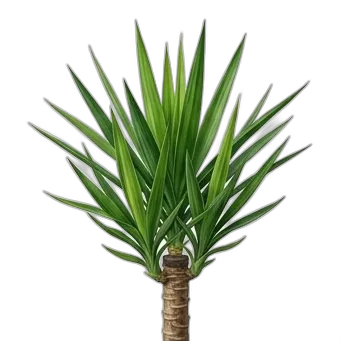
Unlike its spiky desert cousins, Yucca elephantipes is a soft-tipped yucca, meaning its sword-shaped, leathery leaves terminate in a pliable point rather than a skin-puncturing spine. This makes it an ideal, family-friendly choice for indoor environments. In its native habitat, it can reach heights of 30 feet (9 m) with a thick, branching trunk that resembles an elephant's foot at the base—hence the specific epithet elephantipes. Indoors, container cultivation typically restricts growth to between 4 feet and 8 feet (1.2 m to 2.4 m). The canes sold in garden centers are usually mature stem cuttings harvested from field-grown specimens, which root readily and sprout new green rosettes from the top nodes.
To understand how this plant thrives, you must look at its cellular architecture. The thick, woody canes function as specialized water-storage organs, allowing the plant to survive prolonged dry spells. The leaves are coated in a thick, waxy cuticle that minimizes transpiration, reducing water loss in arid, high-light environments.
2. Essential Environmental & Care Requirements
Replicating a tropical dry forest indoors requires balancing light, soil composition, and thermal thresholds.
Light
Yucca Cane requires intense, direct light to maintain its compact, upward growth habit. Place your plant within 3 feet (1 m) of a south-facing or west-facing window where it will receive at least 6 hours of bright sunlight daily. While yuccas can survive in medium-light office environments, growth slows dramatically, the stems stretch out weakly toward distant light sources (etiolation), and the soil stays wet longer, inviting root rot.
Temperature and Humidity
Indoor temperatures should remain between 65°F and 85°F (18°C and 29°C) during the active growing season. In winter, yuccas tolerate cooler indoor temperatures dropping to 55°F (13°C), but exposure to sustained temperatures below 45°F (7°C) will cause cellular damage. Average indoor humidity of 30% to 50% is entirely sufficient; never mist your Yucca Cane, as elevated leaf surface moisture combined with still indoor air encourages fungal leaf spot pathogens.
Soil and Water
The single most critical factor in yucca care is soil porosity. The potting medium must drain instantly. Use a specialized cactus and succulent mix amended with 30% inorganic grit, such as horticultural pumice, perlite, or coarse builder’s sand.
Watering frequency depends heavily on seasonal light cycles and ambient temperature. During the spring and summer growing season, water deeply until liquid runs out of the drainage holes, but allow the top 3 inches (7.5 cm) of soil to dry out completely before watering again. During the autumn and winter dormancy period, reduce watering to once every 4 to 6 weeks, providing just enough moisture to prevent the canes from shriveling. For deeper botanical insight on regional adaptability and outdoor growing zones, consult the University of Florida IFAS Extension.
| Parameter | Optimal Condition | Common Mistake | Why It Matters |
|---|---|---|---|
| Light | 6+ hours of direct sun daily | Placing in a dim hallway or north-facing room | Low light causes weak, spindly stems and waterlogged soil. |
| Soil pH | 6.0 to 7.5 (slightly acidic to neutral) | Using heavy, moisture-retentive peat mixes | Dense soils suffocate roots and harbor fungal pathogens. |
| Watering | Soak-and-dry method (dry top 3 inches) | Giving small, frequent sips of water | Sips wet only the surface roots while leaving lower roots parched. |
| Container | Terra cotta pot with a wide base and drainage | Plastic pot without drainage holes | Trapped water creates an anaerobic, rotting environment. |
💡 Pro-Tip: If your Yucca Cane is in a heavy ceramic pot that lacks drainage, do not water it directly. Instead, lift the inner nursery pot out for watering, let it drain completely in the sink for 30 minutes, and only then return it to the decorative container.
3. Step-by-Step Cultivation, Feeding & Propagation
Feeding and propagating Yucca Cane is straightforward if you respect its slow metabolic rate. Fertilize only during the active growing season (April through August) using a balanced, water-soluble houseplant fertilizer diluted to half-strength once every 6 weeks. Never fertilize in winter when the plant is resting, as unabsorbed salts will accumulate and burn the root system.
When your yucca outgrows its container or you wish to multiply your collection, follow this precise propagation protocol:
- Select the Cane: Choose a healthy, firm cane section at least 6 inches (15 cm) long, or use a mature offset pup that has emerged from the base of the parent plant.
- Sanitize Your Tools: Sterilize a sharp pruning saw or bypass pruners using isopropyl alcohol (70% concentration) to prevent transferring bacterial pathogens into the open vascular tissue.
- Make the Cut: Cut cleanly through the stem at a slight angle to prevent water from pooling on the cut surface. If you are decapitating a tall cane to branch it, leave at least 12 inches (30 cm) of stem on the rooted base.
- Seal the Wound: Apply a dusting of powdered horticultural sulfur or melted, unscraped paraffin wax to the top cut of the parent plant to seal out moisture and pests. Leave the cutting flat on a clean surface for 48 to 72 hours so the cut end forms a protective callus.
- Root the Cutting: Fill a propagation pot with a pre-moistened mix of 50% perlite and 50% peat-free potting soil. Insert the callused end of the cane 2 to 3 inches (5 cm to 7.5 cm) deep into the medium, tamping it down firmly for stability.
- Provide Bottom Heat: Place the pot in bright, indirect light where ambient temperatures stay near 75°F (24°C). Keep the medium barely damp—never soaked—using a spray bottle. Roots and new green leaf buds will emerge from the nodes within 30 to 45 days.
For additional taxonomic verification and cultivation standards, reference the Royal Botanic Gardens, Kew.
4. Common Problems, Pests & Troubleshooting
Even resilient plants flash warning signals when their environment is compromised.
Yellowing Lower Leaves
It is entirely normal for the oldest, lowest leaves on the cane to turn yellow, dry up, and drop off as the plant allocates energy upward. However, if multiple leaves yellow simultaneously and the upper canopy looks pale, you are overwatering.
Soft, Mushy Stems
If the main trunk feels spongy or squishy when squeezed near the soil line, systemic stem rot has set in. This is fatal to that specific cane segment. Use your sterilized saw to cut upward until you reach clean, white, unblemished wood. If the interior wood is brown or black throughout, discard the plant entirely.
Brown Leaf Tips
Crispy, brown leaf tips usually indicate low ambient humidity combined with tap water containing high levels of fluoride or chlorine. Switch to filtered water or rainwater, and ensure the plant isn't sitting directly in the path of a forced-air heating vent.
Pests
Indoor yuccas occasionally attract spider mites and mealybugs. Spider mites thrive in dry, warm indoor air, spinning fine webs on the undersides of leaves and causing stippling. Mealybugs appear as white, cottony masses in leaf axils. Wipe affected areas immediately with a soft cloth dipped in 70% isopropyl alcohol, or spray thoroughly with insecticidal soap every 7 days for a 3-week lifecycle interruption.
⚠️ Important Caution: Yucca leaves contain steroidal saponins, which are toxic to cats, dogs, and horses if ingested. Ingestion can cause excessive drooling, vomiting, and loss of coordination. Keep your Yucca Cane elevated on a plant stand or out of reach of curious household pets.

5. Frequently Asked Questions
Can I cut the top off my tall Yucca Cane to make it shorter?
Yes. You can prune the main cane to any desired height using a sterile, sharp saw. The plant will not die; instead, dormant growth buds located just below the cut will activate within 3 to 6 weeks, typically producing two or three new branching rosettes of leaves that give the plant a fuller, multi-headed architectural look.
Why are the leaves on my Yucca Cane curling inward?
Curling leaves are a primary defense mechanism against severe dehydration. When the root system is either too dry or has rotted away entirely and can no longer take up water, the plant rolls its leaves tightly to minimize surface area and reduce further moisture loss through transpiration. Check the soil moisture and root health immediately.
How do I save a Yucca Cane that has root rot?
Unpot the plant and shake away all wet soil. Use clean shears to trim away every root that is black, mushy, or hollow, leaving only firm, light-colored roots. Dust the remaining root system with powdered rooting hormone containing a fungicide, and repot the plant into a fresh, dry cactus mix inside a clean pot with proper drainage. Withhold water for 14 days to let the damaged roots heal.
Can Yucca Cane survive outdoors year-round?
Yucca elephantipes is reliably hardy only in USDA Hardiness Zones 9 through 11, where winter temperatures rarely drop below 25°F (-4°C). In colder climates, you can move your containerized yucca outdoors onto a sunny patio for the summer months, but you must bring it back indoors before nighttime temperatures consistently fall below 50°F (10°C).
📋 Table of Contents ▼ Click to expand
Tags: