

Wax Begonia
Begonia semperflorens
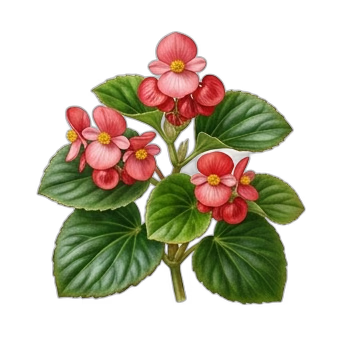
I was kneeling on the damp pavers of my back patio last May, trying to rescue a tray of Begonia semperflorens that had taken a direct hit from an unexpected late spring deluge, when I noticed something remarkable. While the fancy, tuberous begonias nearby had turned to absolute mush, my stubborn wax begonias were already bouncing back, their succulent stems stiffening and their waxy leaves shedding water like tiny green umbrellas. That resilience is precisely why I keep coming back to this unassuming landscape workhorse, season after season.
1. Botanical Overview & Natural Habitat

In garden cultivation across temperate zones, we grow them as warm-season annuals. They feature distinct, succulent stems that store water, which makes them surprisingly drought-tolerant once established, alongside fleshy, glossy leaves that range from vibrant light green to deep bronze and mahogany. The flowers are small, measuring roughly 0.5 to 1 inch (1.2 to 2.5 cm) across, and emerge in clusters of white, pink, rose, or deep red.
Understanding their evolutionary history helps us cultivate them successfully:
- Growth Habit: Compact, mounding habit, typically reaching mature heights and spreads of 6 to 18 inches (15 to 45 cm) depending on the specific cultivar.
- Root System: Fibrous and shallow, making them sensitive to deep root rot in stagnant water but also ideal for shallow containers and borders.
- Photosynthetic Pigments: Bronze-leaf varieties contain higher concentrations of anthocyanin pigments, which provide natural UV protection, allowing them to tolerate direct sunlight far better than their green-leaf counterparts.
2. Essential Environmental & Care Requirements
I specify wax begonias because they are remarkably forgiving, provided you hit their baseline environmental requirements. Let's look at the parameters that separate a thriving planting from a struggling one.
| Parameter | Optimal Condition | Common Mistake | Why It Matters |
|---|---|---|---|
| Light Exposure | Morning sun with afternoon shade (Green-leaf); Full sun to partial shade (Bronze-leaf) | Deep, dark shade | Insufficient light drastically reduces flower count and causes leggy, weak stems. |
| Temperature Range | 60°F to 75°F (15°C to 24°C) | Exposing to frost or sustained heat above 90°F (32°F) | Temperatures below 32°F (0°C) cause immediate cell lysis and death; extreme heat stalls blooming. |
| Soil Moisture | Evenly moist, well-draining soil with a pH of 5.5 to 6.5 | Keeping soil waterlogged or letting it dry out completely | Soggy soil suffocates the shallow root system, while extreme drought causes flower drop. |
| Fertilization | Balanced, water-soluble fertilizer at half-strength every 3 to 4 weeks | Over-fertilizing with high-nitrogen formulas | Excess nitrogen stimulates lush foliage growth at the direct expense of blooms. |
For more detailed regional performance data, you can consult the Clemson Cooperative Extension Home & Garden Information Center.
💡 Pro-Tip: When designing garden beds, always match your begonia leaf color to the microclimate. Plant green-leaf cultivars under the high, filtered canopy of shade trees where they won't scorch, and reserve your bronze-leaf cultivars for those blazing hot, south-facing border edges where their natural pigment acts like built-in sunscreen.
3. Step-by-Step Cultivation, Feeding & Propagation
Growing wax begonias from seed or transplanting nursery starts is straightforward when you follow a structured workflow. Because the seeds are as fine as dust, most home gardeners prefer starting with established flat packs or propagating through stem cuttings.
- Site Preparation: Clear the planting bed of all weeds and debris. Incorporate 2 to 3 inches (5 to 7.5 cm) of well-rotted compost into the top 6 inches (15 cm) of soil to improve drainage and nutrient retention.
- Timing the Planting: Wait until all danger of spring frost has passed and night temperatures consistently stay above 50°F (10°C).
- Spacing the Transplants: Dig planting holes spaced 6 to 10 inches (15 to 25 cm) apart for mass bedding displays, or 4 to 6 inches (10 to 15 cm) apart if you want them to quickly knit together into a dense carpet.
- Setting Planting Depth: Set each transplant at the exact same soil depth it was growing in its nursery container. Planting them too deeply causes the succulent stems to rot at the soil line.
- Initial Irrigation: Water the newly installed bed thoroughly, applying roughly 1 inch (2.5 cm) of water to settle the soil around the delicate roots. Avoid overhead watering late in the day to prevent fungal issues.
- Routine Maintenance & Pinching: Pinch back the growing tips of young plants when they reach about 4 inches (10 cm) tall to encourage a bushier, more floriferous habit. Deadheading is rarely necessary as wax begonias are self-cleaning, dropping their spent blooms cleanly.
If you want to propagate your favorite specimen before winter arrives, take 3 to 4-inch (7.5 to 10 cm) stem cuttings, strip the lower leaves, dip the cut end in rooting hormone, and insert them into a 50/50 mix of perlite and peat moss. Keep them under high humidity at 70°F (21°C), and roots will form in 14 to 21 days.
⚠️ Important Caution: Never plant wax begonias in heavy clay soils without substantial amendment. Their fine, shallow root systems cannot penetrate compacted earth, and poorly draining clay acts like a subterranean bowl, holding water and inviting Pythium root rot.
4. Common Problems, Pests & Troubleshooting
Even tough plants run into trouble when environmental conditions slide out of balance. Here is how to diagnose and correct the most frequent issues facing wax begonias.
- Powdery Mildew (Onychium species): Appears as a white, powdery dusting on leaves and stems, typically triggered by high humidity combined with cool nights and poor air circulation. Correction: Space plants further apart, avoid overhead irrigation, and treat early infections with potassium bicarbonate or horticultural oil.
- Stem Rot and Botrytis: Soft, water-soaked brown lesions on the stems, often resulting from overwatering or planting too deeply in damp shade. Correction: Remove and destroy infected plants immediately. Reduce watering frequency and ensure the soil surface dries out slightly between irrigation cycles.
- Aphids and Mealybugs: Small, soft-bodied insects that cluster on new growth and the undersides of leaves, sucking plant sap and leaving a sticky honeydew residue. Correction: Blast light infestations off with a strong stream of water from the hose, or apply insecticidal soap directly to the pests. For broader horticultural guidance, visit the Royal Horticultural Society.
- Leaf Scorch: Bleached, brown, or paper-thin patches on green-leaf varieties exposed to sudden, intense afternoon sun. Correction: Move container plants to a shadier location, or provide temporary shade cloth for in-ground installations experiencing heatwave conditions.

5. Frequently Asked Questions
Are wax begonias toxic to dogs and cats?
Yes, according to the ASPCA, Begonia semperflorens contains soluble calcium oxalates, primarily concentrated in the underground tubers and roots. If ingested by cats or dogs, these crystals cause intense burning and irritation of the mouth, tongue, and lips, excessive drooling, vomiting, and difficulty swallowing.
Can wax begonias survive the winter outdoors?
In USDA Hardiness Zones 10 and 11, wax begonias can act as short-lived perennials. In zones 9 and colder, they are strictly killed by the first hard frost and will not survive outdoors. However, you can easily dig them up in autumn, pot them individually, and bring them indoors as house plants to overwinter on a sunny windowsill.
Do wax begonias need to be deadheaded?
No, deadheading is completely unnecessary for wax begonias. They are naturally self-cleaning plants, meaning their spent flowers dry up and drop off cleanly on their own without requiring you to manually pinch off the old blooms.
Why are my wax begonia leaves turning yellow?
Yellowing foliage is almost always a symptom of watering stress—either chronic overwatering that has deprived the roots of oxygen, or severe underwatering. Check your soil moisture; if it feels soggy, scale back your irrigation and check drainage. If it is bone dry, give the plant a deep, thorough soaking.
📋 Table of Contents ▼ Click to expand
Tags:





