

Watermelon Peperomia
Peperomia argyreia
1. Botanical Overview & Natural Habitat

Understanding this natural habitat is the key to keeping it alive indoors. In the wild, Peperomia argyreia rarely sees direct sunlight; instead, it receives filtered light bouncing through high branches. It grows in shallow, highly organic leaf litter rather than heavy mineral soil, meaning its root system is naturally compact, shallow, and adapted to quick wet-dry cycles.
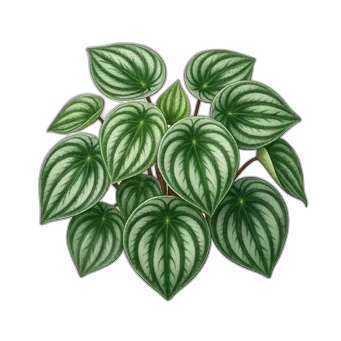
Botanically, the plant is distinguished by its succulent, peltate leaves—meaning the petiole attaches to the center of the underside of the leaf blade rather than the edge, closely mimicking the rind pattern of a miniature watermelon. The leaves possess specialized subepidermal water storage tissue, which allows the plant to endure brief dry spells in its native habitat, though this adaptation frequently tricks indoor growers into underwatering or letting the root ball compress too tightly. The plant typically reaches a mature height and spread of 8 to 12 inches (20 to 30 cm), making it an exceptional specimen for small-space interior design, terrariums, or tabletop containers.
2. Essential Environmental & Care Requirements
To successfully cultivate Peperomia argyreia, you must recreate its tropical understory environment inside a climate-controlled home.
Light is the single most critical factor for maintaining those iconic silver bands. Provide bright, indirect light, ideally placing the plant within 3 to 5 feet (0.9 to 1.5 m) of an east-facing window or an unobstructed north-facing window. Southern and western exposures can easily scorch the succulent foliage, resulting in brown, papery patches. Conversely, placing the plant in a dark corner will cause the striking variegation to fade into a dull, muddy green as the plant produces excess chlorophyll to compensate for the lack of photons.
Temperature management requires vigilance against drafts and sudden drops. Maintain ambient indoor temperatures between 65°F and 80°F (18°C to 27°C). Never expose a Watermelon Peperomia to temperatures below 50°F (10°C), as prolonged chilling will trigger irreversible cell collapse, leaf drop, and systemic stem rot. Keep the plant away from HVAC supply vents, drafty windowsills, and exterior doors during winter months.
Humidity and airflow must be carefully balanced. While tropical understory plants thrive in high moisture, stagnant air combined with wet leaves is an invitation for fungal pathogens like Botrytis or powdery mildew. Aim for a relative humidity level of 50% to 60%. You can achieve this by grouping plants together or using a cool-mist ultrasonic humidifier, but avoid chronic misting of the leaves, which traps moisture in the peltate leaf cups and invites bacterial leaf spot.
| Parameter | Optimal Condition | Common Mistake | Why It Matters |
|---|---|---|---|
| Light | Bright, indirect (East window or filtered South) | Direct midday sun or deep shade | Direct sun scorches leaves; shade destroys the silver variegation. |
| Temperature | 65°F – 80°F (18°C – 27°C) | Placing near cold drafts or AC units | Temperatures below 50°F (10°C) cause chilling injury and root rot. |
| Soil pH | 6.0 to 6.5 (Slightly acidic) | Heavy, compacted garden soil | Highly organic, loose mixes are essential for fragile, shallow roots. |
| Watering | Dry out completely in top 2 inches (5 cm) | Keeping soil constantly soggy | Succulent stems rot rapidly when deprived of oxygen in wet media. |
💡 Pro-Tip: When checking soil moisture, never rely on a surface glance. Insert your index finger a full 2 inches (5 cm) deep into the potting mix. If you feel any cool dampness at your fingertip, withhold the watering can for another 3 to 5 days.
3. Step-by-Step Cultivation, Feeding & Propagation
Watermelon Peperomias have delicate, thread-like root systems that demand specific structural conditions in the potting medium. A standard commercial potting soil will retain too much water and suffocate the roots.
For an optimal custom mix, combine 40% high-quality peat-based or coco coir potting mix, 30% perlite or pumice for macro-aeration, and 30% orchid bark or horticultural charcoal to maintain structural integrity and prevent compaction. Select a shallow container—such as an azalea pot—that is only 1 to 2 inches (2.5 to 5 cm) wider than the current root ball. Terracotta pots work exceptionally well because their porous walls allow excess moisture to evaporate laterally.
⚠️ Important Caution: Never use a pot without a functional drainage hole. Watermelon Peperomias cannot tolerate sitting in a perched water table, and even a layer of gravel at the bottom of a sealed pot will actually raise the saturation zone closer to the roots, accelerating root rot.
Step-by-Step Propagation via Leaf-Petiole Cuttings
Because Watermelon Peperomias have thick, fleshy leaves and distinct petioles, they can be easily multiplied using leaf cuttings. Follow this precise protocol in late spring or early summer when ambient light and natural warmth are at their peak:
- Select Mother Material: Inspect a healthy, mature plant and choose 3 to 4 unblemished, fully expanded leaves that possess a sturdy petiole at least 1.5 inches (3.8 cm) long.
- Make the Cut: Using a sharp, sterilized razor blade or scalpel, sever the leaf cleanly from the main stem, leaving a 1-inch (2.5 cm) section of the petiole attached to the leaf blade. Clean your blade with isopropyl alcohol between each cut to prevent pathogen transfer.
- Prepare the Propagation Medium: Fill a small propagation tray or 4-inch (10 cm) nursery pot with a pre-moistened 50/50 blend of perlite and fine peat moss.
- Plant the Cuttings: Insert the petiole straight down into the medium at a slight angle, burying the stem piece about 0.75 inches (2 cm) deep while keeping the main leaf blade resting just above the surface of the soil. Ensure the leaf blade does not touch wet soil directly, which causes immediate rot.
- Provide a Microclimate: Enclose the tray or pot inside a clear plastic bag or propagation dome to trap ambient moisture, ensuring you vent the cover for 15 minutes daily to prevent stagnant condensation buildup.
- Maintain Warmth and Light: Place the setup in bright, indirect light where temperatures consistently hover around 72°F to 75°F (22°C to 24°C). Keep the medium barely moist by bottom-watering if necessary.
- Transplant New Shoots: Within 30 to 45 days, tiny root systems and miniature rosette shoots will emerge from the base of the buried petiole. Once these baby plantlets develop at least 3 distinct leaves, gently tease them apart and pot them individually into their own 3-inch (7.5 cm) containers using your standard aroid potting mix.
Feeding should be approached with a light hand. Because these plants are slow-growing and sensitive to mineral salt accumulation, apply a balanced, water-soluble houseplant fertilizer diluted to one-quarter strength once every 4 weeks strictly during the active growing season (spring through late summer). Cease fertilization entirely from October through February when the plant enters natural winter dormancy.
4. Common Problems, Pests & Troubleshooting
Even experienced growers occasionally run into issues with Peperomia argyreia. Recognizing symptoms early allows for corrective intervention before structural damage sets in.
Stem rot and root rot are the primary causes of sudden plant failure. Symptoms include translucent, water-soaked lower stems, sudden wilting despite wet soil, and leaves detaching effortlessly from the crown. If caught early, unpot the plant, rinse the root system under lukewarm water, use sterilized shears to trim away all black, mushy, or foul-smelling root tissue, and repot immediately into fresh, dry, highly aerated mix. For deeper guidance on plant health diagnosis, consult the Royal Horticultural Society plant pest and disease advice.
Foliage issues usually point to environmental imbalances:
- Crispy, brown leaf margins: Caused by either severely low humidity or chemical burn from tap water containing excessive fluoride or salts. Switch to distilled or rainwater and increase localized humidity.
- Pale, washed-out leaves with elongated stems (etiolation): The plant is desperately reaching for light. Move it closer to a bright window.
- Sudden leaf drop: Typically triggered by a sudden cold draft or letting the root ball dry out completely for too long, followed by a heavy overwatering that shocks the system.

5. Frequently Asked Questions
Why is my Watermelon Peperomia losing its silver stripes?
The silver variegation on Peperomia argyreia directly correlates with light intensity. If the plant is kept in a dim location, it lacks the energy to produce the specialized air-filled subepidermal layers that create the reflective silver illusion, causing the leaves to revert to a flat, solid green. Move the plant closer to an unobstructed, bright, indirect light source, but avoid direct sun rays that will scorch the tissue.
How often should I water a Watermelon Peperomia?
There is no rigid calendar schedule for watering a Watermelon Peperomia because indoor home environments fluctuate constantly. Instead, water thoroughly only when the top 2 inches (5 cm) of the soil mix feel completely dry to the touch. In a typical indoor climate, this translates to roughly every 7 to 14 days in the spring and summer, and every 18 to 25 days during the slower winter months.
Is Peperomia argyreia toxic to cats and dogs?
No. According to the ASPCA, Peperomia argyreia is completely non-toxic to cats, dogs, and horses. This makes it an exceptional, worry-free choice for pet owners who want to display lush tropical foliage on low plant stands, coffee tables, or open shelving without risking their animal companions' health.
Why are the stems of my Watermelon Peperomia turning mushy?
Mushy stems are the definitive diagnostic sign of stem base rot, which is almost always caused by a combination of overly dense soil, poor drainage, and overwatering. When the soil stays wet for too long, oxygen is squeezed out of the root zone, causing root tissue to die and allowing soil-borne fungal pathogens to ascend the succulent stems. To save the plant, immediately cut away any healthy upper stems and propagate them as fresh cuttings, discarding the rotted root ball and old soil.
📋 Table of Contents ▼ Click to expand
Tags:





