Tiger Jaws
Faucaria tigrina
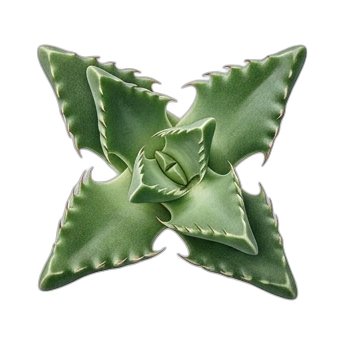
A freshly imported, root-bound specimen of Faucaria tigrina features bizarre, triangular leaves with pearlescent teeth lining their margins, looking preposterously dramatic like miniature botanical bear traps. Trusting a generic succulent care guide that recommends watering weekly causes a single rosette to rot out from the center within three months, highlighting the importance of respecting the precise environmental rhythms of South African desert flora.
1. Botanical Overview & Natural Habitat

The genus name Faucaria derives from the Latin fauces, meaning "jaws" or "throat," a direct reference to the pairs of thick, fleshy leaves adorned with white, cartilaginous bristles or teeth. These teeth are not merely decorative; in their native habitat, they cast shadows that deter grazing herbivores and help condense sparse nocturnal dew, channeling moisture down toward the root zone.
Each rosette typically consists of three to four pairs of decussate leaves—meaning each successive pair sits at a right angle to the previous one. The leaves are rhomboid to triangular in shape, deep green to grey-green, and frequently decorated with white or pale green spots that form broken transverse bands. Mature rosettes reach a modest width and height of 3 to 4 inches (7.6 to 10 cm), though they naturally cluster over time via basal offsets, forming dense mats up to 6 inches (15 cm) across.
In autumn, usually between October and December in cultivation, Faucaria tigrina produces disproportionately large, daisy-like, golden-yellow flowers that can measure up to 2 inches (5 cm) in diameter. These flowers open brilliantly in the midday sun and close tightly by evening, a classic heliotropic response designed to protect delicate reproductive organs from nighttime chills. To explore more about the taxonomy and conservation status of these remarkable South African endemics, you can consult the Royal Botanic Gardens, Kew Plants of the World Online.
2. Essential Environmental & Care Requirements
Recreating the harsh, well-drained, and sun-drenched environment of the Great Karoo is the single most important step in keeping Tiger Jaws alive and thriving. Get these four parameters right—light, soil, water, and temperature—and the plant will reward you with decades of growth.
| Parameter | Optimal Condition | Common Mistake | Why It Matters |
|---|---|---|---|
| Light | 6+ hours of bright, direct sunlight or 2000+ foot-candles under LEDs | Growing in shaded indoor corners or north-facing windows | Insufficient light causes etiolation, stretching the rosette and destroying its tight, predatory shape. |
| Soil | 70% inorganic grit (pumice/perlite/turface) to 30% organic cactus mix | Using standard peat-based potting soil straight from the bag | Heavy organic matter holds water too long, suffocating roots and inviting Fusarium or Rhizoctonia rot. |
| Water | Soak completely, then allow to dry 100% to a depth of 3 inches (7.6 cm) before re-watering | Giving frequent, shallow sips every few days | Shallow watering encourages weak root development near the surface rather than deep, anchoring structures. |
| Temperature | Daytime 70°F to 85°F (21°C to 29°C); Winter resting 45°F to 55°F (7°C to 13°C) | Exposing to continuous damp cold below 35°F (1.6°C) | Freezing moisture inside the fleshy leaves expands and ruptures cellular walls, turning the plant to mush. |
Watering strategy is where most growers fail. Unlike tropical houseplants, Faucaria tigrina operates on a bimodal rainfall pattern adapted from its native habitat, meaning it experiences active growth in spring and autumn, with semi-dormancy periods during the scorching summer months and cooler winters. During active growth, water thoroughly only when the potting medium is bone dry. During the peak of summer heat (when temperatures consistently exceed 90°F / 32°C) and deep winter, scale back watering by 50% to prevent root shock and fungal attack.
💡 Pro-Tip: Watch the leaf margins for your watering cue. When Faucaria tigrina is well-hydrated, the leaves are plump, firm, and slightly upward-curving. When the soil has dried out completely and the plant needs a drink, the outermost leaf pair will begin to flatten out and feel slightly spongy to a gentle pinch. Never water on a strict calendar schedule; let the plant's leaf turgor and soil moisture tell you when it is time.
3. Step-by-Step Cultivation, Feeding & Propagation
Propagating and repotting Faucaria tigrina is straightforward if you respect its biological timeline. The ideal window for repotting or propagation is early spring, just as the days lengthen and the plant prepares to break its winter dormancy.
Step-by-Step Propagation via Division and Seed
- Select a Healthy Clump: Choose a mature Faucaria tigrina specimen that has produced at least three distinct, crowded rosettes and is spilling over the edges of its current container.
- Unpot and Clean Roots: Gently tip the container sideways, tap the rim to loosen the root ball, and shake away all old, spent soil. Use a soft-bristled brush to clear stubborn debris from the root crown without snapping the brittle fleshy roots.
- Inspect and Separate Offsets: Locate the natural cleavage points where offsets attach to the primary stem or root stock. Using a disinfected, razor-sharp grafting knife or bonsai shears, cleanly slice the offset away, ensuring each division retains at least a few intact, healthy roots.
- Cull Damaged Tissue: Trim away any black, withered, or corky roots back to healthy, firm white or light tan tissue.
- Apply Fungicide and Callus: Dust all cut surfaces with sulfur powder or powdered rooting hormone containing a mild fungicide. Place the divisions in a warm, dry, shaded spot for 5 to 7 days to allow a protective callus to form over the wounds.
- Pot into Dry Substrate: Plant the callused divisions into a terra-cotta pot filled with a dry, highly porous mix of 70% pumice and 30% organic succulent soil. Anchor the base of the rosette firmly at the soil line, ensuring no leaves are buried below the mix.
- Withhold Water: Keep the newly potted divisions completely dry in bright, indirect light for 14 to 21 days. This forces the plant to push out new root hairs in search of moisture. Once you notice slight resistance when gently wiggling the rosette, give it its first deep watering.
When it comes to feeding, less is exponentially more. Faucaria tigrina evolved in nutrient-poor quartz-derived soils. Apply a balanced, low-nitrogen liquid cactus fertilizer (such as a 2-7-4 formula) diluted to one-quarter strength precisely twice a year: once in early spring and once in early autumn. Never fertilize a drought-stressed or recently repotted plant, as concentrated salts will burn the sensitive feeder roots. For comprehensive guidance on container selection and soil chemistry, review the resources provided by the Clemson Cooperative Extension Home & Garden Information Center.
4. Common Problems, Pests & Troubleshooting
Even with pristine care, environmental shifts can trigger stress responses in Faucaria tigrina. Recognizing these symptoms early separates a thriving collection from a compost bin.
- Rotting Crowns and Stems: The most common killer. The base of the plant turns translucent yellow, then brown, and easily detaches from the roots. This is caused by overwatering combined with poor airflow and heavy soil. Immediately decapitate any salvageable upper rosettes above the rot zone, callus for 10 days, and reroot in dry pumice.
- Mealybugs: These cottony, white sap-suckers love to hide deep inside the tight crevices between leaf pairs where the teeth protect them. Treat infestations immediately by applying 70% isopropyl alcohol directly to the insects with a cotton swab, followed by a systemic horticultural oil spray if the infestation is severe.
- Sunburn and Leaf Scorch: Occurs when a plant grown indoors or in dappled shade is suddenly thrust into intense afternoon summer sun. Bleached, papery white or brown patches appear on the upper surfaces of the leaves. Move the plant to bright indirect light for two weeks, then gradually reintroduce it to direct morning sun over a 14-day period.
- Etiolation: The plant stretches out, losing its compact, ferocious rosette shape, and leaves become pale green, thin, and weak. This is a direct cry for more solar radiation. While the stretched growth will never shrink back to normal, you can behead the top rosette, root it, and provide at least 6 hours of daily direct light to restore normal growth patterns.
⚠️ Important Caution: Never use standard insecticidal soaps or heavy dormant oils on Faucaria tigrina during peak summer heat or under intense direct sunlight. The waxy, reflective cuticle on the leaves can react with chemical carriers, resulting in severe chemical burns and permanent epidermal scarring that ruins the plant's aesthetic.

5. Frequently Asked Questions
Why are the leaves on my Tiger Jaws plant splitting open?
Leaf splitting is almost always caused by an irregular watering cycle. When a severely dehydrated Faucaria tigrina receives a massive, sudden influx of water, the plant drinks so rapidly that the internal cellular walls cannot expand fast enough to accommodate the surge, causing the epidermis to rupture. Prevent this by offering smaller, more frequent drinks when the plant is very dry, allowing it to rehydrate gradually over 48 hours rather than flooding the root zone all at once.
Are Tiger Jaws toxic to cats and dogs?
No, Faucaria tigrina is completely non-toxic to domestic cats, dogs, and horses, according to the ASPCA toxic plant database. However, the stiff, cartilaginous teeth along the leaf margins can be sharp to the touch, and chewing on them may cause minor mechanical irritation to the mouth or throat of an overly curious pet, making it wise to keep your collection elevated out of paw's reach.
How do I get my Faucaria tigrina to bloom?
To trigger those brilliant yellow autumn blooms, your plant requires a clear seasonal trigger. Ensure the plant receives uninterrupted, direct sunlight throughout spring and summer, and then subject it to a natural cooling period in late autumn where nighttime temperatures drop into the 45°F to 55°F (7°C to 13°C) range while daylight hours shorten. This environmental shift signals the plant that it is time to transition from vegetative growth to floral reproduction.
Should I cut off the old, dried-out leaves at the base of the rosette?
You can, but only when they have completely dried up, turned papery, and brown. As Faucaria tigrina matures, the lowest leaf pairs naturally senesce and sacrifice their moisture to fuel new growth at the center. Leave them attached until they pull away with zero resistance; pulling off green or only partially dried leaves creates fresh wounds on the stem that invite fungal spores and bacterial pathogens into the plant.
📋 Table of Contents ▼ Click to expand
Tags: