String of Pearls
Senecio rowleyanus

1. Botanical Overview & Natural Habitat
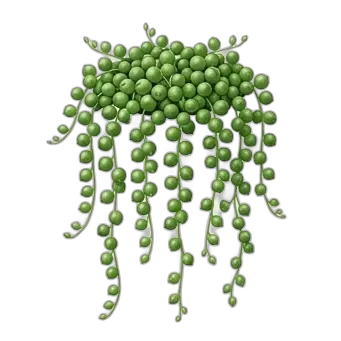
The String of Pearls (Senecio rowleyanus, recently reclassified by some taxonomists as Curio rowleyanus) is a creeping perennial succulent native to the dry, rocky zones of southwestern Africa, specifically Namibia and parts of South Africa. In its native habitat, it does not cascade gracefully from hanging baskets in stagnant indoor air. Instead, it crawls horizontally across the ground, weaving through rocks and low shrubs, acting as a living groundcover that escapes the scorching sun by sheltering beneath nurse plants.
The iconic spherical leaves—technically known as modified leaves adapted for water storage—are a brilliant evolutionary masterclass. Each pea-like sphere possesses a tiny, translucent longitudinal slit called an epidermal window. This specialized tissue allows sunlight to penetrate the interior of the leaf for internal photosynthesis while drastically minimizing the surface area exposed to the dry, desiccating desert air, thereby reducing transpirational water loss.
Botanically, Senecio rowleyanus belongs to the daisy family (Asteraceae). When grown under optimal conditions, mature plants produce small, white, tubular flowers clustered in pom-pom-like heads that emit a delightful, spicy fragrance often compared to cinnamon or cloves. The trailing stems can easily reach lengths of 2 to 3 feet (60 to 90 cm) or more within two growing seasons, rooting at the nodes wherever they make contact with damp substrate. Understanding this creeping, rooting habit is the single most important key to keeping your trailing pearls dense, lush, and free of the dreaded "bald crown" syndrome at the top of the pot.
2. Essential Environmental & Care Requirements
Replicating the dry, bright conditions of the South African veld indoors requires careful attention to light quality, thermal limits, and watering schedules. Let's break down the exact environmental parameters your Senecio rowleyanus needs to thrive.
| Parameter | Optimal Condition | Common Mistake | Why It Matters |
|---|---|---|---|
| Light | 6+ hours of bright, indirect to direct morning sun | Placing in a dark interior corner or deep shade | Insufficient light causes stretched, weak stems ("etiolation") and flat, oblong leaves instead of pearls. |
| Temperature | 70°F to 80°F (21°C to 27°C) active; 50°F to 60°F (10°C to 15°C) winter rest | Exposing to drafts below 45°F (7°C) | Temperatures below freezing instantly rupture the water-filled cellular walls, causing total collapse. |
| Watering | Soak-and-dry method (100% dry soil before rewatering) | Watering on a strict calendar schedule (e.g., every 7 days) | Chronic root moisture triggers anaerobic bacteria and fungal pathogens, leading to stem rot. |
| Soil Mix | Highly porous cactus/succulent blend amended with perlite/pumice | Using heavy, peat-dense standard potting soil | Dense soils hold water too long, suffocating fine roots and preventing oxygen exchange. |
| Humidity | 30% to 50% relative humidity | Misting the foliage regularly | Misting traps moisture against the spherical leaves, encouraging fungal leaf spot and botrytis. |
Light is your primary limiting factor. While direct, scorching afternoon sun in USDA Zones 9 through 11 can scorch the delicate epidermal windows, indoor plants demand a minimum of 4 to 6 hours of bright light daily. A unobstructed east-facing window or a south-facing window filtered through a sheer curtain is ideal. If natural light is lacking, position your plant 6 to 12 inches (15 to 30 cm) beneath a full-spectrum LED grow light operating on a 12-hour timer.
When it comes to watering, adopt the "soak-and-dry" mantra religiously. Submerge the pot in a basin of water until the substrate is thoroughly saturated, then let it drain completely. Do not water again until the soil is completely dry down to the very bottom of the container, and the pearls look just slightly puckered or dimorphic. For deeper insight into succulent physiology, you can reference the Royal Horticultural Society plant profile.
3. Step-by-Step Cultivation, Feeding & Propagation
Propagation and repotting are where many gardeners stumble with Senecio rowleyanus, primarily because the stems are exceptionally brittle and the root systems are surprisingly shallow and delicate. Follow this precise step-by-step protocol to successfully propagate your plant from stem cuttings.
- Select Healthy Stems: Using a pair of sharp, sterilized pruning shears, snip 4 to 6-inch (10 to 15 cm) healthy trailing stems from a mature, vigorous mother plant. Ensure each cutting has at least 4 to 6 visible nodes (the small joints where pearls attach to the stem).
- Prepare the Cuttings: Gently pluck away the bottom 2 or 3 pearls from the lower end of each cutting, exposing approximately 1 to 2 inches (2.5 to 5 cm) of bare stem. Allowing these wounds to callous over in a dry, shaded spot for 24 to 48 hours prevents basal rot.
- Mix the Substrate: Combine 50% high-quality cactus potting mix with 50% coarse perlite, pumice, or poultry grit to ensure rapid drainage and optimal aeration.
- Surface Laying or Planting: Instead of burying the stems vertically—which often leads to stem rot—lay the prepared cuttings horizontally across the surface of the damp potting mix. Alternatively, coil the stems in a circle on top of the soil, gently pinning them down with pieces of bent floral wire or bobby pins so the exposed nodes make direct contact with the substrate.
- Initial Rooting Care: Place the propagation tray or pot in bright, indirect light where temperatures remain consistently between 75°F and 80°F (24°C to 27°C). Mist the surface lightly every 3 to 4 days only until root systems anchor into the soil—typically within 14 to 21 days.
- Transition to Normal Care: Once roots establish and new vertical growth tips emerge (usually by day 30), reduce watering frequency to the standard soak-and-dry regime.
💡 Pro-Tip: When potting a trailing succulent, always select a container made of unglazed terracotta. Terracotta is porous, allowing excess moisture to evaporate sideways through the clay walls rather than pooling around the delicate root system. This single adjustment slashes the risk of root rot by half.
Feeding your String of Pearls should be approached with a light touch. In their native arid environments, soils are lean and nutrient-poor. Dilute a balanced, water-soluble liquid succulent fertilizer (such as a 10-10-10 or 5-10-5 formulation) to one-quarter strength, and apply it only once a month during the active growing season from mid-spring through late summer. Never fertilize during the dormant winter months, as excess mineral salts will accumulate in the dry soil and burn the roots.
4. Common Problems, Pests & Troubleshooting
Even experienced indoor gardeners occasionally misread the subtle physiological signals of Senecio rowleyanus. Here is how to diagnose and correct the most common issues before they become fatal.
- Mushy, Translucent, or Yellowing Pearls: This is the universal symptom of overwatering or poorly draining soil. The root cells have burst from excessive hydraulic pressure, inviting anaerobic rot. The Fix: Immediately unpot the plant, trim away all black, mushy roots and stems with sterile shears, and repot the healthy remaining fragments into fresh, dry, highly porous mix. Reduce watering immediately.
- Shriveled, Flat, or Wrinkled Pearls: If the pearls look like tiny raisins, the plant is severely dehydrated. However, check the base of the stems: if the base is rotted, the roots are dead and cannot take up water, causing the upper stems to dehydrate despite wet soil. The Fix: If roots are healthy, give the pot a thorough soak. If roots are rotted, take top cuttings and propagate anew.
- Stretched Stems and Tiny Leaves (Etiolation): The plant is desperately reaching for higher light levels. The Fix: Move the container to a significantly brighter window or introduce an artificial LED grow light system. Prune the leggy, sparse stems back by one-third to encourage branching and a fuller crown.
- Mealybugs and Aphids: These sap-sucking pests frequently hide in the tight crevices where the pearls join the main stem, leaving behind a white, cottony residue. The Fix: Dab the affected areas with a cotton swab dipped in 70% isopropyl alcohol, or spray thoroughly with insecticidal soap every 7 days for three consecutive weeks to break the pest lifecycle. For broader horticultural guidance, consult the University of Florida Extension resources.
⚠️ Important Caution: Senecio rowleyanus is moderately toxic to household pets, including cats and dogs, as well as humans, if ingested. The plant contains pyrrolizidine alkaloids, which can cause severe liver damage, vomiting, excessive drooling, and lethargy in animals. Always position your hanging baskets well out of reach of curious pets and climbing toddlers.

5. Frequently Asked Questions
Why is the top of my String of Pearls dying out and looking bald?
The top of the pot is the furthest point from the trailing ends, and it often receives the least amount of ambient light because the hanging foliage shades it out. Furthermore, old stems naturally woody-up and die back over time. To fix this, periodically lay a few long trailing strands back across the top surface of the soil in the pot, pinning them down gently so they root at the nodes and fill in the bare crown.
How often should I actually water my String of Pearls?
There is no universal calendar day for watering succulents. Instead, check your plant every 10 to 14 days by inserting a wooden chopstick or your finger 2 inches (5 cm) deep into the soil. If it comes out moist or with soil clinging to it, do not water. Only water when the soil is 100% dry from top to bottom, which typically happens every 14 to 21 days indoors during summer, and every 30 to 45 days in winter.
Can I grow String of Pearls outdoors in the summer?
Yes, absolutely. You can safely move your plant outdoors once nighttime temperatures consistently remain above 50°F (10°C). Hang it in a spot that receives bright, filtered morning light, such as beneath a covered porch or under the canopy of a large tree. Protect it from heavy afternoon sun and torrential rainstorms, which can easily waterlog the pot and split the delicate pearls.
Why are the windows on my pearls turning brown or scabby?
Brown, corky, or scabby patches on the translucent epidermal windows are typically the result of physical damage, extreme sunburn, or edema caused by irregular watering cycles. When the plant absorbs a massive surge of water too quickly after an extended drought, the internal water pressure spikes so violently that the cellular walls rupture, leaving behind permanent corky scars as they heal. Maintain a consistent watering rhythm to prevent this cosmetic damage.
📋 Table of Contents ▼ Click to expand
Tags: