

Staghorn Fern
Platycerium bifurcatum
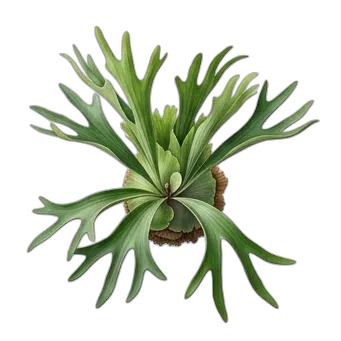
The heavy mahogany plaque slipped in my calloused palms, nearly sending a three-year-old Platycerium bifurcatum crashing onto the greenhouse floor. I had miscalculated the weight of the soaked sphagnum moss backing, a rookie mistake I made back in my early landscaping days when I treated this epiphyte like a standard potted houseplant. Since rescuing that specimen, I have mounted dozens of Staghorn Ferns across conservatory walls and shaded patios, learning that their resilience lives entirely in respecting their unusual biology.
1. Botanical Overview & Natural Habitat

Understanding this plant requires looking at its two distinct types of fronds, which serve entirely different evolutionary purposes:
- Basal Fronds (Shield Fronds): These round, papery, sterile leaves clasp the tree trunk or mounting surface. Initially green and succulent, they turn brown, papery, and tough as they age. They do not die off in a functional sense; instead, they form a layered, sponge-like shield that protects the root system and collects detritus, falling leaves, and moisture from the canopy above.
- Foliar Fronds (Antler Fronds): These are the dramatic, fertile fronds that give the Staghorn its common name. Forking multiple times to resemble deer antlers, these leathery, gray-green fronds capture sunlight for photosynthesis. On the undersides of mature antler tips, you will find fuzzy brown patches called sporangia, which produce microscopic spores for reproduction.
In the wild, these plants experience humid air, brilliant filtered light, and erratic rainfall where water washes quickly over their roots without ever letting them sit in soggy mud. Replicating this microclimate is the secret to moving from keeping a Staghorn alive to helping it thrive.
2. Essential Environmental & Care Requirements
To cultivate a specimen worthy of a botanical conservatory, you must balance light, water, and air movement. Because they are epiphytes, conventional potting soil will suffocate their roots within 30 days.
- Light: Provide bright, indirect light. An East-facing window or a spot a few feet back from a South- or West-facing window filtered through a sheer curtain is ideal. Avoid direct midday sun, which scorches the leathery fronds within 2 to 3 hours, turning them an unrecoverable bleached white and then brown.
- Temperature: Keep ambient temperatures between 60°F and 85°F (15°C to 29°C). While mature plants can endure a brief dip down to 40°F (4°C), prolonged exposure below 50°F (10°C) causes cellular collapse and rot. Keep them away from drafty AC units and heating vents that drop relative humidity below 50%.
- Watering: Water thoroughly when the root ball or mounting medium feels dry to the touch 2 inches (5 cm) deep. Soak the entire mount in a tub of tepid water for 10 to 15 minutes, then let it drip dry completely before rehanging. Never keep the basal shield continuously waterlogged.
💡 Pro-Tip: When watering mounted Staghorn Ferns, add a few drops of liquid seaweed extract to your soaking water once a month during the active growing season. It supplies micronutrients that mimic the nutrient-rich rain runoff these ferns receive in natural forest canopies.
| Parameter | Optimal Condition | Common Mistake | Why It Matters |
|---|---|---|---|
| Light | Bright, indirect (1,500–3,000 foot-candles) | Direct midday sun | Leaves scorch and lose their waxy cuticle protection |
| Watering | Soak-and-dry method | Frequent shallow surface misting | Fails to hydrate the core root mass, leading to desiccation |
| Substrate | Long-fiber sphagnum moss / cork / bark | Dense potting soil or peat moss | Suffocates the aerial roots by cutting off essential oxygen |
| Air Circulation | Gentle, continuous cross-breeze | Stagnant, humid corners | Encourages fungal leaf spot and opportunistic bacterial rots |
⚠️ Important Caution: Never remove, cut, or tear away the brown, papery basal shield fronds. Gardeners often mistake these dead-looking shields for diseased tissue and peel them off, exposing and destroying the delicate root system beneath. They are meant to turn brown and papery as part of normal growth.
For authoritative guidelines on managing indoor tropical epiphytes, consult the University of Florida IFAS Extension.
3. Step-by-Step Cultivation, Feeding & Propagation
Mounting a Staghorn Fern onto a wooden plaque or cork slab is the most authentic way to display it, allowing air to circulate freely around the root ball.
Step-by-Step Mounting Protocol
- Select your mounting board: Choose rot-resistant hardwood like cedar, teak, or a thick piece of cork bark measuring at least 10 inches by 12 inches (25 cm by 30 cm). Drill a hanging wire or hook securely into the back.
- Prepare the cushion: Soak a generous amount of long-fiber sphagnum moss in water until fully hydrated, then wring out excess moisture so it is damp, not dripping. Form a dense, rounded mound about 4 to 6 inches (10 cm to 15 cm) thick in the center of your board.
- Position the fern: Gently remove the nursery container or old medium from the fern’s root ball, teasing apart tightly wound roots. Center the plant directly over the sphagnum moss mound, ensuring the growth bud (the central point where new fronds emerge) points upward and outward away from the board.
- Secure the root ball: Layer more damp sphagnum moss over the back and sides of the root ball. Wrap heavy-duty nylon fishing line or rot-resistant cotton twine in a crisscross pattern tightly over the moss ball and around the board, anchoring it securely. The plant should not wobble when shaken gently.
- Clean and water: Wipe away any stray moss from the green shield and antler fronds. Submerge the newly mounted fern in water for 10 minutes to settle the moss, then let it drip dry before hanging it in its permanent spot.
Feeding is straightforward: dilute a balanced, water-soluble houseplant fertilizer (such as a 20-20-20 formula) to one-quarter strength. Apply it once every 30 days during spring and summer. Stop fertilizing entirely from November through February when natural light levels drop and growth slows down.
For further botanical classification details on ferns, refer to the Royal Botanic Gardens, Kew.
4. Common Problems, Pests & Troubleshooting
Even with meticulous care, indoor environments can present challenges. Here is how to diagnose and treat issues before they compromise your plant:
- Black, Mushy Base: Caused by overwatering or poor air circulation. Remove the plant from its mount, cut away rotting black roots with sterile shears dipped in isopropyl alcohol, and remount it in fresh, dry sphagnum moss. Reduce watering frequency immediately.
- Brown, Crispy Antler Tips: Usually triggered by low humidity or underwatering. Increase ambient humidity using a room humidifier, or soak the entire mount more frequently instead of relying on surface misting.
- Cottony White Spots on Fronds: Mealybugs. These sap-sucking pests hide in the crevices of the basal shield. Dip a cotton swab in 70% isopropyl alcohol and dab each pest directly, repeating every 7 days for 3 weeks to break their reproductive cycle.
- Small Webbing and Stippled Yellow Fronds: Spider mites thrive in warm, dry indoor air. Spray the entire plant thoroughly with insecticidal soap or neem oil, paying careful attention to the undersides of the antler fronds.

5. Frequently Asked Questions
Can I grow a Staghorn Fern in a regular pot?
Yes, you can grow Platycerium bifurcatum in a container, but it requires an extremely coarse, fast-draining medium like orchid bark mixed with perlite and a small amount of peat. However, pots trap moisture around the basal shield, significantly increasing the risk of root and stem rot compared to mounting them on wood or wire baskets.
Should I cut off the brown shield fronds?
No. Never cut off the brown, papery basal shield fronds. As they age, they naturally dry out and turn brown, forming a protective, spongy layer that insulates the roots and retains moisture. Cutting them away exposes the delicate root system to air and damages the plant.
Why are my Staghorn Fern's tips turning black?
Black tips almost always indicate root rot brought on by overwatering, poor drainage, or a mounting medium that stays wet for too many days. Let the plant dry out completely between waterings, and ensure it receives adequate air movement around the root zone to dry the sphagnum moss within 5 to 7 days.
How do I propagate my Staghorn Fern?
Staghorn Ferns produce small plantlets, called "pups" or offsets, from the base of the root system over time. Wait until the pup has developed at least 3 distinct green shield fronds of its own. Use a sharp, sterile knife to slice the pup away from the mother plant—ensuring you take a portion of the core root tissue—and mount the offset onto its own wooden plaque using damp sphagnum moss and fishing line.
📋 Table of Contents ▼ Click to expand
Tags:





