
Umbrella Tree
Schefflera arboricola
Back in the spring of 2014, I stood in a gardener's cramped, dimly lit Victorian parlor staring at a sagging, leggy Schefflera arboricola that looked more like a weeping willow than an umbrella. Its glossy, palmately compound leaves were caked in dust, and the soil surface was choked with a crust of calcified tap water residue. That plant taught me a foundational lesson about the dwarf umbrella tree: it possesses an almost stubborn resilience, yet it thrives only when we honor its evolutionary roots. By cutting it back hard to the third node, flushing the soil, and moving it three feet closer to an east-facing window, that same pathetic specimen transformed into a vibrant, multi-stemmed focal point within eighteen months.

1. Botanical Overview & Natural Habitat
The Schefflera arboricola, commonly known as the dwarf umbrella tree, is an evergreen shrub native to the humid coastal regions and humid forests of Taiwan and Hainan, China. Belonging to the family Araliaceae, it is an arboreal cousin to English ivy and ginseng. In its native habitat, it frequently grows as an epiphyte or a lithophyte, clinging to tree trunks or scrambling over rocky outcrops, which explains its remarkable adaptability to container restriction.
Taxonomically, Schefflera arboricola is distinguished from its larger relative, Schefflera actinophylla (the Queensland umbrella tree), by its significantly smaller stature and leaflets. A mature indoor specimen typically tops out between 6 to 9 feet (1.8 to 2.7 meters) with a spread of 3 to 4 feet (0.9 to 1.2 meters), whereas outdoor landscape specimens in USDA Zones 10 through 12 can reach heights of 15 feet (4.5 meters) or more.
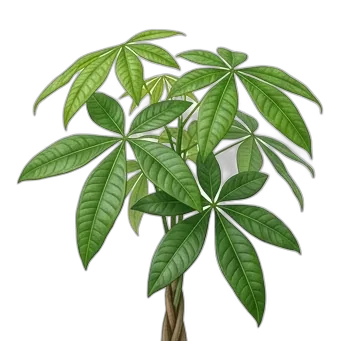
The leaves are palmately compound, typically featuring 7 to 9 (and occasionally up to 11) leathery, obovate leaflets that radiate outward from a central point like the ribs of an umbrella—hence the common name. The juvenile leaves are smaller and glossier, maturing into a deep, dark green. In optimal outdoor conditions or mature indoor settings with intense light, the plant produces inconspicuous, paniculate inflorescences bearing small, umbrella-like clusters of reddish-purple flowers, followed by small, round drupes that ripen to a deep purple. For deep botanical classifications and morphological studies, you can reference the Missouri Botanical Garden Plant Finder.
2. Essential Environmental & Care Requirements
To keep a dwarf umbrella tree thriving, we must replicate its native subtropical microclimate. Let us examine the specific parameters that govern its health:
| Parameter | Optimal Condition | Common Mistake | Why It Matters |
|---|---|---|---|
| Light | Bright, indirect light (4 hours of filtered sun daily) | Placing in deep interior shadows or scorching direct midday sun | Insufficient light causes weak, leggy stems; harsh sun scalds the waxy leaf cuticles. |
| Temperature | 60°F to 75°F (15°C to 24°C) | Exposing to drafts below 50°F (10°C) or AC vents | Sudden temperature drops trigger severe shock, resulting in abrupt leaf drop. |
| Watering | Allow the top 2 to 3 inches (5 to 7.5 cm) to dry completely | Keeping the soil constantly soggy or letting it dehydrate for weeks | Saturated roots develop root rot (Pythium or Phytophthora); extreme drought causes leaf desiccation. |
| Humidity | 50% to 60% relative humidity | Placing near dry heat sources or unmitigated radiators | Low humidity causes crispy leaf margins and invites opportunistic pests like spider mites. |
| Soil | Well-draining, peat-perlite blend (pH 6.0–6.5) | Using dense garden soil without aeration amendments | Compacted soil suffocates roots and retains excess moisture, cutting off oxygen exchange. |
💡 Pro-Tip: When assessing your watering schedule, never rely solely on a moisture meter probe; stick your index finger a full knuckle deep into the soil. If the soil clings coldly at the 2-inch (5 cm) mark, withhold water for another 48 hours.
3. Step-by-Step Cultivation, Feeding & Propagation
Growing Schefflera arboricola successfully involves establishing a predictable maintenance routine. Whether you are potting a nursery starter or propagating a leggy parent plant, follow this structured protocol.
- Select and Prepare the Container: Choose a pot that is only 1 to 2 inches (2.5 to 5 cm) wider in diameter than the current root ball, ensuring it features at least one functional drainage hole at the base.
- Mix the Ideal Substrate: Combine 50% high-quality peat-based potting soil, 25% horticultural perlite or pumice for structural drainage, and 25% coarse organic compost to supply trace minerals.
- Potting and Root Placement: Gently tease apart the outer root mass of your nursery plant to relieve circling roots. Position the plant in the center of the pot at the exact same soil depth it was growing at previously—burying the stem too deeply invites collar rot.
- Establish the Watering Rhythm: Water the newly potted plant thoroughly until water runs freely from the drainage holes. Allow the excess to drain completely before returning the pot to its saucer.
- Implement a Feeding Schedule: Feed your umbrella tree every 4 weeks during the active growing season (spring through late summer) using a balanced, water-soluble houseplant fertilizer diluted to half-strength (e.g., 10-10-10 N-P-K). Cease fertilization entirely between November and February when natural daylight diminishes.
- Execute Pruning and Shaping: Use sterilized bypass pruners to snip stems just above a leaf node. Pruning stimulates lateral bud break, forcing the plant to branch out and develop a dense, bushy canopy rather than a single spindly trunk.
- Propagation via Stem Cuttings: In late spring, take a 4 to 6-inch (10 to 15 cm) terminal stem cutting featuring at least two leaf nodes. Strip the lower leaves, dip the cut end in rooting hormone powder, and insert it into a propagation tray filled with a 1:1 damp perlite and peat mix. Enclose the tray in a clear plastic bag to maintain 90% humidity, keeping it at a consistent 72°F (22°C). Roots will typically form within 21 to 30 days.
⚠️ Important Caution: All parts of the Schefflera arboricola contain insoluble calcium oxalate crystals. If ingested by curious cats, dogs, or small children, these needle-like crystals cause immediate oral irritation, intense burning, excessive drooling, and difficulty swallowing. Always place your plant safely out of reach.
For further scientific insights on managing indoor ornamental plants and preventing physiological disorders, consult the guidelines provided by the Royal Horticultural Society.
4. Common Problems, Pests & Troubleshooting
Even with meticulous care, indoor environments can present challenges. Here is how to diagnose and correct the most common issues plaguing the dwarf umbrella tree:
- Massive, Sudden Leaf Drop: If your plant drops dozens of green or yellow leaves overnight, it is experiencing environmental shock. This is almost invariably caused by a sudden draft of cold air (such as an open winter window or air conditioner vent) or a drastic swing in watering habits. Relocate the plant to a stable thermal zone and maintain consistent moisture.
- Sticky Residue and Sooty Mold: If you notice a clear, sticky substance on the leaves or floor beneath the canopy, inspect the undersides of the leaves for Spider Mites or Aphids, and check the stems for Mealybugs (which look like tiny tufts of white cotton). Wipe down all affected foliage with horticultural soap or neem oil diluted at a rate of 1 teaspoon per quart of warm water, repeating every 7 days for a 3-week cycle to break the pest lifecycle.
- Yellowing Lower Leaves: When older leaves at the bottom of the plant turn a pale yellow and drop gradually over weeks, the culprit is usually natural aging or chronic overwatering that has begun to suffocate the root system. Check the roots; healthy roots are firm and light-colored, whereas rotting roots are brown, mushy, and smell foul. Trim away decayed roots with sterilized shears and repot in fresh, dry medium.
- Leggy, Stretched Stems: Stems stretching aggressively toward a light source with large gaps between leaves indicate severe light deprivation. Move the plant closer to an unobstructed window or supplement with a full-spectrum LED grow light positioned 12 inches (30 cm) above the canopy for 12 hours a day.

5. Frequently Asked Questions
Can I grow an umbrella tree outdoors year-round?
You can cultivate Schefflera arboricola outdoors year-round only if you reside in USDA Hardiness Zones 10 through 12, where freezing temperatures never occur. In cooler climates, you can move the container outdoors onto a shaded patio for the summer months, provided you bring it back indoors before nighttime temperatures dip consistently below 50°F (10°C).
Why are the leaves on my umbrella tree turning black?
Blackening leaves are a definitive sign of severe tissue damage, typically caused by one of two factors: overwatering that has triggered advanced root rot and subsequent fungal collapse, or chilling injury from frost or freezing drafts. Inspect the root system immediately; if the roots are rotted, salvage healthy stem cuttings to propagate a new plant while discarding the damaged specimen.
How do I fix a leaning or top-heavy umbrella tree?
As umbrella trees mature, their canopies often outgrow their root systems or lean toward ambient light sources. To correct this, repot the plant into a heavier ceramic or terracotta container using a dense potting mix to add physical ballast. Stake the primary trunk securely to a green bamboo cane using soft plant ties, and rotate the pot 90 degrees every single week to ensure even, symmetrical light exposure.
Should I mist my umbrella tree to increase humidity?
While manual misting provides a fleeting spike in humidity, it rarely solves dry indoor air issues and can actually encourage fungal leaf spot diseases if water sits on the foliage for extended periods. Instead, place your umbrella tree on a wide pebble tray filled with water (ensuring the bottom of the pot stays above the water line) or run a cool-mist humidifier in the room to maintain a steady ambient humidity level.
📋 Table of Contents ▼ Click to expand
Tags: