
Sago Palm
Cycas revoluta
Years ago, while redesigning a coastal courtyard in Charleston, South Carolina, I inherited a pair of massive, symmetrical Sago Palms flanking a grand entranceway. The previous owner watered them daily with the lawn sprinklers, leaving their lower fronds a sickly, chlorotic yellow and their woody trunks rotting at the soil line. I had to unearth both specimens, excise six inches of decaying caudex with a sterile pruning saw, dust the wounds with sulfur powder, and completely restructure the surrounding drainage beds. That rescue mission taught me a foundational truth that every gardener must understand: the Sago Palm (Cycas revoluta) is an indestructible desert-survivor disguised as a tropical lush palm, and it will perish faster from too much love than from outright neglect.
1. Botanical Overview & Natural Habitat

Native to the warm, rocky scrublands, coastal cliffs, and open forests of southern Japan—particularly the Ryukyu Islands—its natural habitat provides a blueprint for successful cultivation. In the wild, these plants anchor themselves in shallow, coarse, highly mineralized soils derived from weathered limestone or volcanic rock. Rainfall is seasonal, and because these soils possess virtually zero water-retention capacity, the roots are subjected to wet-and-dry cycles followed by intense, baking sun and stiff, salt-laden ocean breezes.
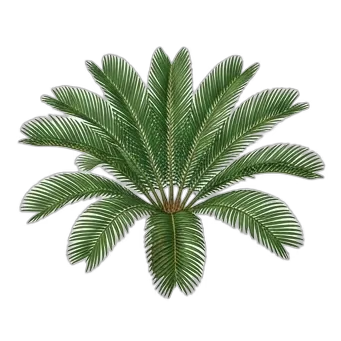
The plant features a stout, shaggy, cylindrical trunk known as a caudex, which grows exceptionally slowly—often less than 1 inch (2.5 cm) per year. This woody stem acts as a biological reservoir, storing starches and water to sustain the plant through prolonged droughts. From the apex of this trunk emerges a rigid, symmetrical crown of pinnate fronds that can span 3 to 6 feet (0.9 to 1.8 m) across. Each individual leaflet is stiff, sharply pointed, and features rolled-under (revolute) margins—an evolutionary adaptation designed to minimize transpirational moisture loss in arid environments.
Because they are dioecious, individual plants are strictly male or female. Mature specimens produce massive, distinct reproductive structures once they reach roughly 10 to 15 years of age. Male plants push up a striking, upright, cone-shaped strobili that can reach 24 inches (61 cm) in height, releasing golden pollen. Female plants develop a flattened, woolly, pineapple-like megasporophyll structure in the center of the crown that cradles large, bright red-orange seeds if successfully pollinated.
| Parameter | Optimal Condition | Common Mistake | Why It Matters |
|---|---|---|---|
| Soil Drainage | Rapid percolation; gritty, sandy loam mix | Using heavy, moisture-retentive garden clay | Standing water suffocates roots and triggers fatal Phytophthora root rot. |
| Light Exposure | 6+ hours of direct sun or bright southern exposure | Growing in deep, dark indoor corners | Low light causes weak, elongated, etiolated fronds that snap easily. |
| Watering Frequency | Allow top 3 to 4 inches (7.6 to 10 cm) to dry completely | Keeping soil consistently damp like a fern | Sago caudex rots rapidly if moisture is locked against the trunk base. |
| Temperature Range | 65°F to 95°F (18°C to 35°C); survives down to 15°F (-9.4°C) | Exposing to hard freezes below 10°F (-12°C) without protection | Severe freezing ruptures cellular walls in the caudex, turning the interior to mush. |
2. Essential Environmental & Care Requirements
Recreating the harsh, sun-drenched native cliffs of Japan within your home or landscape requires a strict adherence to environmental controls.
Light is the primary driver of compact, robust growth. Outdoors, Sago Palms thrive in full sun, though in scorching desert climates like Phoenix or Las Vegas, they appreciate light afternoon shade to prevent foliar bleaching. Indoors, place them directly in front of a south- or west-facing window where they receive unobstructed sunlight for at least 6 hours daily. If you must use artificial illumination, position a high-output LED grow light within 12 inches (30 cm) of the canopy for 12 to 14 hours per day.
Temperature tolerance is remarkably broad, but context matters. As established landscape specimens in USDA Hardiness Zones 8b through 11, they easily endure summer highs exceeding 105°F (40.5°C). When temperatures dip below 20°F (-6.7°C), the outermost fronds may sustain cosmetic cold damage, but the growing tip often survives down to 15°F (-9.4°C) if the root zone is heavily mulched. Potted specimens brought indoors for winter should be kept away from forced-air heating vents and cold drafty entryways; maintain ambient indoor temperatures between 55°F and 75°F (13°C and 24°C).
Watering must follow a strict "soak and dry" protocol. Insert your index finger 3 inches (7.6 cm) into the soil mix. If it feels even slightly cool or damp, withhold water entirely. When the soil is bone-dry at that depth, saturate the pot until water streams freely from the drainage holes, then empty the saucer within 15 minutes. Never let a Sago Palm sit in standing water. During the active growing season of spring and summer, this watering cycle typically occurs every 10 to 14 days outdoors, or every 14 to 21 days indoors. In winter, reduce watering frequency by half.
Soil composition must prioritize aeration above all else. A standard potting mix straight from the bag is a death sentence. Blend equal parts coarse builder's sand, perlite or pumice, and aged pine bark or organic compost. This creates large pore spaces that allow oxygen to reach the root network while preventing compaction over years of growth.
💡 Pro-Tip: When planting a Sago Palm in the ground, always ensure the top of the woody caudex sits 1 to 2 inches (2.5 to 5 cm) above the surrounding soil grade. Sinking the trunk below ground level invites surface moisture to pool directly against the crown, which is the number one cause of sudden, unrecoverable trunk rot in landscape settings.
3. Step-by-Step Cultivation, Feeding & Propagation
Cultivating healthy cycads requires patience and precision. Whether you are potting a nursery specimen or propagating offsets (pups) from a mature plant, follow this structured methodology.
- Select the Container and Medium: Choose a heavy terra-cotta or ceramic pot that is only 2 inches (5 cm) wider in diameter than the current root mass. Terracotta is porous, which helps wick excess moisture away from the roots. Fill it with a fast-draining blend of 40% coarse sand, 40% perlite, and 20% organic compost.
- Inspect and Prepare the Plant: Unpot your Sago Palm and gently tease away old, compacted peat moss from the root ball using your fingers or a hori-hori knife. Cut away any black, mushy, or brittle roots using shears sterilized in a 10% bleach solution or rubbing alcohol.
- Position and Plant: Set the plant in the center of the new container, making certain the upper root flare and base of the caudex remain entirely above the soil line. Firmly tamp the gritty soil mix around the perimeter roots to eliminate large air pockets, leaving a 1-inch (2.5 cm) watering gap at the top of the pot.
- Initial Watering and Settlement: Drench the soil thoroughly with tepid water until it flows clear from the bottom. Once the soil settles, top up any depressions with extra soil mix, ensuring the trunk base remains elevated.
- Establish a Feeding Regimen: Wait 30 days after repotting before applying any fertilizer. Once established, apply a slow-release, balanced palm fertilizer (such as an 8-2-12 formulation containing added micronutrients like magnesium, manganese, and iron) every 60 days from early spring through late summer. Apply the granules evenly across the soil surface at a rate of 1 tablespoon per foot of canopy spread, then water in thoroughly. Cease all fertilization completely from October through February to encourage dormancy.
- Propagating Pups (Offsets): Mature Sago Palms naturally produce basal offsets, commonly called "pups," around the base of the main trunk or occasionally along the upper caudex. In mid-spring, slice a firm, baseball-sized pup away from the parent trunk using a sharp, sterilized saw blade, cutting as close to the main stem as possible. Allow the excised basal wound to callous over in a shaded, dry area for 7 to 10 days until the cut surface turns corky and white. Dip the base in rooting hormone powder, and plant the pup 2 inches (5 cm) deep in a small pot filled with pure, damp perlite. Keep the perlite lightly moist in bright, indirect light; robust root systems will form within 90 to 120 days.
⚠️ Important Caution: Every single part of the Sago Palm—especially the bright red seeds—contains toxic cycasin and beta-methylamino-L-alanine (BMAA) neurotoxins. Ingestion by dogs, cats, or humans causes severe liver failure, vomiting, coagulopathy, and frequently death. Always wear heavy leather gloves and protective eyewear when pruning sharp fronds, wash your hands thoroughly afterward, and site the plant strictly out of reach of household pets and small children. For official clinical data on cycad toxicosis, consult resources provided by the ASPCA Animal Poison Control Center.
4. Common Problems, Pests & Troubleshooting
Diagnosing issues on a Sago Palm requires reading the physical signals written directly on its foliage and trunk.
Yellowing Lower Fronds: If the oldest, lowest fronds turn bright yellow and eventually brown and papery, do not panic. This is normal cellular senescence; the plant redirects energy from aging fronds to fuel new growth at the apex. Simply prune them off flush with the trunk using clean shears once they are completely brown. However, if all fronds turn yellow simultaneously, you are dealing with either overwatering (root suffocation) or a severe magnesium deficiency. Check the soil moisture immediately.
Brown Leaf Tips and Margins: Crisp, brown leaf tips almost universally point to low relative humidity combined with underwatering or excess chemical fertilizer salts accumulating in the soil. Flush the potting mix by running a high volume of plain water through the container for five minutes to leach out mineral salts, and trim away dead tips with clean scissors, cutting at a natural angle to mimic the leaflet shape.
Scale Insects and Mealybugs: The armored scale insect (Aulacaspis yasbumai, commonly known as the Sago Palm Scale) is the most devastating pest threat to Cycas revoluta. These microscopic pests appear as white, cottony, or hard crusty encrustations along the undersides of fronds and deep within the crevices of the woody trunk. They feed on plant sap, causing the fronds to bleach, wither, and drop prematurely. To eradicate an infestation, scrub the trunk and frond undersides with a soft-bristled brush dipped in a solution of warm water and insecticidal soap or horticultural oil (such as neem oil). For persistent infestations, systemic insecticides containing imidacloprid applied as a soil drench offer long-term protection. For broader horticultural guidance on managing palm and cycad pests in residential landscapes, refer to the University of Florida IFAS Extension.

5. Frequently Asked Questions
Why is my Sago Palm turning yellow?
Simultaneous yellowing across the entire canopy is typically caused by root rot from poorly draining soil, overwatering, or a severe deficiency in essential micronutrients like magnesium and iron. Check the root zone for soggy conditions, adjust your watering schedule, and apply a specialized palm fertilizer containing trace minerals.
Are Sago Palms poisonous to dogs?
Yes, all parts of the Sago Palm are intensely toxic to dogs, cats, horses, and humans. The seeds contain the highest concentration of the toxin cycasin, which causes acute liver failure, vomiting, lethargy, and internal bleeding. Ingestion is a veterinary medical emergency requiring immediate intervention.
How fast do Sago Palms grow?
Sago Palms are exceptionally slow-growing specimens. In ideal outdoor conditions, they typically add only 1 to 2 inches (2.5 to 5 cm) of vertical trunk height per year. A flush of new leaves (a "flush") occurs once or occasionally twice annually during the warmest summer months, producing a ring of dozens of new fronds simultaneously.
Can I grow a Sago Palm indoors?
Yes, Sago Palms make striking indoor accent plants provided they receive maximum light exposure. Place them directly in front of a south-facing window where they get direct sun, use an extremely gritty, fast-draining potting mix, and allow the soil to dry out thoroughly between waterings to prevent indoor root rot.
📋 Table of Contents ▼ Click to expand
Tags: