

Rat Tail Cactus
Aporocactus flagelliformis
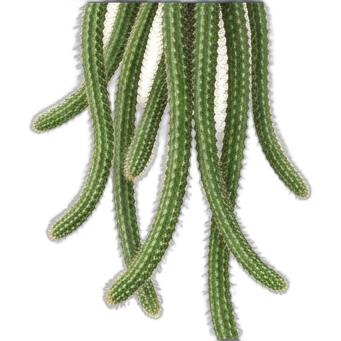
I almost threw out my first Aporocactus flagelliformis back in November 2014. It was sitting in a standard, heavy ceramic pot on a deep windowsill, and the trailing stems—barely 12 inches (30 cm) long at the time—had started turning a dull, chlorotic yellow at the tips. I assumed it was rotting from overwatering. When I unpotted it, the root ball was bone dry and densely compacted, suffocating in dense peat. That rescue mission taught me everything I know about the Rat Tail Cactus: it demands immaculate drainage, high-intensity ambient light, and a precise winter resting period to do what it does best—produce electric, magenta-pink flowers that look entirely too tropical for a desert plant.
1. Botanical Overview & Natural Habitat

The stems are a vibrant mid-to-light green, featuring 10 to 14 low ribs that are densely covered in tiny, spine-filled aureoles. These hairs-like spines are golden-brown to grayish, soft to the touch compared to its more defensive desert cousins, though they can still cause skin irritation if handled bare-handed.
💡 Pro-Tip: Do not let the soft, hair-like spines fool you into handling this plant casually. Those microscopic glochids will transfer to your skin with the slightest brush; always wear thick nitrile or leather gloves when pruning or repotting.
From a design perspective, the architecture of Aporocactus flagelliformis makes it unmatched for hanging baskets, high plant stands, or trained over wall mounts. Because its stems grow rapidly—often putting on 12 inches (30 cm) or more of new growth in a single season under ideal conditions—it creates a living green waterfall that softens architectural lines in modern and rustic spaces alike.
For further botanical classification details, consult the Royal Horticultural Society Plant Finder.
2. Essential Environmental & Care Requirements
Replicating the cliff-side habitat of Mexico requires balancing light, substrate composition, and thermal thresholds.
Light
This plant demands bright, direct sunlight to maintain thick, vigorous stems and set flower buds. Provide a minimum of 6 hours of direct sun daily. An unobstructed south-facing or west-facing window is ideal. If grown indoors under insufficient light, the stems will etiolate—growing thin, pale, and weak-stemmed. Conversely, if transitioning a greenhouse-grown plant to an outdoor summer spot, introduce direct sun gradually over 14 days to prevent severe epidermal scorching.
Temperature & Humidity
Aporocactus is native to tropical and subtropical semi-arid regions. During its active growing season from April through September, it thrives in daytime temperatures between 70°F and 85°F (21°C to 29°C). Nighttime drops to 55°F (13°C) are well-tolerated and even beneficial.
Crucially, this cactus requires a cool winter rest period (dormancy) to trigger spring flowering. Keep winter temperatures between 45°F and 55°F (7°C to 13°C). Never expose the plant to sustained temperatures below 35°F (1.5°C), as cell walls will rupture, resulting in irreversible rot.
Substrate & Potting
Because of its epiphytic tendencies in nature, standard potting soil is a death sentence. The mix must be exceptionally porous, draining completely within 5 seconds of saturation. A reliable commercial cactus and succulent mix amended with 40% inorganic materials—such as pumice, coarse perlite, and horticultural charcoal—prevents compaction and ensures rapid oxygen exchange at the root zone.
| Parameter | Optimal Condition | Common Mistake | Why It Matters |
|---|---|---|---|
| Light | 6+ hours of direct sun daily | Placing in a dim interior room | Causes weak, pale etiolation and prevents flowering |
| Substrate pH | 6.0 to 6.5 (slightly acidic) | Heavy, unamended garden loam | Induces root rot by retaining moisture too long |
| Winter Temp | 45°F – 55°F (7°C – 13°C) | Keeping in heated, warm living rooms | Inhibits the hormonal shift required for spring blooms |
| Watering Depth | 100% saturation until runoff | Frequent, shallow sips | Causes shallow root development and structural collapse |
For additional guidance on regional succulent hardiness and regional care modifications, reference the University of Florida IFAS Extension.
3. Step-by-Step Cultivation, Feeding & Propagation
Mastering the lifecycle of the Rat Tail Cactus relies on respecting its seasonal rhythm: aggressive growth in spring and summer, followed by a strict dormancy in winter.
Step-by-Step Cultivation & Watering Protocol
- Spring Awakening (March – April): Move the plant to its brightest indoor or outdoor location. Resume watering only after you observe the first signs of swelling new stem tips or tiny pink bud nodes emerging along the old growth.
- The Soak-and-Dry Cycle (May – August): Water deeply until water runs freely out of the container’s drainage holes. Allow the top 2 inches (5 cm) of soil to dry completely before watering again. During peak summer heat, this typically translates to watering every 7 to 10 days.
- Fertilization Routine: Feed every 3 weeks during active growth using a balanced, water-soluble fertilizer formulated for cacti and succulents, diluted to half strength (e.g., 5-10-5 NPK ratio). Cease all fertilization completely by September 1st.
- Winter Dry Down (November – February): Reduce watering to a bare minimum—just enough moisture once every 30 to 45 days to prevent the stems from shriveling severely. Keep the plant in its cool winter location.
Propagation by Stem Cuttings
The Rat Tail Cactus propagates with exceptional reliability through stem cuttings.
- Select and Cut: In late spring, use a sterilized, sharp razor blade to cut a healthy, pest-free stem segment measuring 4 to 6 inches (10 to 15 cm) long. Make a clean cut just below an node.
- Callus: Place the cutting horizontally or vertically in a shaded, well-ventilated room for 5 to 7 days. The cut end must form a hard, dry callus to prevent soil pathogens from entering.
- Planting: Fill a shallow tray or small nursery pot with a dry, sterile propagation mix consisting of equal parts perlite and peat-free potting soil. Insert the callused end 1 inch (2.5 cm) deep into the medium. If the stem is too long to stand upright, lay it flat horizontally across the surface, pressing it lightly into the mix.
- Rooting Phase: Keep the substrate barely damp by misting every 4 to 5 days. Roots and tiny new branchlets typically emerge within 21 to 30 days, at which point you can transition the young plant to standard care.
⚠️ Important Caution: Never fertilize a freshly propagated cutting or a newly repotted cactus. Forcing synthetic nutrients into an unrooted or recovering root system will cause chemical burn and rot. Wait at least 6 weeks post-repotting before applying any fertilizer.
4. Common Problems, Pests & Troubleshooting
Even experienced growers encounter hiccups with Aporocactus flagelliformis. Early identification solves most issues before permanent damage sets in.
Stem Rot (Basal or Mid-Stem)
- Symptoms: Stems turn translucent, mushy, black, or brown, starting either at the soil line or from over-saturation higher up.
- Cause: Overwatering combined with poor drainage, heavy soil, or low light temperatures.
- Correction: Cut away all affected tissue using a sterilized blade, cutting 1 inch (2.5 cm) into healthy green flesh. Dust the wound with powdered sulfur or cinnamon as a natural antifungal agent, let callus for 7 days, and restart propagation.
Pests: Mealybugs and Red Spider Mites
- Symptoms: Cottony, white web-like masses in the crevices of the ribs (mealybugs) or a fine, dusty, yellow-bronze stippling across the stem epidermis (spider mites).
- Cause: Low indoor humidity and stagnant air circulation.
- Correction: Isolate the plant immediately. Spray thoroughly with insecticidal soap or 70% isopropyl alcohol applied via a spray bottle, targeting every aureole. Repeat treatment every 7 days for 3 consecutive weeks to break the pest lifecycle.
Failure to Bloom
- Symptoms: The plant grows long, healthy green stems year after year, but produces zero flowers in spring.
- Cause: The plant was kept in a warm room (above 60°F / 15°C) all winter, or lacked sufficient direct sunlight during the previous summer.
- Correction: Enforce a strict winter rest period in a cool room (45°F–55°F / 7°C–13°C) with zero fertilizer and minimal water, followed by a move to full sun in early spring.

5. Frequently Asked Questions
Why is my Rat Tail Cactus turning purple or red?
A purplish or reddish flush on the green stems is usually a protective stress response. It is most commonly caused by a sudden increase in direct sunlight (sun stress) or exposure to temperatures dropping below 50°F (10°C). If the stems remain firm and plump, the coloration is harmless and often precedes heavy flowering. However, if the stems are also shriveled, the color change indicates cold damage or severe dehydration.
How often should I repot a Rat Tail Cactus?
Repotting is required every 2 to 3 years, preferably in early spring just as new growth initiates. Choose a container only 1 to 2 inches (2.5 to 5 cm) wider than the previous pot, as oversized pots retain excess moisture and encourage root rot. Because the trailing stems break easily, have a helper hold the stems up and away while you work around the root ball.
Can I grow a Rat Tail Cactus outdoors year-round?
You can only grow Aporocactus flagelliformis outdoors year-round if you live in USDA Hardiness Zones 10 through 11. In these frost-free climates, protect it from intense afternoon sun by hanging it under a shaded patio roof or tree branch where it receives morning sun. In all other zones, bring the plant indoors before the first autumn frost drops temperatures below 40°F (4.5°C).
Are Rat Tail Cacti toxic to pets?
No, Aporocactus flagelliformis is non-toxic to cats, dogs, and horses according to the ASPCA. However, the physical danger lies in the fine, needle-like spines, which can lodge in a curious pet's mouth, nose, or paws, causing mechanical irritation and inflammation. Always hang or place the plant well out of reach of inquisitive pets and toddlers.
📋 Table of Contents ▼ Click to expand
Tags:





