
Peperomia Rosso
Peperomia caperata 'Rosso'

1. Botanical Overview & Natural Habitat
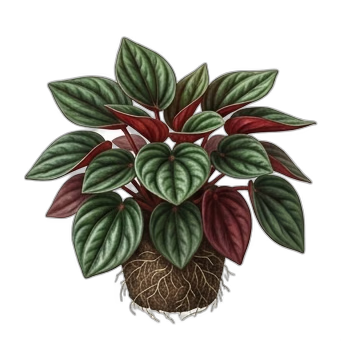
Peperomia caperata 'Rosso' is a striking horticultural hybrid mutation, prized primarily for its dramatic bi-colored leaves. The upper surface features deeply textured, corrugated emerald-green leaves with a subtle metallic sheen, while the undersides reveal a vibrant, glowing ruby-red or maroon coloration. Botanically, it belongs to the Piperaceae (pepper) family, sharing distant ancestral ties with the culinary black pepper plant (Piper nigrum).
Unlike its climbing or trailing cousins, Rosso exhibits a dense, rosette-forming, mound-building growth habit. Mature specimens typically reach a height of 6 to 8 inches (15 to 20 cm) with a spread of 8 to 10 inches (20 to 25 cm). During the peak of spring and summer, it frequently produces slender, reddish-brown floral spikes that resemble upright rat-tails or incense sticks. These non-showy inflorescences are botanically fascinating, consisting of tiny, densely clustered, petalless flowers.
In its natural habitat, Peperomia Rosso traces its lineage to the humid, shaded tropical rainforests of Central and South America. However, because of its epiphytic and lithophytic tendencies in the wild, it rarely grows directly in dense, waterlogged jungle floor soil. Instead, it anchors itself into the shallow, organic debris accumulated in tree bark crevices or mossy rock ledges. This evolutionary history dictates everything about how we must cultivate it indoors: it demands high ambient humidity paired with exceptionally fast-draining, highly aerated root zones that dry out rapidly between watering events.
For further botanical classification data and taxonomy details, you can consult the Royal Horticultural Society Plant Finder.
2. Essential Environmental & Care Requirements
Mastering the indoor cultivation of Peperomia Rosso comes down to replicating the microclimate of a high-altitude tropical canopy: bright, filtered sunlight, warm ambient temperatures, and alternating cycles of moisture and air circulation at the root level.
| Parameter | Optimal Condition | Common Mistake | Why It Matters |
|---|---|---|---|
| Light | Bright, indirect light (10,000 to 15,000 lux) | Direct midday sun or deep shade | Too much sun burns leaves; too little flattens out the red coloration. |
| Temperature | 65°F to 80°F (18°C to 27°C) | Exposure below 50°F (10°C) or cold drafts | Cold shock causes sudden leaf drop and cellular collapse in succulent stems. |
| Humidity | 50% to 60% relative humidity | Stagnant, bone-dry air (<30%) | Low humidity stunts growth and invites spider mites; stagnant air breeds fungus. |
| Soil pH | Slightly acidic to neutral (6.0 to 6.8) | Heavy garden loam or dense peat mixes | Compacted soil starves roots of oxygen, directly causing root rot. |
Light
Provide your Peperomia Rosso with bright, indirect light for 10 to 12 hours daily. An east-facing windowsill or a spot set 3 to 4 feet (90 to 120 cm) back from a south- or west-facing window is ideal. While it tolerates lower light levels, you will notice the striking ruby undersides fade to a dull green, and the compact rosette will stretch uncomfortably toward the light source.
Temperature & Airflow
Keep ambient temperatures stable between 65°F and 80°F (18°C to 27°C). Never allow temperatures to drop below 50°F (10°C), as tropical epiphytes suffer severe cellular damage from prolonged chill. Furthermore, ensure gentle, indirect air circulation in your plant room. Stagnant air combined with damp soil is a primary trigger for fungal leaf spots.
⚠️ Important Caution: Never place your Peperomia Rosso directly over an active heating vent or immediately adjacent to a drafty winter window. Rapid thermal fluctuations cause the thick, succulent leaves to curl and drop prematurely.
Watering Protocol
The single most critical rule of Peperomia care is the "soak and dry" method, applied with restraint. Because the leaves and stems store water, the plant behaves semi-succulently.
- Insert your index finger 2 inches (5 cm) deep into the potting mix.
- If the soil feels completely dry at that depth, it is time to water.
- If any moisture remains, wait another 3 to 5 days and check again.
- When watering, drench the soil thoroughly until water runs freely through the drainage holes, then empty the saucer within 15 minutes. Never let the pot sit in standing water.
3. Step-by-Step Cultivation, Feeding & Propagation
Repotting and propagating Peperomia Rosso requires a delicate touch due to its fragile, brittle root systems and succulent foliage.
Soil Formulation
Avoid standard, heavy potting soils. Mix a custom substrate consisting of:
- 40% high-quality organic potting soil or coco coir
- 30% perlite or pumice (for structural aeration)
- 20% orchid bark (to mimic epiphytic bark attachment)
- 10% worm castings (for slow-release micronutrients)
Step-by-Step Repotting & Propagation Sequence
- Select the Right Container: Choose a pot that is only 1 to 2 inches (2.5 to 5 cm) wider in diameter than the current root ball. Peperomis actually prefer being slightly root-bound; oversized pots hold excess moisture that rots the roots. Ensure the container has at least one large drainage hole.
- Gently Unpot the Specimen: Tilt the plant sideways, gently squeeze the nursery container, and slide the root ball out. Support the base of the stems with your palm to prevent snapping the brittle leaf stalks.
- Inspect and Prune Roots: Tease apart the outer roots with your fingers. Use sterilized pruning shears to snip away any brown, mushy, or hollow roots.
- Plant at the Correct Depth: Set the plant into the fresh, pre-moistened soil mix, ensuring the base of the stem sits at the exact same soil level it did previously. Burying the stem too deeply invites stem rot.
- Execute Leaf-Cutting Propagation (Spring/Summer): Select a healthy, mature leaf with a 1-inch (2.5 cm) petiole (stem) attached. Using a sterile razor blade, slice the leaf cleanly. You can either plant the petiole directly into a propagation tray filled with damp perlite, or slice the leaf blade horizontally across the veins and pin the sections flat onto moist sphagnum moss.
- Provide Bottom Heat and Humidity: Enclose propagation cuttings in a clear plastic dome or bag to maintain 80% humidity. Place them in bright, indirect light at a constant temperature of 75°F (24°C). Roots and tiny plantlets will emerge from the cut sites within 30 to 45 days.
Fertilization
Feed sparingly. Peperomia Rosso is a light feeder. Dilute a balanced, liquid houseplant fertilizer (such as a 10-10-10 or specialized foliage formula) to one-quarter strength. Apply this solution once every 4 weeks strictly during the active growing season (spring through late summer). Withhold all fertilizer entirely during autumn and winter when growth naturally pauses.
💡 Pro-Tip: If your tap water is hard or heavily chlorinated, let it sit uncovered in a watering can for 24 hours before applying it to your Peperomia. Alternatively, use rainwater or distilled water. High mineral salt accumulation quickly burns the delicate, shallow root tips, manifesting as brown leaf margins.
4. Common Problems, Pests & Troubleshooting
Even with meticulous care, indoor environments can throw curveballs. Identifying symptoms early prevents minor issues from becoming fatal.
Root and Stem Rot (Pythium and Phytophthora)
- Symptoms: Lower leaves turn translucent, yellow, and mushy; stems become water-soaked and black at the soil line; the entire plant may suddenly collapse overnight.
- Cause: Overwatering combined with heavy, oxygen-depleted soil and low light.
- Solution: Unpot the plant immediately. Wash away the rotten soil, prune away all decayed root tissue with sterilized shears, and dust the remaining healthy roots with horticultural cinnamon or a copper-based fungicide. Repot into fresh, dry, fast-draining soil and reduce watering frequency by half.
Edema (Corking)
- Symptoms: Raised, corky, wart-like blisters or scabs forming on the undersides of the leaves.
- Cause: Irregular watering cycles—specifically, keeping the soil saturated for too long after a heavy drought, causing root pressure to rupture individual leaf cells.
- Solution: Standardize your watering routine. Allow the soil to dry out between waterings, but never let the plant experience extreme dehydration followed by sudden, heavy saturation.
Pests: Mealybugs and Spider Mites
- Symptoms: White, cottony masses tucked into leaf joints and crevices (mealybugs), or fine, dusty webbing across the growing tips accompanied by stippled, pale foliage (spider mites).
- Cause: Low indoor humidity and warm, dry air.
- Solution: Isolate the affected plant immediately. Wipe down all stems and leaf undersides with a cotton swab dipped in 70% isopropyl alcohol. For stubborn infestations, thoroughly spray the foliage with insecticidal soap or horticultural neem oil, ensuring you reach every crevice. Repeat every 7 days for three cycles to break the pest lifecycle.

5. Frequently Asked Questions
Why are the leaves on my Peperomia Rosso turning yellow?
Yellow leaves on a Peperomia Rosso almost always point to root stress, most commonly caused by overwatering and subsequent root rot. When the roots suffocate in soggy soil, they can no longer transport water and nutrients upward, causing lower foliage to yellow and drop. Less frequently, yellowing can result from sudden cold drafts or natural senescence of the oldest leaves at the base of the plant. Check your soil moisture immediately: if the soil is wet, withhold water and improve aeration.
Is Peperomia Rosso toxic to cats and dogs?
No, Peperomia caperata 'Rosso' is classified as non-toxic to cats, dogs, and horses by the ASPCA. It contains no harmful calcium oxalate crystals or toxic alkaloids. You can display this plant safely in households with curious pets, though it is still wise to keep it elevated out of reach to protect the delicate stems from being accidentally snapped by playful paws.
How do I make the red color on the underside brighter?
The vibrant ruby coloration on the underside of your plant's leaves is directly tied to light intensity. If the red color is fading or washing out to a pale green, your plant is not receiving enough light. Move the plant closer to an east- or bright west-facing window where it receives several hours of bright, indirect sunlight daily. Be careful not to introduce direct, scorching midday sun, which will bleach the green upper surface and cause sunburn.
Why is my Peperomia Rosso drooping?
Drooping foliage typically indicates one of two extreme conditions: severe underwatering or advanced root rot. Examine the soil: if the potting mix is bone-dry and shrunk away from the sides of the pot, the plant is simply thirsty and will typically bounce back within 12 to 24 hours after a thorough soaking. If the soil is wet and the stems feel soft or mushy at the base, the root system has rotted away and can no longer support the weight of the plant, requiring emergency propagation from healthy stem cuttings.
📋 Table of Contents ▼ Click to expand
Tags: