

Peperomia Frost
Peperomia caperata 'Frost'
1. Botanical Overview & Natural Habitat

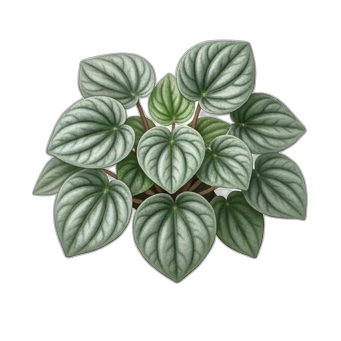
Unlike scrambling epiphytes that climb high into the canopy, Peperomia Frost is a compact, evergreen perennial that grows in a dense, mounding rosette. It typically reaches a mature height of 6 to 10 inches (15 to 25 cm) with an equal or slightly wider spread. The leaves are the plant's defining feature: thick, succulent, cordate (heart-shaped), and deeply corrugated with pronounced puckering (caperata means wrinkled). A heavy dusting of silvery-white pubescence covers the upper surface of each leaf, giving it a frosted, iridescent appearance that contrasts sharply with its pale green undertones and reddish-green stems.
In its native habitat, Peperomia Frost receives filtered, dappled sunlight filtered through layers of dense tropical foliage. It grows in loose, highly organic leaf litter that drains exceptionally fast after tropical downpours. Understanding this natural microclimate is the secret to replicating its success indoors. It is a semi-succulent plant, meaning it stores water within its fleshy leaves and stems, allowing it to survive brief dry spells between rainfall events. This evolutionary trait dictates every aspect of our cultivation protocol, from soil composition to irrigation frequency.
2. Essential Environmental & Care Requirements
Mastering the indoor environment for Peperomia Frost requires balancing light, moisture, and temperature to mimic its native tropical understory. Because this plant possesses succulent-like foliage, its environmental tolerances are much narrower regarding root rot than drought.
Light
Provide bright, indirect light for 10 to 14 hours daily. An east-facing windowsill or a spot a few feet back from a south- or west-facing window is ideal. Avoid direct midday sun, as the intense UV rays will scorch the delicate silvery leaves, leaving unsightly brown patches. Conversely, placing the plant in deep shade will cause the silvery coloration to fade into a dull, flat green, and the stems will stretch out uncharacteristically in search of light.
Temperature and Humidity
Maintain ambient temperatures between 65°F and 80°F (18°C to 27°C). Peperomia Frost is sensitive to cold drafts and will suffer cellular damage if exposed to temperatures dropping below 50°F (10°C). While it tolerates average household humidity around 40%, it thrives magnificently when ambient humidity is kept between 50% and 60%. If your home air is dry, especially during winter heating cycles, group it with other tropicals or place it on a pebble tray filled with water, ensuring the pot's base sits above the waterline.
Watering Protocol
Allow the top 2 inches (5 cm) of the soil mix to dry out completely before watering again. When irrigating, water thoroughly until it runs freely through the drainage holes, then discard any excess standing water in the saucer after 15 minutes. Never let the pot sit in standing water.
| Parameter | Optimal Condition | Common Mistake | Why It Matters |
|---|---|---|---|
| Light | Bright, indirect light (10–14 hrs/day) | Direct midday sun | Direct sun scorches the succulent leaves and ruins the silvery coloration. |
| Soil pH | Slightly acidic to neutral (6.0–6.8) | Heavy, dense garden soil | Compacted soil starves roots of oxygen and retains too much moisture. |
| Watering | Dry top 2 inches (5 cm) before watering | Frequent, shallow sips | Shallow watering encourages weak root growth near the surface. |
| Temperature | 65°F–80°F (18°C–27°C) | Exposure to drafts below 50°F (10°C) | Cold drafts shock the plant, leading to rapid defoliation and root collapse. |
For detailed guidance on indoor plant environmental baselines, you can consult the University of Florida IFAS Extension.
3. Step-by-Step Cultivation, Feeding & Propagation
Successful long-term cultivation of Peperomia Frost relies on proper potting mechanics, a measured fertilization schedule, and utilizing its remarkable ability to propagate from leaf cuttings.
Soil Formulation
Create an airy, highly porous potting mix. Combine 50% high-quality peat-based potting soil or coco coir, 25% perlite or pumice for drainage, and 25% orchid bark or horticultural charcoal to ensure maximum oxygen diffusion around the root zone.
Feeding Schedule
Because Peperomia Frost is a slow-to-moderate grower, it is a light feeder. Dilute a balanced, water-soluble houseplant fertilizer (such as a 10-10-10 formula with micronutrients) to one-quarter strength. Apply this solution once every 4 weeks strictly during the active growing season (spring through summer). Withhold all fertilizer completely from late autumn through winter when the plant enters semi-dormancy.
Step-by-Step Leaf-Cutting Propagation Sequence
Propagation is remarkably reliable when performed correctly during the spring growing season.
- Select Healthy Material: Choose a firm, fully mature, undamaged leaf from the upper portion of the plant. Using a sterile razor blade or sharp pruning shears, cut the leaf away, leaving approximately 1 inch (2.5 cm) of the petiole (stem) attached.
- Prepare the Callus: Lay the cutting flat on a clean paper towel and let it sit in a warm, shaded location for 12 to 24 hours. This allows the cut surface to seal, preventing fungal pathogens from entering the tissue.
- Set Up the Propagation Medium: Fill a small nursery tray or 3-inch (7.5 cm) pot with a pre-moistened, sterile propagation mix consisting of 50% perlite and 50% peat moss.
- Plant the Cuttings: Insert the petiole at a 45-degree angle into the medium, burying the stem about 0.5 inches (1.3 cm) deep while keeping the leaf blade resting just above the soil surface. Alternatively, you can lay the leaf flat with slits cut across the main veins.
- Create a Humidity Chamber: Cover the container with a clear plastic dome or bag to lock in moisture, ensuring the plastic does not touch the leaf surface directly. Place the setup in bright, indirect light at 70°F to 75°F (21°C to 24°C).
- Monitor and Transplant: Mist the medium lightly whenever the surface feels dry to the touch. Tiny plantlets with roots will emerge from the base of the petiole within 30 to 45 days. Once the new plantlets reach 1 to 2 inches (2.5 to 5 cm) in height, gently separate them from the parent leaf and pot them individually into standard Peperomia soil mix.
💡 Pro-Tip: When potting or repotting Peperomia Frost, choose a container that is only 1 inch (2.5 cm) wider in diameter than the previous root ball. These plants possess a remarkably small, shallow root system and prefer to be slightly root-bound. Putting them in a massive pot invites excess soil moisture retention and subsequent root rot.
4. Common Problems, Pests & Troubleshooting
Even with meticulous care, indoor growers occasionally run into issues with Peperomia Frost. Most problems stem directly from watering imbalances or inadequate airflow.
Overwatering and Stem Rot
If you notice lower leaves turning translucent, yellow, or mushy at the base, you are experiencing the classic symptoms of root rot brought on by overwatering or dense soil.
- Action: Immediately unpot the plant, wash away the rotting soil under lukewarm water, and use sterilized shears to trim away all black, mushy roots. Dust the remaining healthy root system with ground cinnamon (a natural antifungal) and repot into fresh, dry, fast-draining soil. Reduce watering frequency moving forward.
Underwatering and Leaf Drop
When the soil stays dry for too long, the thick succulent leaves will lose their plumpness, wrinkle, and eventually drop off.
- Action: Submerge the entire nursery pot in a basin of room-temperature water for 20 minutes to thoroughly rehydrate the root ball, then allow it to drain completely.
Pests
Peperomia Frost is occasionally targeted by mealybugs, spider mites, and fungus gnats.
- Mealybugs look like small white cottony masses tucked into the tight leaf axils. Dab them away using a cotton swab dipped in 70% isopropyl alcohol.
- Spider mites thrive in dry indoor air, spinning fine webs on the undersides of leaves and causing stippling. Wash the foliage thoroughly under a sink sprayer, then apply horticultural neem oil spray every 7 days for three consecutive weeks.
- Fungus gnats indicate a persistently soggy topsoil. Let the soil dry out more deeply between waterings and topdress the pot with a layer of horticultural sand or gnat-specific beneficial nematodes.
⚠️ Important Caution: Never use heavy oil-based leaf shine products or synthetic petroleum glosses on Peperomia Frost. The silvery pubescence on the leaves requires uninhibited gas exchange; coating the foliage will suffocate the plant cells and ruin its natural frosted aesthetic.

5. Frequently Asked Questions
Why are the leaves on my Peperomia Frost losing their silver color and turning green?
This is almost always a symptom of insufficient light intensity. When a Peperomia Frost is placed too far from a window or in a dark corner, it produces extra chlorophyll to maximize light capture, which masks the silvery pubescence. Move your plant to a brighter location with indirect sunlight to restore the frosted coloration over the course of new leaf development.
Is Peperomia Frost toxic to cats and dogs?
No, Peperomia caperata 'Frost' is entirely non-toxic to cats, dogs, and humans. It is listed by the ASPCA as a safe, pet-friendly houseplant, making it an excellent choice for households with curious pets. However, keep in mind that ingestion of large amounts of plant matter may still cause mild, temporary gastrointestinal upset in animals.
How often should I repot my Peperomia Frost?
Because they possess a compact, shallow root system, Peperomia Frost plants only need to be repotted every 2 to 3 years. The best time to repot is in early spring as the active growing season begins. Choose a container that is just slightly larger than the current root system and always use a fresh, well-aerated potting mix.
Why are the stems of my plant becoming long and leggy?
Leggy growth (etiolation) is a direct reaction to low light levels. As the plant stretches its stems to reach a distant light source, the compact rosette structure breaks down and the internodes lengthen. Prune back the leggy stems to encourage bushier growth and relocate the plant to a spot with brighter, indirect light.
📋 Table of Contents ▼ Click to expand
Tags:





